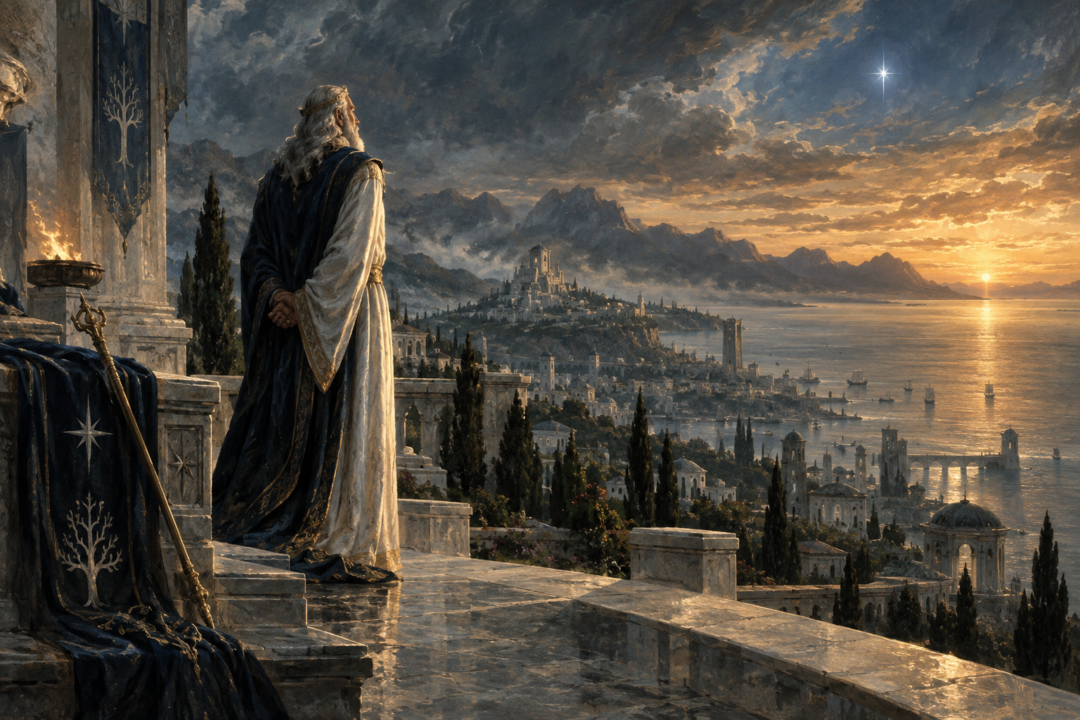
Númenor received something that sounds almost like the answer to mortality.
Its people were granted lives far longer than those of ordinary Men. The royal House of Elros enjoyed an even more extraordinary span, beginning with Elros himself, who lived for five hundred years. The early Númenóreans possessed health, knowledge, strength, wealth, and a beautiful island raised for them in the western sea.
Yet Númenor eventually became the civilization in Middle-earth most obsessed with escaping death.
That is one of the central tragedies of the Akallabêth. Longer life did not remove mortality. In the end, it gave the Númenóreans more to lose, more time to contemplate the loss, and an immortal people living almost within sight of them against whom they could measure their fate.
The blessing remained real. But once the Númenóreans ceased accepting its limits, the blessing itself became fuel for envy.
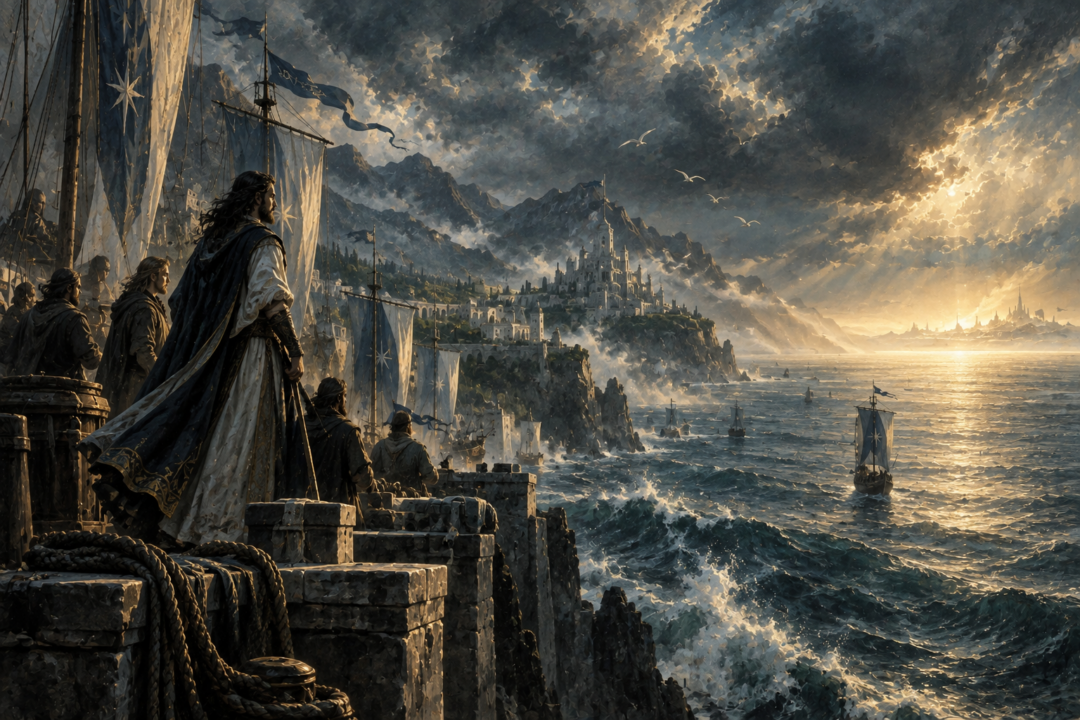
The Númenóreans Were Never Made Immortal
The first distinction is essential: Númenórean longevity was not immortality.
The Edain were rewarded after the wars against Morgoth, and their descendants in Númenor received lives greatly extended beyond those of other Men. But they remained fully subject to the fate appointed to humanity.
Death is described in the mythology not simply as a punishment but as the Gift of Ilúvatar. Unlike the Elves, whose lives remain bound to Arda while the world endures, Men eventually depart from the world.
Where they ultimately go is not known even to the Valar.
That uncertainty is crucial. Númenórean civilization could become extraordinarily learned without solving the mystery at the center of human existence.
Its mariners could cross enormous seas. Its scholars could accumulate knowledge for centuries. Its rulers could personally witness stretches of history that would encompass several ordinary human lifetimes.
None of this revealed what waited beyond death.
Longevity expanded Númenórean experience without removing the one boundary they most desperately wanted to understand.
Elros Shows What Long Life Was Supposed to Be
The earliest model was not a man desperately clinging to his remaining years.
It was Elros.
The brother of Elrond had been given the choice associated with the Half-elven. Elrond chose the fate of the Elves; Elros chose that of Men and became the first King of Númenor.
He nevertheless received an exceptional lifespan. He ruled for more than four centuries and died at the age of five hundred.
But the important point is not merely how long Elros lived. It is how his life ended.
The tradition preserved concerning the early Númenórean rulers presents death as something that could be accepted when weariness finally came. The king could surrender his authority, and ultimately his life, rather than waiting until bodily decay took both from him.
This made extraordinary longevity compatible with mortality.
A long life was something to use, not something to possess forever.
That distinction would eventually collapse.
The Dangerous Comparison Across the Sea
Númenor’s geography made its mortality unusually difficult to ignore.
The island lay west of Middle-earth and nearer to the Blessed Realm than the lands from which the Edain had come. The Númenóreans were forbidden to sail so far west that they could no longer see their own shores.
The Ban did not make mortality inevitable. Mortality was already the nature of Men. Nor was Aman a magical source of immortality that could transform mortals into Elves.
But psychologically, the situation was dangerous.
The Númenóreans knew that deathless beings lived in the West.
They also had contact with the Eldar. In the earlier days of Númenor, Elves came to the island from Tol Eressëa. The Númenóreans therefore did not contemplate Elvish longevity as an abstract legend. They encountered beings whose relationship to time was fundamentally different from their own.
For a people already capable of living centuries, the difference could feel tantalizingly narrow and infinitely unfair.
An ordinary mortal might regard immortality as unimaginable.
A Númenórean could live long enough to feel almost like an immortal—and still discover that “almost” changed nothing in the end.
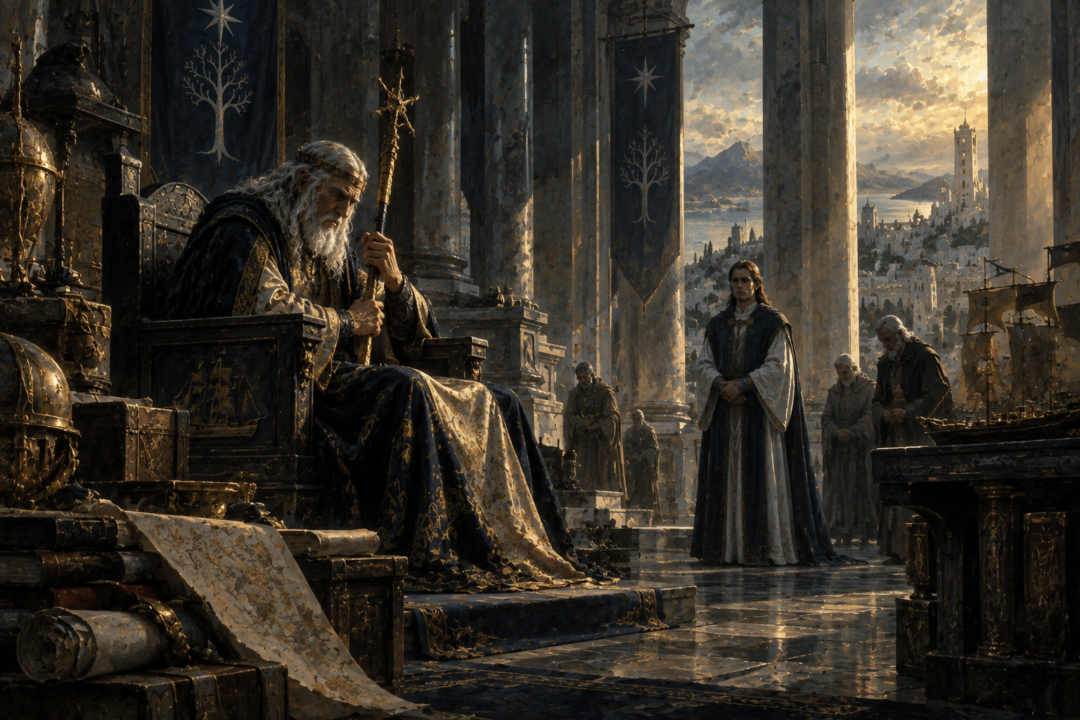
More Years Created More Attachment
The Akallabêth explicitly connects the growing Shadow in Númenor with fear of death and resentment of the Ban.
The Númenóreans increasingly desired more time precisely because they already had so much.
This apparent contradiction makes sense.
Imagine building for centuries.
A Númenórean noble could accumulate estates, ships, treasures, knowledge, political influence, and memories across an extraordinarily long life. Númenor itself became increasingly powerful. Its mariners explored the coasts of Middle-earth, and its rulers came to command resources beyond anything possessed by ordinary Men.
Death therefore did not merely mean losing a few decades.
It meant surrendering centuries of accumulated identity and achievement.
The texts do not offer this as a clinical theory of Númenórean psychology, so the point should not be pushed beyond the evidence. But the history strongly supports the broader pattern: as Númenor’s wealth and power increased, its acceptance of mortality diminished.
They became greater within the world and therefore increasingly unwilling to leave it.
Tar-Atanamir Marks the Change
One of the clearest turning points appears with Tar-Atanamir.
Earlier rulers had surrendered the Sceptre when the proper time came. Tar-Atanamir became known as the Unwilling and was the first King to refuse to relinquish the Sceptre and voluntarily depart while still possessing the strength to choose his ending.
That change is more significant than a royal custom.
It represents a transformation in the meaning of life itself.
The old ideal said: life has an appointed completion.
The new impulse said: any remaining life must be seized.
Once death is treated primarily as theft, no lifespan can finally be sufficient. Two hundred years are inadequate because three hundred are imaginable. Four hundred are inadequate because the Elves possess thousands.
And even thousands would not answer the deeper fear, because the real demand has ceased to be for long life.
It has become a demand for no ending at all.
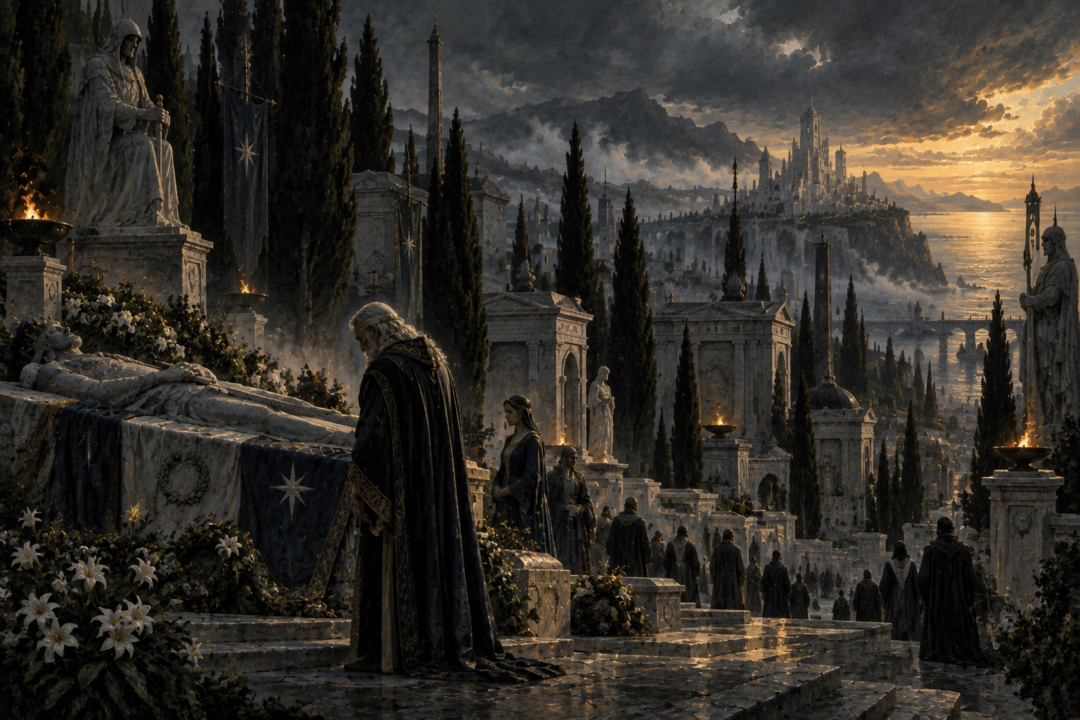
The Númenóreans Began Losing What They Tried to Preserve
The tragedy becomes sharper because resistance to death did not keep Númenórean life youthful and beautiful.
The later tradition describes people clinging to life until its end, while the span and quality of their lives diminished. The royal house itself experienced declining longevity.
Their obsession also reshaped their relationship with the dead. The later Númenóreans constructed great tombs and increasingly turned attention toward preserving the memory and remains of those who had died.
The contrast with the early kings is severe.
Earlier Númenórean wisdom had been expressed through voluntary relinquishment.
Later Númenórean fear expressed itself through holding on.
The more they attempted to master mortality, the less peacefully they could meet it.
This is why longevity did not function as a cure. A cure would have required a changed understanding of death. Númenor instead increasingly treated additional years as evidence that still more years ought to be possible.
Every extension moved the desired boundary farther away.
Sauron Did Not Create the Fear
By the time Sauron came to Númenor as a prisoner of Ar-Pharazôn, the fundamental problem already existed.
This matters because it makes Númenor’s fall more disturbing.
Sauron did not have to invent the King’s fear of death. He exploited it.
Ar-Pharazôn had become immensely powerful. Númenor dominated much of the western world of Men, and the King had humbled Sauron’s forces so completely that Sauron surrendered rather than contest Númenórean military strength directly.
Yet none of Ar-Pharazôn’s power could purchase one additional certainty about what happened after death.
Sauron’s deception therefore attacked the precise point at which the mightiest mortal king remained powerless.
He persuaded the King toward rebellion against the Valar and ultimately toward the catastrophic belief that the Undying Lands could provide what mortality denied him.
But the premise was false.
Aman did not make its inhabitants immortal merely because they lived there. The immortality of the Eldar belonged to their nature and fate; it was not a property that Men could acquire by occupying the correct territory.
Ar-Pharazôn’s final invasion was therefore founded on a profound category error.
He tried to conquer a metaphysical condition as though it were a kingdom.
The Final Irony of the Great Armada
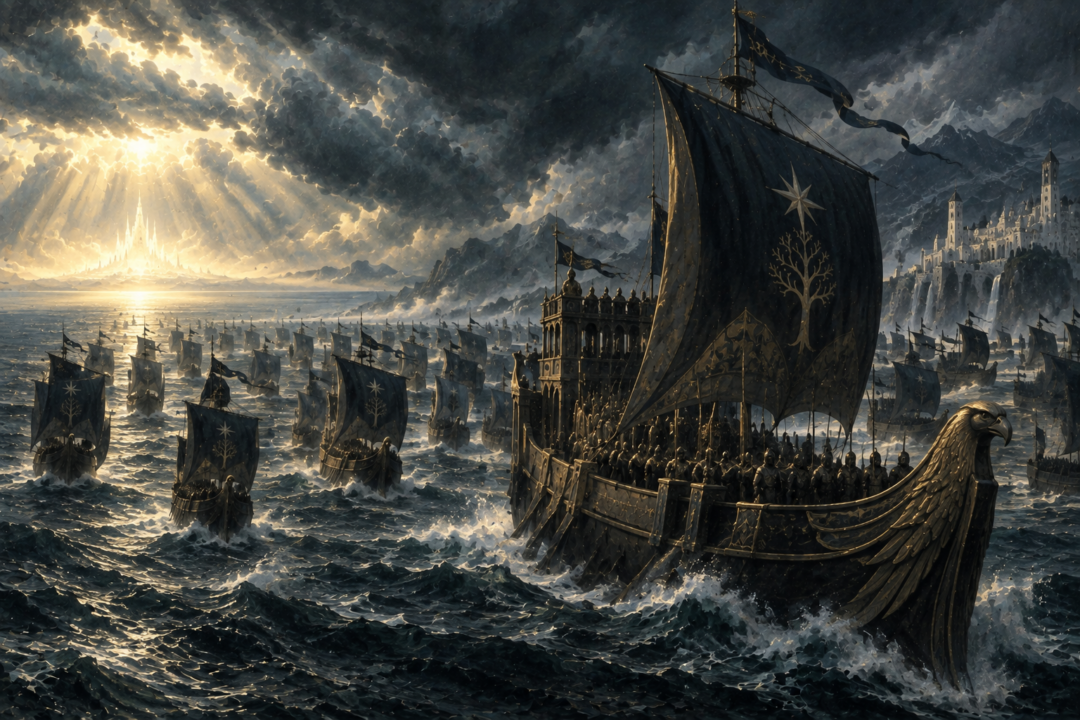
At last the Númenóreans built the greatest armament they had ever assembled and sailed west.
It was the logical endpoint of their fear.
Their longevity had given them centuries of accumulated knowledge.
Their wealth had given them enormous fleets.
Their empire had given them confidence that force could solve problems.
Their victories had taught them that seemingly impossible enemies could be defeated.
So when mortality remained unconquered, they eventually approached it with the instrument Númenor had learned to trust most: power.
The result was the Downfall.
Ar-Pharazôn landed in Aman, and the world was changed. Númenor was swallowed by the sea, while the King’s invading host was buried beneath falling hills.
The civilization that had become obsessed with extending life brought about its own sudden destruction.
That is the terrible symmetry of the Akallabêth.
Why Longer Life Was Never the Answer
Númenórean longevity was not itself the cause of the Downfall. The texts do not condemn long life, and the early Númenóreans demonstrate that extraordinary longevity could coexist with wisdom.
The problem was the transformation of gift into entitlement.
Once the Númenóreans began measuring their lives against the Eldar, hundreds of years could appear short. Once they regarded death as an enemy rather than an appointed mystery, every additional year merely postponed the same confrontation.
Their tragedy was therefore not that they received too little.
It was that abundance could no longer teach them sufficiency.
Elros lived five hundred years and relinquished life.
Thousands of years later, Ar-Pharazôn possessed the greatest kingdom of mortal Men and still believed he had been denied what mattered most.
Between those two kings lies much of the moral history of Númenor: the movement from accepting a long life as a gift to regarding any finite life as an injustice.
And that is why Númenórean longevity ultimately intensified the fear it seemed designed to ease.
It brought Men extraordinarily close to the experience of the deathless without ever changing what they were.
They could extend the road.
They could fill it with wonders.
But they could not remove its end.
Sources & Notes
- The Encyclopedia of Arda, “Gift of Men” — explains death as Ilúvatar’s gift, the unknown destination of Men beyond Arda, the early Númenórean acceptance of death, and the later attempt to escape it despite their long lives. https://www.encyclopedia-of-arda.com/g/giftofmen.html
- The Encyclopedia of Arda, “House of Elros” — documents Elros’s mortal choice, extraordinary five-hundred-year lifespan, and the inherited longevity of Númenor’s royal house. https://www.encyclopedia-of-arda.com/h/houseofelros.php
- The Encyclopedia of Arda, “The Unwilling” — describes the early royal custom of freely yielding life and rule, and Tar-Atanamir’s decisive refusal to relinquish either. https://www.encyclopedia-of-arda.com/u/unwillingatanamir.php
- The Encyclopedia of Arda, “The Deceiver” — summarizes Sauron’s false promises of unending life to Ar-Pharazôn and his manipulation of the King into seeking immortality through an assault on Aman. https://www.encyclopedia-of-arda.com/d/deceiver.html
- The Encyclopedia of Arda, “Doom of Men” — traces the corruption of mortality from gift into fear, the later Númenóreans’ clinging to life and tomb-building, and the catastrophic quest for immortality. https://www.encyclopedia-of-arda.com/d/doomofmen.html
Sources document Númenórean longevity, mortality as the Gift of Men, the shift from willing death to fear and clinging, and Sauron’s exploitation of that fear.