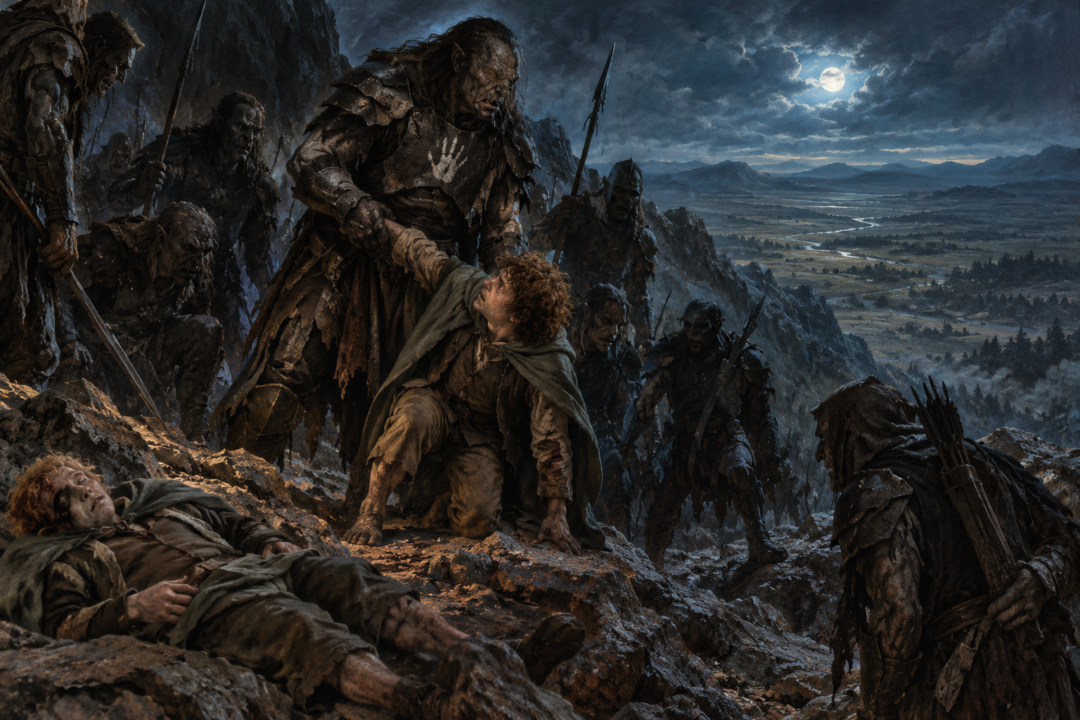
Merry and Pippin are among the most valuable prisoners Saruman’s Orcs have ever taken. They have been seized alive at Parth Galen, carried away from Boromir’s last stand, and are being hurried toward Isengard under strict orders not to kill them.
So when Uglúk suddenly cuts their leg-bonds and forces them onto their feet, the decision can look strangely inefficient. Hobbits are short-legged, injured, exhausted, and obviously slower than the great Uruk-hai racing across Rohan.
Why make them walk?
The answer reveals something important about Uglúk. He is not being merciful, and he is not simply tormenting them. At that moment, he is solving a military problem.
There is also an important qualification: Uglúk does not insist that Merry and Pippin travel on foot for the entire journey. The text explicitly shows the Isengarders carrying them again afterward. What matters is the particular moment when Uglúk decides that the prisoners must use their own legs.
That moment tells us a great deal about the Uruk-hai, their pursuit across Rohan, and the brutal efficiency Saruman has cultivated in his servants.
The Hobbits Begin as Cargo
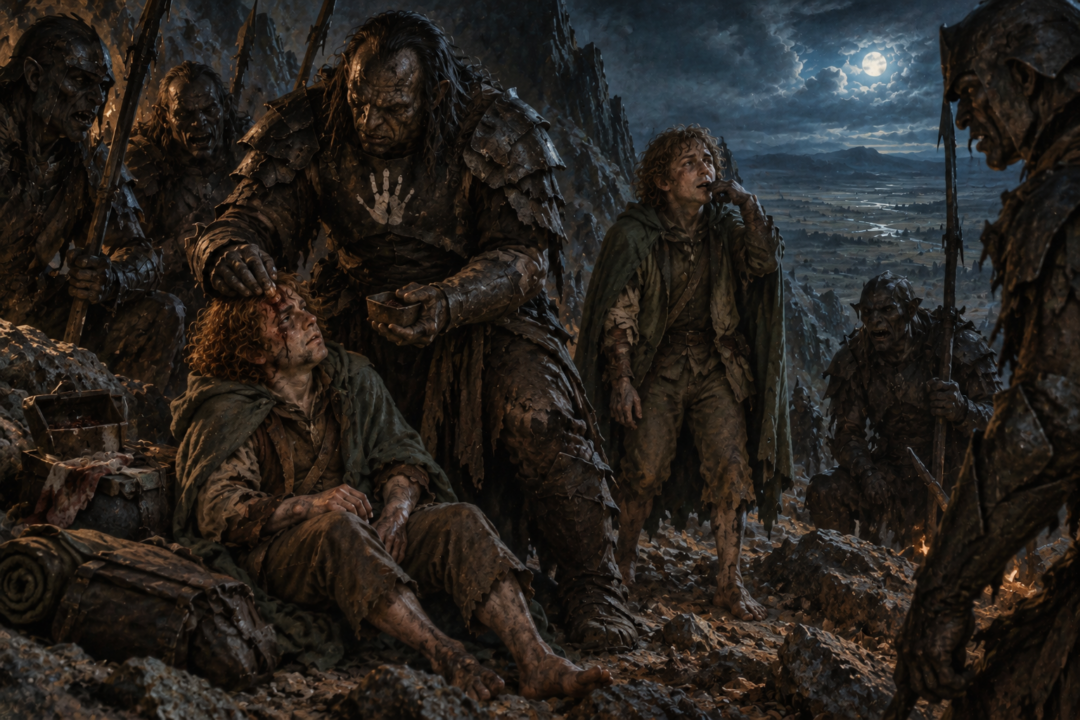
After Merry and Pippin are captured, the Orcs initially treat them almost literally as burdens.
Their hands and legs are bound, and Orcs carry them while the raiding company moves away from the Anduin. Pippin experiences the journey as a nightmare of jolting movement, pain, suffocation, and half-consciousness. The captives are passed between carriers as the Orcs continue their forced march.
That method makes sense at first.
The prisoners are wounded and disoriented. More importantly, they must not escape. Saruman’s orders, as Uglúk understands them, require the hobbits to be brought back alive and as intact as practical. Their captors do not know precisely why they are wanted, but they understand that the prisoners have unusual value.
Carrying them therefore gives the Orcs complete control.
But carrying a living prisoner over long distances is costly. Even an unusually strong soldier has to expend additional energy, and the Uruk-hai are not moving at an ordinary marching pace. They are conducting an increasingly desperate withdrawal across hostile country.
Eventually, Uglúk decides that his soldiers should not bear every part of that cost.
The Decision Comes After the Rohirrim Are Warned
The timing is crucial.
An Orc scout reports that a lone horseman has escaped westward. Uglúk immediately understands the danger. The rider can raise the alarm among the Rohirrim.
From that point onward, the Orcs are no longer merely returning to Isengard.
They are racing against cavalry.
Uglúk knows enough about Rohan to understand what this means. Once mounted warriors begin pursuing them across open country, every delay becomes dangerous. His company needs to move quickly toward Fangorn and the protection offered by rougher terrain.
Then Uglúk turns to Pippin.
His explanation is brutally practical: his soldiers are tired of carrying the hobbits, the company must climb down, and the prisoners will have to use their legs.
Those reasons belong together.
The Uruk-hai need speed, but they also need to conserve the strength of the soldiers producing that speed. At a difficult descent, carrying bound prisoners becomes especially inconvenient. A hobbit who can stand and move becomes temporarily more useful as a walking captive than as dead weight on an Orc’s back.
Uglúk is effectively transferring part of the physical cost of the escape onto the prisoners themselves.
Orc Medicine Is Part of the Same Calculation
There is an especially revealing detail in what happens next.
Pippin initially cannot stand properly.
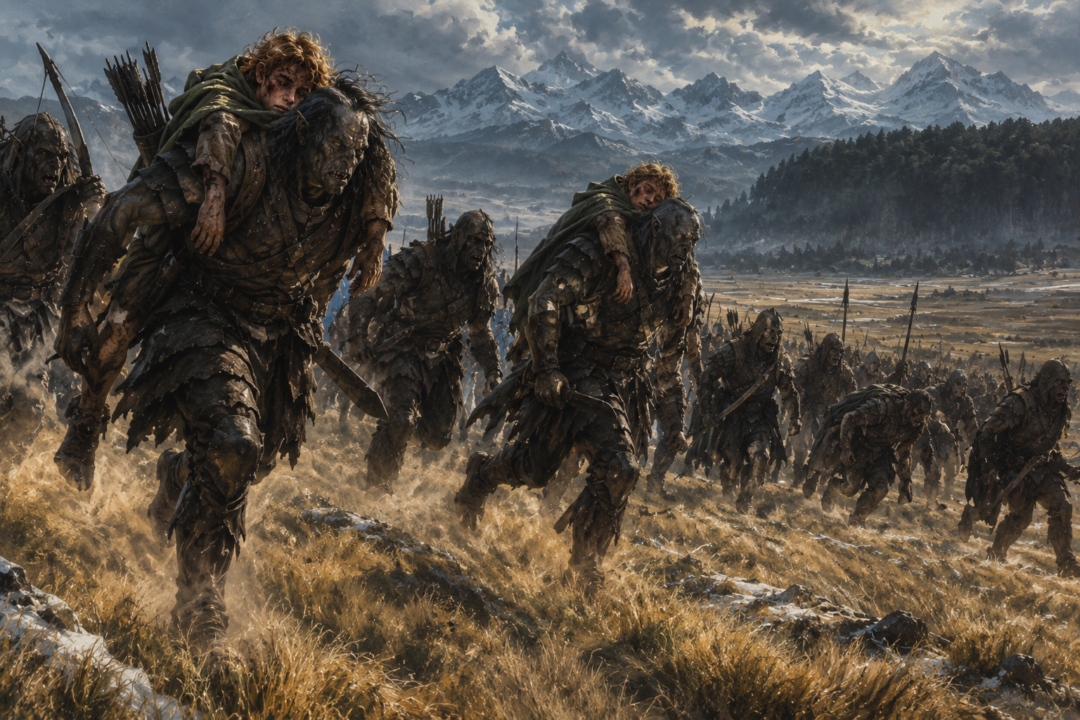
Uglúk does not shrug and order another Orc to carry him. Instead, he forces a burning draught down Pippin’s throat. Pippin feels a fierce heat, and the pain in his legs and ankles disappears sufficiently for him to stand.
Merry receives even more direct treatment. His head wound is uncovered, and Uglúk applies a dark substance from a small wooden box. The treatment is agonizing, but it works rapidly. Merry is then given the same kind of drink and hauled upright.
The narrator makes Uglúk’s purpose unusually clear: he is not doing this for amusement. At that moment he needs speed.
That distinction matters.
Orcs are certainly capable of cruelty, and the surrounding Orcs laugh at Merry’s suffering. But Uglúk himself is behaving instrumentally. He needs two damaged prisoners converted into mobile prisoners, so he uses whatever rough remedies his company carries.
The medicine is not compassion.
It is maintenance.
Merry and Pippin are valuable assets whose bodies have to remain functional long enough to reach Isengard.
Why Not Simply Carry Them Faster?
Because carrying them is not automatically the fastest option in every piece of terrain.
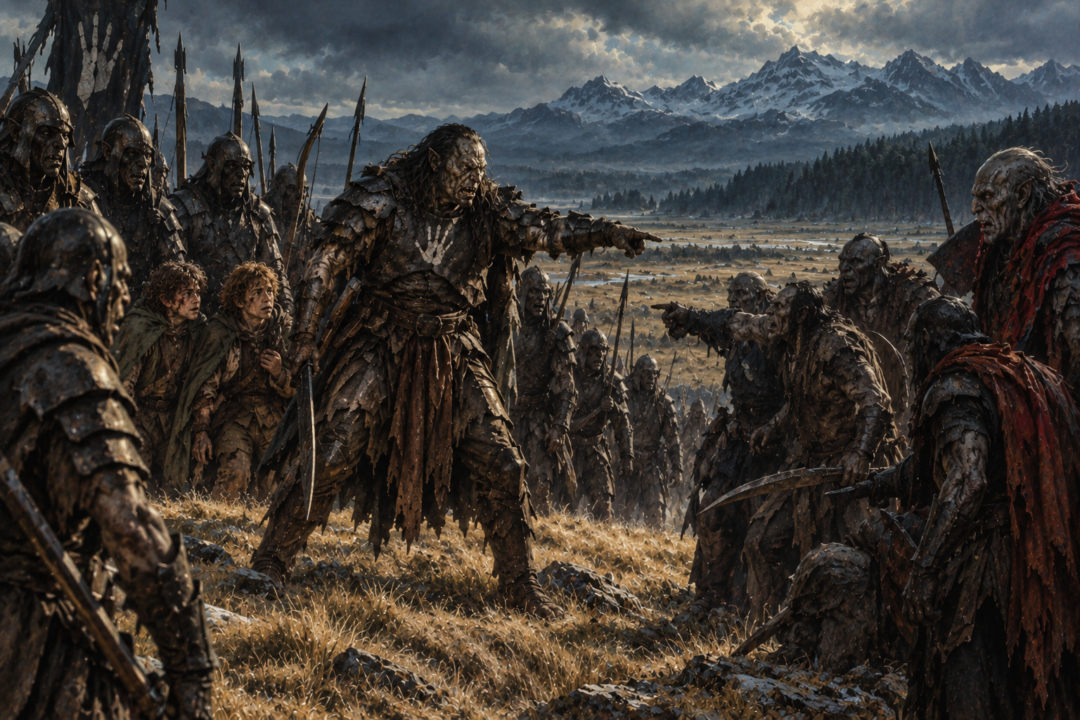
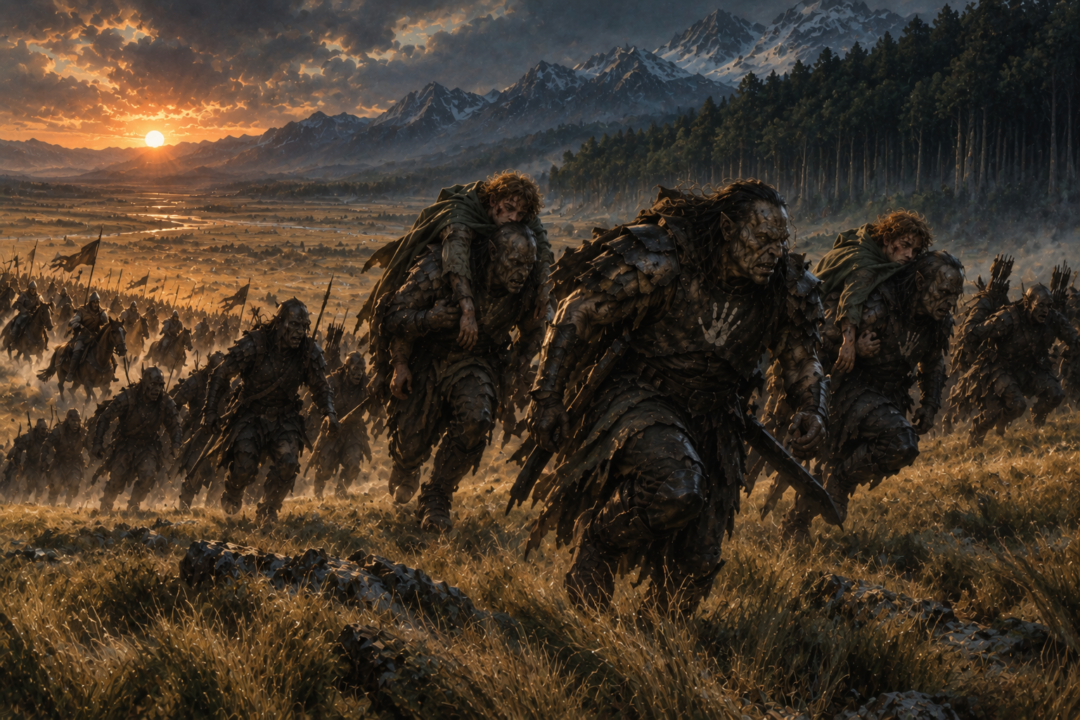
The Isengarders are extraordinarily capable runners. Later in the same chapter they carry Merry and Pippin again, changing carriers during the long march. The text even emphasizes the relentless strength of their legs as they race across the plains.
So Uglúk plainly does not believe that hobbits can outrun Uruk-hai.
His decision is situational.
At the difficult descent where he first puts them on their feet, carrying an additional body can interfere with balance and movement. His soldiers have also already been transporting the prisoners for a considerable distance. Allowing the captives to support their own weight gives the carriers some relief without abandoning the prisoners.
Once conditions change, the calculation changes too.
The Isengarders seize Merry and Pippin again and sling them onto their backs. They then run for hours, occasionally passing the hobbits to fresh carriers.
This is why the episode should not be read as Uglúk establishing a general rule that the prisoners must walk to Isengard.
He is managing them according to circumstance.
Sometimes the quickest way to move the prisoners is to carry them.
Sometimes the quickest way is to make them move themselves.
Uglúk Is Managing More Than Two Prisoners
There is another pressure on him that is easy to overlook: Uglúk does not command a perfectly unified army.
The raiding force contains Orcs with different origins and loyalties. Uglúk leads the Isengarders, while Grishnákh represents Mordor, and there are also Orcs from the northern mountains. Their objectives do not entirely align.
Arguments repeatedly threaten the cohesion of the company.
The Mordor faction wants the prisoners taken eastward toward the Great River. Uglúk insists on taking them to Saruman. Other Orcs are increasingly concerned about pursuit. Some eventually break away toward Fangorn rather than remain with Uglúk.
Uglúk therefore has to manage exhausted soldiers, rival commanders, unwilling prisoners, hostile territory, and approaching Rohirrim simultaneously.
His remark that his own lads are tired of carrying the hobbits has significance in that context. A commander whose authority is already being contested cannot casually exhaust his best troops for the comfort of two captives.
He needs the prisoners alive.
He also needs his soldiers capable of fighting.
The Uruk-hai Are Built for This Kind of March
The episode also highlights the difference between Saruman’s Uruk-hai and some of the other Orcs accompanying them.
The Isengarders are formidable long-distance runners. They endure daylight better than the Northerners, who begin to suffer under even the pale winter sun. As the pursuit intensifies, Uglúk’s soldiers maintain a punishing pace.
That endurance is one of their decisive advantages.
But endurance is still a resource.
Uglúk does not behave as though his warriors possess limitless strength. He rotates the prisoners between carriers. He uses Orc remedies to keep the captives functional. He pushes frightened or reluctant Orcs onward. He constantly responds to terrain and pursuit.
The result is less like a mindless Orcish stampede than a forced military withdrawal conducted under increasingly dangerous conditions.
And Uglúk is competent enough to recognize the danger.
The Rohirrim eventually catch him, but not because he fails to understand the problem. He drives his force astonishingly hard toward Fangorn and nearly reaches terrain that could have complicated the Riders’ pursuit.
Merry and Pippin Are Valuable—but Only While Usable
The ugliest implication is that Uglúk’s care for the hobbits has strict limits.
He repeatedly protects their usefulness rather than their welfare.
He prevents them from being casually killed. He treats their injuries. He makes sure they can move. He carries them when carrying is advantageous.
None of those actions make him benevolent.
They show that Saruman’s orders have transformed Merry and Pippin into strategic cargo.
Uglúk even threatens punishment while carefully specifying that it will not destroy their usefulness to his master. That is the governing principle behind his treatment of them.
Their survival matters because someone powerful wants them.
Their comfort does not.
The Detail Makes Uglúk More Dangerous
It would actually make Uglúk less interesting if he simply brutalized the hobbits without thinking.
Instead, “The Uruk-hai” presents a commander capable of making quick tactical judgments.
A horseman escapes? Increase the pace.
The carriers are tiring and difficult ground lies ahead? Make the prisoners walk.
The prisoners cannot walk? Treat their injuries.
The terrain opens again and maximum speed becomes possible? Put them back on fresh carriers.
Other Orcs hesitate? Threaten them and keep moving.
That pattern does not make Uglúk wise in any larger sense. His loyalty is to Saruman, his methods are cruel, and his mission ends catastrophically when Éomer’s Riders surround and destroy the raiding company.
But within the narrow world of the chase, he is frighteningly practical.
And that is the real reason the moment with Merry and Pippin matters.
Uglúk does not put them on their feet because he suddenly stops caring whether they reach Isengard.
He puts them on their feet precisely because he does care whether they reach Isengard.
For a few crucial miles, their own legs are simply the most useful way of getting them there.
Sources & Notes
- The Encyclopedia of Arda, “Uglúk” — https://www.encyclopedia-of-arda.com/u/ugluk.php
- The Encyclopedia of Arda, “Orc-draughts” — https://www.encyclopedia-of-arda.com/o/orcdraughts.php
- Tolkien Gateway, “The Uruk-hai” — https://tolkiengateway.net/wiki/The_Uruk-hai
Reference entries document the characters, places, events, and textual details discussed in this article.