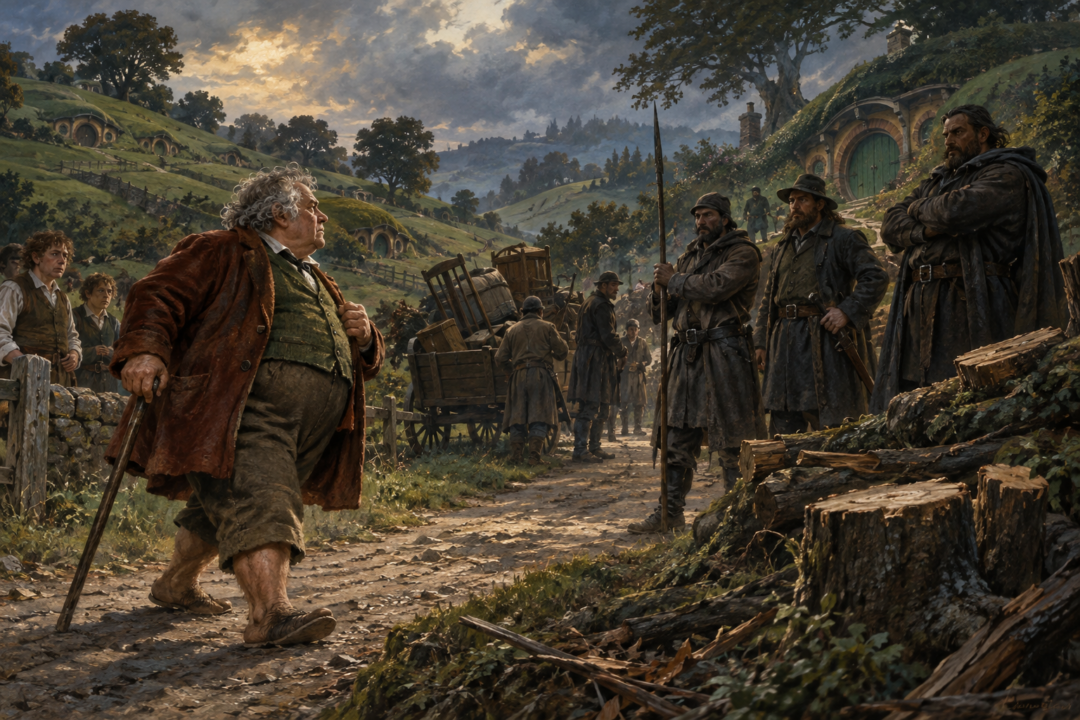
When Frodo, Sam, Merry, and Pippin return to the Shire, one of the strangest signs that something fundamental has gone wrong is not a burned mill or a felled tree. It is the absence of an old, rather comic hobbit named Will Whitfoot.
Will is the Mayor of Michel Delving, commonly called the Mayor of the Shire. Before the War of the Ring, his office hardly looks powerful at all. The Mayor presides at banquets, serves as Postmaster and First Shirriff, and belongs to a society that has remarkably little government.
Then Lotho Sackville-Baggins has him arrested.
That act matters far beyond Will himself. The imprisonment of the Shire’s elected Mayor reveals the central political contradiction of Lotho’s regime: the new rulers constantly invoke offices, Shirriffs, and “Rules,” yet they must remove the legitimate officeholder before their system can function.
Will Whitfoot’s imprisonment therefore does not simply show that the Shire has become oppressive. It exposes how power has been separated from legitimacy.
The Shire Had Authority Without Much Government
The Shire is unusual because its political order depends remarkably little on coercion.
In the Prologue to The Lord of the Rings, the hobbits are described as having largely managed their own affairs for generations. They retain the office of Thain after the disappearance of the northern kings, while the Master of Buckland possesses authority in his own region. Yet by the end of the Third Age, the Mayor of Michel Delving is described as the Shire’s only real official.
Even that sounds grander than it is.
The Mayor is elected every seven years at the Free Fair on the White Downs. His most visible responsibility is presiding over banquets. Attached to the office, however, are two more practical functions: Postmaster and First Shirriff.
This distinction becomes crucial during the occupation.
The Shire possesses institutions, but those institutions ordinarily operate within a culture of consent and custom. Its Shirriffs are few. Its inhabitants recognize inherited Rules traditionally associated with the old Kings of the North, but daily life does not resemble a heavily administered state.
Authority works largely because hobbits accept it.
Lotho overturns that principle without immediately discarding its vocabulary.
Why Lotho Needs Will Whitfoot Gone
Lotho Sackville-Baggins first acquires enormous economic influence. He buys property and goods, and Men begin appearing in the Shire. As conditions worsen, Will Whitfoot goes to Bag End to protest.
He never gets the opportunity to exercise meaningful institutional resistance.
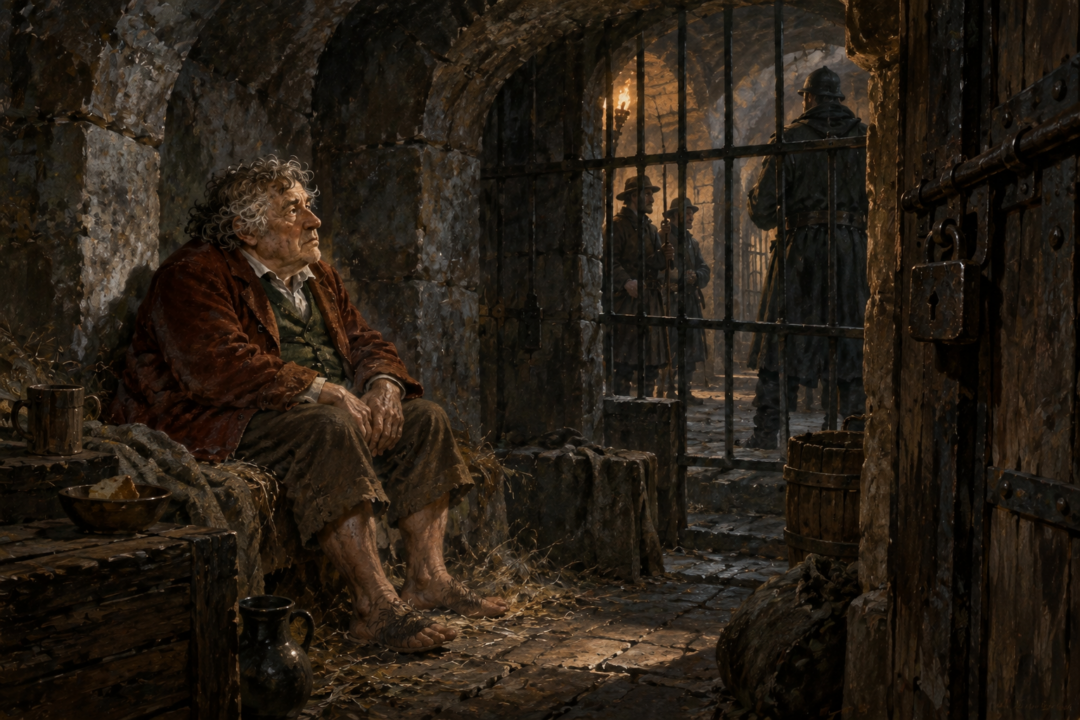
Lotho’s Men seize him and put him in the Lockholes.
The sequence is significant. Will is not described as leading an armed rebellion. His threat is constitutional in the Shire’s modest sense: he is the recognized Mayor protesting what Lotho is doing.
Removing him clears the way for something new.
Lotho subsequently calls himself Chief Shirriff and expects people to call him “Chief.” The title itself is revealing. Rather than openly declaring himself king or lord of the Shire, Lotho appropriates the language of an existing Shire institution.
But the Mayor is already First Shirriff.
That makes Will’s imprisonment especially damaging to Lotho’s claim to ordinary authority. Lotho cannot simply fit himself naturally into the existing system while its legitimate elected officer remains free and opposed to him.
The Mayor has to disappear.
The “Rules” Become the Opposite of the Rules
The transformation becomes even clearer through the proliferation of regulations.
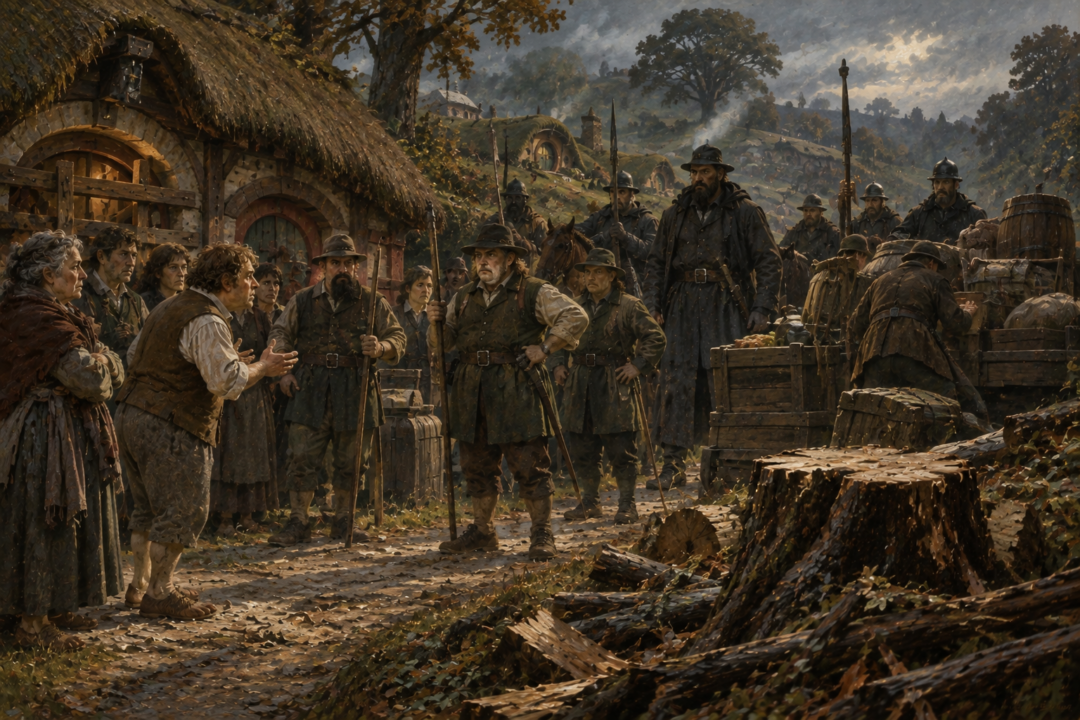
The returning Travellers encounter endless new Rules: restrictions on movement, gatherings, food, fires, and other ordinary activities. Notices and orders have multiplied, and so have the Shirriffs expected to enforce them.
This is deeply ironic because the older Shire order already had Rules.
The hobbits traditionally associated their laws with the Kings of the North and continued to observe them after the kingdom disappeared. Their respect for those Rules rested upon antiquity and accepted legitimacy rather than constant enforcement.
Under Lotho and later Sharkey, “rules” become instruments of domination.
The distinction is not simply between having laws and having none. The Shire before the Troubles was not lawless. The difference is between rules embedded in an accepted social order and commands imposed by people who have seized the machinery of authority.
That is why Will Whitfoot matters.
His presence in the Lockholes silently demonstrates that the new regime cannot plausibly claim continuity with ordinary Shire government. The recognized Mayor has not voluntarily transferred his authority. He has been imprisoned by the very people issuing commands in the name of public order.
The Shirriffs Reveal the Same Contradiction
The Shirriffs are another institution transformed by the occupation.
Normally they are a tiny body, concerned chiefly with stray animals and occasional outsiders rather than maintaining political control. Under the new regime, their numbers are increased and their purpose distorted.
Some of them are hardly enthusiastic tyrants. When Frodo and his companions encounter Shirriffs after returning, the absurdity of the situation is obvious. Hobbit officials have been made into instruments of an apparatus whose real force ultimately depends upon the Men behind it.
The institution remains recognizable while its function has changed.
This is one of the most unsettling aspects of the Scouring of the Shire. The takeover does not begin by replacing every familiar structure with something completely foreign. Existing habits and offices are bent into new purposes.
Will’s imprisonment marks the point where that bending becomes unmistakable.
The lawful First Shirriff is locked away while an enlarged body of Shirriffs enforces the commands of a self-appointed Chief.
The titles remain.
The legitimacy does not.
The Thain Shows That Lotho Never Fully Controls the Shire
Will Whitfoot is not the only surviving source of traditional authority.
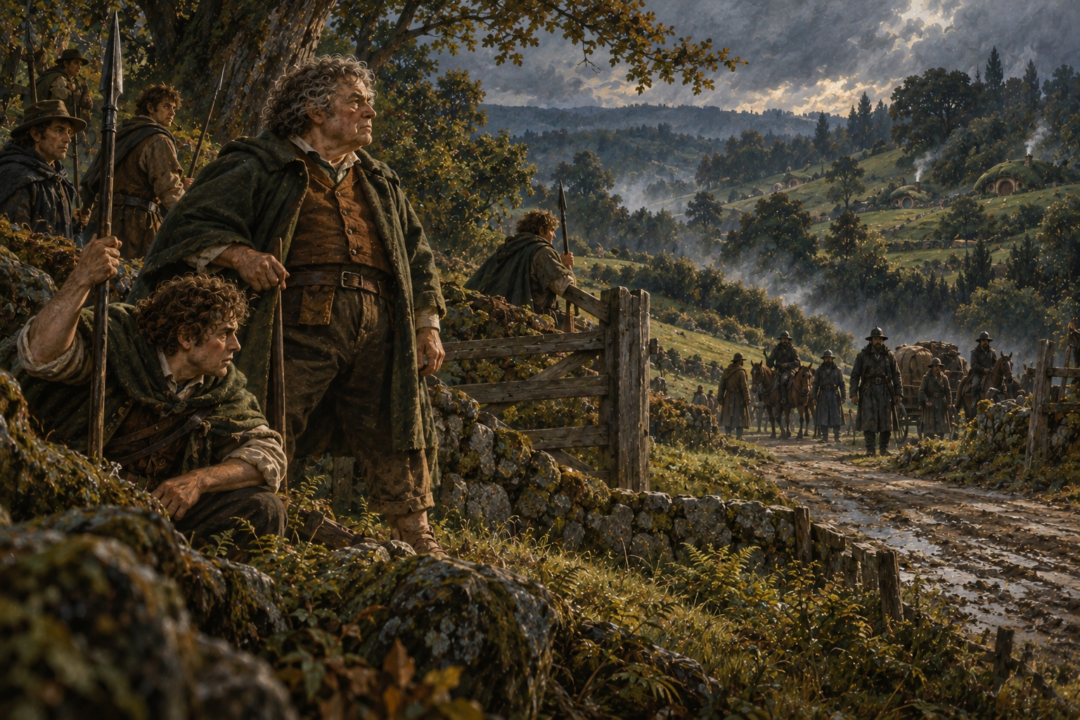
Paladin Took, the Thain, refuses to recognize Lotho’s claim to be Chief. When Lotho’s Men attempt to impose themselves upon Tookland, the Tooks resist them. By the time the Travellers return, Took country has not been completely subdued.
This matters because the Shire is not a centralized state whose legitimacy can be captured simply by controlling one office.
Its political life rests on several overlapping traditions: the Mayor, the Thain, the Master of Buckland, family authority, local custom, and the inherited memory of the King’s laws.
Lotho can imprison Will, but he cannot make his own authority legitimate merely by doing so.
Indeed, the imprisonment produces the opposite result.
The Mayor remains Mayor precisely because his captors have no accepted process by which to replace him.
The texts never present Lotho as lawfully succeeding Will. He simply gains power, removes opposition, adopts the title Chief, and has his orders enforced.
That is rule by possession, not succession.
Frodo’s Deputy Mayoralty Is the Quiet Restoration
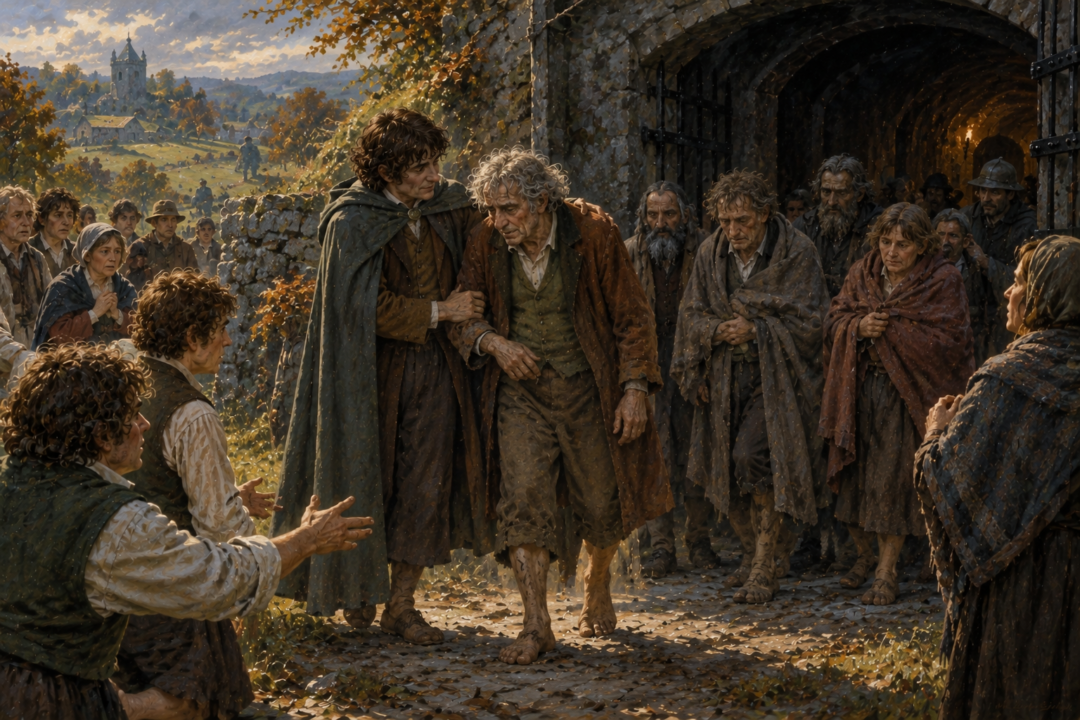
After the Battle of Bywater and the end of Sharkey’s control, the Lockholes are opened.
Among those released are Lobelia Sackville-Baggins, Fredegar Bolger, and Will Whitfoot. Their physical condition reveals what imprisonment has meant. Will, once famous for his enormous girth, has become so thin that his appearance itself is a bitter joke upon his old nickname, “Flourdumpling.”
He is also not immediately fit to resume his duties.
What happens next is one of the most important details in understanding Shire legitimacy.
Frodo becomes Deputy Mayor until Will recovers.
He does not proclaim himself Chief. Merry does not claim the Shire by right of military victory. Pippin does not use his standing as the Thain’s heir to take control. Sam does not become Mayor because he helped defeat the occupiers.
Instead, the existing office is preserved.
Frodo temporarily performs its duties as deputy.
His actions are restorative rather than revolutionary. Among them is reducing the Shirriffs to their former numbers and functions. The extraordinary machinery created during the occupation is dismantled.
The Shire does not answer arbitrary government by constructing a stronger arbitrary government of its own.
It returns authority to its accustomed limits.
Will’s Return Proves That His Office Survived His Prison
At the Free Fair in the following summer, Will Whitfoot is restored to public life and continues as Mayor. Appendix B records that he eventually resigns in Shire-reckoning 1427, when Samwise Gamgee is elected Mayor.
That later succession completes the pattern.
Will’s imprisonment never erased the legitimacy of his office because legitimacy in the Shire did not come from whoever possessed Bag End, commanded the most Men, or posted the greatest number of regulations.
It came from recognition, election, custom, and continuity.
Lotho could control the Shire’s machinery for a time. Sharkey could terrorize its inhabitants and scar its landscape. Neither could turn seizure into lawful succession merely by exercising power.
There is a larger implication here, though it should be stated carefully. The Scouring suggests that institutions can survive conquest in a meaningful sense when a community continues to recognize the difference between an office and the person who has physically seized its powers.
Will Whitfoot seems almost deliberately unimpressive as a political figure. He is old, fat, associated with banquets, and remembered by an embarrassing nickname.
Yet when the crisis comes, he protests.
For that, he is imprisoned.
And paradoxically, the Lockholes make the constitutional truth of the Shire clearer than it was in peaceful times. Lotho can silence the Mayor, but he cannot become the Mayor merely by locking him away.
The prison door therefore separates two kinds of authority.
Outside stands the regime with Men, orders, extra Shirriffs, confiscations, and endless Rules.
Inside sits the elected Mayor.
When the door finally opens, the Shire knows which one was legitimate all along.
Sources & Notes
- Tolkien Gateway, “Will Whitfoot” — https://tolkiengateway.net/wiki/Will_Whitfoot
- Tolkien Gateway, “Lotho Sackville-Baggins” — https://tolkiengateway.net/wiki/Lotho_Sackville-Baggins
- Tolkien Gateway, “Scouring of the Shire” — https://tolkiengateway.net/wiki/Scouring_of_the_Shire
Reference entries document the characters, places, events, and textual details discussed in this article.