
Why Gondor’s Steward’s Reckoning Needed Special Correction Days
Minas Tirith measured more than battles, reigns, and generations. Gondor also kept watch over something far easier to lose without noticing: the year itself.
By the time of the Ruling Stewards, Gondor possessed a calendar descended from the Númenórean Kings’ Reckoning. It was remarkably sophisticated. Ordinary years contained 365 days, leap years corrected the accumulated fraction of a day, and even longer-term errors were accounted for.
Yet the system still drifted.
The problem was tiny on the scale of a single lifetime. Across centuries, however, hours became days. Worse, the beginning of the Third Age had disrupted the old sequence of corrections inherited from Númenor. Eventually Gondor’s calendar required exceptional additions that did not belong to its normal leap-year cycle.
That is why Mardil, the first Ruling Steward, added two special days to the year 2059 of the Third Age before introducing the Stewards’ Reckoning in 2060. Three centuries later, Steward Hador added another day.
These were not arbitrary festivals invented to decorate Gondor’s year. They reveal just how seriously the Dúnedain treated the relationship between their inherited reckoning and the actual movement of the seasons.
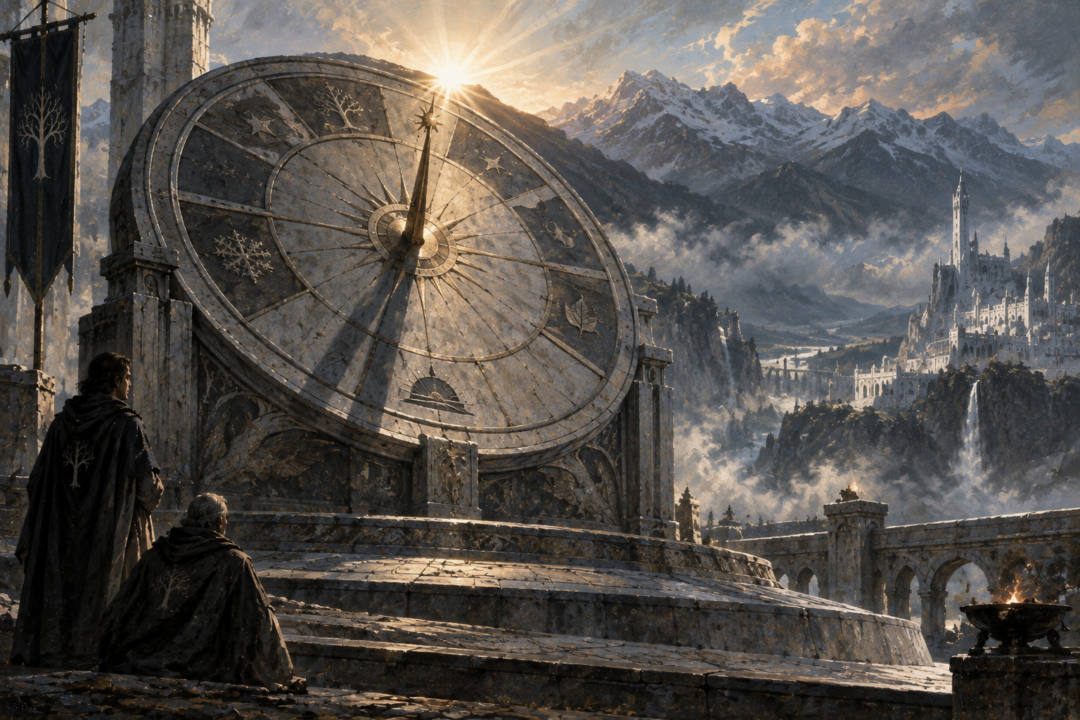
Gondor Inherited Its Calendar From Númenor
The Stewards did not begin with a blank calendar.
Gondor and Arnor inherited the Kings’ Reckoning from Númenor. Its year contained twelve months, or astar, together with several days standing outside the months. Yestarë marked the first day of the year, mettarë the last, while loëndë stood at mid-year.
The system already included leap-year corrections.
The underlying problem was the familiar one faced by any solar calendar: the astronomical year is not exactly 365 days long. Appendix D of The Lord of the Rings gives the length used by the Númenórean reckoners as 365 days, 5 hours, 48 minutes, and 46 seconds.
A calendar therefore cannot simply repeat 365-day years forever. It must occasionally insert additional time or gradually move out of alignment with the seasons.
The Númenóreans had devised rules to prevent that drift. In the Kings’ Reckoning, leap years normally occurred every fourth year, but the last year of a century was treated differently. Further adjustment was made at the end of a millennium.
This was impressively precise.
It was not perfectly self-correcting.
The Tiny Error That Survived Every Millennium
The Númenórean system deliberately allowed a small discrepancy to accumulate.
Because of its century rule, a deficit remained until the millennial correction. Even after that larger cycle was taken into account, Appendix D calculates the millennial deficit at only 4 hours, 46 minutes, and 40 seconds.
That sounds insignificant.
For a person, it is. For a civilization measuring its history across thousands of years, it is not.
The important point is that Gondor’s calendar was designed for extraordinary continuity. The Dúnedain were not merely trying to make next year resemble this one. Their reckoning descended from a civilization whose recorded history stretched back through the Second Age.
A discrepancy of a few hours per millennium could therefore matter.
And then came a much larger disturbance.
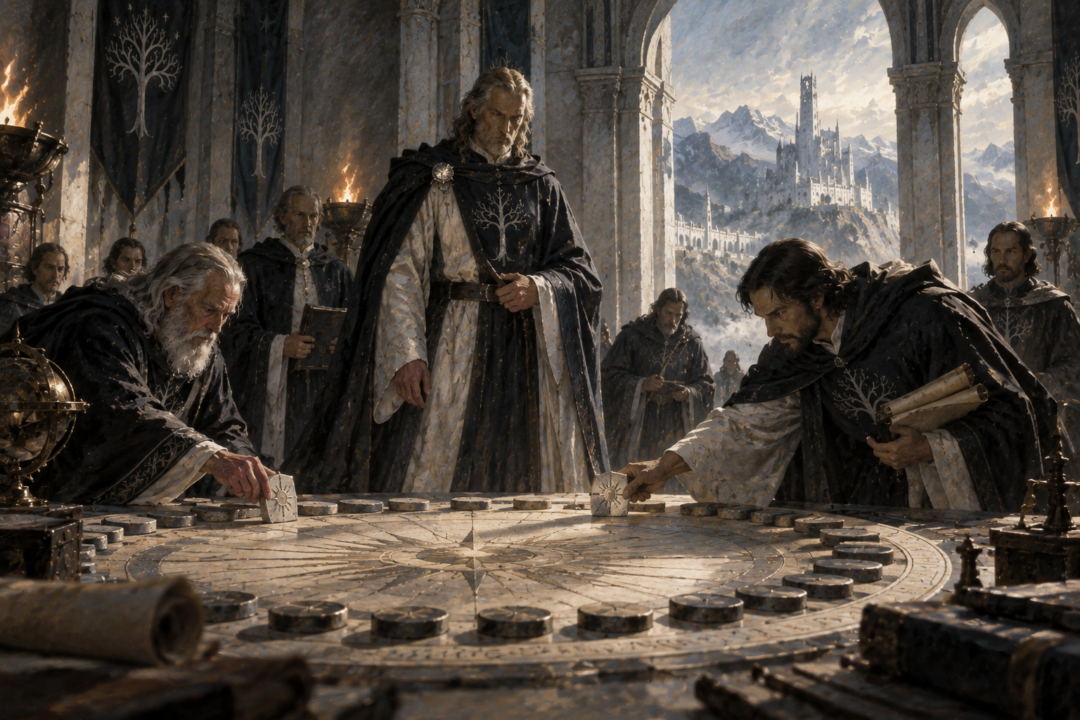
The Third Age Broke the Old Numerical Rhythm
The end of the Second Age created an awkward calendar problem.
After the overthrow of Sauron at the end of the War of the Last Alliance, the numbering of years began again. Second Age 3442 became Third Age 1.
Astronomical time, of course, did not restart with the calendar.
That distinction mattered because the leap-year and millennial corrections depended upon numbered years. According to Appendix D, making Third Age 4 a leap year instead of the year corresponding to Second Age 3444 inserted another short year and produced an additional deficit of 5 hours, 48 minutes, and 46 seconds.
The millennial corrections were also now tied to the new Third Age numbering. Consequently, the additions in Third Age 1000 and 2000 came 441 years later than they would have under the uninterrupted Second Age count.
Nothing catastrophic happened on the morning after one of these errors.
That is precisely what makes the problem interesting.
Calendar drift is almost invisible while it happens. No single year looks badly wrong. But the discrepancy continues accumulating until traditional calendar dates no longer correspond as closely as intended with the solar year.
By the twenty-first century of the Third Age, Gondor had inherited several layers of accumulated error.
Mardil decided to correct them.
Mardil’s Two Extraordinary Days
Mardil Voronwë became the first Ruling Steward after King Eärnur disappeared in 2050 and no new King took the throne.
His calendar reform followed soon afterward.
The year Third Age 2059 corresponded to 5,500 years from the beginning of the Númenórean reckoning as calculated in Appendix D. Mardil used this point to address the accumulated deficit.
He made a special addition of two days to 2059.
These were exceptional correction days rather than part of the ordinary four-year leap cycle. Even after their insertion, Appendix D says that approximately eight hours of deficit remained.
Then, beginning in Third Age 2060, Mardil introduced the Revised Calendar that became known as the Stewards’ Reckoning.
This was not simply an emergency patch. He also reorganized the structure of Gondor’s year.
Why the Stewards’ Calendar Looked So Orderly
Under the older Kings’ Reckoning, ten months contained thirty days while two contained thirty-one.
Mardil made all twelve months exactly thirty days long.
That gives 360 days.
The remaining five ordinary days stood outside the months: yestarë, tuilérë, loëndë, yáviérë, and mettarë.
Tuilérë was inserted between the third and fourth months, while yáviérë stood between the ninth and tenth. Together with the already existing yestarë, loëndë, and mettarë, these formed the five days outside the ordinary months. Appendix D identifies these days as holidays.
The result was an unusually symmetrical calendar.
Three thirty-day months were followed by an outside day; another three months led to mid-year; three more led to another outside day; and the final three brought the year toward its end.
The change should not be confused with the exceptional two-day correction made in 2059. Tuilérë and yáviérë were permanent structural elements of Mardil’s revised calendar. The two extra days placed into 2059 were a separate measure intended to reduce accumulated chronological error.
That distinction explains much of the apparent mystery surrounding Gondor’s “extra” days.
Some belonged to the design of every ordinary year.
Others existed because centuries of history had knocked that design slightly out of alignment with the Sun.
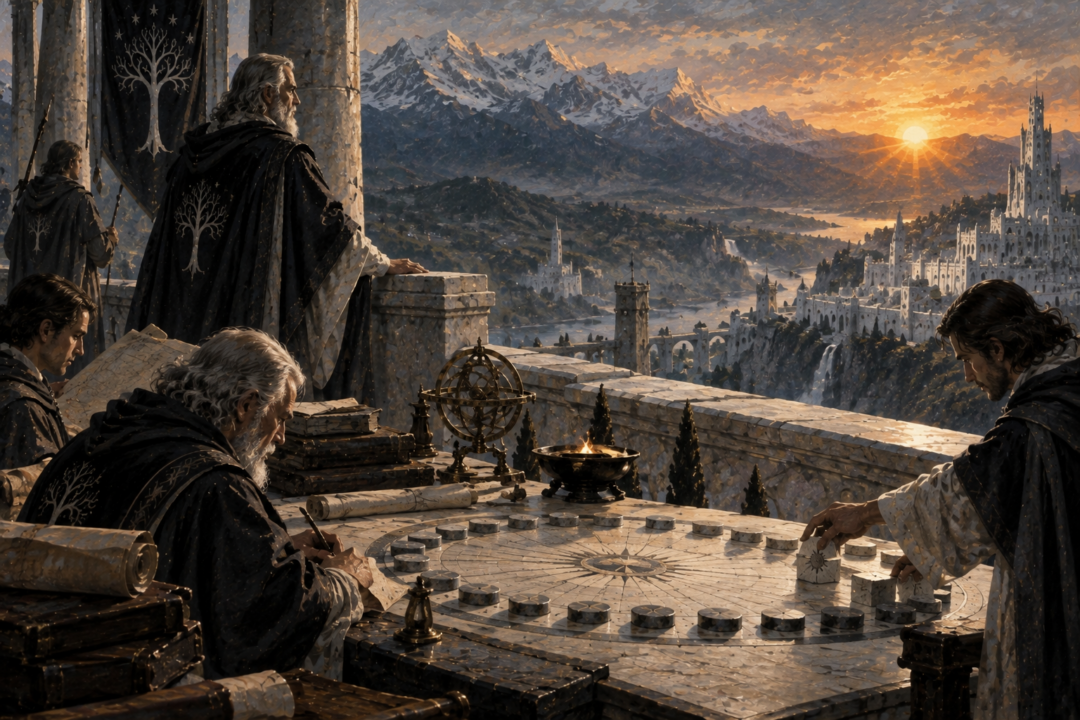
Hador Had to Correct It Again
Mardil’s reform did not make astronomical error disappear forever.
Three hundred years after the Stewards’ Reckoning began, Steward Hador made another exceptional adjustment. In Third Age 2360, he added one extra day to the year.
Intriguingly, Appendix D notes that the accumulated deficiency had not quite reached a full day.
In other words, Hador’s correction was slightly anticipatory rather than a response to a complete twenty-four-hour deficit.
After that, no further special adjustments were made during the Third Age.
The old millennial correction might have raised the question again around Third Age 3000, but Gondor was approaching its final war with Sauron. Appendix D explicitly notes that, with war imminent, such matters were neglected.
By the end of the Third Age, however, the remaining deficit still had not reached a full day.
The system had worked remarkably well.
A Calendar Built for a Civilization That Remembered
There is something revealing about Gondor’s concern with a discrepancy measured first in hours and only eventually in days.
The Stewards inherited a realm in decline. Gondor had endured plague, invasion, civil conflict, shrinking borders, the disappearance of its last King, and the growing danger of Mordor.
Yet its rulers still preserved the reckoning of Númenor closely enough to worry about errors accumulated across millennia.
The texts do not tell us that Mardil’s calendar reform was intended as a philosophical statement about Gondor’s identity, so it would go too far to claim that motive as fact. But the contrast is difficult to miss.
Politically, the realm had changed enormously.
Its calendar still remembered Númenor.
Even the need for correction came partly from the attempt to preserve continuity across the enormous rupture between the Second and Third Ages.
The correction days therefore expose an unusual form of historical memory. Gondor was not merely counting days from one winter to another. Its scholars and rulers were maintaining a system whose accumulated errors could be traced across thousands of years.
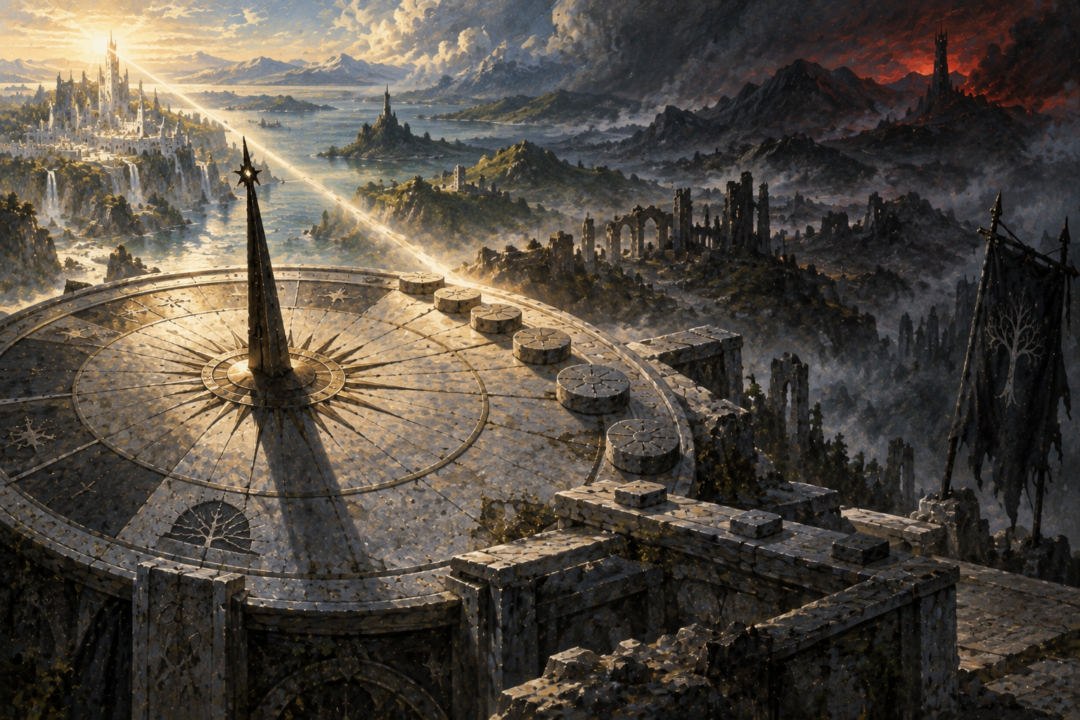
Even Gondor Could Not Make Time Stand Still
The deepest irony of the Stewards’ Reckoning is that its precision could never completely conquer the thing it measured.
Days can be named. Months can be regularized. Leap years can be calculated. Millennial deficits can be corrected.
Time still moves.
The Númenórean calendar survived the Downfall. It survived the founding of the Realms in Exile. It survived the ending of the Second Age and the disappearance of Gondor’s royal line. Mardil revised it, Hador corrected it, and generations continued to live by it.
Then the War of the Ring changed the reckoning once more.
After Sauron’s fall and the restoration of the King, a New Reckoning was introduced. The year was reorganized around a transformed historical reality, with the new year associated with March 25, the date of Sauron’s defeat.
Gondor’s calendar had been corrected for the heavens.
Now history itself demanded another beginning.
That is what makes Mardil’s obscure correction days more than a curiosity buried in Appendix D. Two days added to a year, followed centuries later by one more, preserve the evidence of an extraordinary ambition: to make the inherited memory of Númenor remain aligned with the real turning of the world.
For thousands of years, Gondor kept counting.
And when the count drifted, even by less than a day, someone noticed.
Sources & Notes
- Tolkien Gateway — Stewards’ Reckoning https://tolkiengateway.net/wiki/Stewards%27_Reckoning
- Tolkien Gateway — Kings’ Reckoning https://tolkiengateway.net/wiki/Kings%27_Reckoning
- Tolkien Gateway — Shire-reckoning https://tolkiengateway.net/wiki/Shire-reckoning
These references document Gondor’s Steward’s Reckoning, the older Kings’ Reckoning from which it developed, and a contrasting calendar system used in the Shire. The article’s explanation of correction days as calendar maintenance and political continuity is interpretive synthesis.