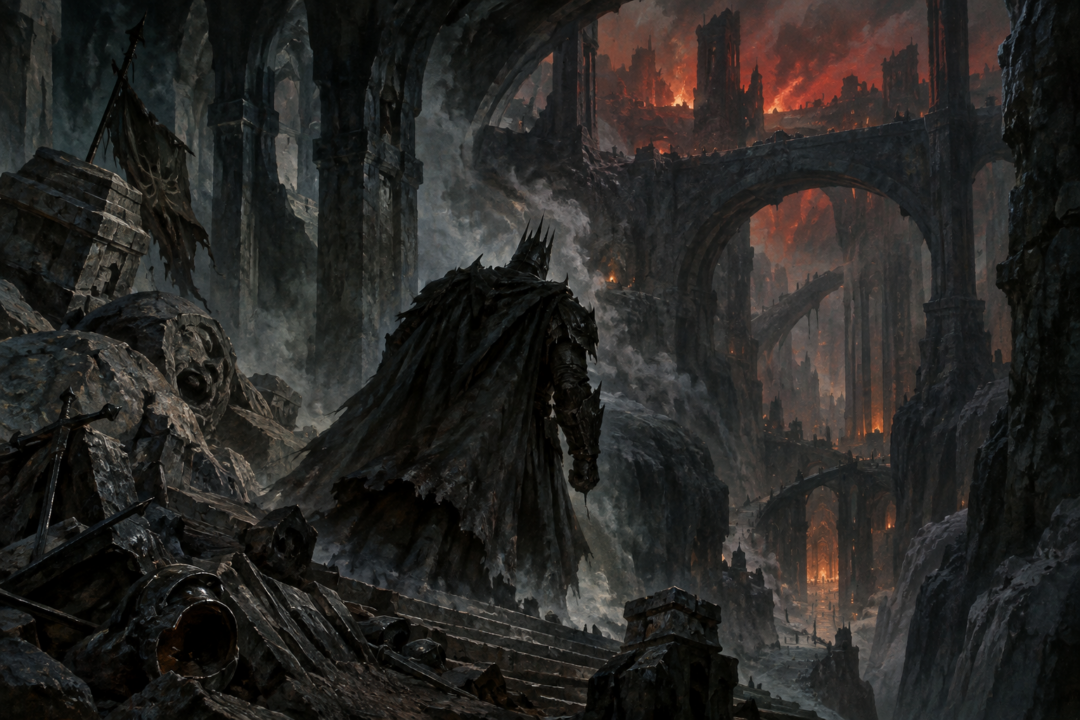
Morgoth’s Final Defeat: What Really Happened When Angband Fell?
For most of the First Age, Morgoth seemed almost impossible to overthrow.
From beneath the volcanic towers of Thangorodrim, he commanded Angband, unleashed Orcs, Balrogs and dragons, shattered kingdoms, and gradually destroyed nearly every major stronghold that resisted him. By the closing years of the Age, the surviving Elves and Men of Beleriand had little realistic hope of defeating him themselves.
Yet Morgoth’s reign did end.
And when the end finally came, it was not through a last heroic duel with one of the great Elven kings. Morgoth had already fought such a duel against Fingolfin—and although Fingolfin wounded him repeatedly, Morgoth killed him.
The Dark Lord’s actual downfall was very different.
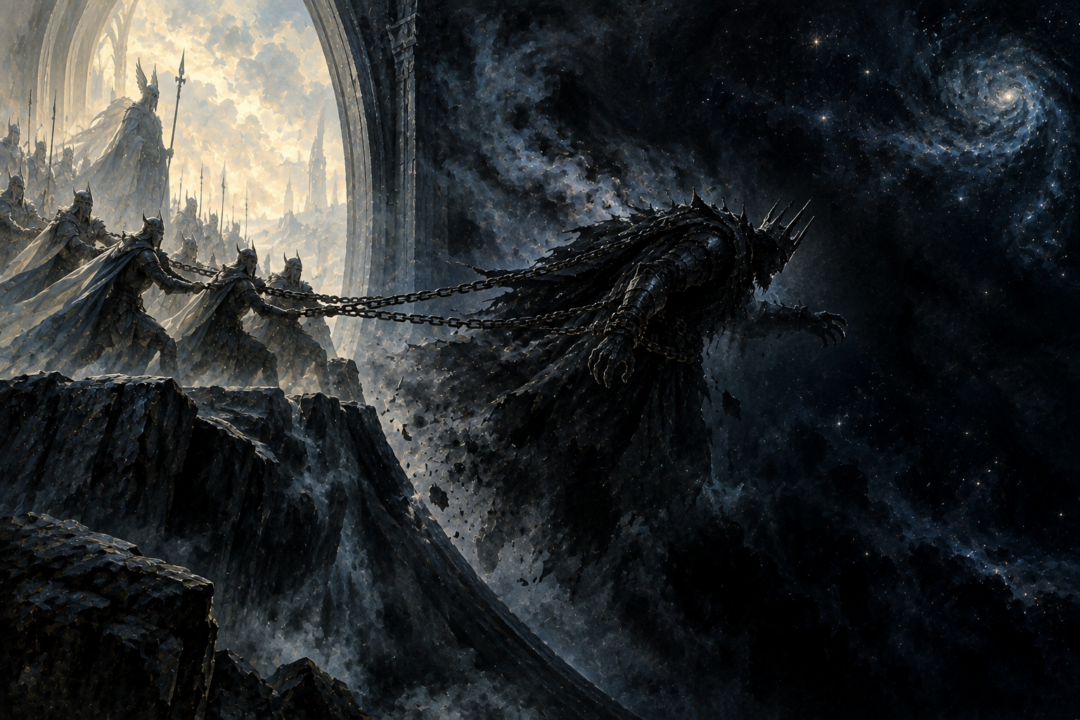
When the Host of the West finally broke his military power, Morgoth withdrew into the deepest places of Angband. There, the being who had once challenged the other Powers of Arda was captured, chained, humiliated, and ultimately cast beyond the world.
Angband Had Once Seemed Unbreakable
Angband was far more than a castle.
It was an enormous subterranean fortress beneath the Iron Mountains, with Thangorodrim rising above it. Morgoth had originally established Angband long before the return of the Noldor to Middle-earth, and after his escape from Aman it became the center of his power in the north.
For centuries, the Noldor maintained the Siege of Angband, containing Morgoth rather than destroying him. That siege eventually collapsed in the Dagor Bragollach, when Morgoth sent rivers of fire across Ard-galen and launched forces that included Orcs, Balrogs and Glaurung.
Encyclopedia of Arda
Afterward, Morgoth’s power continued to expand.
The Nirnaeth Arnoediad ended disastrously for the alliance assembled against him. Nargothrond fell. Gondolin fell. Doriath was destroyed through a different chain of tragedies. By the final period of the First Age, much of the organized resistance in Beleriand had been broken.
Morgoth appeared to have won.
But one development lay beyond his calculations: Eärendil reached Aman and pleaded for aid.
The West Finally Went to War
Eärendil’s voyage ultimately led to the intervention that the peoples of Beleriand could never have accomplished alone.
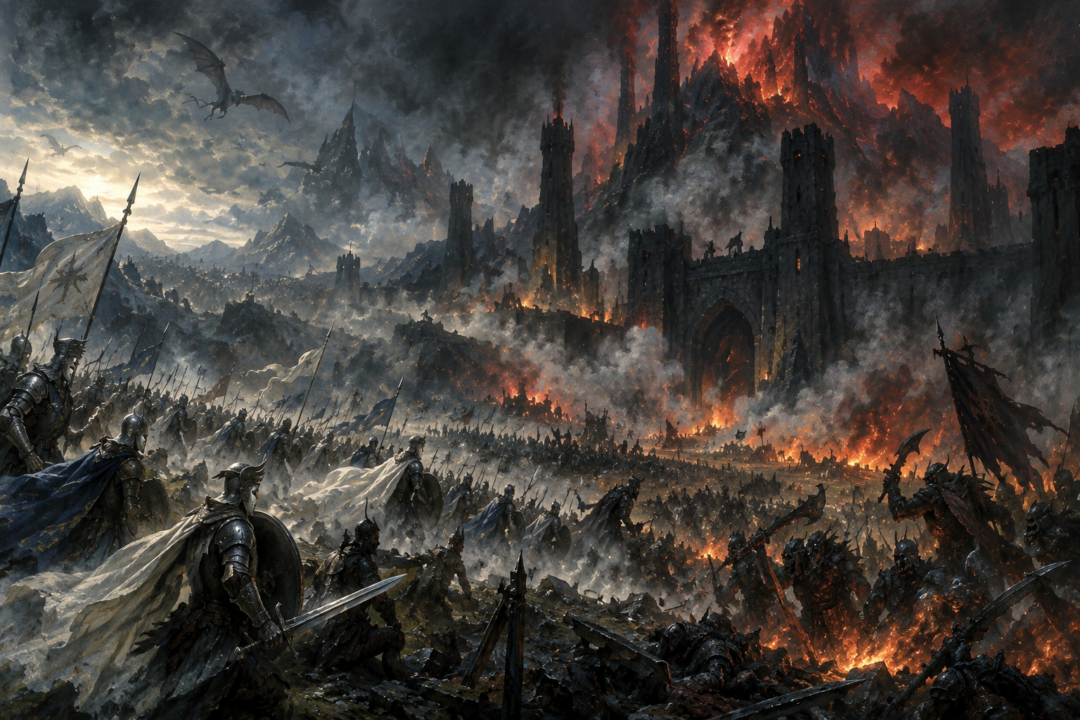
A tremendous Host of the West came into Middle-earth under Eönwë, herald of Manwë. The Vanyar marched with it, as did those Noldor of Aman who had never joined Fëanor’s rebellion. The surviving Edain also fought on the western side.
Thus began the War of Wrath, the Great Battle at the end of the First Age.
It was not a brief assault upon Angband. The chronology preserved for the Elder Days places the conflict across decades, conventionally from First Age 545 to 587.
Morgoth threw the strength of his realm against the invaders.
His armies were eventually overwhelmed. Even the Balrogs could not reverse the war. But Morgoth still possessed one terrifying weapon that his enemies had not expected in its full form.
The winged dragons.
Their sudden appearance temporarily drove back the Host of the West. The struggle then extended into the sky, where Eärendil in Vingilót fought alongside the Eagles led by Thorondor.
The greatest of the dragons was Ancalagon the Black.
Eärendil eventually slew him, and Ancalagon fell upon Thangorodrim, breaking its towers.
The defenses of Morgoth were finished.
The victors entered Angband.
Morgoth Did Not Make a Glorious Last Stand
This is one of the most revealing details of Morgoth’s ending.
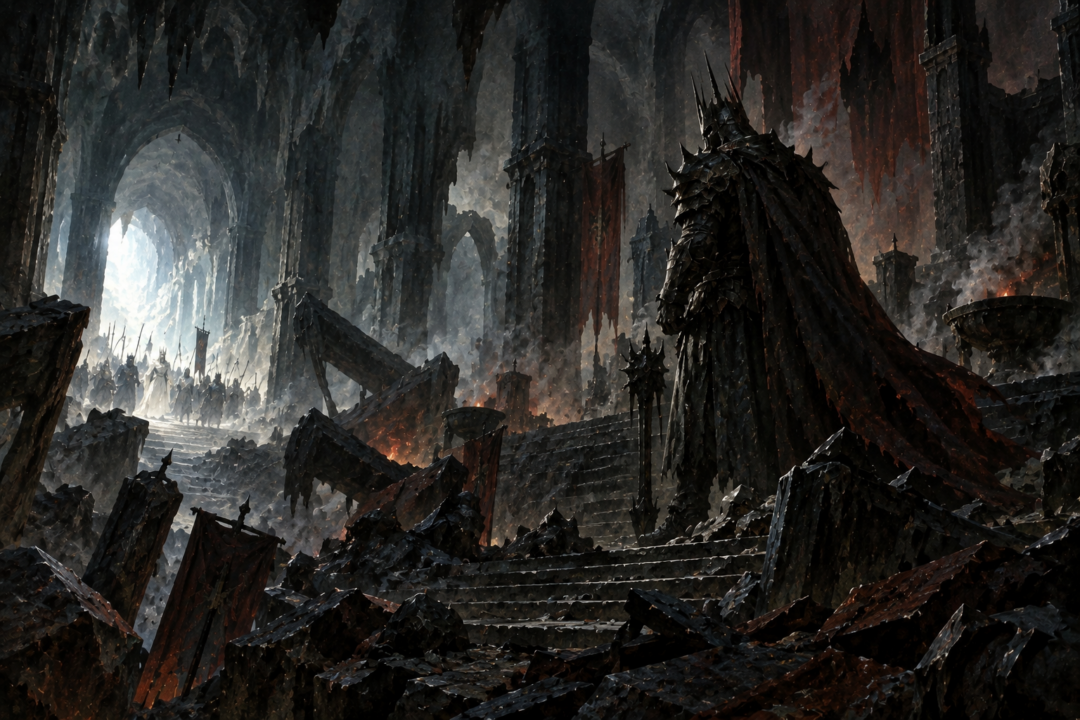
The Dark Lord who had once openly contested the rule of Arda did not stride out for one final battle.
He fled deeper into his fortress.
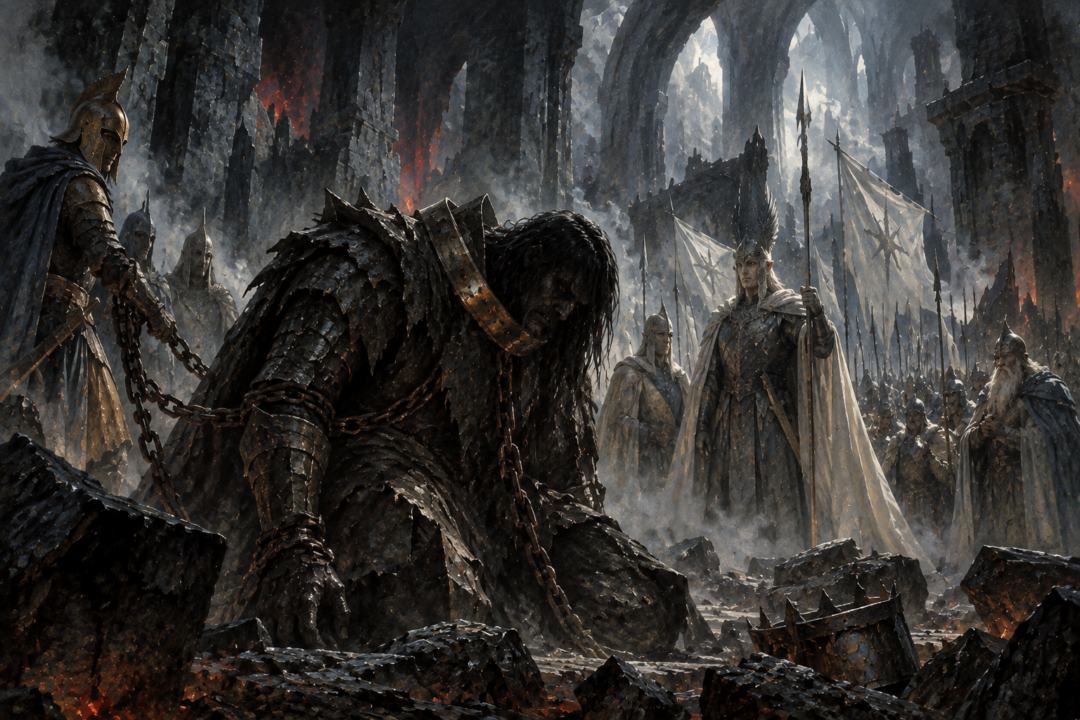
The account in The Silmarillion places him in the deepest parts of Angband when his enemies finally reached him. He attempted to seek peace and pardon rather than fighting them to the death. His plea did not save him. He was thrown down and bound again with Angainor, the chain that had previously been used to imprison him after the ancient Battle of the Powers.
The contrast with Fingolfin is striking.
Long before the War of Wrath, Fingolfin had ridden alone to Angband and challenged Morgoth before his gates. Morgoth accepted because refusing the challenge before his captains would have brought shame upon him. It was the last time Morgoth personally emerged from Angband to fight during those wars.
At the end, there was no equivalent display of defiance.
His armies had been destroyed.
His dragons had failed.
Thangorodrim had fallen.
And Morgoth himself was found hiding in the depths of the kingdom from which he had terrorized Beleriand.
The Iron Crown Became His Collar
Few images in the mythology communicate Morgoth’s reversal more powerfully than the fate of his Iron Crown.
Morgoth had forged the crown after stealing the Silmarils, setting the three jewels into it. After Beren and Lúthien entered Angband, one Silmaril was cut from the crown, leaving Morgoth with two.
Those remaining Silmarils were taken from him after his defeat.
Then the Iron Crown itself was beaten into a collar for his neck. Morgoth was bound with Angainor and taken away as a prisoner.
The symbolism is difficult to miss even without adding anything beyond the narrative.
The crown that had represented Morgoth’s claim to mastery became an instrument of his captivity.
The ruler of Angband left his ruined kingdom not as its king, but in chains.
The Victory Destroyed Much of Beleriand
Defeating Morgoth did not restore the First Age world to what it had been.
The War of Wrath was so destructive that the geography of northwestern Middle-earth was permanently transformed. Much of Beleriand was ruined and ultimately disappeared beneath the sea.
This means that many of the most famous places of the First Age were not simply abandoned before the events of The Lord of the Rings.
They were gone.
The lands where the great kingdoms and battles of the Elder Days had stood largely vanished beneath Belegaer. Only fragments and remnants survived into later geography.
The victory over Morgoth therefore came with an extraordinary cost.
The world in which the Wars of Beleriand had been fought effectively ended with him.
Morgoth Was Cast Beyond the World
Morgoth’s punishment went beyond imprisonment.
After his defeat, he was expelled from the world through the Door of Night and cast into the Timeless Void beyond the Walls of the World.
This is an important distinction between Morgoth and Sauron.
Sauron would later suffer catastrophic defeats, including the destruction of his physical form during Númenor’s downfall and his final overthrow when the One Ring was destroyed. But Sauron remained a being operating within Arda until his final defeat.
Morgoth was removed from it.
The first Dark Lord, once the mightiest rebel power within the created world, ended the First Age outside the world he had spent ages trying to dominate.
Later traditions concerning the ultimate end of Arda sometimes speak of Morgoth returning for a final conflict, often associated with the concept of Dagor Dagorath. Those traditions exist in several forms and changed during the development of the mythology, so details about Morgoth’s eventual return should not be treated as uniformly settled. What the published Silmarillion states clearly is his expulsion through the Door of Night into the Void.
Yet Morgoth’s Evil Did Not Disappear
This is perhaps the darkest element of the ending.
Removing Morgoth did not remove everything he had done to the world.
His influence survived.
Sauron himself survived the War of Wrath. After Morgoth’s defeat, Sauron approached Eönwë and expressed repentance. Eönwë did not have authority to pardon a being of Sauron’s own order and required him to return to the West for judgment. Sauron refused and eventually hid himself in Middle-earth.
Encyclopedia of Arda
From that survival came the great conflicts of later Ages.
But Sauron was not merely a replacement Morgoth.
Their methods differed considerably. Morgoth increasingly spent his power corrupting and dominating the substance and inhabitants of Arda, whereas Sauron became especially associated with organization, control and the desire to impose order through absolute rule. Their relationship is therefore better understood as master and lieutenant than as two identical Dark Lords.
And Morgoth’s deeper legacy extended beyond Sauron.
The wounds, fears, lies and corruptions associated with his long domination remained embedded in the history of Middle-earth. His personal removal did not reset Arda to an unfallen condition.
That helps explain something Elrond remembers thousands of years later.
At the Council of Elrond, he recalls the immense hosts gathered when Thangorodrim was broken and says that the Elves believed evil had ended forever.
It had not.
The Fall of Morgoth Was the End of an Entire World
Morgoth’s defeat is easy to imagine simply as the ultimate victory of good over the greatest villain of the First Age.
The actual story is more melancholy.
Yes, Angband was destroyed.
Yes, Morgoth was captured.
Yes, his crown was taken, his Silmarils removed, and the first Dark Lord was expelled from the world.
But Beleriand was also shattered.
Most of the lands in which the great stories of the First Age had unfolded disappeared beneath the sea. The surviving Elves entered a world in which much of their former glory existed only in memory. And one of Morgoth’s greatest servants remained behind.
The destruction of Angband therefore marks both victory and ending.
Morgoth had spent ages trying to dominate Arda, building fortresses, breeding armies and pouring his strength into his war against the Children of Ilúvatar.
In the end, his armies could not protect him.
When the Host of the West finally reached Angband, the ruler who had brought ruin to Beleriand withdrew into the deepest darkness of his own fortress.
There he was found.
There he was chained.
And from the ruins of the kingdom he had believed would make him master of Middle-earth, Morgoth was taken away forever from the world he had tried to possess.
Sources & Notes
- Tolkien Gateway — Thorin II Oakenshield https://tolkiengateway.net/wiki/Thorin_II_Oakenshield
- Tolkien Gateway — Battle of Five Armies https://tolkiengateway.net/wiki/Battle_of_Five_Armies
- Tolkien Gateway — Arkenstone https://tolkiengateway.net/wiki/Arkenstone
These references document Thorin’s death and burial, the political settlement after the Battle of Five Armies, and the Arkenstone’s return to Thorin’s tomb. The article’s reading of the funeral arrangements as resolving claims, memory, and succession is interpretive synthesis.