How the Teleri Learned Maritime Culture from Ossë Before Alqualondë
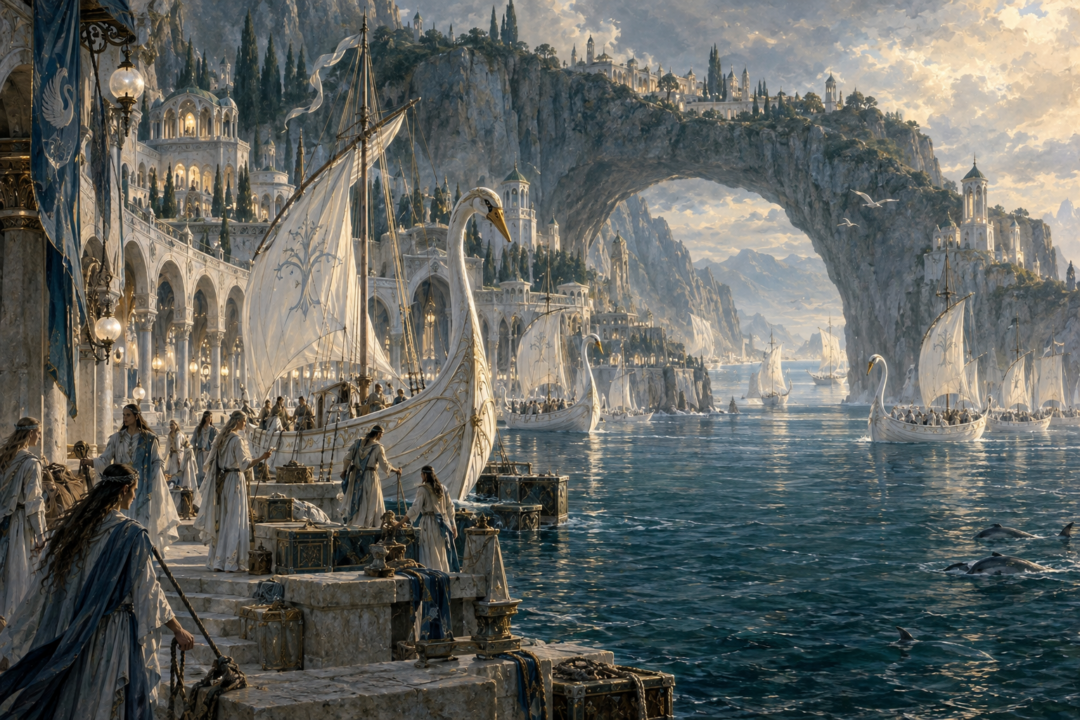
Alqualondë is remembered through its ships: white vessels shaped like swans, lying beneath a great arch of sea-carved rock in the Haven of the Swans. Yet the Teleri did not arrive on the coast of Aman and suddenly become the great mariners of the Eldar. Their maritime identity was already ancient by the time the first ship entered that harbor.
Its beginnings lay far away, on the western shores of Middle-earth.
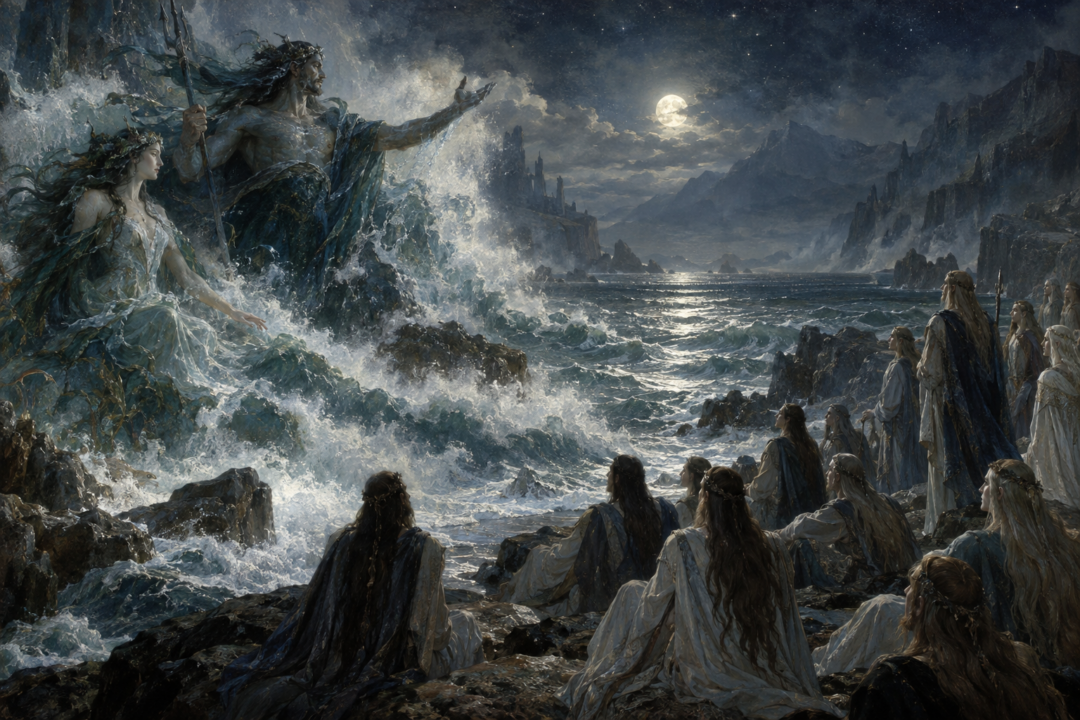
Before Alqualondë existed, before the Teleri possessed ships of their own, and even before they had crossed the Great Sea, they encountered Ossë and Uinen. From those powers of the sea they learned something that would distinguish them permanently from the Vanyar and Noldor.
The important point is easy to miss: Ossë did not merely teach the Teleri how to construct boats. Their relationship with the sea began earlier and went deeper. Shipbuilding was the culmination of a culture that had already formed around waves, music, coastlines, and a love powerful enough to delay their journey into the Blessed Realm.
The Teleri Reached the Sea Before They Learned to Sail
During the Great Journey of the Eldar, the Teleri were the slowest of the three great hosts.
Their delays had lasting consequences. Their lord Elwë disappeared in Beleriand after encountering Melian, and many of his people remained behind searching for him. Others eventually continued under Olwë, Elwë's brother, and reached the shores of the Great Sea.
There they stopped.
The Sea was not initially their familiar home. The account in The Silmarillion presents the Eldar as being afraid of Belegaer when they first encountered its immense waters. They had crossed forests, mountains, and rivers during their westward migration, but the ocean was something different: an apparent boundary between Middle-earth and Aman.
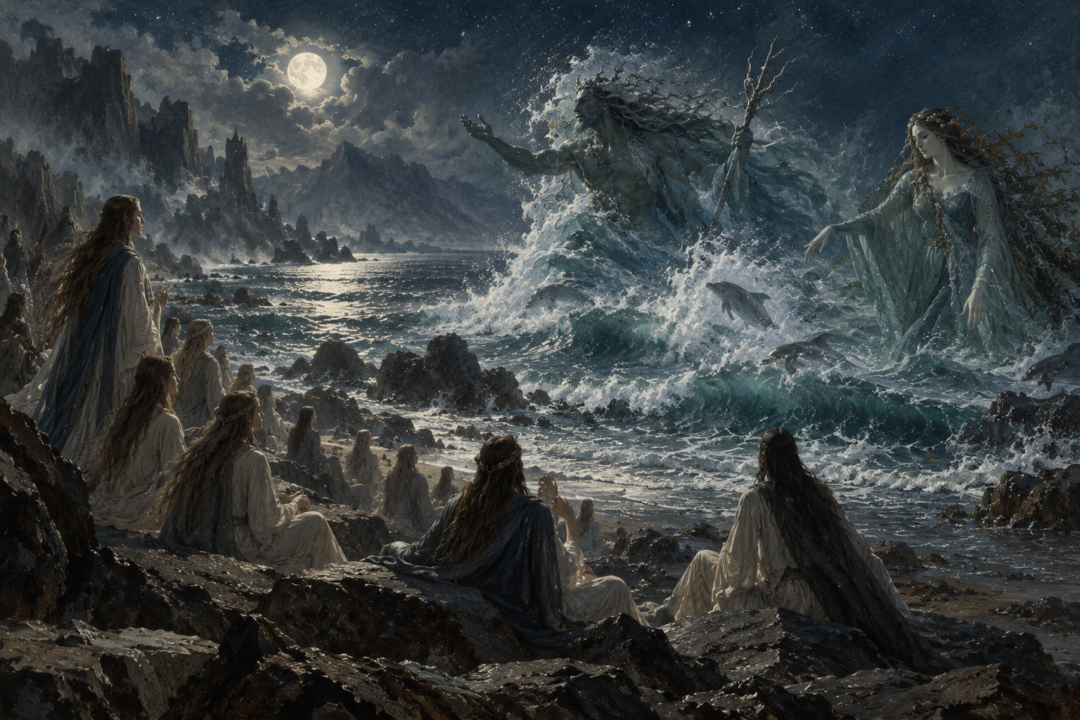
It was during this waiting that the Teleri encountered Ossë and Uinen.
Ossë was a Maia associated with the coastal waters and waves, serving Ulmo, Lord of Waters. Uinen, his spouse, was likewise closely associated with the sea and was especially beloved by mariners. The Teleri became their friends, and Ossë and Uinen taught them the lore of the sea and its music.
That happened before Alqualondë.
Indeed, it happened before the Teleri of Olwë had sailed a ship to Aman.
Ossë Taught More Than Shipbuilding
It is tempting to reduce Ossë's influence to a technological lesson: the Teleri needed ships, Ossë showed them how to build them, and the Sea-elves were born.
The chronology is more revealing.
On the shores of Middle-earth, the Teleri first learned sea-lore and sea-music from Ossë and Uinen. Their attachment to the ocean became so strong that when Ulmo eventually returned to carry them west, Ossë grieved at their departure and persuaded some to remain.
Those who stayed on the coasts of Beleriand became the Falathrim, whose lord was Círdan the Shipwright. They became the great mariners and shipwrights of the western shores of Middle-earth.
The larger body under Olwë departed, but even they did not simply abandon the maritime world Ossë had introduced to them.
Ulmo transported them across the sea upon the island that became Tol Eressëa. At Ossë's request, the island was rooted in the Bay of Eldamar rather than being brought completely to the mainland of Aman.
For a long period, therefore, Olwë's people lived on an island within sight of the Blessed Realm.
Their identity had become caught between two desires: they loved the sea, but they also desired the Light of Aman and reunion with the Eldar who had gone before them.
Alqualondë would eventually become the answer to that tension.
Tol Eressëa Was the Bridge Between Sea-Lore and Seamanship
The Teleri's residence on Tol Eressëa is crucial because this is where their earlier knowledge of the sea became connected explicitly with shipbuilding.
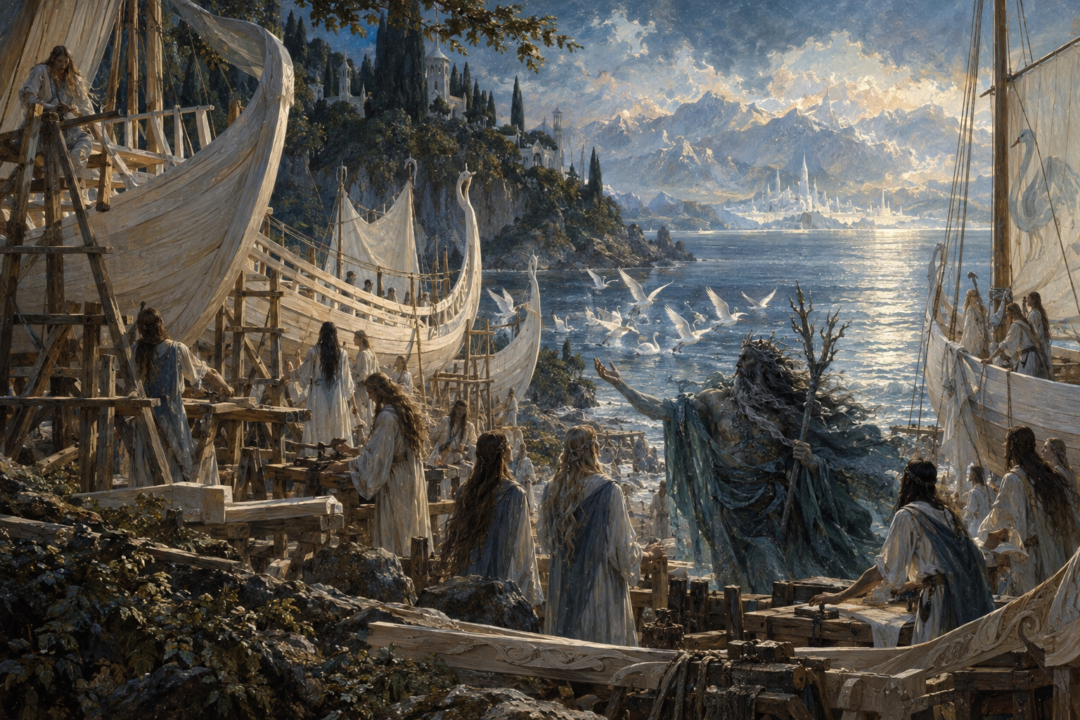
Eventually the Teleri desired to cross from the Lonely Isle to the shores of Aman. Ossë came to them and taught them the craft of building ships.
Only now did the people who had listened to the sea learn to construct vessels capable of crossing it.
The distinction matters.
Their maritime culture did not begin with carpentry. Before possessing ships, they had already spent long years beside the sea, befriended its Maiar, learned its lore, heard its music, and divided as a people partly because some could not bear to leave its shores.
Shipbuilding gave physical form to an identity that already existed.
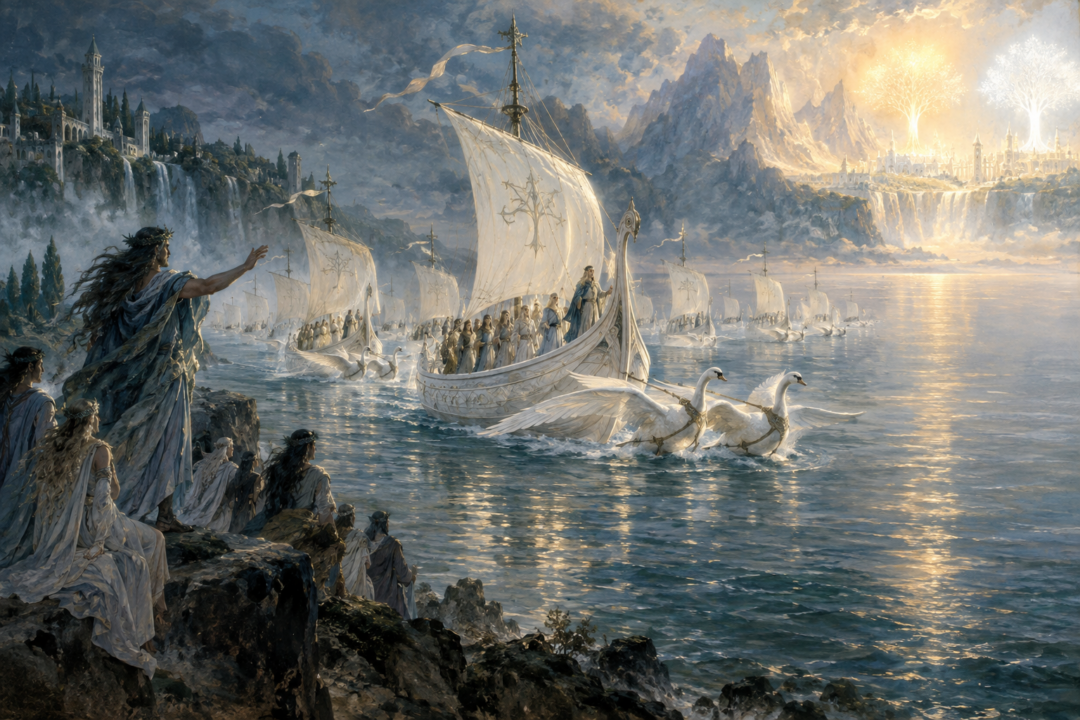
When the ships were ready, Ossë brought the Teleri strong-winged swans as his parting gift. The swans drew their white vessels across the Bay of Eldamar because there was no wind.
Thus even their final passage into Aman preserved the connection between the Teleri and Ossë.
They did not enter their new homeland as passengers aboard another people's vessels. They came in ships they had learned to make themselves.
Alqualondë Was the Result, Not the Beginning
Once they reached the mainland, the Teleri did not move deep into Valinor.
They settled on the coast.
That decision tells us almost everything about what their earlier history had made them.
The Vanyar increasingly associated themselves with the realm of Manwë, while the Noldor became renowned for knowledge, craftsmanship, gems, and works of extraordinary skill. The Teleri developed differently. Their home faced the Bay of Eldamar, allowing them to live within Aman without surrendering the sea.
There they built Alqualondë, the Haven of the Swans.
Its famous ships were fashioned in the likeness of swans, with golden beaks and eyes of gold and jet. The Teleri found pearls in the sea, while the Noldor gave them gems that adorned the shores and their dwellings.
Even the geography of their city reflected their maritime character. The entrance to the harbor passed beneath a great arch of rock shaped by the sea.
Alqualondë was therefore not the place where the Teleri became a sea-people.
It was the architectural expression of what they had already become.
Why the Swan-Ships Meant So Much
This older history also explains a much later event that otherwise risks seeming puzzling.
When Fëanor sought to leave Aman after the Darkening of Valinor, he asked the Teleri for their ships. Olwë refused.
His response makes clear that the ships were not interchangeable transportation.
Olwë reminded Fëanor that the Teleri had not learned this craft from the Noldor but from the Lords of the Sea. The timbers had been worked by their own hands and the sails woven by their people. He compared the ships' value to the value the Noldor placed upon their own precious works.
That comparison reveals the cultural weight accumulated inside the swan-ships.
Behind each vessel stood the long history of the Teleri: their first astonishment before Belegaer, their friendship with Ossë and Uinen, their years upon Tol Eressëa, their instruction in shipbuilding, and their passage behind the swans into Aman.
This does not mean that every later swan-ship was literally one of the original vessels that crossed from Tol Eressëa. The texts do not establish that. What they do establish is that the craft itself was precious and that Olwë regarded the ships at Alqualondë as irreplaceable works of his people.
That makes the First Kinslaying even more tragic.
The Noldor did not merely seize a fleet.
They attempted to take by force something bound to the Teleri's history, craftsmanship, and identity.
The Sea Had Already Divided the Teleri Once
There is another consequence of Ossë's influence that reaches beyond Aman.
The sea helped divide the Teleri before it united them as mariners.
Some remained in Beleriand because of Elwë. Others remained specifically through their attachment to Ossë and the shores, becoming the Falathrim under Círdan. Olwë's people crossed to Tol Eressëa and eventually founded Alqualondë.
These groups followed different histories, but maritime traditions appeared on both sides of the Great Sea.
Círdan became the most famous shipwright remaining in Middle-earth. Olwë became king of the Sea-elves of Aman.
The texts do not describe these two maritime traditions as identical institutions, and it would go too far to reconstruct a shared technical school or detailed nautical system that is never given. But their common origin is significant. Both arose among branches of the Teleri whose formative history had taken place beside the sea and under the influence of Ossë.
The Telerin relationship with water was therefore older than the division between the Falathrim of Middle-earth and the Falmari of Aman.
The Hidden Meaning of the Haven of the Swans
Alqualondë can look, from a distance, like another wonder of the Blessed Realm: a beautiful Elven harbor filled with pearl, gems, lamps, and white ships.
Its history makes it more interesting.
The city represents a compromise the Teleri had been moving toward for generations.
They had answered the summons toward Aman, yet they would not relinquish the sea. They desired the Blessed Realm, yet when they finally entered it they chose its eastern shore. They had once feared the ocean, yet through Ossë and Uinen they came to love its sound and understand its lore. They had once required Ulmo to carry them west upon an island; eventually they crossed the final waters in vessels built through their own craft.
That transformation happened before the first foundations of Alqualondë were laid.
The Haven of the Swans was not the birthplace of Telerin maritime culture.
It was its monument.
Sources & Notes
- Tolkien Gateway — Teleri https://tolkiengateway.net/wiki/Teleri
- Tolkien Gateway — Ossë https://tolkiengateway.net/wiki/Oss%C3%AB
- Tolkien Gateway — Alqualondë https://tolkiengateway.net/wiki/Alqualond%C3%AB
These references document the Teleri’s long association with the sea, Ossë’s instruction and attachment to them, and their later life as mariners and shipwrights at Alqualondë. The article’s description of maritime culture developing before the city is interpretive synthesis.