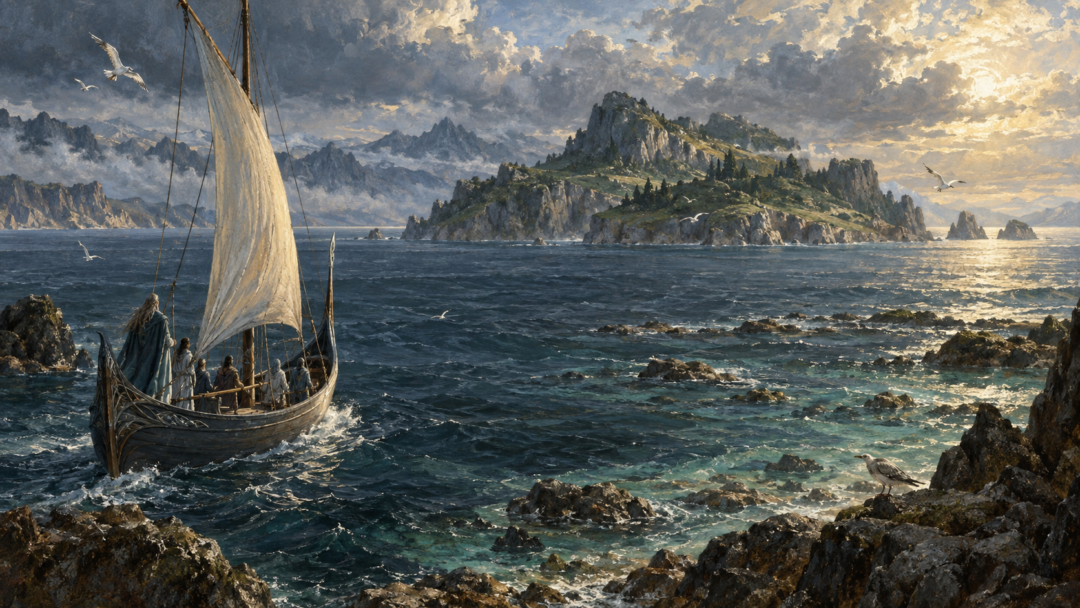
The Isle of Balar had always been there.
Far out in the great bay south of Beleriand, beyond the mouths of Sirion, it lay separated from the wars and kingdoms of the mainland. The mariners of Círdan knew its waters. Pearls were gathered in the shallows around it. According to Elvish tradition, the island itself was a remnant of the land that had once carried part of the Eldar westward across the Sea.
Yet for much of the First Age, Balar was not the political heart of the Elves, nor their great fortress against Morgoth.
That distinction belonged to places such as Hithlum, Nargothrond, Gondolin, Doriath, and the fortified Havens of the Falas.
Balar mattered increasingly because those places did not endure.
Its rise from distant island to refuge reveals one of the central patterns of the later First Age: as the great defensive system of Beleriand collapsed, survival moved steadily southward and westward. The survivors ceased trying to hold enormous realms and began seeking places that could simply remain beyond Morgoth's immediate reach.
Balar Was Known Long Before It Became Essential
The Isle of Balar was not discovered during the disasters at the end of the First Age.
Its history reached back much further. In the traditions concerning the westward journey of the Elves, the island was said to be the eastern portion of the great island used by Ulmo to carry the Eldar across the Sea, broken away and left behind in the Bay of Balar.
Círdan's Falathrim also knew Balar well. Its surrounding waters were associated with abundant pearls, and the maritime culture of the Falas naturally extended into the bay.
But familiarity did not immediately make Balar a major refuge.
That distinction matters.
The early strategy of the Eldar in Beleriand was overwhelmingly based on holding territory. Thingol possessed Doriath. Finrod built Nargothrond. Turgon founded hidden Gondolin. Fingolfin and his people guarded the northwestern approaches to Angband. Círdan maintained Brithombar and Eglarest on the coast.
These were kingdoms, cities, fortresses, and defended lands.
Balar was something different: an offshore possibility.
The Elves Considered Balar Before Disaster Fully Arrived
The idea of Balar as a place of safety seems to have developed before it became the great refuge of the Falathrim.
The tradition preserved in the later First Age material says that people of Nargothrond explored the island with the assistance of ships made by Círdan's folk, considering places where refuge might be found if evil times came.
That detail is revealing.
Even before the major Elvish kingdoms were destroyed, some of the Eldar were already thinking beyond their existing defensive geography. The Siege of Angband had created the appearance of stability, but Morgoth's enemies were never entirely secure.
Then came the Dagor Bragollach.
The Battle of Sudden Flame shattered the long containment of Angband. Ard-galen was burned, northern defenses collapsed, and Morgoth's power pushed deeply into territories that had previously seemed defensible.
Balar did not suddenly replace the kingdoms after this disaster. But the logic behind places like Balar became more important.
The question was no longer merely how to defend Beleriand.
It was where people could survive if its defenses failed.
The Fall of the Falas Changed Balar's Role
The decisive transformation came after an even greater catastrophe: the Nirnaeth Arnoediad.
The disastrous battle broke much of the remaining organized resistance to Morgoth. Hithlum was lost to his enemies, and the surviving Elvish realms became increasingly isolated.
Soon afterward, Morgoth turned against the coastal Havens.
Círdan's great settlements at Brithombar and Eglarest had survived wars that destroyed other northern positions. Their walls were strong, and the Falathrim resisted fiercely. But Morgoth sent overwhelming forces equipped for the assault.
The Havens fell.
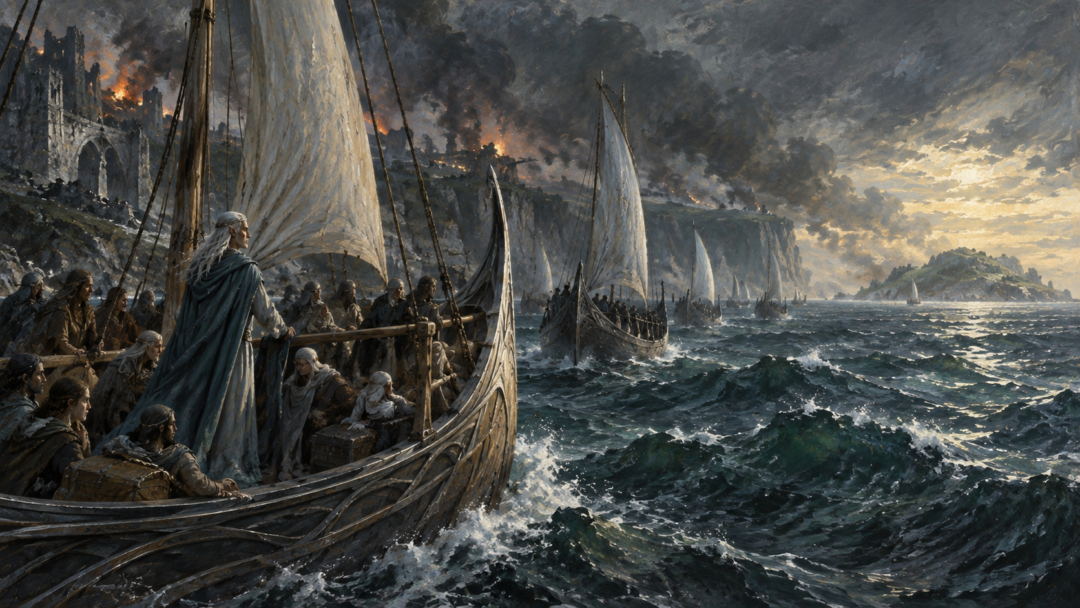
Many of Círdan's people were killed or enslaved. Others escaped aboard ships.
Among the survivors were Círdan and Gil-galad.
They sailed south.
Their destination was Balar.
This is the point at which the island's function fundamentally changed. Balar was no longer merely a known island, a source of pearls, or a potential sanctuary considered against future disaster.
It became an actual refuge for the surviving free peoples who could reach it.
Why Balar Worked When Mainland Strongholds Did Not
There is no statement that Balar was magically protected from Morgoth, and it should not be treated as another Gondolin or Doriath.
Its advantage was simpler.
It was an island.
Morgoth's greatest military strength was concentrated on land. His armies could cross plains, besiege fortresses, penetrate mountain defenses, and overwhelm walled cities. The history of the late First Age repeatedly demonstrates how little permanent security walls ultimately provided against the growing power of Angband.
Balar required another kind of warfare.
Círdan's people were mariners. Ships gave them mobility that the ruined inland kingdoms increasingly lacked. When the Falas could no longer be defended, the Sea itself became part of their defensive geography.
But the survivors did not simply abandon the mainland.
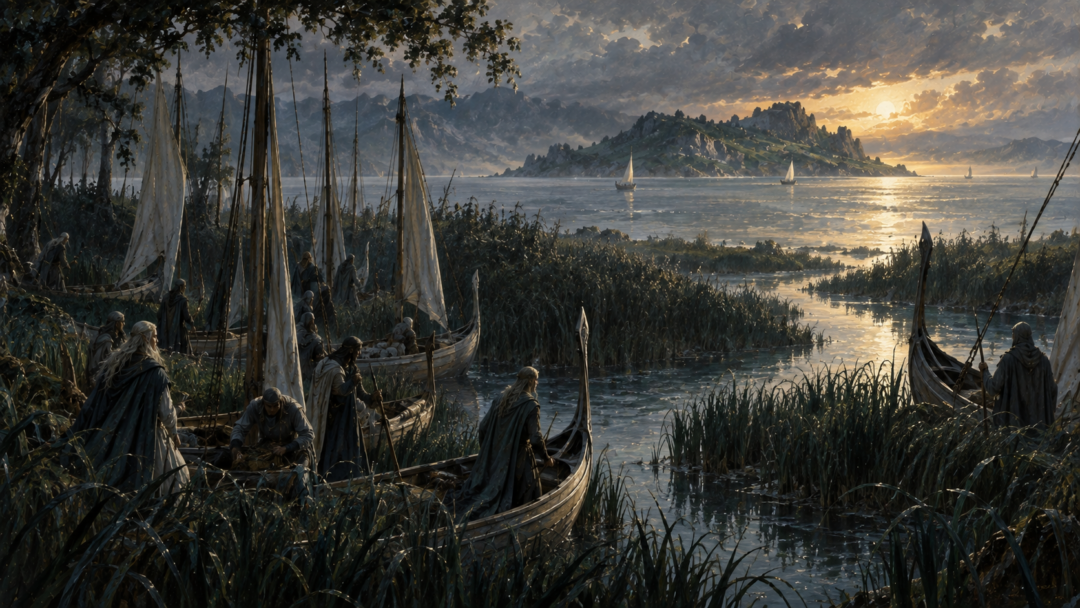
They also maintained a foothold at the Mouths of Sirion, where light ships could be concealed among the creeks and thick reeds.
The resulting system was remarkably different from the earlier kingdoms of Beleriand.
There was an island refuge offshore and a concealed maritime position on the mainland.
It was not an attempt to rebuild Fingolfin's northern defense or establish another magnificent Noldorin realm.
It was a network built for survival.
Balar and Sirion Became Two Parts of the Same Refuge
The distinction between the Isle of Balar and the Havens at the Mouths of Sirion is important.
They were separate places, but their histories became closely connected.
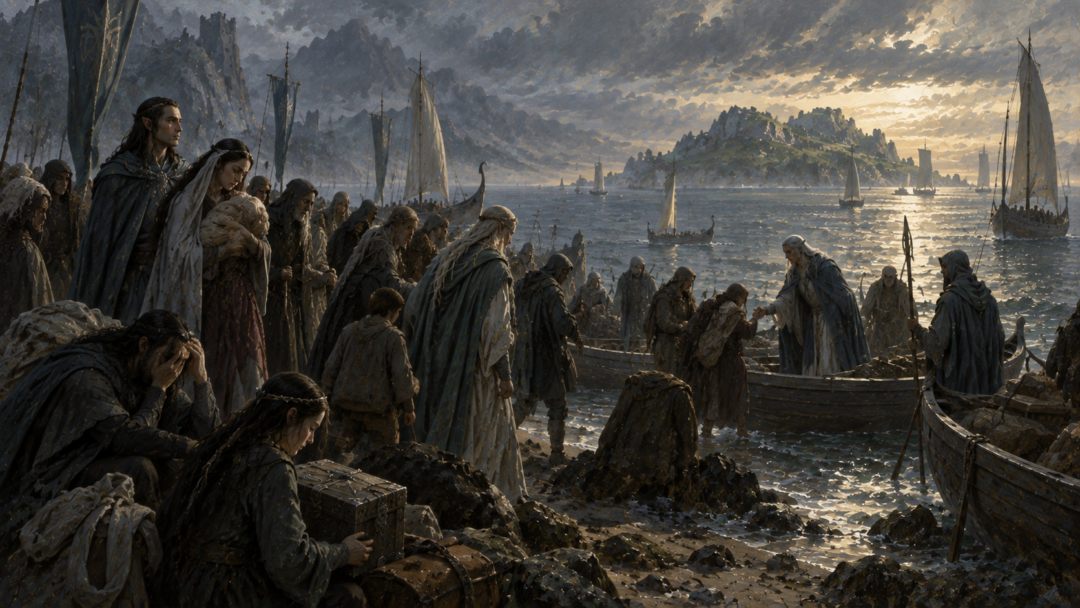
Balar gave Círdan and his people an offshore base. The Mouths of Sirion provided access to the mainland and eventually became one of the great gathering places for refugees from the destruction of Beleriand.
As disaster followed disaster, survivors moved south.
Doriath eventually fell amid the conflict surrounding the Silmaril. Elwing escaped with survivors to the Mouths of Sirion.
Gondolin, the greatest surviving hidden kingdom of the Noldor, also fell. Tuor, Idril, Eärendil, and other survivors eventually reached the region of Sirion.
Thus the Bay of Balar became associated not with one defeated people but with remnants of several.
Falathrim were there.
Survivors connected with Doriath were there.
Exiles of Gondolin were there.
The great political map of Beleriand was shrinking into communities of refugees.
Círdan's Greatest Strength Was No Longer a Wall
Círdan's role in this transformation is easy to underestimate because his story lacks the spectacular last stands associated with many First Age rulers.
His achievement was persistence.
He lost the Havens of the Falas, but his people continued.
He maintained ships.
He maintained communication.
He maintained a refuge.
And, crucially, the maritime world around Balar remained connected to attempts to seek help beyond Middle-earth.
Turgon had long understood that victory against Morgoth might ultimately require intervention from the West. Messengers were sent by sea, and Círdan later aided further voyages. Most failed utterly.
Voronwë alone returned from one such expedition after years of wandering and shipwreck, eventually becoming the guide who brought Tuor to Gondolin.
The repeated failures underline the desperation of the strategy. The Sea offered refuge from Morgoth's armies, but it did not provide easy access to Valinor.
Balar stood on that boundary.
Behind it lay a continent being destroyed.
Beyond it lay a West the exiles could not simply reach.
The Last Refuges Were Not Truly Safe
The word "refuge" can give the wrong impression if it is taken to mean permanent security.
Nothing in late First Age Beleriand was secure in that sense.
Even the community at the Mouths of Sirion eventually suffered catastrophe. When the surviving Sons of Fëanor sought the Silmaril possessed by Elwing, they attacked the Havens, producing the final Kinslaying.
The tragedy is especially severe because these were no longer rival kingdoms struggling for dominance.
They were survivors.
The old grandeur of the Noldorin realms had largely disappeared. Yet the Oath of Fëanor could still bring violence upon one of the last communities left in Beleriand.
Those who survived that assault could again find safety with the people associated with Círdan and Gil-galad on Balar.
The pattern had reached its bleakest form.
Each destroyed refuge pushed the survivors toward another, smaller margin.
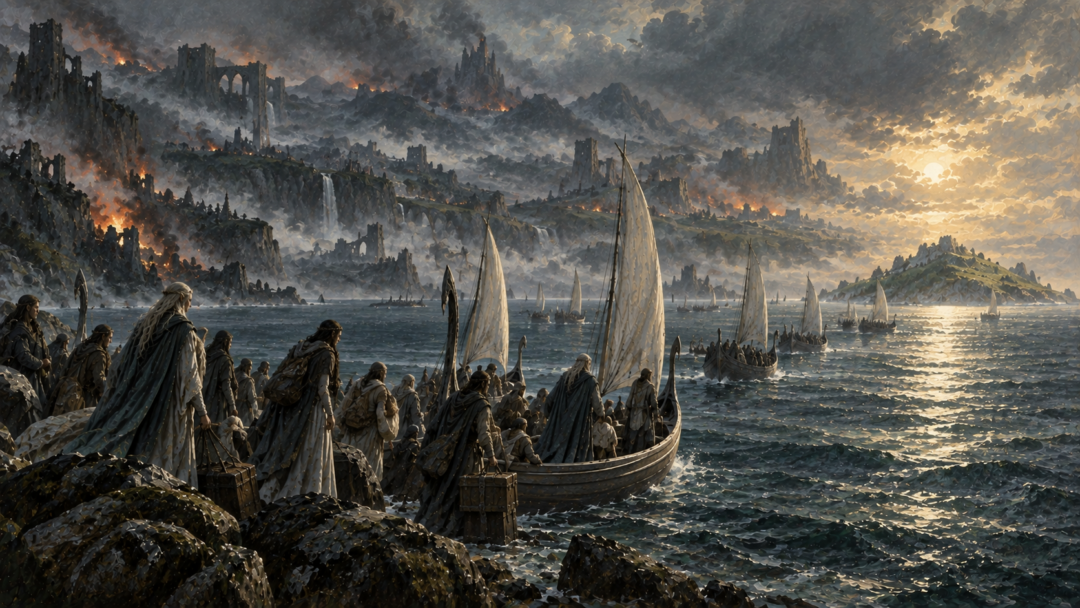
Balar Shows How Completely the First Age Had Changed
At the beginning of the wars against Morgoth, the princes of the Noldor divided enormous territories among themselves. They built cities, established marches, guarded mountain passes, and maintained the long Siege of Angband.
By the end, survival looked very different.
A hidden city had fallen.
A protected woodland kingdom had fallen.
The great underground stronghold of Nargothrond had fallen.
The Havens of the Falas had fallen.
The northern lands were under Morgoth's domination.
What remained was increasingly concentrated around ships, river mouths, coastal settlements, and an island in the Bay of Balar.
That does not mean Balar was insignificant before these disasters. The texts clearly show earlier knowledge of the island and earlier plans involving it.
But catastrophe changed its importance.
Balar became essential because the world that had once made it peripheral was disappearing.
And that is what makes the island such a powerful symbol of the final years of Beleriand.
The great kingdoms had been built to endure.
Balar was prepared for what happened when they did not.
Sources & Notes
- Tolkien Gateway — Isle of Balar https://tolkiengateway.net/wiki/Isle_of_Balar
- Tolkien Gateway — Falas https://tolkiengateway.net/wiki/Falas
- Tolkien Gateway — Havens of Sirion https://tolkiengateway.net/wiki/Havens_of_Sirion
These references document Balar’s early history, the Falathrim and fall of the coastal Havens, and the later concentration of refugees around the Mouths of Sirion. The article’s account of refuge shifting westward as mainland defenses failed is interpretive synthesis.