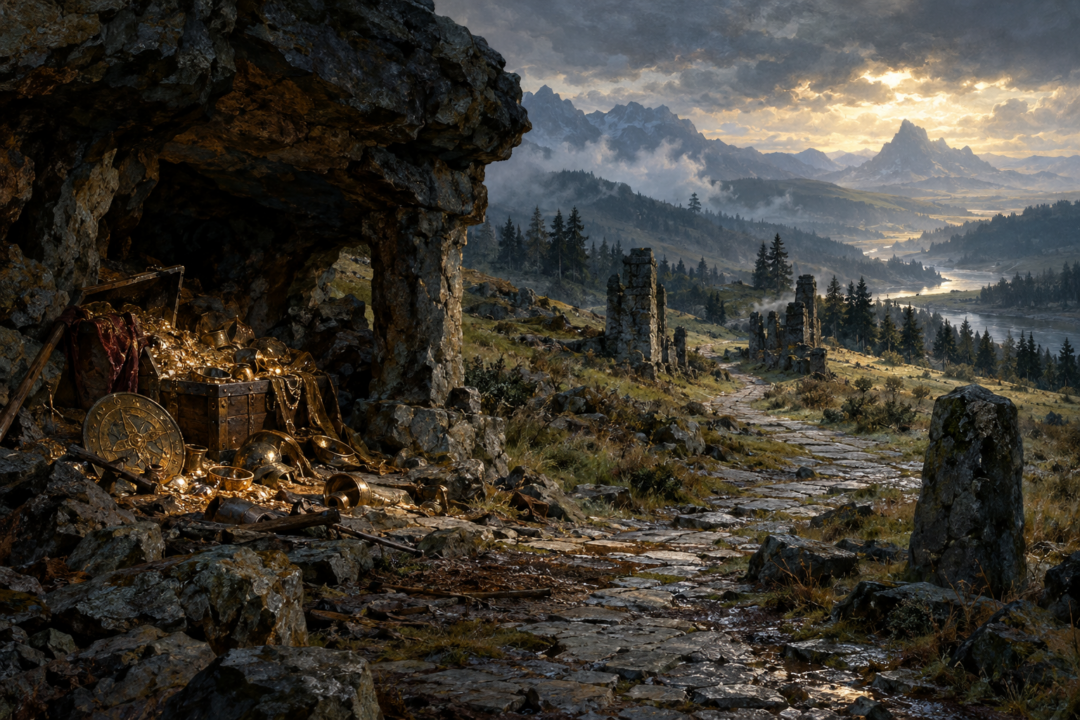
When Bilbo Baggins entered the trolls’ cave, he was looking at something much stranger than a pile of stolen treasure.
The cave contained food, clothing, gold, weapons, and the accumulated possessions of victims unfortunate enough to fall into the hands of William, Bert, and Tom. Yet among that ordinary plunder were objects that did not belong to the world of roadside thieves at all: ancient Elvish blades, including Orcrist and Glamdring, weapons whose history reached back to Gondolin in the First Age.
That discovery raises an obvious question. How did treasures from one of the greatest lost cities of the Elder Days end up in a troll-hole in eastern Eriador?
The texts never give us their complete journey. But the hoard reveals something important about the landscape surrounding it. Bilbo's company was not simply wandering through untouched wilderness. They were moving through a region crossed by an old east-west route, surrounded by the remains of earlier ages and inhabited by predators feeding, quite literally, on what still moved through those ruins.
The troll-hoard is therefore more than an adventure-story treasure chest. It is a small archaeological window into the decline of Eriador.
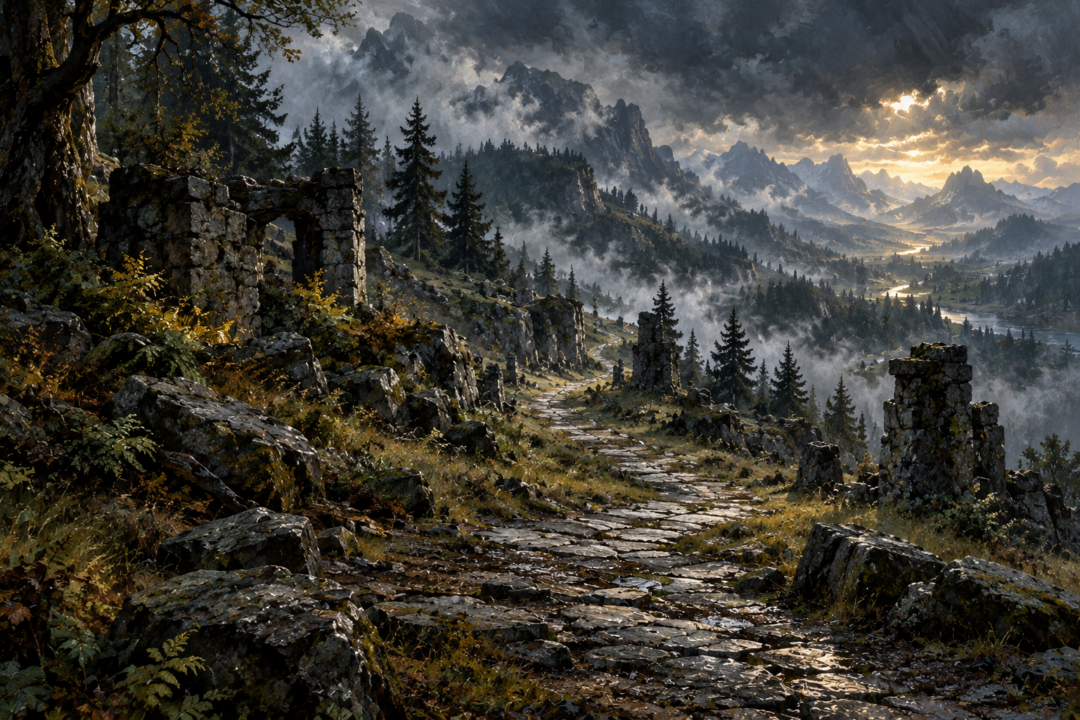
The Trolls Were Living Beside a Route That Still Mattered
In The Hobbit, Thorin's company travels east from the Shire through increasingly lonely country toward Rivendell and the Misty Mountains. By the time they encounter the trolls, the journey has become miserable. The weather is bad, provisions are becoming a concern, and comfortable settlements have disappeared behind them.
That loneliness can make the region feel like trackless wilderness.
It was not.
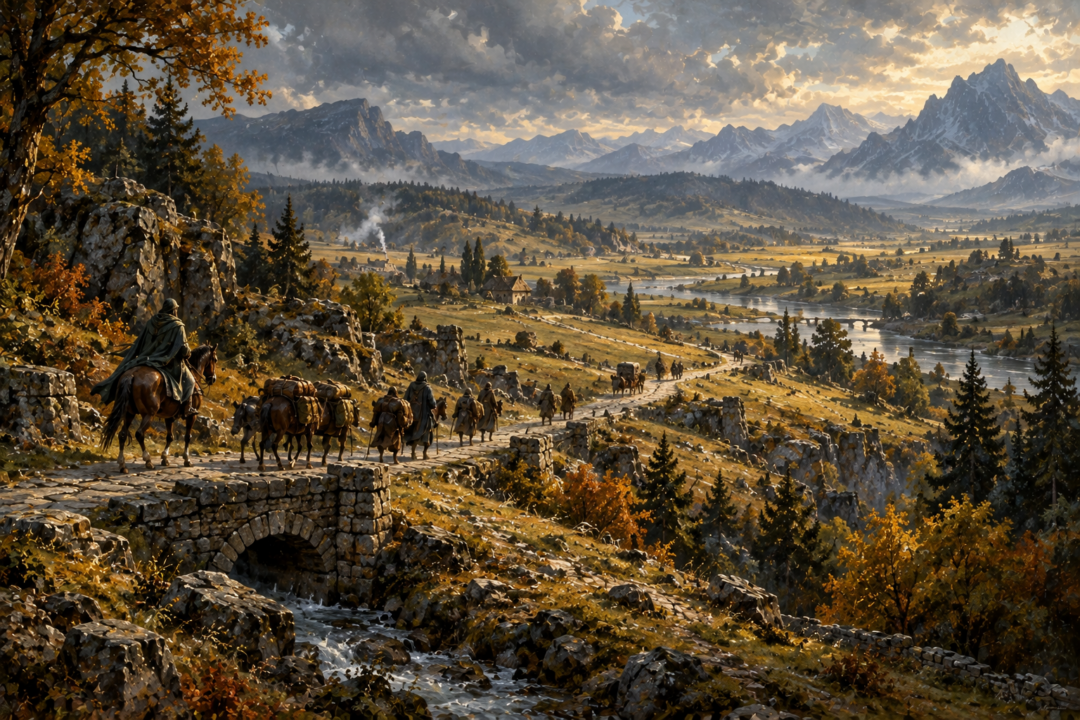
The wider geography established in The Lord of the Rings places this journey in the country of the East Road, the ancient route running across Eriador. Westward it passed through Bree and the Shire; eastward it crossed the Hoarwell at the Last Bridge and continued through the difficult country approaching the Bruinen and Rivendell, with routes onward toward the Misty Mountains.
Bilbo's adventure therefore takes place within a landscape that still possesses the infrastructure of connection even though much of the society that once surrounded that infrastructure has vanished.
That distinction matters.
An abandoned road is evidence of absence, but it is also evidence of former presence. Roads exist because people once needed to travel between places. Bridges imply repeated crossings. Ruins imply builders. A highway running through nearly empty country tells us that the emptiness came later.
The trolls have inserted themselves into that diminished world.
Their Hoard Looks Like the Debris of Travelers
The contents of the cave make this especially clear.
After the trolls are turned to stone, Gandalf produces a key and the company enters their hiding place. They find a thoroughly mixed collection of plunder: food, clothing, gold coins, and weapons. The clothes are too small for trolls and are grimly associated with their victims.
This is not presented as the organized treasury of a king, dragon, or wealthy lord.
It is accumulation.
Different objects from different victims have been thrown together because the trolls value what they can eat, use, or keep. Their cave has become the final destination of possessions carried into the region by other people.
That strongly suggests repeated predation rather than one extraordinary robbery.
Exactly who every victim was cannot be known, and the text gives us no inventory from which to reconstruct their identities. It would therefore go too far to claim that the hoard represents a particular merchant route or lost settlement.
But the basic implication is difficult to miss: people still passed through this dangerous country often enough for three trolls to accumulate substantial plunder.
The old route was diminished, not dead.
Then the Company Finds Something Impossibly Old
Among all that miscellaneous loot, Gandalf and Thorin notice two particularly remarkable swords. Bilbo takes a smaller blade that serves him as a sword.
At Rivendell, Elrond identifies the great blades as Orcrist and Glamdring.
Their origin transforms the meaning of the hoard.
These are not merely old weapons from the former northern kingdoms. They reach vastly farther into the past. They were made in Gondolin, the hidden Elven city destroyed in the First Age. Glamdring had belonged to Turgon, King of Gondolin.
Suddenly a troll-cave in Eriador contains material surviving from a civilization destroyed thousands of years earlier.
Elrond does not pretend to know the exact chain of ownership. Instead, he offers possibilities. Such weapons may have passed through dragon-hoards or goblin plunder, and he suggests that the trolls themselves might have robbed other robbers or discovered remnants of older robberies.
That uncertainty is important.
There is no canonical story describing Glamdring's travels from Gondolin to the Trollshaws. Any detailed reconstruction would be invention.
What the text gives us instead is arguably more interesting: a world in which ancient objects can survive through repeated cycles of conquest, theft, loss, rediscovery, and theft again.
The trolls are merely the latest possessors.
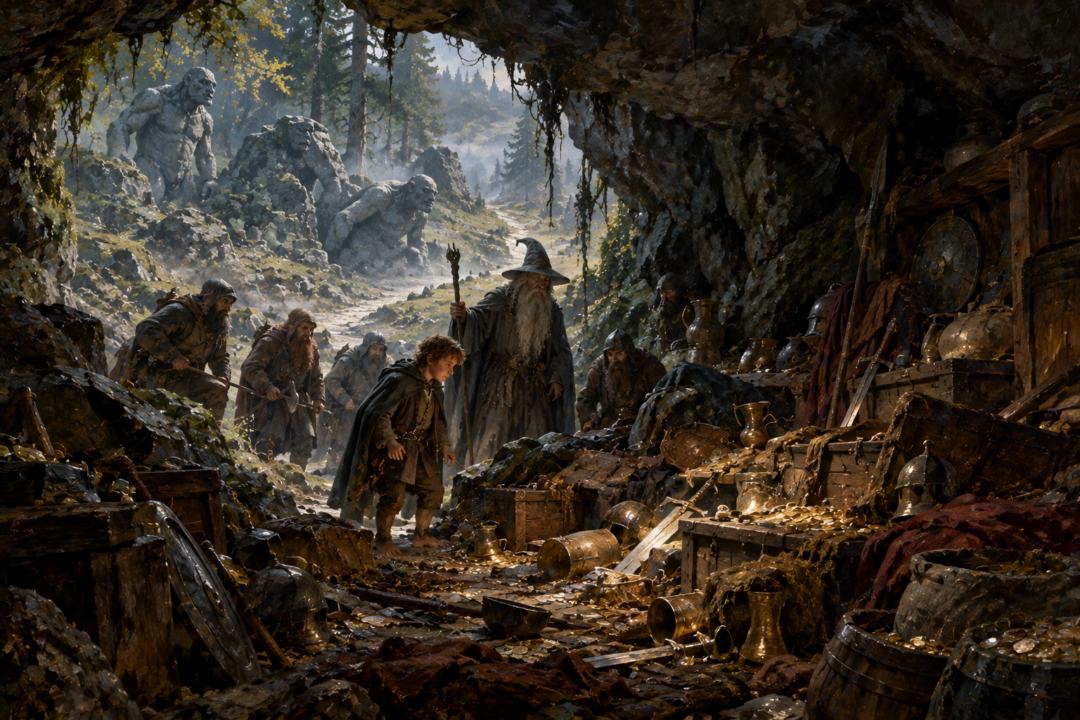
The Hoard Is a Layer Cake of Middle-earth's History
Seen this way, the troll-hoard compresses several ages into one filthy cave.
There is contemporary plunder from unfortunate travelers. There are coins and mundane possessions whose individual histories have disappeared. And there are weapons carrying memories of the Elder Days.
These objects did not necessarily arrive together.
Indeed, Elrond's speculation points in the opposite direction. The famous swords may already have been old plunder long before the trolls acquired them. Their presence therefore does not prove that anyone carried them directly from Gondolin along the East Road.
But it demonstrates something about the geography of Middle-earth.
Objects move even after kingdoms disappear.
They move with refugees, warriors, conquerors, merchants, Orcs, Dwarves, thieves, and scavengers. They disappear into hoards and emerge centuries later. A road can outlive the political world that once maintained it and continue channeling fragments of history through a changed landscape.
The troll-cave sits beside precisely such a landscape.
The Ruins of the Trollshaws Confirm the Pattern
The later journey of Frodo and his companions makes the historical depth of this region much more explicit.
After crossing the Last Bridge in The Fellowship of the Ring, Aragorn leads the company through the difficult country of the Trollshaws. They encounter old walls and ruined works in the hills. When the hobbits wonder about their builders, Aragorn makes the crucial point that trolls do not build.
Men built the ruins.
The land through which Bilbo had traveled was therefore not always the depopulated troll-country encountered at the end of the Third Age.
This is part of the larger tragedy of Eriador. The northern Dúnedain kingdom of Arnor had long since fragmented, and its successor realms had fallen. Rhudaur, which occupied this eastern region, became entangled in the wars surrounding Angmar. By the late Third Age, the political geography visible in the ruins no longer corresponded to living kingdoms.
The road remained.
The bridge remained.
The ruins remained.
But the population and authority that had once made such infrastructure meaningful had largely disappeared.
That is exactly the kind of environment in which creatures such as Bilbo's trolls could flourish.
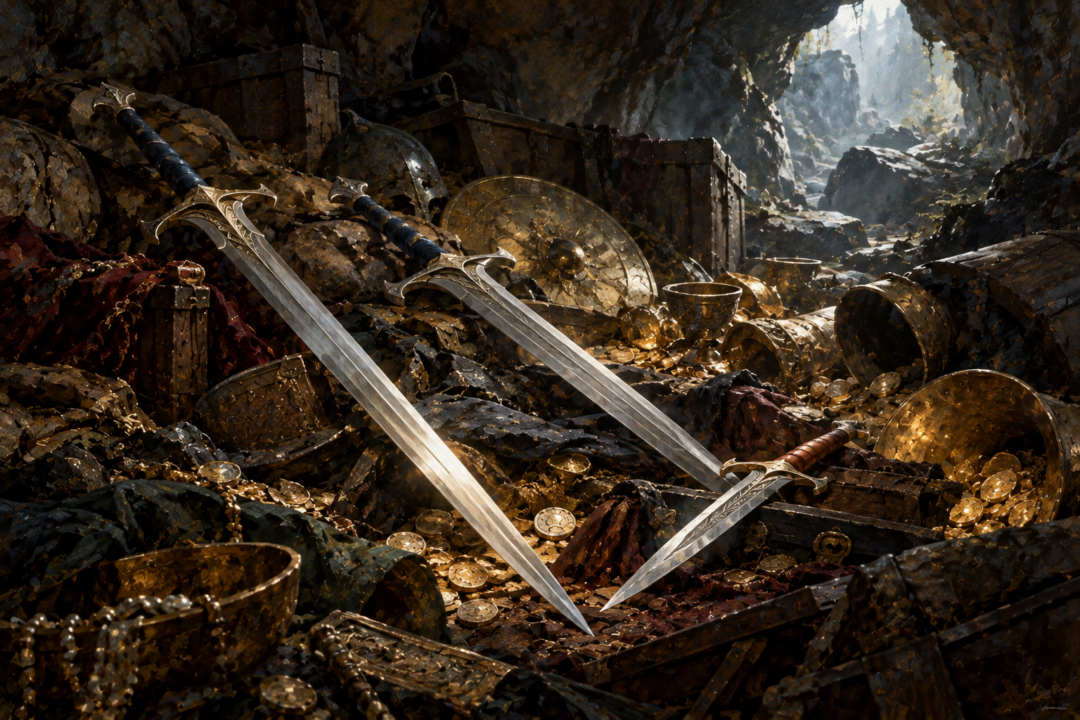
A Road Can Survive the Civilization Around It
One of the most striking features of late Third Age Eriador is how much travel occurs through lands that are thinly inhabited.
The East Road continues to connect places that matter enormously: the Shire, Bree, Rivendell, and ultimately the approaches to the Misty Mountains. Dwarves still travel through the western lands. Gandalf moves repeatedly across this geography. Rangers operate in the wilderness. Elves journey westward.
Yet long stretches between surviving communities feel almost abandoned.
That produces a strange contradiction.
The road is strategically and culturally important, but traveling on it can still be dangerous.
The trolls embody that contradiction perfectly. They have not destroyed the route. They exploit its continued existence. A completely forgotten road would offer them little. A fully protected road would make their predation difficult.
A decayed but still-used road is ideal.
The hoard exists because connection has survived more effectively than security.
The Troll-Hoard Does Not Prove Who Built the Road
There is an important limit to what can safely be inferred.
The troll-hoard cannot tell us who originally constructed every section of the East Road, nor can the presence of First Age swords establish that the road itself dates from Gondolin or that those weapons followed it across Eriador in the First Age.
The texts do not provide such a chain of evidence.
The hoard instead tells us something subtler.
By Bilbo's time, this eastern corridor had become a place where objects from dramatically different historical periods could accumulate. The surviving road and crossings still brought travelers through a region filled with remnants of older political worlds.
The road is therefore best understood not as evidence for one lost civilization, but as a surviving thread running through several layers of history.
And the trolls have made their nest beside that thread.
Bilbo Walks Through History Without Realizing It
Bilbo cannot initially understand what he has found.
To him, the small Elvish blade is simply an unusually good weapon. Gandalf recognizes that the swords are extraordinary, but even he waits for Elrond's learning to identify them properly.
That progression mirrors the landscape itself.
At first glance, the Trollshaws are merely unpleasant wilderness.
Look more closely and there is an old road.
Look beyond the road and there are ruined fortifications.
Look inside a predator's cave and there are possessions taken from generations of travelers.
Look among those possessions and suddenly Gondolin appears.
This is one of the recurring qualities of Middle-earth: the past is rarely sealed away. It survives imperfectly in names, bloodlines, songs, ruins, weapons, roads, and objects whose original owners have been dead for ages.
The traveler does not need to understand that history in order to walk through it.
Bilbo certainly does not.
He simply takes a blade from a troll-hole and continues east.
Only later does he discover that something recovered from the refuse of a dangerous roadside encounter once belonged to the world of the High Elves.
The Real Treasure Is the History Around the Gold
The gold in the trolls' cave is useful enough that the company hides what it cannot carry and later recovers a portion of it. But historically, the most revealing objects are the ones whose value the trolls themselves apparently did not understand.
Glamdring and Orcrist survived the destruction of Gondolin, though their exact paths afterward are unknown. Somehow, after countless opportunities for loss, they reached a cave in the Trollshaws.
Around them accumulated the lesser possessions of much more recent victims.
Outside lay a road continuing through the remains of a fallen region.
Taken together, those details produce a remarkable picture of eastern Eriador. This is not empty wilderness in the simple sense. It is post-civilizational country: land where routes, bridges, ruins, memories, and scattered treasures have outlasted the societies that once gave them context.
That may be the deepest clue hidden in the troll-hoard.
The old road through Eriador is still carrying history long after the world that built and guarded its surroundings has broken apart. And in Middle-earth, when civilization retreats but its roads remain, other things begin waiting beside them.
Sources & Notes
This article is based on close reading and interpretation of Tolkien's published works and related source material where relevant.