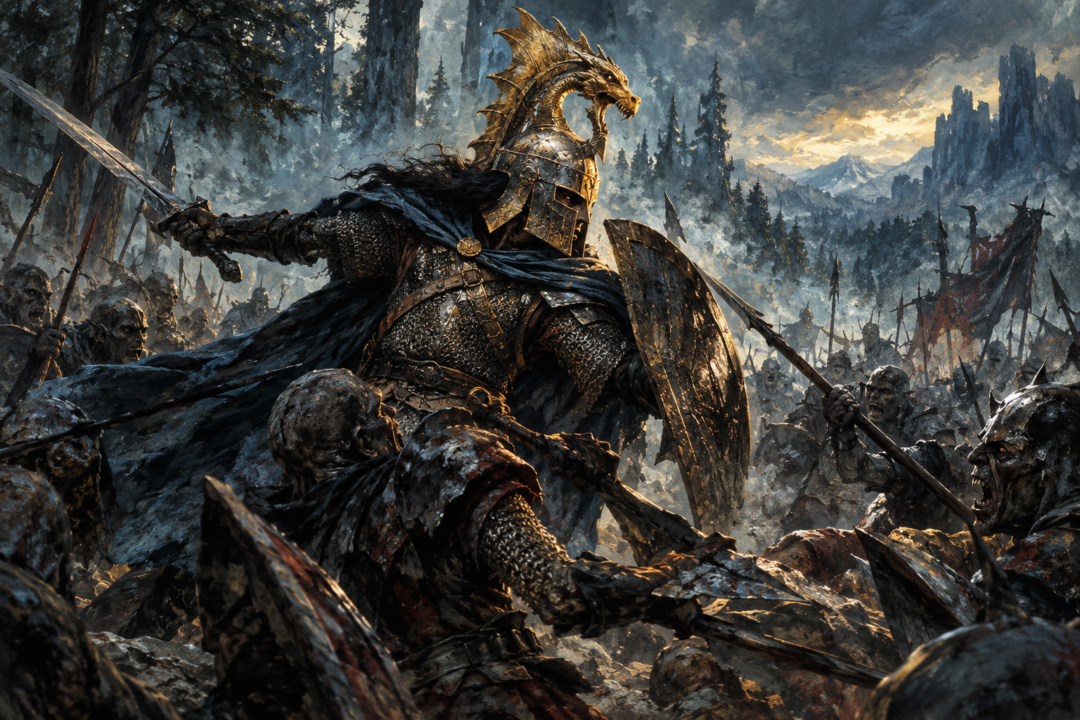
Few objects in Túrin’s story capture his tragedy as neatly as the Dragon-helm of Dor-lómin.
It is armor made to preserve life. It is also almost impossible to wear without announcing who its bearer is.
For a man who repeatedly abandons names, conceals his origins, and tries to begin again, that contradiction matters. Túrin can call himself Neithan, Gorthol, Agarwaen, Mormegil, or Turambar, but the Dragon-helm belongs to a history older than any alias he chooses. Once he places it upon his head, the past becomes visible.
And Morgoth is watching.
The helm therefore represents more than protection. During the brief rise of Dor-Cúarthol, it helps turn Túrin into a symbol around whom resistance gathers. Yet that same fame contributes to Morgoth recognizing that Húrin’s son has emerged again. The stronger the symbol becomes, the harder its bearer is to hide.
An Heirloom Designed to Be Seen
The Dragon-helm did not begin with Túrin or even with the House of Hador.
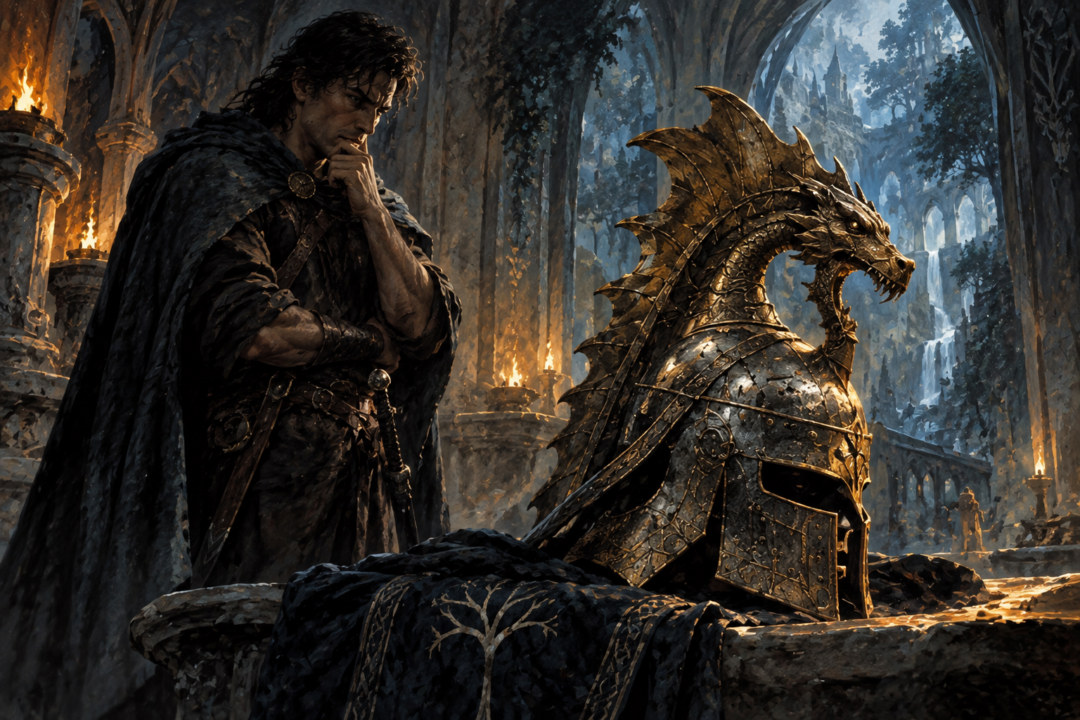
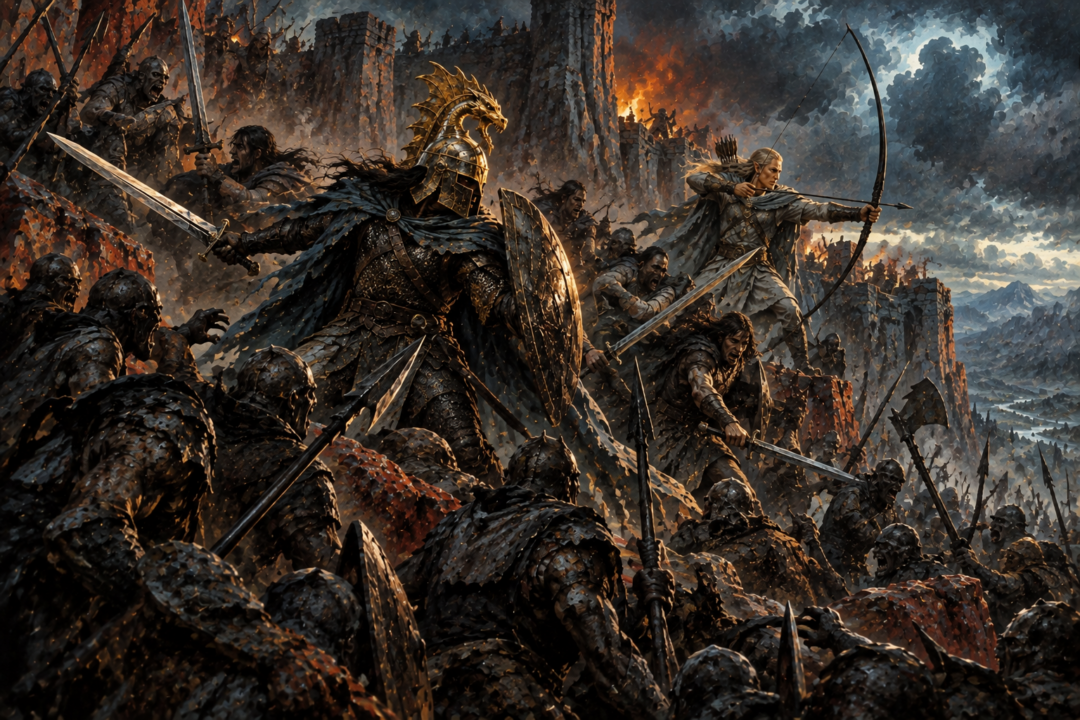
It was made by Telchar of Nogrod for Azaghâl, lord of the Dwarves of Belegost. It was a massive helm of grey steel, adorned with gold, with a visor after the fashion of the Dwarves. Upon its crest was the likeness of Glaurung, the great dragon of Morgoth.
The image was deliberately defiant. The helm carried the likeness of the enemy as a challenge rather than an allegiance.
Eventually it passed from Azaghâl to Maedhros, then to Fingon, and from Fingon to Hador. From there it became an heirloom of Hador’s house.
Its size was itself remarkable. The tradition emphasizes that it had originally been made for a Dwarf and was extraordinarily heavy. Hador could wear it, as could his son Galdor. Húrin possessed it but did not commonly wear it.
Túrin, however, could bear it.
That physical fact quietly identifies him before anyone needs to speak his name. The helm belongs to his ancestral house, and he has inherited the strength required to wear it. Even before its recognizable dragon crest is considered, the object ties him to Hador’s line.
The Helm Really Does Offer Protection
The protective reputation of the Dragon-helm should not be dismissed as mere symbolism.
The traditions concerning it associate its runes with power and victory, and describe it as warding its wearer in battle. Its Dwarven construction also gives the protection a practical dimension: its visor was designed to shield the face and eyes.
Different versions of the Túrin material do not present every detail of the helm’s supernatural protection in precisely the same way, so it is safest not to imagine Túrin as invulnerable while wearing it. The broader tradition, however, clearly treats the Dragon-helm as extraordinary armor associated with protection as well as terror.
That makes its cost especially interesting.
Túrin has good reason to wear it.
He is not recklessly choosing ornament over safety. He is taking into battle one of the greatest defensive heirlooms available to him, a piece of Dwarf-work made for war and inherited from legendary warriors.
The problem is that good armor can still be dangerous when everyone recognizes it.
Túrin Had Already Learned to Hide Behind Names
Long before Dor-Cúarthol, Túrin had begun separating himself from his birth-name.
After fleeing Doriath and joining the outlaws, he calls himself Neithan, “the Wronged.” Later names similarly mark new phases of his life. At Nargothrond he gives himself another concealed identity, while others come to know him by titles such as Mormegil, the Black Sword. In Brethil he becomes Turambar, “Master of Doom.”
These changes are not all identical in purpose, and it would be too simple to treat every new name as merely a disguise. Some express Túrin’s understanding of himself; some reflect what others see in him; some help obscure his history.
But together they reveal a persistent pattern.
Túrin keeps trying to become someone new without ever fully escaping the consequences attached to who he already is.
The Dragon-helm works in exactly the opposite direction.
A name can be changed in a moment.
An ancestral artifact famous enough to stir memories across Beleriand cannot.
Beleg Returns the Past to Him
When Túrin fled Doriath, the Dragon-helm remained behind.
Later Beleg sought Túrin again and eventually joined him at Amon Rûdh. Among the things he brought was the helm.
Its return coincided with a transformation.
Túrin and Beleg began waging increasingly effective war against the Orcs. Their power grew. Refugees and fighters gathered around them. For a time, a region of West Beleriand was defended by their strength.
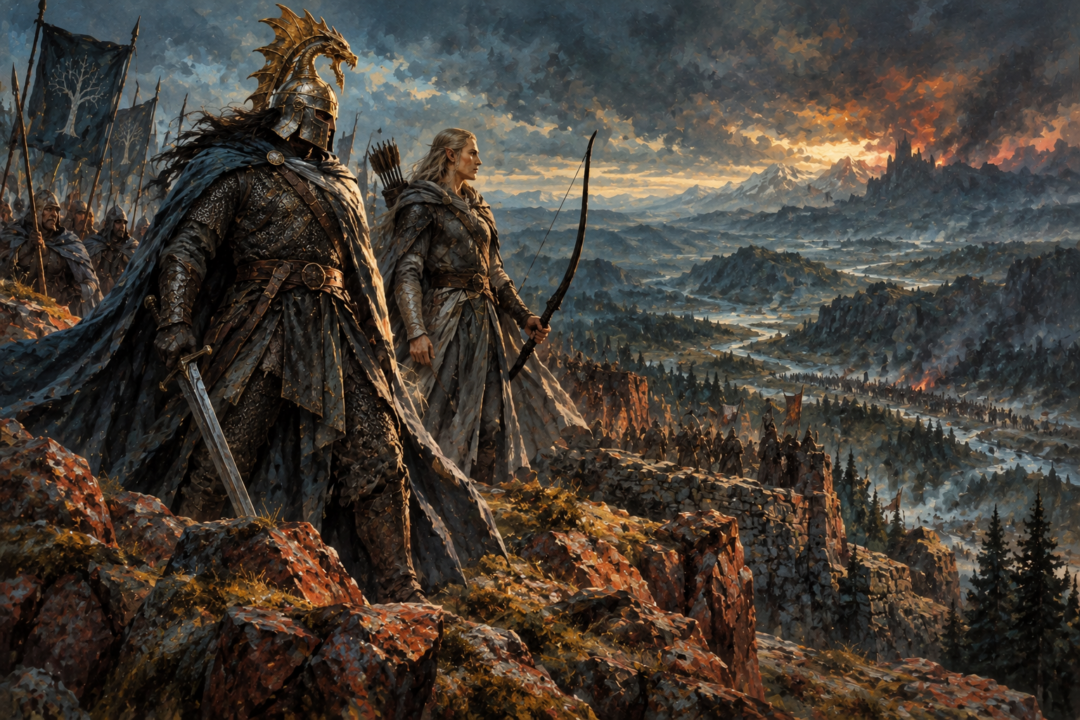
The two captains became identified by their famous weapons: Beleg by his bow and Túrin by the Dragon-helm.
The land itself came to be called Dor-Cúarthol, the Land of Bow and Helm.
Túrin took another name: Gorthol, the Dread Helm.
This is one of the great ironies of his career. A man repeatedly associated with hidden or altered identity chooses a public name derived from perhaps the most recognizable object he could wear.
At this moment Túrin is no longer merely carrying his inheritance.
He is making it his banner.
Fame Becomes a Strategic Vulnerability
Dor-Cúarthol succeeds precisely because Túrin and Beleg cease to be insignificant fugitives.
Their resistance becomes known beyond their immediate territory. The forces of Angband are checked, and news of the Bow and Helm travels abroad. What had been an outlaw company becomes something approaching an organized resistance centered upon the two captains.
But fame in Beleriand is dangerous.
The Enemy is not merely trying to win battles. Morgoth has a particular interest in Húrin and his children, and Túrin’s obscurity has therefore offered a kind of protection that armor cannot provide.
The Dragon-helm compromises that obscurity.
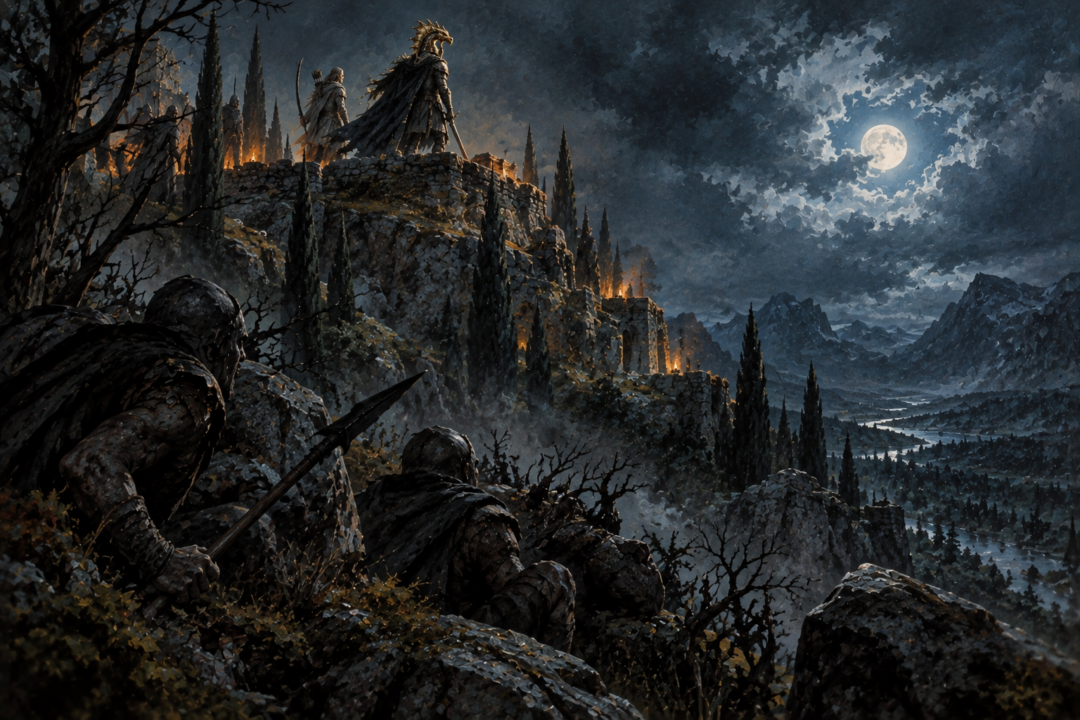
The narrative explicitly connects its appearance with Morgoth recognizing Húrin’s son again. Spies are sent around Amon Rûdh, and the hidden stronghold comes under increasing danger.
The helm has done exactly what a heroic emblem is supposed to do: it has made its wearer visible.
Unfortunately, visibility works in both directions.
Friends can rally to a symbol.
Enemies can track it.
The Cruel Logic of “Gorthol”
Túrin’s choice of the name Gorthol deepens the contradiction.
He has effectively replaced his birth-name with a description of the very object capable of revealing him.
Calling himself “the Dread Helm” does not erase Túrin son of Húrin. It advertises the continuity between them.
This is why the Dragon-helm fits his tragedy so well. Túrin often attempts to master circumstances through decisive acts of will: departing, renaming, fighting, commanding, changing direction. Yet he carries relationships, loyalties, griefs, and consequences from one identity into the next.
The helm makes that pattern physical.
He can rename himself.
He cannot rename the Dragon-helm of Dor-lómin into anonymity.
Its meaning already exists independently of him.
Protection Cannot Defend Against Betrayal
The end of Dor-Cúarthol also reveals the limits of what armor can accomplish.
Morgoth’s servants do not simply overcome Túrin because a weapon finally penetrates his famous helm. The catastrophe depends upon knowledge and betrayal.
Mîm, the Petty-dwarf whose halls at Amon Rûdh have become the company’s refuge, betrays the hidden ways to the Orcs. The stronghold is assaulted, Túrin’s company is destroyed, Beleg is left behind, and Túrin is taken alive.
The great protective object cannot protect the secrecy of the refuge.
It cannot prevent an enemy from gathering information.
It cannot make a compromised stronghold hidden again.
This distinction matters because it keeps the helm from becoming a simplistic “cursed object.” The Dragon-helm is not presented as secretly evil. Its danger comes from what it openly is: famous, ancestral, recognizable, and bound to Túrin’s identity.
Its strength is real.
So is the information it gives away.
The Nargothrond Distinction Matters
The later history of the Dragon-helm requires some care because different textual traditions do not line up perfectly.
In the completed narrative of The Children of Húrin, Túrin at Nargothrond finds Dwarf-made armor and wears a great gilded Dwarf-mask in battle. That mask, rather than the Dragon-helm, is specifically associated there with protection against Glaurung’s fire.
Other material indicates plans or traditions in which the Dragon-helm survived the disaster at Amon Rûdh and later returned to Túrin. These should not simply be blended into the main narrative as though every version says the same thing.
What remains consistent is the striking contrast.
Túrin repeatedly uses armor connected with Dwarven craft, concealment, terror, and protection. Yet the Dragon-helm has a special significance because it does not merely cover his face.
It identifies his lineage.
A mask may hide the man beneath it.
The Dragon-helm tells the world whose heir he is.
Túrin’s Strongest Armor Cannot Hide His Past
The Dragon-helm of Dor-lómin embodies one of the deepest tensions in Túrin’s life.
He wants the freedom to define himself anew, but he belongs to a story already in motion.
He is Húrin’s son whether he announces it or not. He is heir to the House of Hador whether he calls himself Túrin, Neithan, Gorthol, or something else. Morgoth’s hatred does not disappear when Túrin changes his name.
At Amon Rûdh, Túrin chooses to wear that inheritance openly.
For a brief time, the result is magnificent. The Helm and Bow become signs that resistance has returned. Orcs are driven back. Wanderers gather. A small territory stands against the Shadow.
Yet every victory increases the fame of the symbol.
And every increase in fame makes hiding harder.
That is the tragic paradox of the Dragon-helm. It protects Túrin from the immediate violence of battle while exposing him to a larger danger. The thing that helps preserve the warrior also announces where the warrior can be found.
Túrin could hide his name.
He could not wear his legend quietly.
Sources & Notes
- Tolkien Gateway — Dragon-helm of Dor-lómin https://tolkiengateway.net/wiki/Dragon-helm_of_Dor-lomin
- Tolkien Gateway — Túrin https://tolkiengateway.net/wiki/Turin
- Tolkien Gateway — Beleg https://tolkiengateway.net/wiki/Beleg
- Tolkien Gateway — Dor-Cúarthol https://tolkiengateway.net/wiki/Dor-Cuarthol
These references document the helm’s provenance and protection, Túrin’s aliases, Beleg’s return of the helm, and Dor-Cúarthol’s fame. The symbolism of recognizable armor defeating anonymity is interpretive synthesis.