Beorn’s Hospitality Has a Hidden Rule: Trust Must Be Earned Before It Becomes Generosity
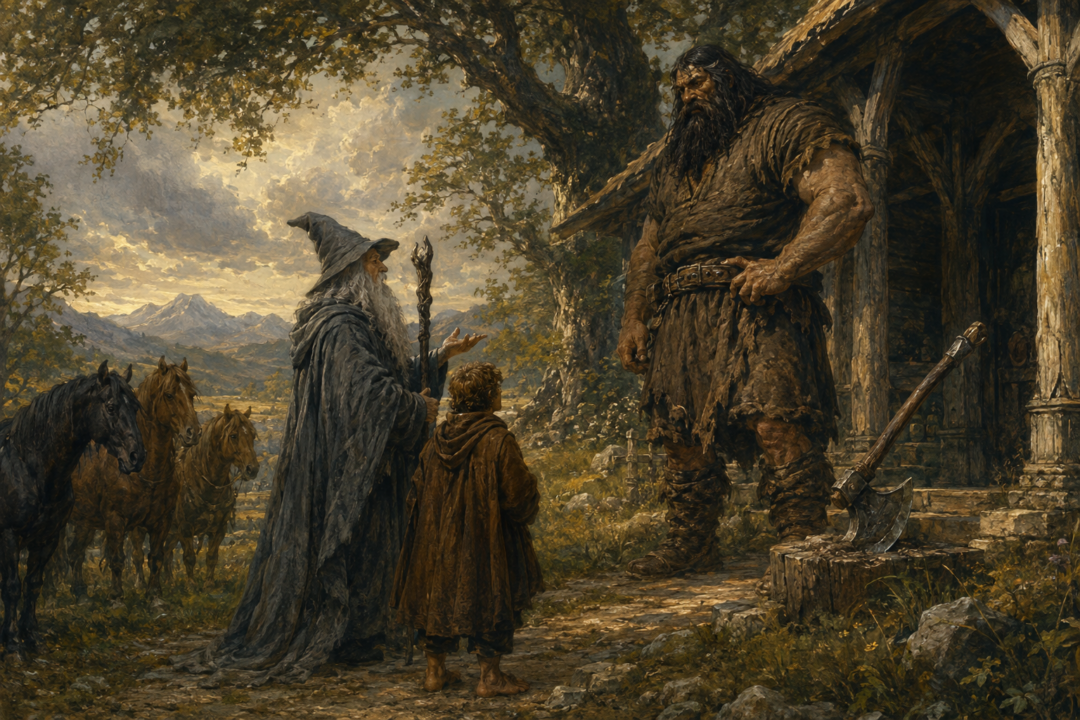
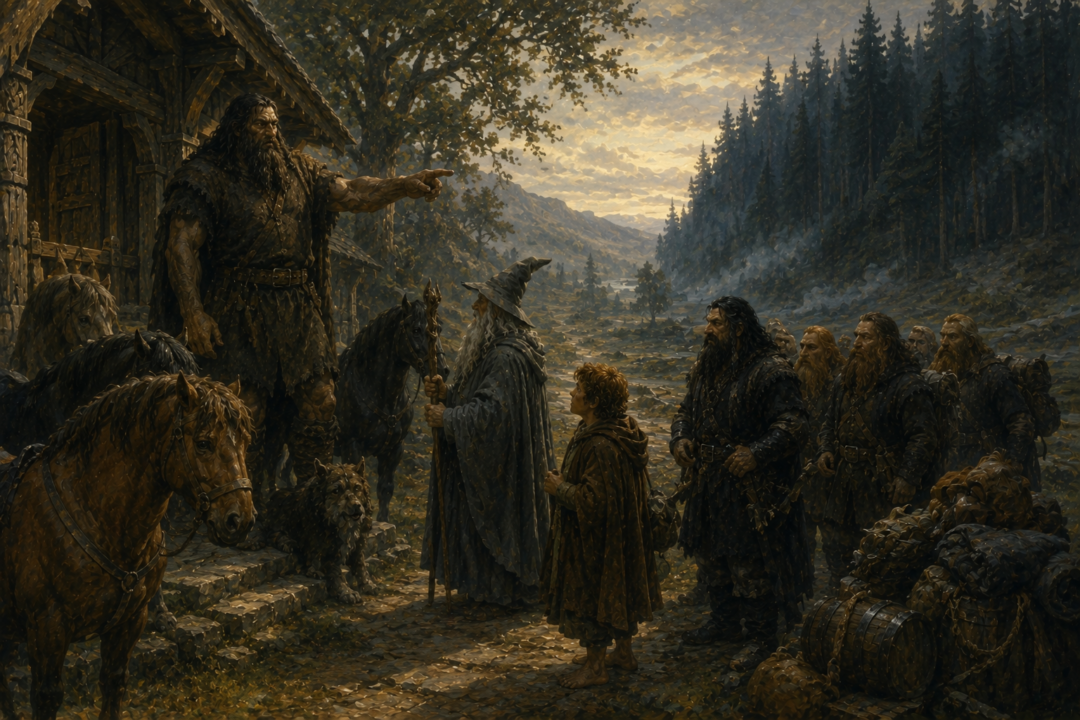
When Bilbo Baggins first approaches Beorn’s house, he is not walking toward an ordinary refuge.
He and the Dwarves have escaped the goblins of the Misty Mountains, survived the Wargs, and been carried eastward by the Eagles. They are hungry, poorly equipped, and approaching Mirkwood without the supplies they will need. Gandalf knows someone who may help them—but he also knows that arriving at this stranger’s door as a company of fifteen would be a dangerous mistake.
That stranger is Beorn: a huge, black-haired skin-changer who can take the form of a great black bear.
What follows in “Queer Lodgings,” Chapter 7 of The Hobbit, is often remembered as one of Gandalf’s cleverest comic performances. He introduces the Dwarves gradually while telling their story, preventing Beorn from immediately dismissing an enormous band of unexpected visitors.
But the humor hides something more serious.
Gandalf does not simply persuade Beorn to become generous. He carefully manages the conditions under which Beorn is willing to trust strangers. And Beorn, crucially, does not accept their account merely because Gandalf tells a good story.
He investigates it.
Only after discovering that the travelers have told him the truth does his limited hospitality become something far more valuable.
Gandalf Knows the First Rule: Do Not Overwhelm Beorn
Before the Company reaches Beorn’s home, Gandalf gives unusually precise instructions.
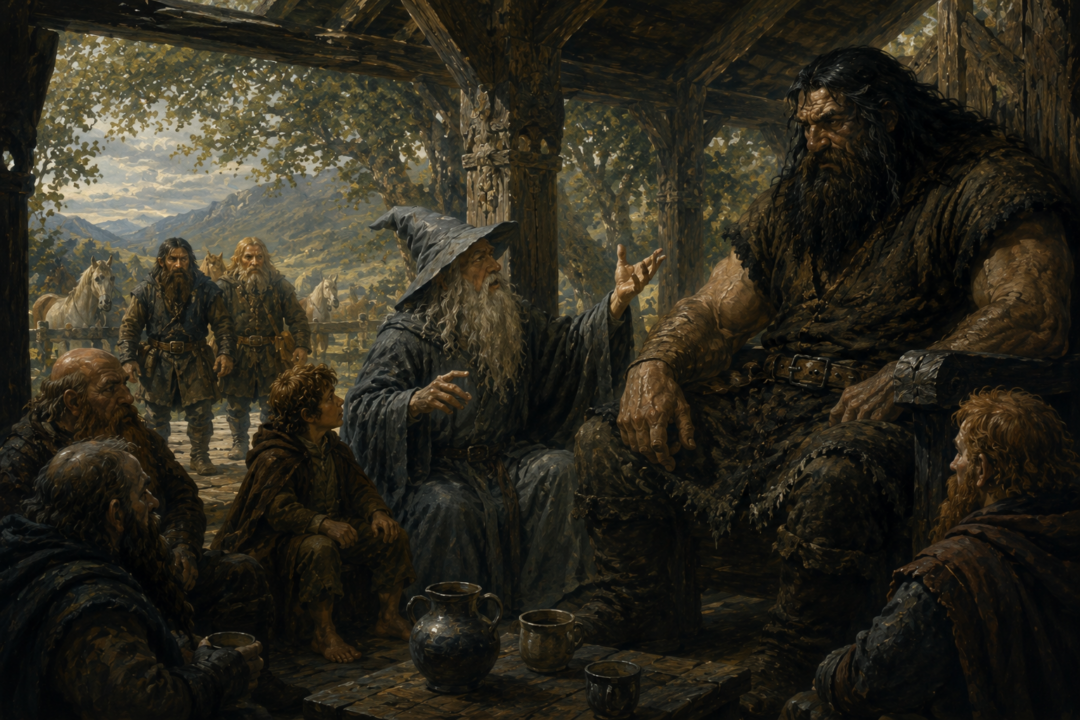
Everyone must be polite. Beorn is powerful, easily angered, and capable of being terrifying when provoked. Most importantly, Gandalf decides not to introduce the entire Company at once. The Dwarves will arrive gradually, generally in pairs, at intervals.
The plan immediately recalls the unexpected party at Bag End.
There, Bilbo found his carefully ordered home invaded one Dwarf at a time until Thorin’s entire company had assembled. At Beorn’s house, Gandalf employs a similar technique—but the stakes are considerably higher.
Bilbo could become flustered.
Beorn could become dangerous.
This distinction matters because Gandalf is not behaving as though hospitality is automatically owed to travelers. Beorn’s house is his domain, and Gandalf takes his temperament seriously.
When Gandalf and Bilbo first encounter him, Beorn is hardly eager to entertain strangers. Gandalf therefore begins explaining how they came to be there. He mentions their encounter with goblins, and Beorn’s interest increases because he hates goblins.
Then the story begins to expand.
So does the guest list.
The Arrivals Are a Trick, but the Story Is Not Simply a Lie
Gandalf’s method is deliberately manipulative.
As he recounts the journey through the mountains, he refers to companions in ways that prompt Beorn to ask questions. At convenient moments more Dwarves arrive: Thorin and Dori, then others, until the real size of the Company becomes impossible to miss.
The narration itself recognizes Gandalf’s cleverness. The interruptions keep Beorn interested in the adventure and prevent him from dismissing the Dwarves immediately as suspicious wanderers.
Yet there is an important distinction between controlling how information is revealed and fabricating the central events.
Gandalf is managing Beorn’s attention. He is not inventing the goblin pursuit that brought them into this country.
That difference becomes essential later.
Beorn is particularly interested in their conflict with the goblins and Wargs. His hostility toward those enemies gives Gandalf common ground on which to build. Thorin’s Company may be strangers, and Beorn admits that he is not especially fond of Dwarves, but enemies of goblins are more interesting to him than unidentified travelers appearing at his gate.
Gandalf has therefore found the narrow opening through Beorn’s suspicion.
But interest is not yet trust.
Beorn Feeds Them Before He Fully Trusts Them
This is one of the most revealing details in the episode.
Beorn does not wait for absolute certainty before offering food and shelter. He allows the Company into his great wooden hall and feeds them generously.
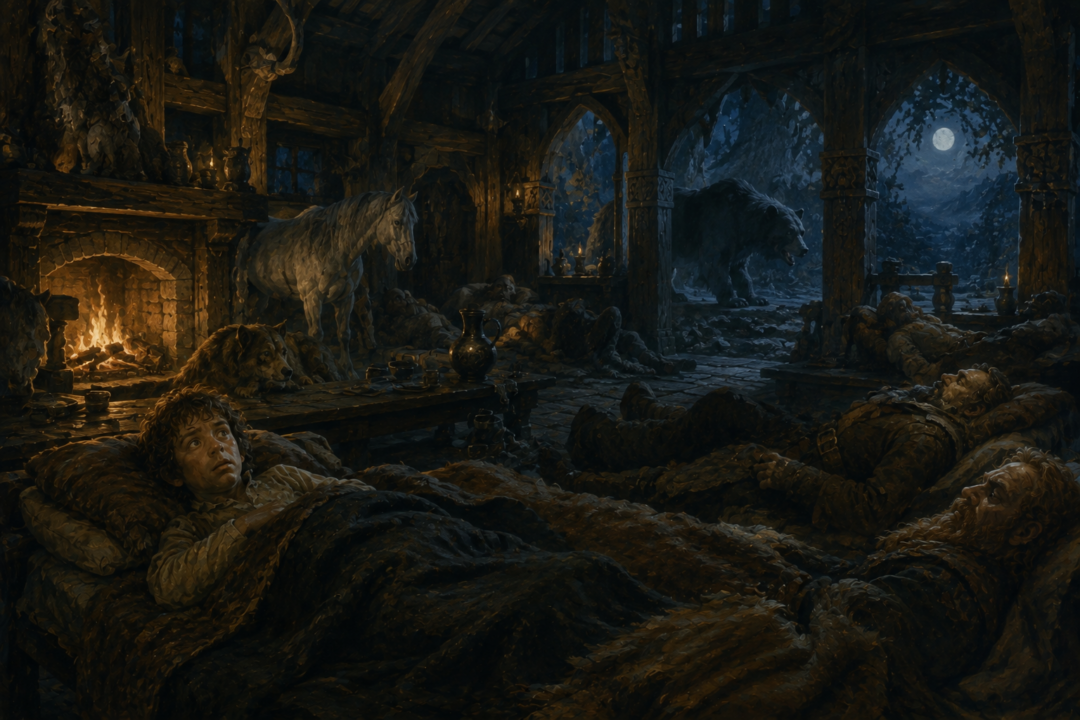
His household is extraordinary. Intelligent horses and other animals serve within it, and Beorn himself lives on foods such as bread, honey, cream, and mead rather than slaughtering his animals for meat.
The scene is warm, strange, and almost idyllic after the horrors of the mountains.
Yet Bilbo does not experience it as perfectly safe.
During the night, he hears noises outside and wonders fearfully about Beorn in his bear-shape. Gandalf has already warned the Company not to wander outside until morning.
The tension is significant.
Guest and host have reached a temporary peace, but neither familiarity nor complete confidence exists between them.
Beorn has permitted strangers beneath his roof.
He has not yet decided exactly what sort of strangers they are.
That judgment requires evidence.
Beorn Goes to Test Gandalf’s Story
After the first night, Beorn disappears.
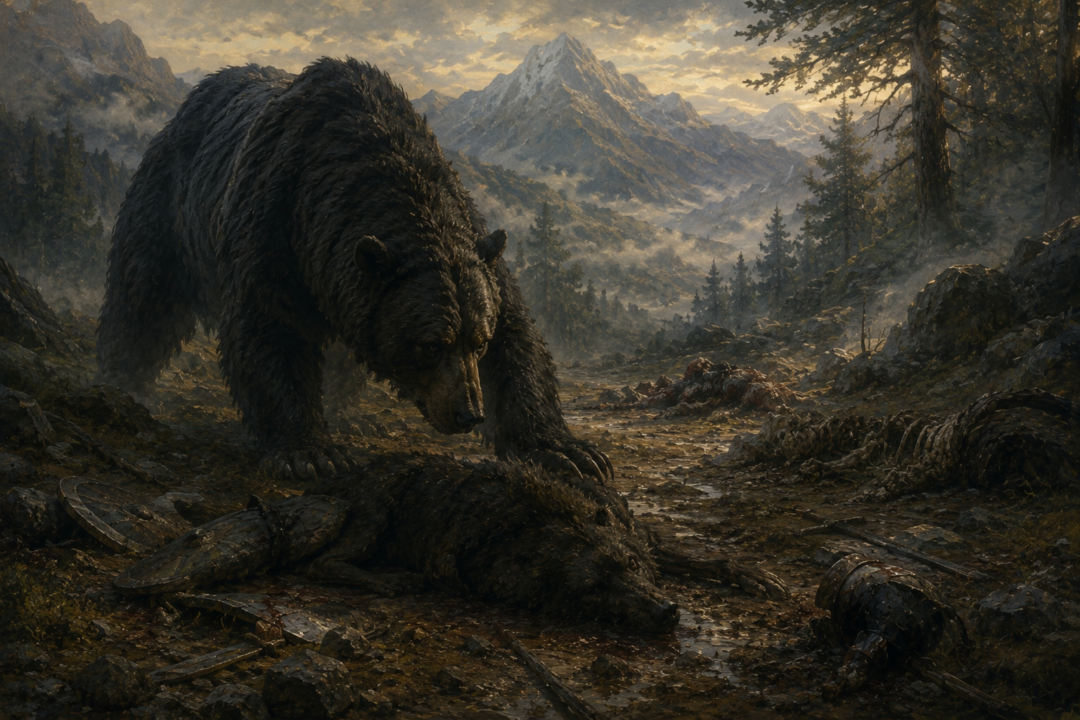
Gandalf later discovers bear tracks and evidence suggesting considerable activity outside. When Beorn eventually returns, the reason for his absence becomes clear: he has gone back toward the region where Gandalf said the Company had encountered the goblins and Wargs.
He has investigated the story for himself.
Beorn reports evidence confirming the travelers’ account, including the remains associated with the fighting and the death of the Great Goblin. He has also captured a goblin and a Warg and learned more from them.
His reaction is one of the key moments in the chapter.
He effectively tells Gandalf that he now believes their story more because he knows it to be true.
That changes everything.
The Company had already received supper and beds. After verification, however, Beorn becomes a much more committed ally.
This suggests a useful distinction in his behavior: basic hospitality can precede certainty, but deeper trust follows proof.
Hospitality Becomes Material Help
Once Beorn has confirmed the story, his generosity becomes practical.
That matters because the Company does not merely need another meal.
Mirkwood lies ahead.
Beorn provides food for the journey. He lends them ponies and gives them mounts for part of the road. He supplies what they need to approach the forest more safely, and he gives them detailed warnings about the dangers ahead.
Most important is his insistence that they remain on the path through Mirkwood.
The advice will prove painfully important.
Beorn is therefore no longer merely allowing travelers to rest in his house. He is investing resources in their survival.
The transformation is subtle but unmistakable:
strangers become guests;
guests whose story proves true become people worth helping.
This does not mean Beorn suddenly becomes sentimental. His generosity remains consistent with the fierce independence established when the Company first hears about him.
He helps on his own terms.
Beorn’s Animals Reveal Another Side of His Moral World
There is another reason Gandalf warns the Company to behave carefully.
Beorn’s gentleness toward his animals contrasts sharply with his violence toward goblins and Wargs.
The difference is extreme.
At home, animals move freely around him and serve at his table with an almost enchanted intelligence. Gandalf specifically warns Bilbo not to make foolish remarks about furriers or objects made from animal skins. Beorn does not hunt his own animals for food, and his household reflects an unusual intimacy between master and beasts.
Toward his enemies, however, Beorn can be ruthless.
The text does not present him as universally gentle. His kindness is selective.
That helps explain why trust matters so much at his house. Beorn’s world is divided not simply between people he likes and dislikes, but between creatures who belong within a protected order and enemies who threaten it.
Gandalf understands that arriving peacefully is not enough.
The Company must be recognized as belonging on the correct side of that boundary.
Their truthful account of fighting goblins helps establish exactly that.
Gandalf Understands That Truth Sometimes Needs Careful Delivery
There is an apparent contradiction at the heart of the episode.
If truth is so important to Beorn, why does Gandalf introduce the Company through a theatrical trick?
Because truthful information and uncontrolled disclosure are not the same thing.
Gandalf knows that presenting fifteen needy travelers simultaneously could cause Beorn to reject them before hearing anything else. So he regulates the pace.
He lets Beorn discover the Company while becoming invested in the story explaining their presence.
This is persuasion, certainly. It is also comic misdirection. But the success of the strategy ultimately depends on the underlying account being verifiable.
If Beorn had traveled west and discovered that the essential story of the goblins and Wargs was false, Gandalf’s performance would likely have accomplished very little.
The clever introduction opens the door.
Truth keeps it open.
The Contrast With Mirkwood Makes Beorn’s House Even More Important
The Company leaves Beorn’s lands carrying more than provisions.
They carry instructions.
Beorn warns them about Mirkwood, and Gandalf reinforces the central command: do not leave the path.
Then Gandalf departs.
The contrast is striking.
At Beorn’s house, danger is managed by respecting boundaries, listening carefully, and building trust through truthful dealings. Inside Mirkwood, the Company will repeatedly face temptation, confusion, hunger, and the consequences of departing from sound advice.
Beorn cannot protect them indefinitely.
He can only prepare them.
That makes his hospitality a kind of threshold between two dangers. Behind them are the goblins and Wargs they have escaped. Ahead lies a forest in which ordinary judgment becomes increasingly difficult.
For a brief interval, they inhabit a place governed by comprehensible rules.
Respect the host.
Tell a story that can withstand examination.
Do not abuse what is lent.
Follow the path.
Beorn’s Trust Matters Beyond One Night’s Shelter
Beorn is not finished with Thorin’s story after the travelers leave his house.
Much later, during the Battle of Five Armies, he appears in bear-shape and enters the fighting at a decisive stage. He carries the mortally wounded Thorin away from the battle and then returns with terrible force against the goblins.
After the victory, Beorn accompanies Bilbo and Gandalf on part of their homeward journey, and they again spend time at his house.
The wary host has become a friend.
It would be too strong to claim that this entire later relationship rests solely on Gandalf’s truthful account during their first meeting. The text does not establish such a simple rule.
But their first encounter does establish the pattern.
Beorn begins suspicious.
He listens.
He investigates.
He confirms.
Then he gives more.
That progression is what makes the episode more than a humorous interlude between the Misty Mountains and Mirkwood.
Beorn’s hospitality is generous, but it is never careless. Gandalf succeeds because he understands that trust cannot simply be demanded from a powerful stranger.
It must be approached carefully.
And when Beorn finally decides that these unexpected guests have told him the truth, he does not merely allow them to remain beneath his roof.
He helps make their journey possible.
Sources & Notes
- https://www.glyphweb.com/arda/b/beorn.html
- https://www.glyphweb.com/arda/c/carrock.html
- https://www.glyphweb.com/arda/b/beornings.html
- https://www.glyphweb.com/arda/s/skinchangers.html
Sources on Beorn, his nature as a skin-changer, his territory around the Carrock, and the later Beornings who maintained his guarded hospitality and protection.