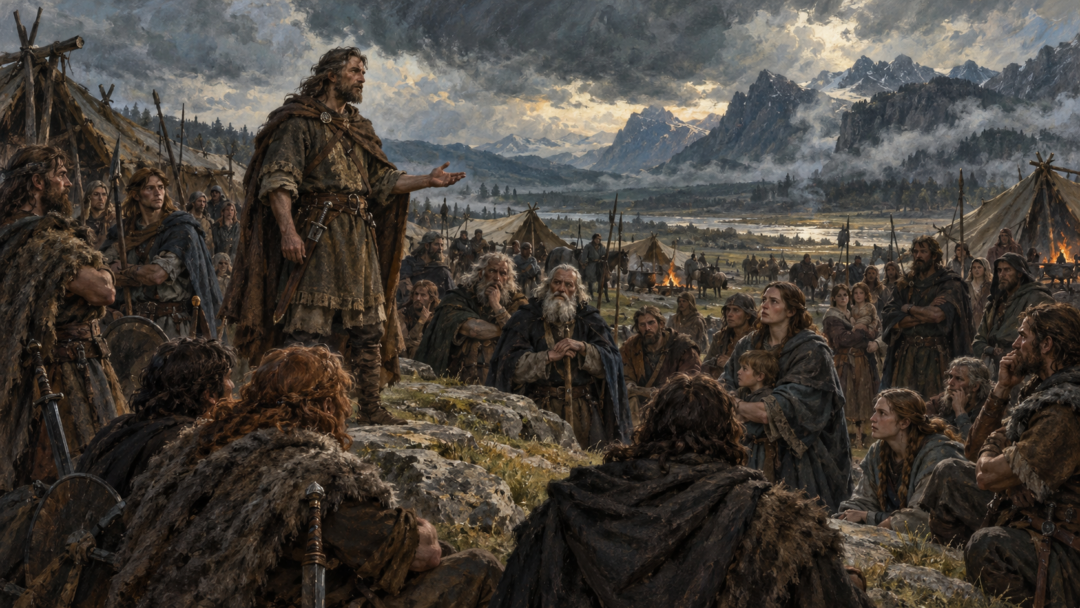
In the First Age of Middle-earth, a great assembly of Men gathered at Estolad to decide whether they should remain among the Elves or turn away from their wars. During that debate, someone who appeared to be Amlach delivered a bitter warning against the Eldar. Later, the real Amlach denied that he had spoken at all.
The deception pointed toward Morgoth, whose servants were working to divide Men from the Elves.
Surely discovering that an enemy had interfered should have changed everything.
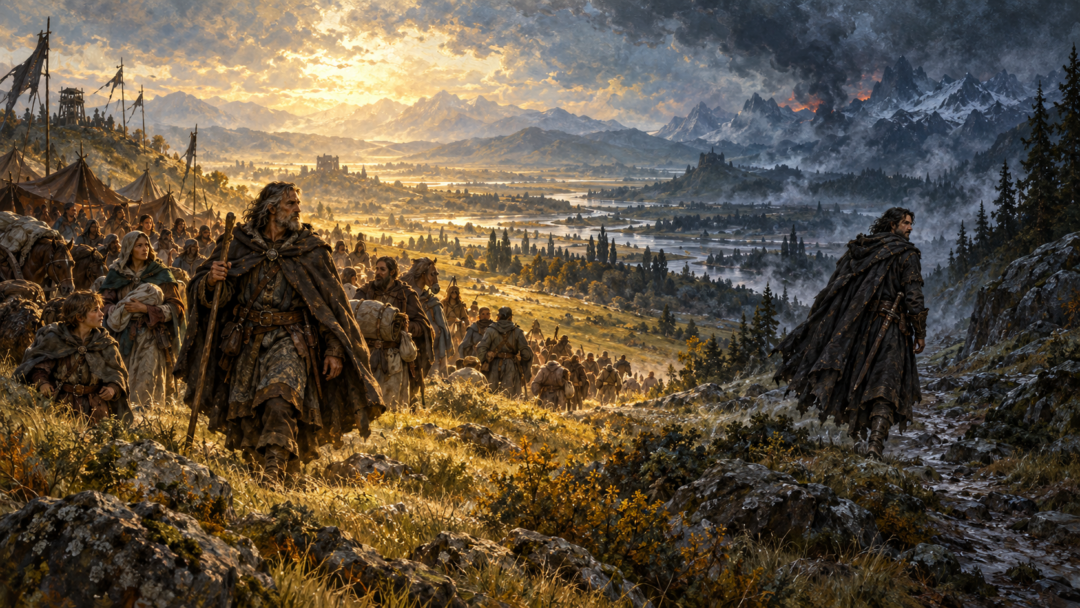
Yet Bereg, one of the leading voices against remaining in the conflict, still departed. He led a thousand of the people of Bëor southward, disappearing from the recorded songs of that age.
His decision is one of the more revealing moments in the early history of the Edain. The exposure of a lie did not automatically resolve the question that had divided them.
For Bereg, the issue was larger than whether an enemy had manipulated the debate. It concerned whether mortal Men should risk their brief lives in a war already being fought by powers far older than themselves.
And even after the imposture was exposed, that question remained.
The Men Who Had Come West Seeking Freedom
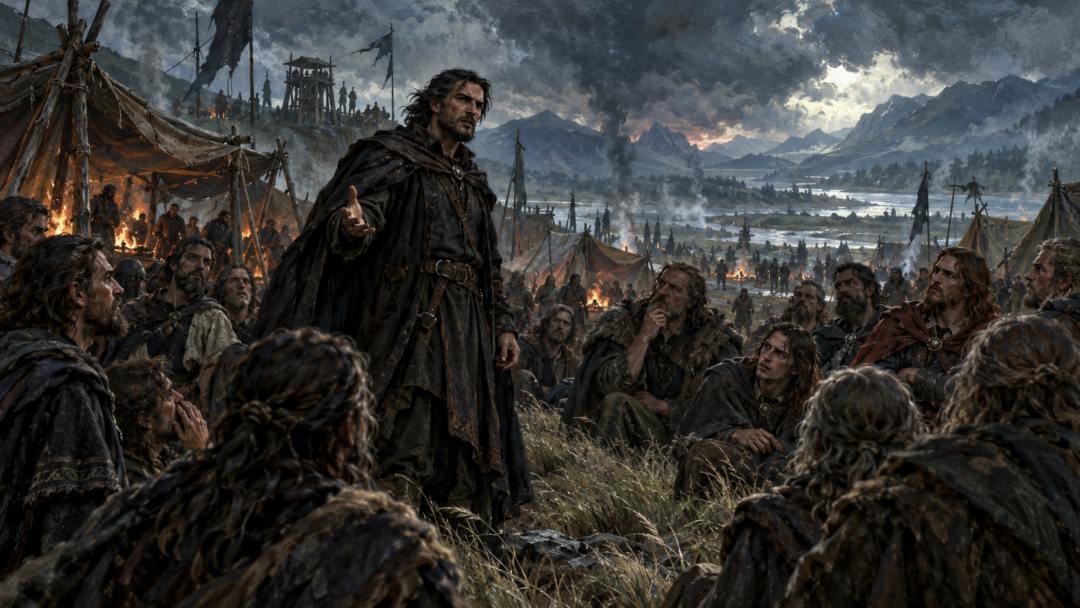
The first Men encountered by Finrod Felagund had journeyed westward from lands beyond the Blue Mountains. They belonged to peoples who had experienced the Shadow in the East, although the full history of their earliest encounters with darkness remained obscure.
Their movement westward was not originally presented as a military expedition against Morgoth.
They were seeking new lands and freedom from the darkness they had left behind.
Finrod befriended the people of Bëor and guided them into Beleriand. Other groups followed, including the people of Marach. Many eventually settled in Estolad, an open region of East Beleriand whose name means the Encampment.
There, Men encountered a world already shaped by ancient struggles.
The Noldorin Elves had returned to Middle-earth and established powerful realms. Morgoth remained entrenched in the North, while the Elven princes maintained their watch against him.
For the newcomers, this created an uncomfortable possibility.
They had escaped the Shadow only to discover that the greatest power behind it still threatened the lands ahead.
Friendship with the Eldar offered protection, knowledge, and opportunity. But it also brought Men closer to a conflict whose beginnings lay far beyond their own experience.
Why Bereg Opposed the War
Bereg was a man of the people of Bëor and a descendant of that house's early leadership. He emerged as an important voice among those dissatisfied with the growing relationship between Men and the Eldar.
His objection concerned the purpose of the westward migration and the cost of becoming involved in the struggle against Morgoth.
In The Silmarillion, chapter "Of the Coming of Men into the West," Bereg and others resist the suggestion that Men should go north toward the very darkness from which they had fled.
Their objection was understandable in its immediate human terms.
The Elves could live for ages unless slain or otherwise destroyed. Men, by contrast, possessed naturally short lives.
A conflict lasting generations among the Eldar could consume an entire mortal lifetime.
When the Elf-friends argued that Men might have come west precisely to help resist Morgoth, Bereg answered with a particularly revealing objection:
"Let the Eldar look to it! Our lives are short enough."
The text does not reveal all his private reasoning. It does, however, establish his public position: he opposed drawing mortal Men into the northern struggle.
That position was already present before the impersonation of Amlach complicated the debate.
The Council at Estolad and the False Amlach
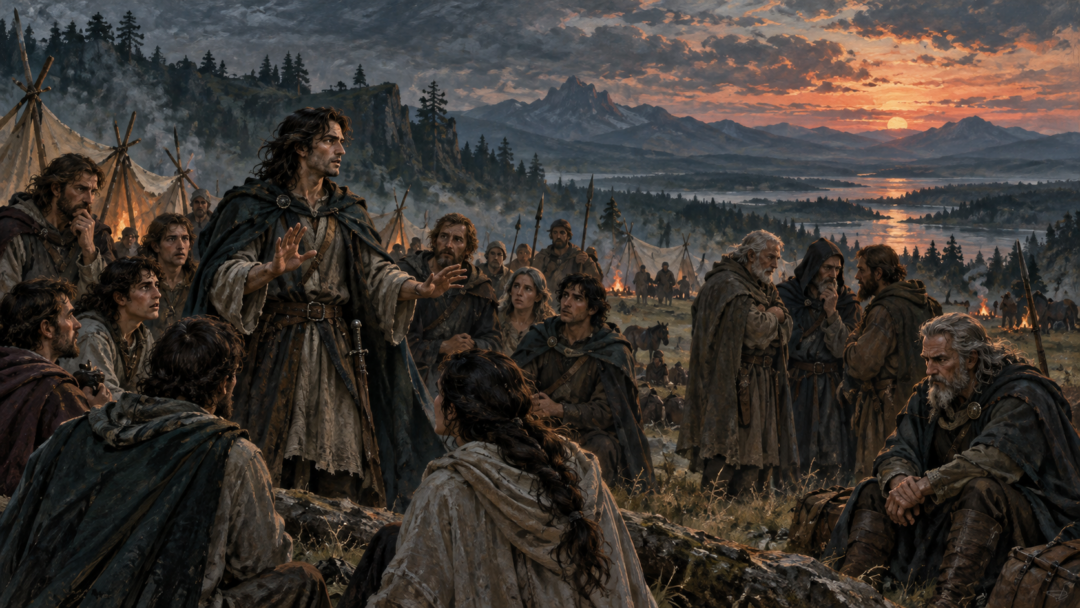
The disagreement eventually became serious enough for a council and assembly of Men to gather at Estolad.
The Elf-friends presented a forceful answer to Bereg.
They argued that Morgoth threatened all Middle-earth, not merely the realms of the Eldar. If he were not defeated, or at least held in check, there would be no lasting refuge from him.
Their reasoning transformed the question.
Instead of asking whether Men should involve themselves in an Elvish conflict, they asked whether any people could safely remain outside a struggle against a power seeking universal dominion.
Then the debate took a darker turn.
A figure appearing to be Amlach, son of Imlach and a descendant of Marach, rose and attacked the Elves' account of the world.
He challenged their stories about the West and the powers beyond the Sea. He suggested that the Eldar themselves desired dominion and had brought trouble upon Middle-earth.
His speech shook the assembly.
Those listening were overcome by fear, and a decision to leave the lands of the Eldar followed.
But afterward the real Amlach appeared and denied having attended the debate or spoken the words attributed to him.
The assembly was thrown into uncertainty.
The narrative places this deception within Morgoth's attempts to sow suspicion among Men and separate them from the Elves. It does not identify the impersonator by a personal name or explain precisely how the likeness was achieved.
Someone had used Amlach's identity to lend authority to a message intended to deepen division.
Yet the discovery did not produce a single, united response.
Why Exposing the Lie Did Not End the Disagreement
This is where Bereg's story becomes especially interesting.
The Elf-friends regarded the imposture as evidence supporting their warnings.
If a servant of the Dark Lord could appear among Men and interfere in their deliberations, then Morgoth was not merely a distant figure from Elvish history.
His influence had reached Estolad itself.
Furthermore, the attempt to divide Men from the Eldar suggested that their cooperation mattered to him.
But some of the dissenters drew a different practical conclusion.
They did not necessarily dispute that Morgoth was dangerous. Instead, they continued to fear that remaining involved in the Elves' struggle would expose them to even greater hostility.
Their answer, as recorded in The Silmarillion, was that Morgoth's hatred would only increase the longer they remained entangled in his conflict with the Elven kings.
One side saw cooperation with the Eldar as the best hope of survival.
The other saw withdrawal as a way to avoid further involvement.
The narrative does not establish that every person at the assembly accepted the same explanation of the impersonation. Nor does it show Bereg personally investigating the deception or responding to its exposure in a recorded speech.
What it does show is that the revelation failed to settle the broader disagreement.
This distinction matters because Bereg's continued opposition should not be mistaken for proof that he supported Morgoth.
His departure also cannot be treated as proof that he had fully understood the Enemy's plans.
The available evidence supports a narrower conclusion: after the deception came to light, Bereg and many others still chose to leave.
A Thousand People Follow Bereg South
The consequence was not confined to argument.
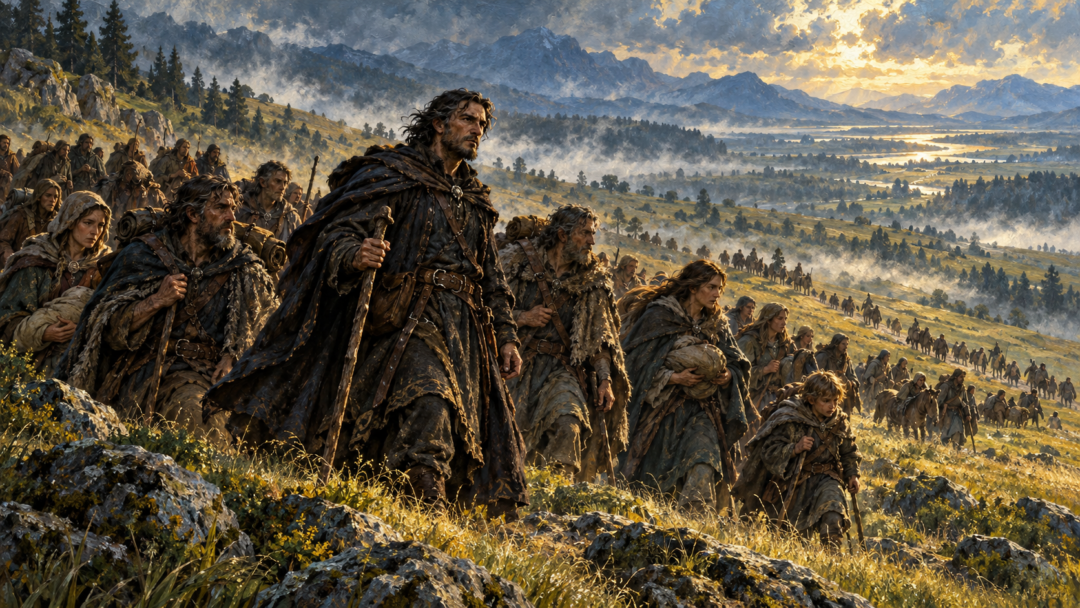
Bereg led a thousand of the people of Bëor away southward.
The text records the number and direction, but gives little further information about the journey.
It does not identify a final settlement, describe the travelers' subsequent fortunes, or establish what eventually became of their descendants.
Even the precise extent of their route should not be reconstructed with more confidence than the narrative permits.
What survives is the essential fact: Bereg gathered a thousand followers and led them south, after which they disappeared from the songs of those days.
Bereg represents a different response.
His followers did not remain within the main narrative of the alliance between Men and Elves.
Whether their withdrawal ultimately brought safety is not recorded.
Bereg Goes South While Amlach Goes North
The contrasting decisions of Bereg and Amlach are among the clearest details in the episode.
After learning that someone had assumed his appearance, Amlach changed his course.
He regarded the deception as a personal grievance against Morgoth and went north to enter the service of Maedhros.
Bereg went south.
For Amlach, the Enemy's interference became a reason to confront him.
For Bereg, the discovery did not reverse the opposition to involvement that he had already expressed.
Their choices should not be reduced to a simple division between courage and cowardice.
The text gives Amlach's declared personal quarrel, but it does not supply an equivalent confession of Bereg's private motives.
Nor does it establish that Bereg and Amlach possessed identical information, convictions, or obligations.
One man entered the service of an Elven lord fighting Morgoth.
The other led his followers away from the direction of that struggle.
There was also a separate departure among Amlach's people.
Those who remained sympathetic to Bereg's position chose another leader and returned across the mountains into Eriador.
They should not be confused with the thousand followers whom Bereg led southward.
The account distinguishes these movements, even though both groups withdrew from the path taken by the Elf-friends.
The People Who Vanished from the Songs
Bereg's final appearance is remarkable for what it leaves unsaid.
There is no account of his death, no later return, and no concluding judgment delivered upon his followers.
Their story simply passes beyond the surviving narrative.
This is not evidence that they ceased to exist. It means that their later history is not preserved in the account being told.
The distinction is important.
Bereg's company moved away from that remembered history.
Their absence reminds us that the celebrated alliances of Men and Elves were not the only paths available to the newcomers.
Some chose service. Some chose resistance. Others chose departure.
The surviving songs illuminate certain lives while leaving others almost entirely in darkness.
Bereg's thousand followers belong to that quieter, less recoverable history.
Their names, settlements, and eventual fate remain unknown.
The Choice That the Impostor Could Not Settle
The deepest irony of Bereg's departure is that Morgoth's deception was exposed, yet the division among Men endured. Discovering who had lied did not answer every question raised at Estolad.
The danger was real. So was the shortness of mortal lives. The Elf-friends believed resisting a common enemy was necessary; Bereg still chose to take his followers away. His later silence in the record cannot tell us whether that choice brought safety.
Amlach's decision entered the great struggle against Morgoth. Bereg's passed beyond the songs that preserved it. The same crisis opened opposite roads, and exposure of the impostor did not make every mortal man agree on what he ought to sacrifice.
Sources & Notes
- Tolkien Gateway — Bereg. https://tolkiengateway.net/wiki/Bereg
- The Encyclopedia of Arda — Amlach. https://www.encyclopedia-of-arda.com/a/amlach.html
- Silmarillion Writers' Guild — Amlach, by Himring (Character of the Month). https://www.silmarillionwritersguild.org/node/7054
Primary text: The Silmarillion, Quenta Silmarillion, Chapter 17, ‘Of the Coming of Men into the West,’ for the debate at Estolad, the impersonation of Amlach, Bereg's departure with a thousand followers, and Amlach's service to Maedhros. Tolkien Gateway also cites The War of the Jewels for Bereg's ancestry. Geographic qualification: the chapter describes Bereg's southward departure, while The Silmarillion's Index of Names associates him with Eriador, as the Bereg reference records; no detailed route or later fate is supplied. The distinction between exposing deception and resolving the underlying disagreement is interpretation, not a recorded account of Bereg's private motives.