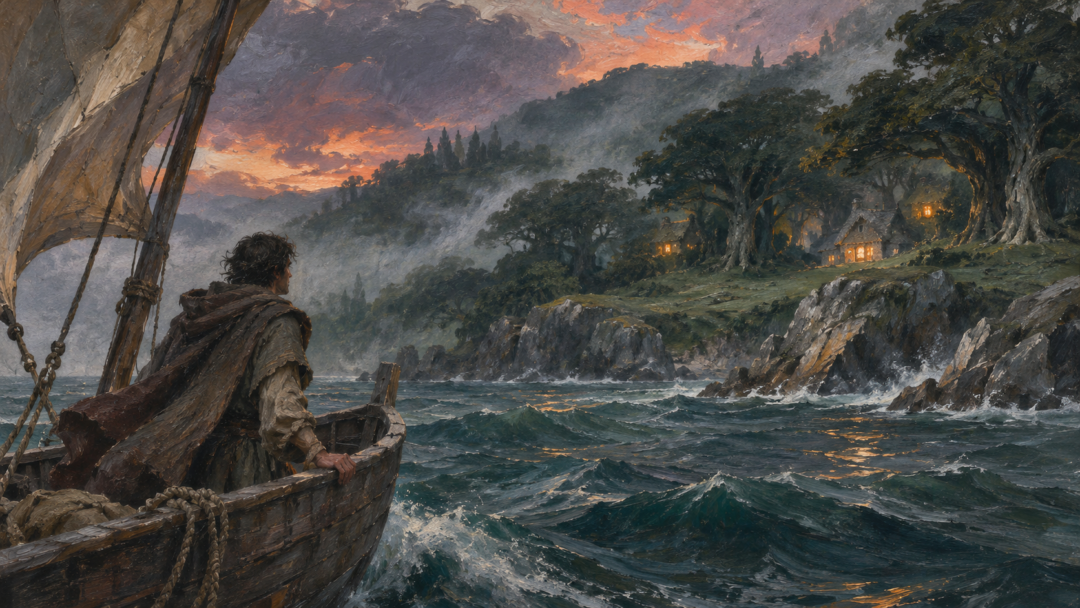
At the edge of Tol Eressëa, a mariner comes among Elves who still gather to tell stories. It is an unexpected doorway for someone who already knows the light of the Two Trees, the exile of the Noldor, and the destruction of Gondolin. Those events are not entirely new here. What is new is the feeling of reaching a house where ancient history is still being spoken aloud.
Yes, you can read The Book of Lost Tales next. The four books you mention give you more than enough familiarity to begin. The essential preparation is a change of expectations, not another compulsory book. You are going backward in the development of the mythology, rather than forward to a sequel about what happened after The Silmarillion.
First, know which Book of Lost Tales you are opening
The Book of Lost Tales comes in two parts, which are the first and second volumes of The History of Middle-earth, edited by Christopher Tolkien. Part One was originally published in 1983 and Part Two in 1984. The pair presents early forms of stories that later fed the wider legendarium.
Part One begins with The Cottage of Lost Play. After that doorway come the Music of the Ainur, the coming of the Valar and the building of Valinor, the chaining of Melko, the coming of the Elves, the darkening of Valinor, and the flight of the Noldoli. Tales of the Sun and Moon and the hiding of Valinor follow. You will recognize the broad movement from creation toward exile, but not a settled version of every event.
Part Two continues into material closer to the great tragedies you know: The Tale of Tinúviel, Turambar and the Foalókë, The Fall of Gondolin, and The Nauglafring, an early tale concerning the necklace of the Dwarves. It also contains material gathered under The Tale of Eärendel, followed by The History of Eriol or Ælfwine and the End of the Tales. That last title is especially worth reading carefully: it explores how the imagined framework and projected ending changed, rather than supplying one fully finished conclusion.
The Cottage of Lost Play is part of the adventure
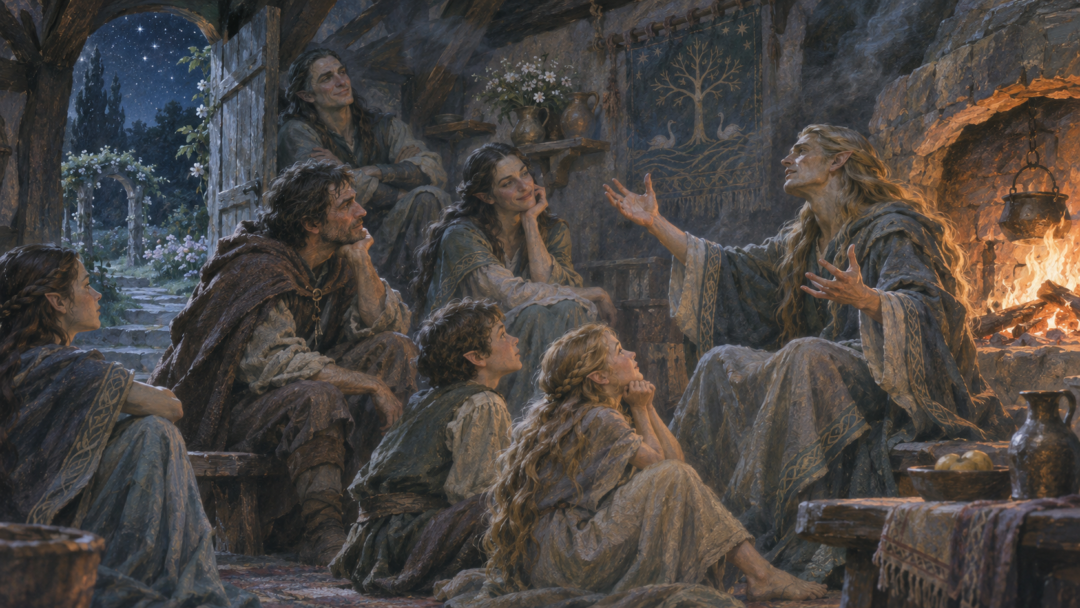
The mariner is Eriol, a mortal voyager who reaches Tol Eressëa, the Lonely Isle, and encounters Elves who preserve accounts of their distant past. At the Cottage of Lost Play, he meets Lindo and Vairë, whose household provides the setting for the telling of the tales. Children, listeners, hosts, and individual speakers give these ancient events a social setting. The myths arrive as something heard and remembered, not merely as chapters in a history book.
Imagine entering from the sea, finding a welcoming hearth, and gradually learning why the Elves speak with such intimacy of lands and lights no longer accessible in the same way. The setting places a distance between the ancient happenings and the traveller hearing about them, while making their telling immediate.
If you have just finished The Silmarillion, you may be accustomed to a sweeping narrative voice that carries you from the creation of Arda to the wars over the Silmarils. The cottage offers a different scale. A mighty tale can begin with someone being asked to listen; an account of Valinor can belong to a particular speaker on a particular evening. Skipping straight to the famous names would mean missing the earliest project's distinctive way of bringing Elf-history into a human visitor's reach.
The framing history was not fixed once and for all. Later conceptions involve Ælfwine, and Part Two examines the changes rather than smoothing them into a single biographical account. It is tempting to assemble every version of the traveller into one complete life, but that would conceal the very development these volumes preserve. For your first reading, follow Eriol where the story actually takes him, and let the later alternatives remain alternatives.
Recognizable places, surprising inhabitants
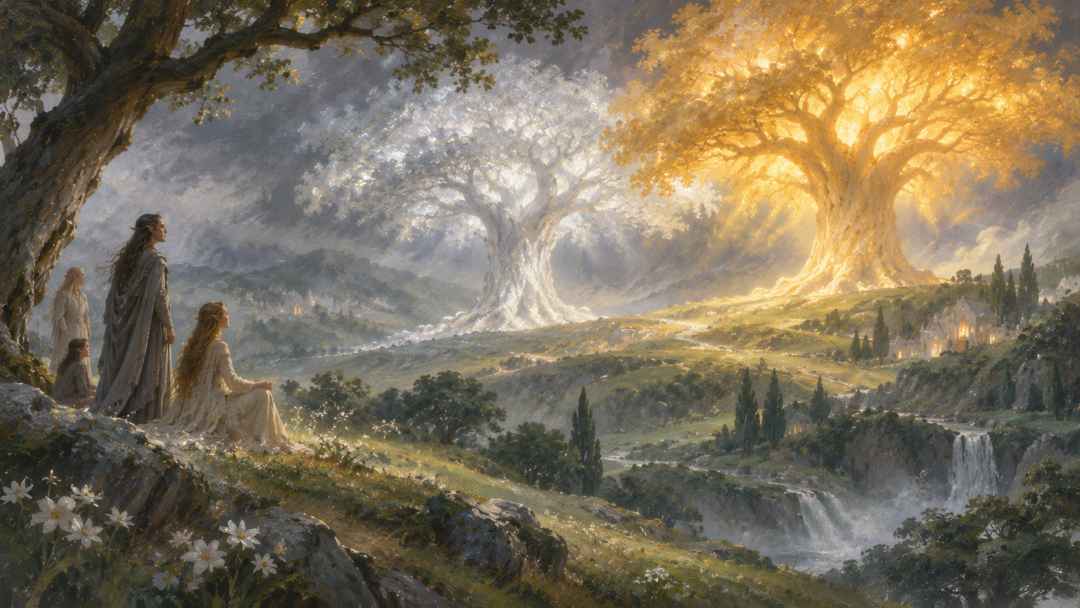
The earliest Valinor offers plenty to recognize: the Powers, the Trees, the Elves' arrival, the shadow of the great enemy, and the disastrous movement toward exile. Yet familiar names can behave differently, and some have not taken their later forms. You will encounter Melko, rather than the later familiar Melkor, and Noldoli where you may expect Noldor. These are not errors for a modern reader to silently correct. They belong to an earlier vocabulary and, sometimes, an earlier conception of the peoples and their histories.
The word Gnomes is a particularly useful warning. In these texts it names the Elven Noldoli, not small garden figures. But translating every old term immediately into its later equivalent also risks hiding differences. A name can point toward something recognizable without carrying every association that name would acquire in the published Silmarillion.
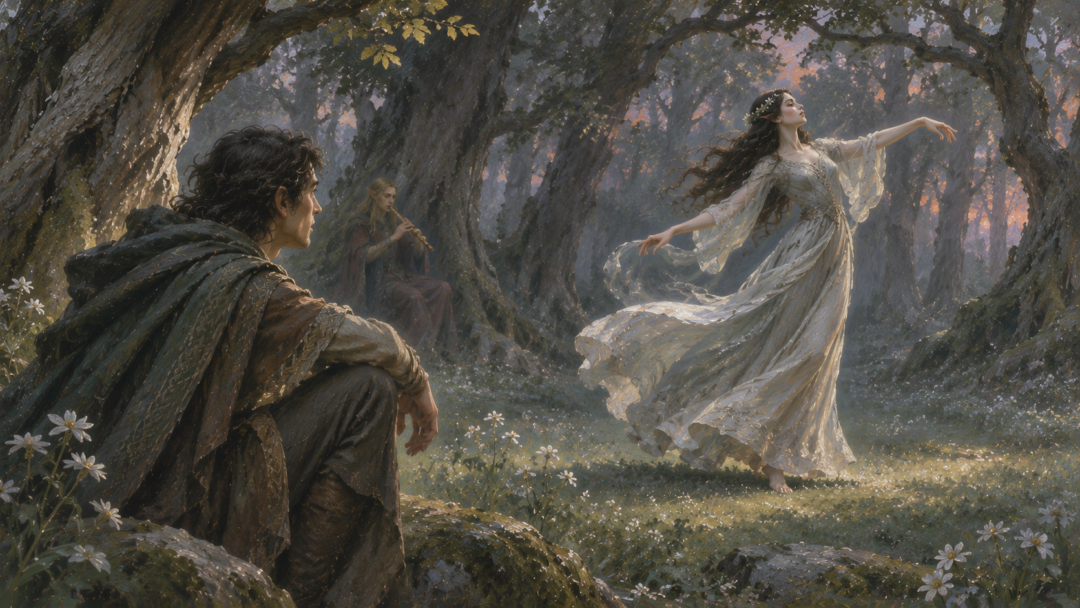
The clearest example awaits in The Tale of Tinúviel. The Beren of that early story is a Gnome, an Elf and son of Egnor, not the mortal son of Barahir familiar from the later legend. Love still draws Beren and Tinúviel into danger, but his identity changes the relationship's terms. It is not a secret revelation about the later Beren. It is evidence that the story itself took another form before the version most readers now know.
Then there is Tevildo, Prince of Cats, an adversarial presence in the early tale. His role makes for a memorable contrast with the later story involving Sauron, but the two should not be imagined as sharing a missing episode in a single continuity. Tevildo belongs to a different stage of the tale. The pleasure here is watching familiar narrative pressures—captivity, peril, loyalty, escape—take shape through characters and imagery that the later work would transform.
What the books you have read actually prepare you for
The Silmarillion gives you a strong map of the central relationships: the Valar and the Elves, the Two Trees and the Silmarils, the exile, and the struggles of the First Age. You already know why the darkening of Valinor shadows what follows. That familiarity frees you to notice the choice of names, the order of emphasis, or the storytelling voice rather than struggling to identify every kingdom.
Beren and Lúthien and The Fall of Gondolin provide a different advantage. Both encourage you to think of a great tale as something that can exist in more than one literary form. So when you meet the early Tinúviel story or the old account of Gondolin's fall, you can appreciate a passage for its own energy without treating its departures from a later version as defects to be repaired. The besieged city, the doomed lovers, and the figures around them can be familiar while the telling remains genuinely new.
Unfinished Tales offers a useful introduction to Christopher Tolkien's editorial presence: narrative passages may sit alongside explanations of manuscripts, variant details, and uncertainties. Lost Tales makes that historical aspect central. Its chapters are accompanied by notes and detailed commentary, and the commentary often changes what you understand about the text you have just enjoyed. Their real gift is the ability to recognize an echo without demanding an exact duplicate.
A comfortable way to read the two parts
Start with Part One and read The Cottage of Lost Play rather than jumping to Part Two for Beren or Gondolin. This is a recommendation based on how the collection is arranged, not a test you must pass. The cottage introduces the listeners and the kind of book you are entering; the creation and Valinor tales then establish the early mythological landscape before the greater adventures arrive. Starting there makes the changes in scope feel earned.
For each chapter, try reading the tale first and its commentary afterward. That gives a scene room to work as fiction before you inspect its textual history. You do not need to memorize the apparatus, and there is no single method that suits everyone. The practical aim is simply to avoid confusing an editor's explanation of a variant with the voice of the tale itself.
The name appendices are worth keeping within reach, especially once Gnomes, Noldoli, and older place-names begin to accumulate. A small note can help too: write Lost Tales version beside a surprising detail, perhaps with the later form you know. That is enough to prevent two incompatible accounts from merging in memory. Resist the urge to construct one enormous corrected chronology. These books are more rewarding when their differences remain visible than when every sentence is forced to fit a final map.
The unfinished horizon is part of what you find
Gondolin's fall receives a substantial early narrative, but other projected developments did not become a comparably complete continuous story. In particular, the material associated with Eärendel includes outlines and unfinished possibilities; the heading The Tale of Eärendel is not a promise of a fully realized account of every voyage and consequence.
Likewise, the closing discussion of Eriol and Ælfwine reveals an evolving idea of how these Elvish stories might be carried into the world of human tradition. It is fascinating precisely because the proposed routes and endings do not resolve into one definitive last chapter. The diction can feel older and more fairy-tale-like than the books you have just read, and some passages ask for patience. But their unfinished edges allow you to see possibilities before one version eclipsed the others.
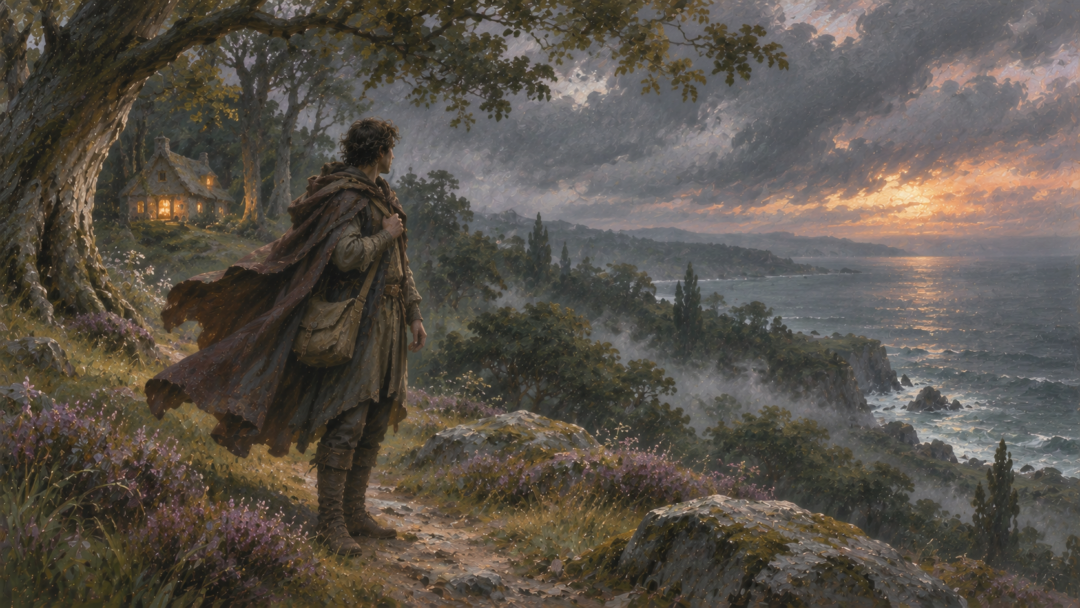
So yes: open Part One now. You already know what became of the Trees and Gondolin; you do not yet know how strange and intimate those stories once sounded. The lasting image is not another missing event added to a timeline, but a mariner crossing the sea toward a lighted cottage, where the ancient world is still being told into being.
Sources & Notes
This article is based on close reading and interpretation of Tolkien's published works and related source material where relevant.