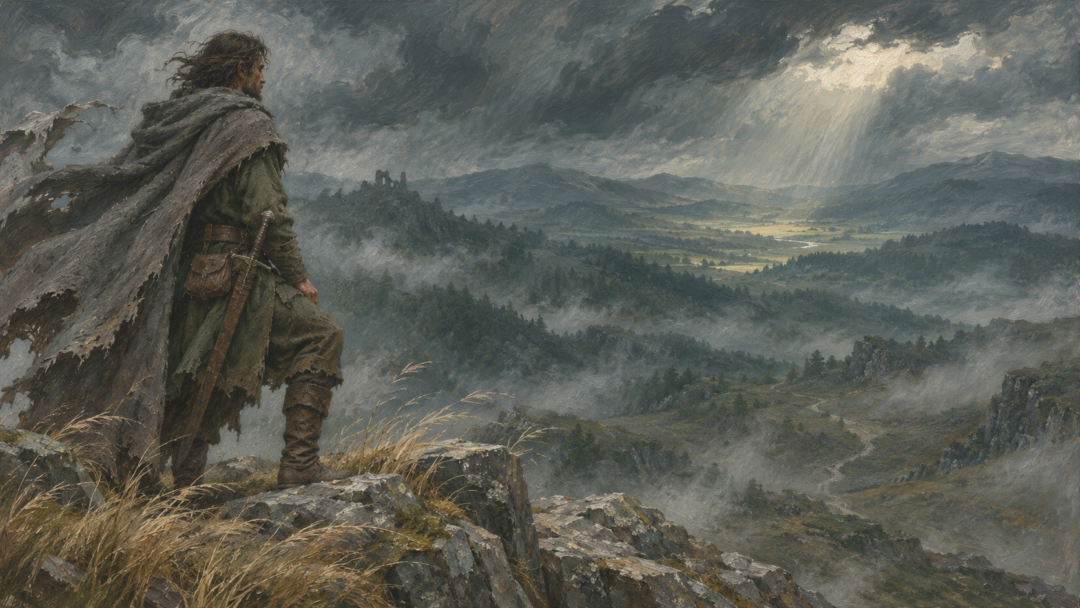
In the Prancing Pony at Bree, a weather-beaten stranger sits in the shadows, watching four hobbits who have no idea how much danger follows them. The innkeeper knows him as Strider. Soon, Frodo will discover that the quiet Ranger is Aragorn, heir to a kingdom and one of the few people capable of guiding him through the wild. Viggo Mortensen made that first impression unforgettable in The Lord of the Rings films. Could modern screen technology have brought him back for an earlier adventure?
For a time, that was a real possibility under discussion. In 2024, screenwriter Philippa Boyens raised digital make-up as a potential way to accommodate Mortensen in The Hunt for Gollum. But Warner Bros.' April 2026 casting announcement named Jamie Dornan as Strider, also known as Aragorn. The distinction matters: de-aging remained part of the film's technical conversation, while the role itself went to another actor.
Mortensen was open to returning, with conditions
The possibility began with Mortensen himself, not an anonymous casting rumor. In a May 2024 interview with British GQ, he was asked whether he would consider playing Aragorn again in the newly announced film. His answer began simply: “Sure.” He spoke warmly about enjoying the character and learning from the experience. It made a reunion imaginable for viewers who still associate Aragorn's guarded authority with Mortensen.
Yet his response contained an important condition. He said the part would have to suit both the character and the actor's present age. At that point, he did not know the new film's story. His answer was an expression of interest, not confirmation that he had read a screenplay, accepted an offer or joined the cast. He wanted the return to make sense.
The interview took place while Mortensen was discussing The Dead Don't Hurt, the Western he wrote, directed and starred in. He had even borrowed Aragorn's sword, with permission, for a sequence in that film. It did not, however, turn a possible reunion into a production agreement. Mortensen's current filmmaking interests supplied context, not an explanation for later casting.
By December 23, 2024, the possibility had advanced to conversations with the filmmakers. Speaking to The Playlist, Boyens said she, director Andy Serkis and producer Peter Jackson had all talked with Mortensen. She also expressed how difficult it was for her to picture another Aragorn. But her clearest assessment was deliberately provisional: “Honestly, that will be up to Viggo collaboratively, and we are at a very early stage.”
Boyens placed the screenplay ahead of any technical solution. Mortensen would need a role he wanted to perform, and only then would he and Serkis work out how to achieve it on screen. She even entertained the possibility of his involvement in handing the character to another actor if he chose not to reprise it. That was creative interest, not a settled casting decision. The story still had to earn its Aragorn.
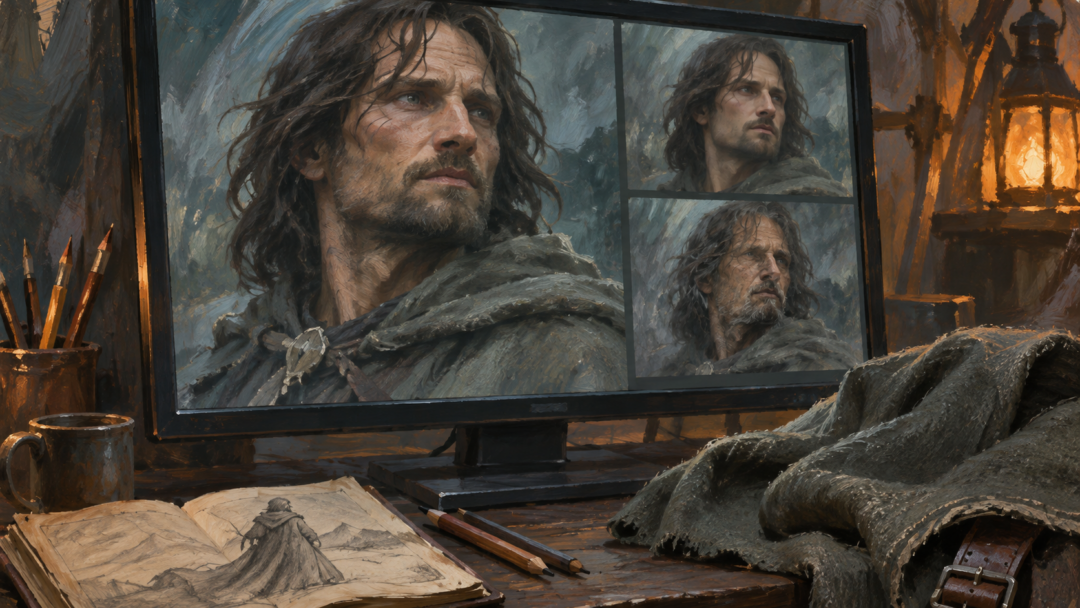
Why this Aragorn would need to look younger
The literary chronology explains why appearance became part of the discussion. In Appendix B of The Lord of the Rings, Gandalf asks Aragorn for help seeking Gollum after Bilbo's farewell feast in the Shire in Third Age 3001. The search resumes at intervals from 3009, stretching through the vales of Anduin, Mirkwood and the lands toward Mordor. In 3017, Aragorn captures Gollum in the Dead Marshes and takes him to Thranduil's realm to be held and questioned. These are events from the books, not a confirmed scene-by-scene outline of the film.
That places the hunt before Frodo's encounter with Strider in Bree in 3018. Aragorn was born in Third Age 2931, so he was already decades into his life as a Ranger: roughly 78 in 3009 and 86 when he caught Gollum. He was not a young recruit discovering the wilderness for the first time. His Dúnedain ancestry also granted him unusual longevity.
A younger Aragorn, then, is primarily a filmmaking question. A prequel set before the Fellowship's journey would need to connect believably with the Strider audiences met in Peter Jackson's films, shot more than twenty-five years before this new production. Digital work could potentially soften signs of the actor's passing years without turning the Ranger into someone fresh-faced or inexperienced. The face must still belong to a man who has traveled far, seen danger and learned to keep his name hidden.
What digital make-up could—and couldn't—solve
Boyens specifically described the potential approach as digital make-up, distinguishing it from what she called AI technology at that stage of development. The phrase suggested an adjustment to an existing performance, rather than creating a replacement actor out of software. But she disclosed no production test, technical process or finalized plan. Her comment was about a possible method should Mortensen and the filmmakers agree to proceed, not evidence that the method had already worked for Aragorn.
In practical terms, screen de-aging aims to alter how old a performer appears in photographed footage. That might involve adjustments to facial contours, skin texture or the way age cues register in changing light. Such work is still attached to choices made in front of a camera: expression, movement, timing and the energy exchanged with other performers. None of that establishes what a de-aged Mortensen would have looked like; no production test has been disclosed.
The more interesting challenge is the character's continuity. The Aragorn in Bree does not command attention by looking youthful; he attracts suspicion precisely because he seems rough, watchful and difficult to read. The earlier hunter of Gollum would likewise have to suggest stamina, secrecy and patience across forbidding country. A smoother face would be only one ingredient in that portrayal. Whether the performance suited the screenplay was a separate judgment, one technology could not make on the actor's or filmmakers' behalf.
CinemaCon supplied a different Aragorn
On April 15, 2026, Variety reported the cast announced during Warner Bros.' presentation at CinemaCon in Las Vegas. The name attached to Strider was Jamie Dornan. There is no second identity loophole here: Strider is the name by which Aragorn is known when the hobbits first encounter him. The announcement therefore identified a new performer for the very character Mortensen had played, rather than introducing a different Ranger who happened to share his nickname.
The rest of that announcement makes the choice more striking. Serkis was returning as Gollum and directing the film. Ian McKellen was announced as Gandalf, Elijah Wood as Frodo and Lee Pace as Thranduil. The ensemble combined familiar faces with newcomers, rather than adopting a simple rule that every earlier role must be recast or every original performer preserved. Variety also listed December 17, 2027, as the scheduled theatrical release date at the time of its report; that is the announced target, not an independently reconfirmed timetable today.
The credits underline the film's connections with the earlier adaptations. Jackson returned as producer, while Fran Walsh and Boyens worked on the screenplay alongside Phoebe Gittins and Arty Papageorgiou. There was continuity behind the camera even as Aragorn's face changed. That combination makes it tempting to construct a story about negotiations, technical limitations or creative disagreement. The publicly reported facts do not provide one. They establish conversations in 2024 and Dornan's casting in 2026, not the private reasoning.
It is also worth separating the emotional force of Boyens's earlier comment from its official weight. Finding another Aragorn hard to imagine was a personal creative reaction during development. An announced casting is a later and much firmer statement about the film being made. The two need not be treated as a contradiction or a broken promise. They belong to different moments in a process where an intriguing possibility can remain unrealized even when the people discussing it were entirely sincere.
Why the later de-aging news does not change the casting
The story gained an extra wrinkle in July 2026, when The Playlist relayed Serkis's comments to Variety about the film's visual effects. He confirmed that limited de-aging was being used for some characters and that machine learning formed part of the process. Crucially, he did not identify those characters as Aragorn, nor did he suggest that Mortensen had joined the production. An announcement that a technique is being used somewhere in a film is not an announcement about who plays a particular role.
Serkis also drew a boundary around that technology. He described the film's shots as being created through conventional filmmaking rather than generated wholesale by AI, while discussing his interest in combining digital work with miniatures and prosthetics. Digital make-up describes an effect on appearance; machine learning can be one tool used to achieve certain effects; generative AI footage is a different proposition. The words overlap in popular discussion, but they are not interchangeable descriptions of one process.
Nor does that July account necessarily overturn Boyens's position in December 2024. She was describing a tentative approach to a possible Mortensen return while the script was still being developed. Serkis was discussing techniques being used in a production with an announced cast. A project can evolve from broad creative language to a more specific technical description without revealing that an earlier casting idea has been revived. The later report confirms some use of de-aging, but it does not reconnect that work to Mortensen.
By October 2026, Dornan was publicly discussing the pressure of succeeding Mortensen in an interview reported by Variety. No casting reversal has been reported. De-aging was considered as a route back for Mortensen, but it did not prevent the announcement of a new Aragorn. Along the wet paths beyond the Dead Marshes, the Ranger still carries a name he cannot reveal. Whoever wears Strider's cloak must convince us that the shadowed traveler and future king are the same man.
Sources & Notes
This article is based on close reading and interpretation of Tolkien's published works and related source material where relevant.