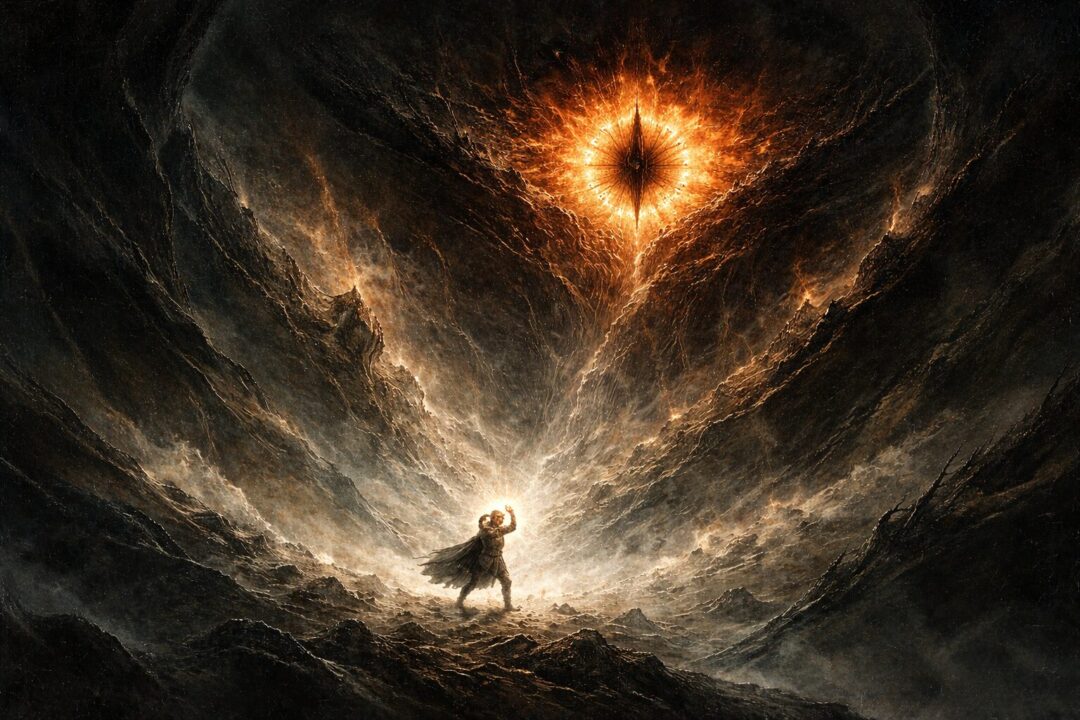
It is one of the most tantalizing “what ifs” in all of Middle-earth.
When the Host of the West stands before the Black Gate, Aragorn challenges the Dark Lord openly—drawing his Eye westward while the true Ring-bearer moves unseen in Mordor. At that moment, Frodo Baggins is already deep inside enemy territory: exhausted, starving, hunted, and barely able to stand.
But imagine a different choice.
Imagine Frodo not crawling through ash and shadow, but standing openly before the Black Gate. Imagine him lifting the Ring—not in desperation, but in defiance—and claiming it there, in the sight of Mordor itself.
Could he have worn it?
Could he have bent Mordor’s armies to his will?
Could he have forced his way to Mount Doom and destroyed the Ring by strength rather than secrecy?
At first glance, the idea does not sound absurd. After all, the Ring is the greatest weapon ever forged in Middle-earth. It was made to dominate wills, command armies, and impose order through fear. Even a brief contact with it allows Sam to terrify Orcs in the Tower of Cirith Ungol.
So why not Frodo?
The answer lies in understanding what the Ring actually does—and what kind of power Tolkien’s world recognizes as real.
The Ring Does Not Grant “Stats”—It Grants Authority
Modern fantasy often treats power as something measurable: strength, endurance, magical output. Tolkien’s world does not work that way.
The One Ring is not a weapon that improves physical ability. It does not make Frodo stronger, faster, or harder to kill. Its true function is dominion.
The Ring operates on the level of being.
When worn, it shifts the bearer partially into the unseen world—the spiritual realm where wills contend directly. This is why Frodo becomes invisible. This is why the Nazgûl can sense him. This is why beings like Gandalf, Galadriel, and Elrond fear not the Ring’s strength, but its claim.
The Ring magnifies what is already there.
And a Hobbit begins very small.
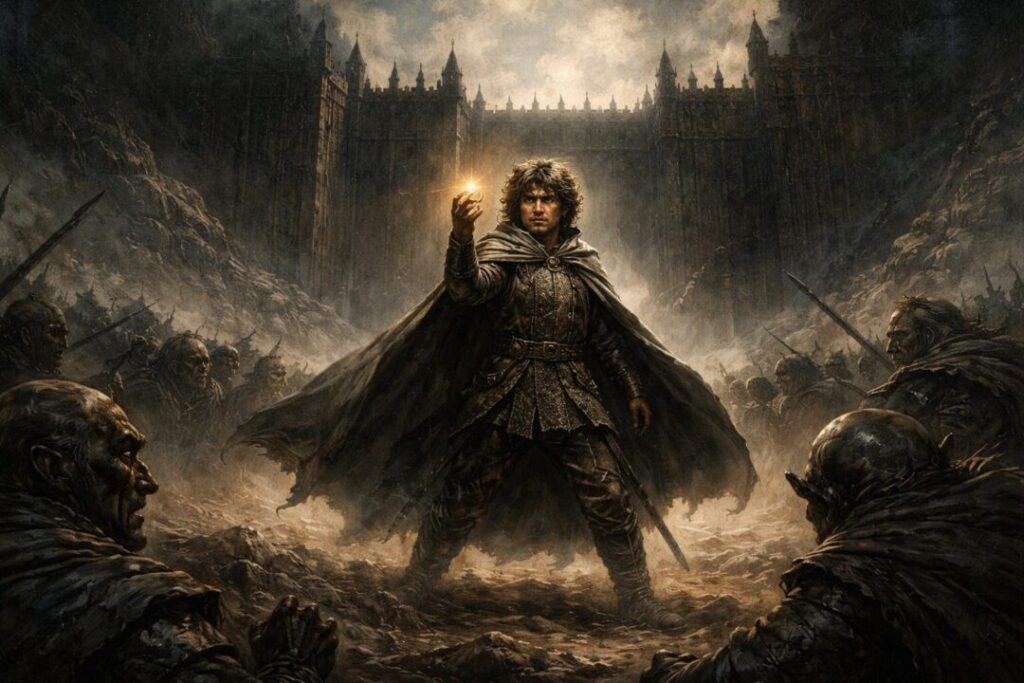
Frodo’s Native Stature—and Why It Matters
Frodo is not weak. He possesses extraordinary endurance, moral courage, and resilience far beyond what his size suggests. But Tolkien draws a sharp distinction between moral strength and dominating will.
The Ring rewards the latter.
This is why Boromir is tempted. This is why Aragorn fears it. This is why Sam, in his brief moment of possession, imagines himself a great hero commanding armies and reshaping the world into a garden.
Those visions are not lies. They are exaggerations of inner desire.
Frodo’s nature is not to command, reshape, or rule. His strength lies in humility, pity, and persistence. These qualities allow him to bear the Ring—but they do not allow him to wield it.
And the Ring demands to be wielded.
What Happens the Moment Frodo Claims the Ring at the Black Gate
If Frodo were to put on the Ring at the Black Gate and claim it openly, several things would happen almost immediately.
1. Sauron’s Awareness Would Snap into Focus
The Ring is not invisible to its maker when used in defiance.
The moment Frodo claimed it, his presence would blaze in the unseen world. Sauron would not need to search. He would know.
Not vaguely.
Not gradually.
But with sudden, terrible clarity.
This is exactly what happens at the Cracks of Doom, when Frodo finally claims the Ring for himself. Distance does not matter. Secrecy vanishes the instant the Ring is asserted.
At the Black Gate, Frodo would be doing this inside Sauron’s own realm.
2. The Nazgûl Would Converge Instantly
The Ring does not grant independence from Sauron’s servants—it binds them more tightly.
The Nazgûl are enslaved by Rings of Power that answer to the One. They do not oppose a Ring-lord. They serve him.
If Frodo claimed the Ring, the Nazgûl would not attack him as enemies. They would attempt to deliver him—to bring Ring and bearer together with their master.
To Frodo, this might feel like victory at first. The Ring would bend them. They would kneel. They would obey.
But obedience is not safety.
3. The Ring Would Begin Reshaping Frodo’s Will
This is the most dangerous part—and the least visible.
Frodo would feel strengthened. Focused. Certain. The crushing weight he has carried for months would lift. Fear would recede. Confusion would dissolve into clarity.
This is how the Ring works.
It does not enslave immediately. It convinces.
It would whisper that the Orcs fear him. That the Gate will open. That Mount Doom lies ahead, and that he is finally strong enough to finish the task on his own terms.
But this strength would not be Frodo’s.
It would be borrowed—and it would demand repayment.
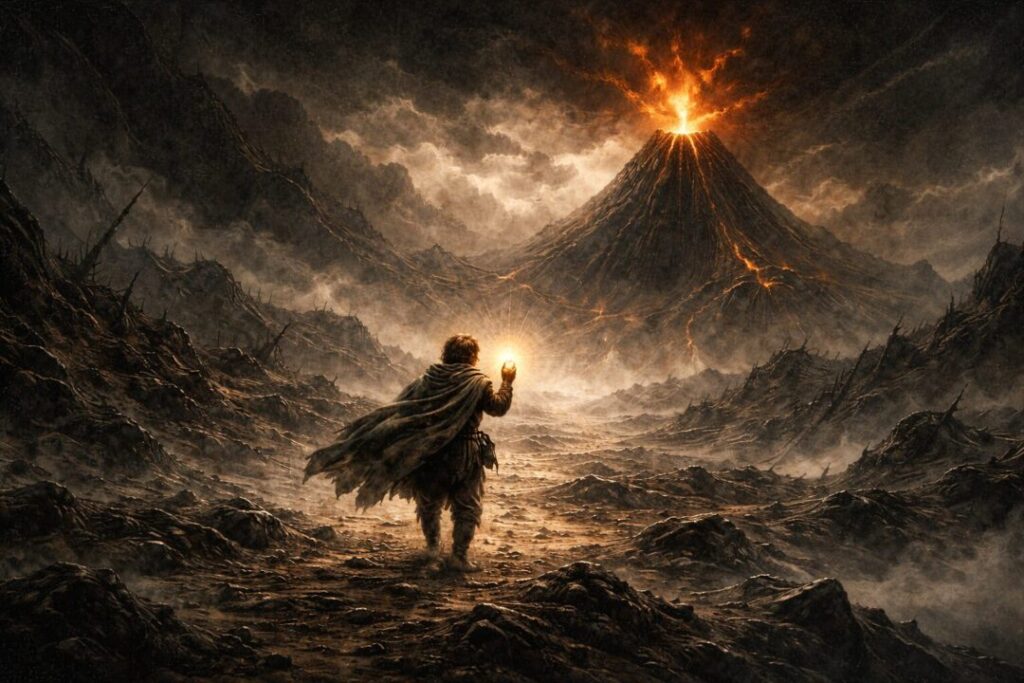
Could Frodo Command Mordor’s Armies?
Briefly?
Yes—very likely.
Orcs are conditioned to obey power. They recognize domination instinctively. A Ring-bearer radiates authority that would shatter discipline, sow panic, and force submission.
The Black Gate might open.
Columns of Orcs might fall back.
Frodo could walk forward surrounded by terror and silence.
But command is not ownership.
The Ring ultimately answers to Sauron. Frodo would be wielding a master’s instrument within the master’s domain, attempting to impose a lesser will upon a greater one.
This is not a contest Frodo can win.
Would the Ring Make Frodo Immortal?
No.
The Ring delays death. It stretches life unnaturally. It causes the bearer to fade—to lose substance and become increasingly bound to the unseen world.
This is not true immortality.
It is preservation without healing.
Frodo would not become invulnerable. He would not become eternal. He would become dependent—unable to exist meaningfully without the Ring, increasingly unable to act against it.
Immortality in Tolkien’s world is not a gift lightly given.
And Hobbits, above all peoples, are not made to endure it.
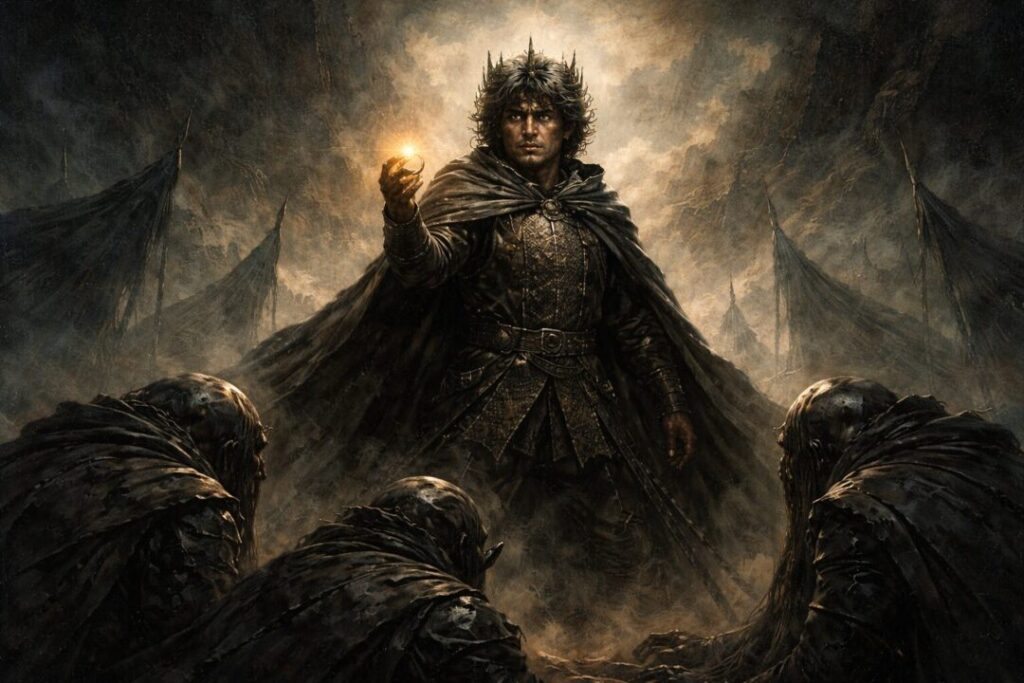
Why the Plan Could Never Truly Work
The fatal misunderstanding behind this idea is assuming the Ring can be used against Sauron through open defiance.
It cannot.
Every time the Ring is claimed openly—by Isildur, by Frodo at the Cracks of Doom, or even hypothetically by Gandalf—it moves closer to its true purpose.
Returning to its maker.
At the Black Gate, Frodo would not be marching toward victory.
He would be stepping onto a path that leads only one way.
Toward surrender—not of body, but of will.
Why the Quiet Path Was the Only Path
The Ring is not destroyed by strength.
It is destroyed by neglect.
By being carried unnoticed.
By being treated as a burden rather than a crown.
By reaching Mount Doom without ever being used as it demands.
This is why Hobbits matter.
This is why great warriors fail.
This is why the fate of the world turns not on who is strongest—but on who is willing to endure without claiming power.
Frodo succeeds precisely because he does not try to dominate Mordor.
And that leads to one final, unsettling question:
If Frodo had worn the Ring at the Black Gate…
would anyone in Middle-earth have been able to stop what came next?