Beleriand feels impossibly distant from the world of The Lord of the Rings.
By the late Third Age, it is not a kingdom one can ride to. It is not a land marked on the familiar roads between the Shire, Rivendell, Rohan, Gondor, and Mordor. Its great realms are gone. Its rivers, forests, and strongholds belong to an age that ended thousands of years before Frodo was born.
Gondolin has fallen.
Nargothrond has fallen.
Doriath is gone.
The wars against Morgoth are no longer living politics.
And most of Beleriand itself has been swallowed by the Sea.
So it is easy to imagine that the peoples of the Third Age knew little or nothing of it.
But the texts suggest something more complicated.
Beleriand was gone, but it was not erased.
Its memory survived unevenly: in Elven song, in Númenórean tradition, in the lore of Rivendell, in the records of Gondor, in Dwarvish poetry, and in the minds of a few beings who had actually lived through the Elder Days.
The answer, then, is not simply yes or no.
Some people knew Beleriand as history.
Some knew it as legend.
Some knew only scattered names.
And a very few knew it as a vanished homeland.
Beleriand Was Already Ancient History
By the end of the Third Age, Beleriand had been lost for more than six thousand years.
That matters.
The distance between the fall of Beleriand and the War of the Ring is enormous. Even for many Elves, the First Age was remote. For Men, Hobbits, and most ordinary peoples, it would have belonged to the realm of deep legend rather than practical memory.
Beleriand was the great western region of Middle-earth in the First Age. It was the setting of the wars against Morgoth, the hidden Elven kingdoms, the tale of Beren and Lúthien, the tragedy of Túrin, and the voyage of Eärendil.
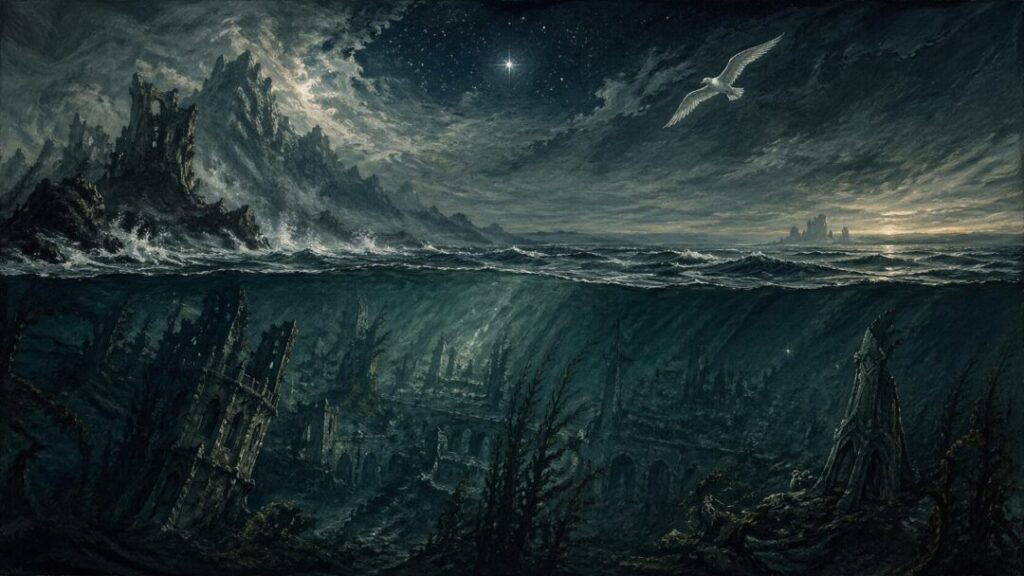
At the end of the First Age, after the War of Wrath, much of that land was broken and drowned. The world physically changed. The familiar Middle-earth of the Second and Third Ages was not simply Beleriand continued under new rulers. It was a later world, living beside the absence of a lost one.
So for the common people of the Third Age, Beleriand was not nearby history.
It was older than ancient.
The Elves Remembered Most Clearly
The people most likely to know of Beleriand were the Elves, especially the High Elves and those connected with the surviving houses of the Elder Days.
This is not speculation in the broad sense. The story itself shows Elves preserving the memory of the First Age through song, names, and lineage.
Rivendell is especially important.
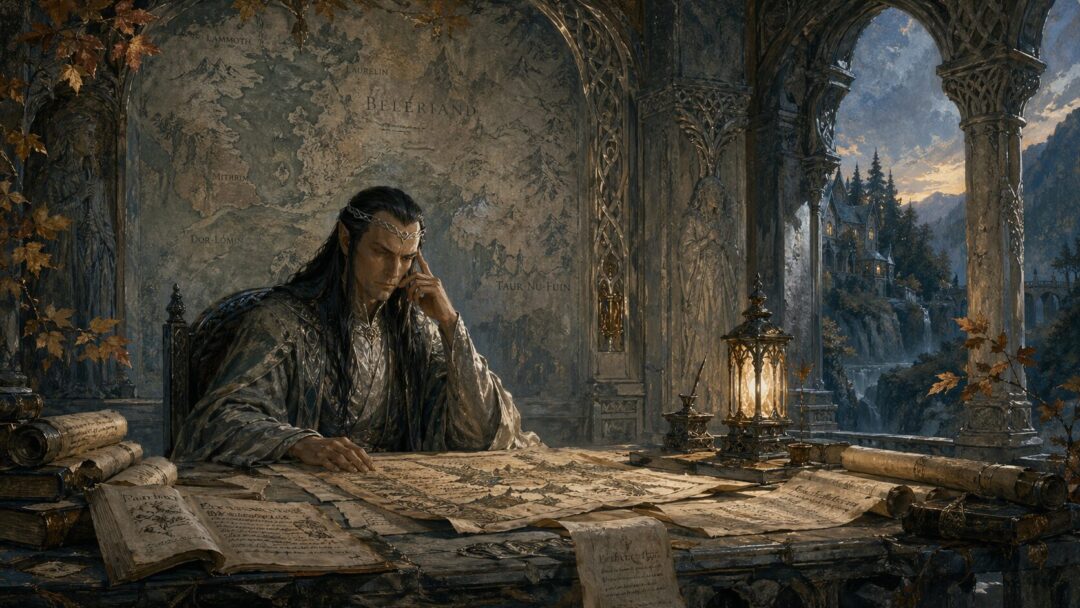
In The Lord of the Rings, Rivendell is not just a safe house on the road to Mordor. It is a place where ancient memory has survived. Elrond’s house preserves lore that is almost unreachable elsewhere in Middle-earth.
And Elrond’s connection to Beleriand is not merely academic.
He was born in the First Age, in the world of Beleriand, as the son of Eärendil and Elwing. His father’s story belongs to the final hope of the Elder Days, and his brother Elros became the first king of Númenor.
So when First Age names are spoken in Rivendell, they are not just old decorations.
They are family history.
They are the memory of a world Elrond himself came from.
This changes the atmosphere of Rivendell. Its songs are not escapism. Its lore is not trivia. It is a kind of preservation against loss.
Beleriand is gone beneath the Sea, but in Rivendell, its memory still has a voice.
Bilbo Learned More Than Most Hobbits Ever Would
For ordinary Hobbits, there is little reason to think Beleriand was widely known.
The Shire is deliberately small in its concerns. Its people care about birthdays, genealogy, meals, gardens, pipe-weed, and local respectability. Even events far closer than the First Age are often hazy to them.
Bilbo is the exception.
After his adventure, and especially during his later years in Rivendell, Bilbo becomes deeply involved in Elvish lore. His song of Eärendil is one of the clearest signs that a Hobbit could learn and preserve stories of Beleriand, but only under extraordinary circumstances.
The subject of that song is not a simple wandering hero. Eärendil belongs to the last desperate hope of the First Age. His story is tied to the lost havens, the Silmaril, the appeal to the West, and the overthrow of Morgoth.
Bilbo could sing such a song because he had entered circles of knowledge almost no Hobbit ever reached.
That does not mean the Shire knew Beleriand.
It means Bilbo did.
And even then, his knowledge was learned, literary, and reverent. He was not remembering his own people’s past. He was preserving the lore of others.
That distinction matters.
Aragorn Knew the Elder Days
Aragorn also clearly knew of Beleriand.
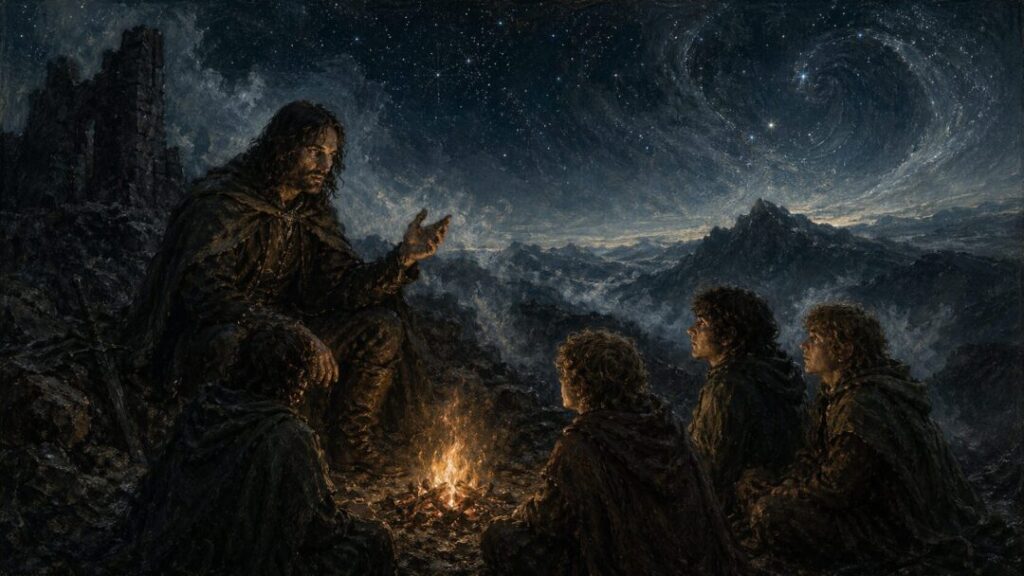
On Weathertop, he tells the hobbits the tale of Beren and Lúthien. That tale belongs to the First Age and to the lands of Beleriand. It is not presented as a vague folktale with no roots. It is part of the deep history of Elves and Men.
For Aragorn, the story has personal significance as well.
His love for Arwen echoes the pattern of Beren and Lúthien: a mortal Man and an immortal Elf-woman bound together across the divide between their peoples. The comparison is not casual. It is built into the emotional structure of Aragorn’s life.
Aragorn was raised in Rivendell. He was the heir of Isildur and part of the long memory of the Dúnedain. Through both lines—Elvish education and Númenórean descent—he had access to traditions that preserved the Elder Days.
So yes, Aragorn knew of Beleriand.
But again, he was not an ordinary Man of the late Third Age.
He stood at the meeting point of several ancient inheritances: Elvish lore, Númenórean royal memory, and the fading world of the North.
When Aragorn speaks of Beren and Lúthien, the First Age briefly enters the present.
Not as dead history.
As something still shaping the choices of the living.
Gondor Probably Preserved Some Knowledge
Gondor is one of the harder cases.
The texts do not show ordinary Gondorians discussing Beleriand in detail. We should be careful not to imagine every soldier of Minas Tirith reciting the histories of Gondolin or Doriath.
But Gondor was founded by the exiled Númenóreans, and Númenor itself came from the legacy of the Edain—Men who had been connected with the wars and alliances of the First Age.
The high culture of Gondor preserved names, records, lineages, and memories of the West. Its ruling houses looked back to Númenor, and Númenor looked back to the Elder Days.
So it is reasonable to say that learned people in Gondor likely knew of Beleriand in some form.
Not necessarily as living geography.
Not necessarily with complete detail.
But as part of the ancient history behind Númenor, the Faithful, Elendil, and the alliance of Elves and Men against the Great Enemy.
This knowledge would probably have been strongest among lore-masters, nobles, scribes, and those educated in the traditions of the Dúnedain.
For the common people, Beleriand may have survived only indirectly—through old names, half-understood legends, and the larger memory of Westernesse.
In Gondor, Beleriand was likely not forgotten.
But it was filtered through Númenor.
The Dwarves Remembered More Than We Might Expect
One of the most interesting pieces of evidence comes from Gimli.
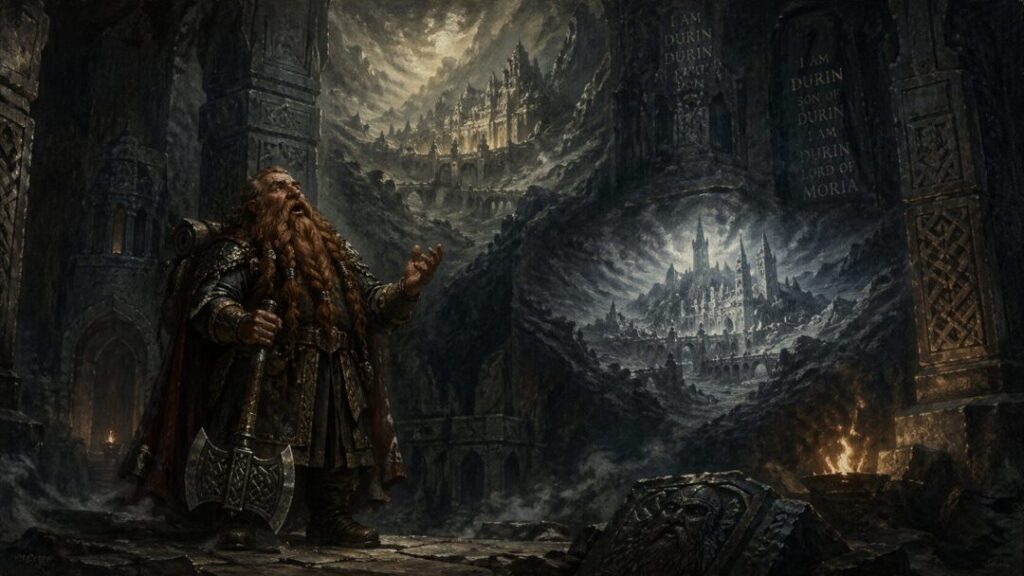
In Moria, he sings of Durin and includes names from the Elder Days: Nargothrond and Gondolin. These were great Elven realms of Beleriand, long destroyed by the time of the War of the Ring.
That detail matters.
It shows that at least some Dwarvish tradition preserved names from the First Age. Gimli is not an Elf of Rivendell. He is a Dwarf of the line connected with the Lonely Mountain and the wider history of Durin’s folk. Yet his song remembers fallen kingdoms of Beleriand.
This does not mean all Dwarves knew the full history of Beleriand.
But it does suggest that Dwarvish memory was not sealed off from the Elder Days. That makes sense. In the First Age, the Dwarves of the Blue Mountains had dealings with the Elves of Beleriand, including both friendship and conflict. The deep past of the Dwarves touched that lost western world.
By the Third Age, much of that history may have become poetic rather than practical.
Still, the names endured.
Nargothrond.
Gondolin.
The Elder Days.
Gimli’s song is a small window into a larger truth: memory in Middle-earth often survives in poetry after it has vanished from maps.
Rohan and the Shire Were Probably Different
What about the Rohirrim?
Here we need to be cautious.
The Rohirrim had rich traditions of song and ancestry, but their known cultural memory is not centered on Beleriand. Their identity is tied more closely to the Northmen, the Mark, horses, kingship, and their alliance with Gondor.
Could some among them have heard ancient names from Gondor?
Possibly.
But the texts do not give us strong evidence that Beleriand was a meaningful part of Rohirric cultural memory. If the Rohirrim knew anything of it, it was probably indirect and limited.
The same is even more true of the Shire.
Before Bilbo and Frodo, Hobbits generally seem far removed from the great histories of Elves and Men. Their world is intentionally local. That is part of why the intrusion of ancient matters into Hobbit lives feels so powerful.
A learned Hobbit like Bilbo could know of Beleriand.
A Hobbit who had listened to Bilbo or read his translations might know something too.
But the average Hobbit of the Shire almost certainly did not carry any serious knowledge of the drowned lands of the First Age.
To most of them, even Rivendell was nearly legendary.
Beleriand would have been beyond imagining.
Some Living Beings Remembered It Personally
The most haunting answer is that Beleriand was not only remembered through texts.
Some beings in the Third Age had lived close enough to the Elder Days for the memory to remain personal.
Elrond was born in Beleriand.
Galadriel had lived through the First Age, though the details of her movements belong to the deeper traditions of the legendarium and should be handled carefully. What matters here is that she belonged to the ancient Elven world and carried memories far older than the kingdoms of Men in the Third Age.
Círdan, too, was one of the oldest Elves remaining in Middle-earth, associated with the western shores and the long history of Elven departure.
For such figures, Beleriand was not merely “ancient history.”
It was part of the world they had lost.
This is why the sadness of the Elves in The Lord of the Rings feels so deep. They are not simply tired because the Third Age is ending. They carry losses from ages before the Shire existed, before Rohan existed, before Gondor existed, before even Númenor rose from the Sea.
When they speak of the Elder Days, they are not decorating the story with old myths.
They are remembering wounds that never fully closed.
Beleriand Survived as Memory, Not Geography
The key is this:
By the Third Age, Beleriand no longer functioned as a place.
It functioned as memory.
That memory took different forms depending on the people.
For Elrond, it was personal and familial.
For Rivendell, it was lore and song.
For Aragorn, it was inherited identity and living moral pattern.
For Gondor, it was probably part of deep Númenórean tradition.
For Gimli, it survived in ancient poetry.
For Bilbo, it became learned beauty.
For ordinary Hobbits, it was likely almost unknown.
This layered memory is one reason Middle-earth feels so old.
The past is never fully gone, but neither is it equally available to everyone. Ancient names surface briefly, then disappear again. A song in Rivendell. A tale on Weathertop. A line in Moria. A sorrow in Elrond’s house.
The reader senses that the world is built on ruins far older than the immediate quest.
Beleriand is one of those ruins.
Even when it is not named, its shadow lies behind the story.
The Real Answer
So did the peoples of Middle-earth know of Beleriand in the Third Age?
Some did.
Most did not know much.
And almost no one knew it in the same way.
The Wise knew.
The High Elves knew.
The Dúnedain preserved parts of the memory.
Learned Gondorians likely knew something.
Dwarvish song retained ancient names.
Bilbo and Frodo encountered that lore through Rivendell and their unusual place in the great events of the age.
But ordinary people probably did not think of Beleriand at all.
To them, the world was already full of enough troubles: Mordor, war, harvests, roads, kings, borders, and survival.
That is what makes the presence of Beleriand in The Lord of the Rings so powerful.
It is not explained like a history lesson.
It rises like something half-buried.
A name in a song.
A sorrow in an immortal face.
A tale told in the dark before danger comes.
A reminder that the War of the Ring is not the first great struggle against evil, but the last movement of a much older music.
Beleriand is gone.
But the Third Age is still haunted by it.
And the people who remember it most clearly are often the ones who understand the deepest truth of Middle-earth:
nothing truly great is ever lost without leaving echoes behind.
Sources & Notes
- J.R.R. Tolkien, The Silmarillion, “Of the Voyage of Eärendil and the War of Wrath” — Beleriand is broken and much of it is drowned after the First Age.
- J.R.R. Tolkien, The Lord of the Rings, Book I, Chapter 11, “A Knife in the Dark” — Aragorn tells the hobbits the tale of Beren and Lúthien on Weathertop.
- J.R.R. Tolkien, The Lord of the Rings, Book II, Chapter 1, “Many Meetings” — Rivendell preserves Elder Days lore, including Bilbo’s song of Eärendil.
- J.R.R. Tolkien, The Lord of the Rings, Book II, Chapter 4, “A Journey in the Dark” — Gimli’s song of Durin remembers Nargothrond and Gondolin.
- J.R.R. Tolkien, The Lord of the Rings, Appendix A, “Annals of the Kings and Rulers” — Númenórean and Dúnedain history links Third Age Gondor and Aragorn to Elder Days traditions.