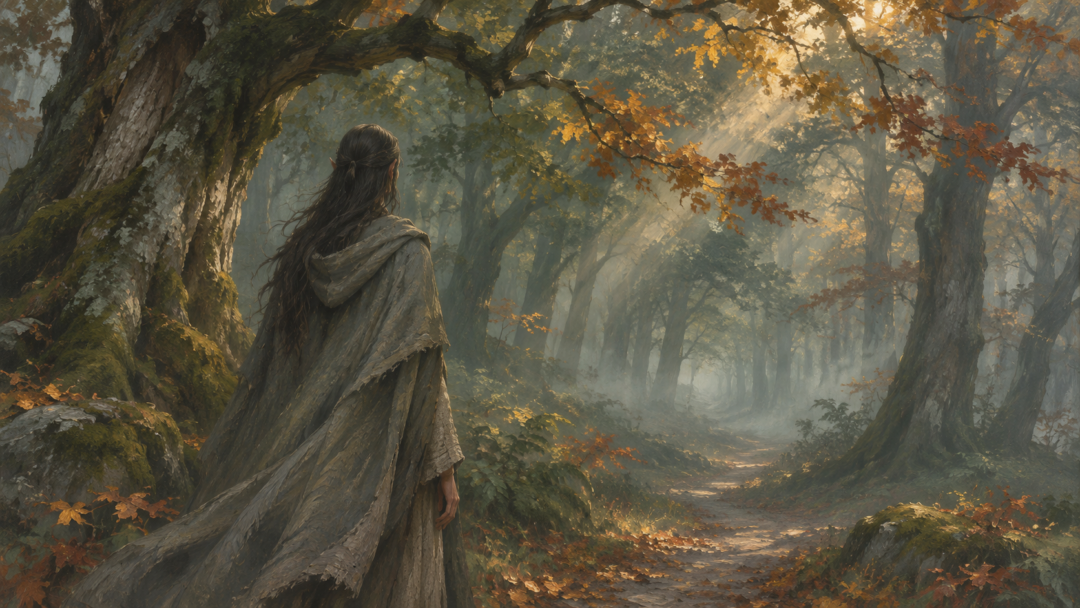
In Lothlórien, Frodo walks among golden leaves and feels that the world has slipped out of ordinary time. The trees seem to hold a beauty that other places have already lost. It is tempting to think the Elves have solved the problem of living: they remain young, make astonishing things, and remember ages that have vanished from the maps. On film, Legolas’s effortless movement through danger strengthens that impression; the books reveal the centuries behind that grace.
But yes, Elves have several downsides, and the greatest is built into their existence. They are bound to a changing world for as long as that world lasts. Their memories grow heavier, their bodies are subject to a long fading, and their love of beautiful things can become a dangerous wish to keep them unchanged. That is a structural problem, not a verdict that Elves are worse people than anyone else.
A life bound to the world
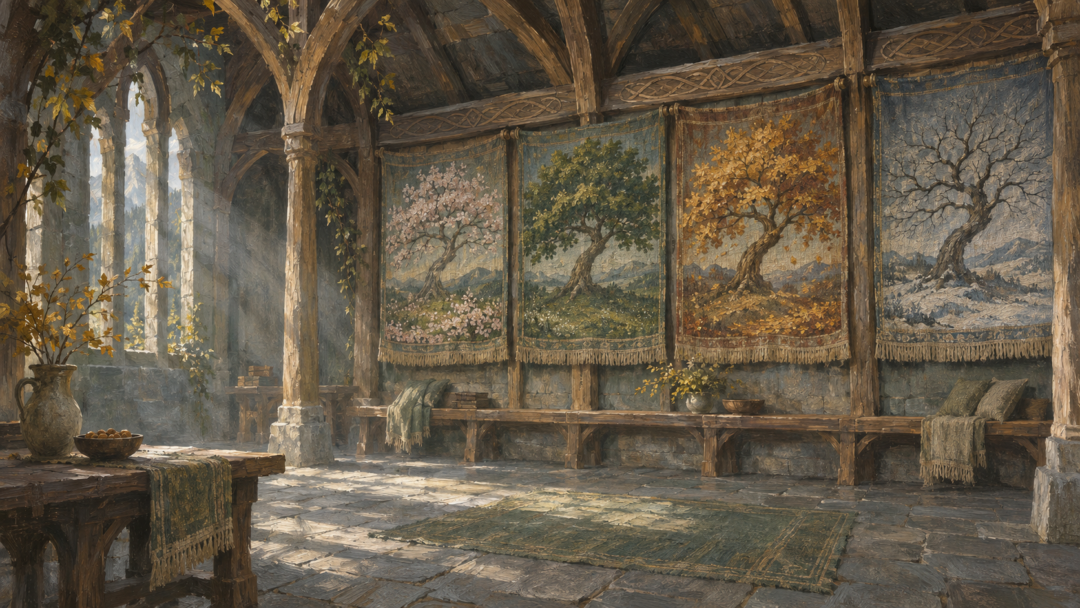
The Silmarillion gives Elves a fate quite different from the one that awaits Men. They can be killed in battle or perish through overwhelming grief, but ordinary age does not bring their lives to a natural close. Their spirits remain within Arda, the world itself, until its end. For an Elf, even bodily death is not the same departure that death represents for a human being. It is possible for an Elvish spirit to be restored to embodied life, though not simply on demand.
This is why calling them immortal can mislead. A sword wound is real; so is bereavement. An Elf who dies is summoned to the halls of Mandos, and the separation of spirit from body is no trivial interruption. Later writings on Elvish customs explore that separation and the prospect of return. None of it makes loss harmless, or promises that an Elf can step outside the history that caused the loss in the first place.
Consider Elrond. His twin brother Elros chose the mortal fate, becoming the first king of Númenor, while Elrond remained among the Elves. The descendants of Elros rose, ruled, and passed away, and the kingdom itself eventually fell. Elrond also saw the destruction of Eregion and lost friends in the wars against Sauron. By the time the Fellowship reaches Rivendell, its welcoming halls belong to someone who has outlived whole political worlds, not merely several generations of guests.
There is a strange arithmetic to this endurance. More years allow for more friendships, works of art, and acts of healing; they also allow more things to be taken away. The Elves are not condemned to feel equally miserable every day, and their songs and celebrations are abundant evidence against that idea. Yet no ordinary lifespan draws a boundary around what they may have to witness. Long life expands the possibilities of joy and the reach of grief together.
Memory can be a kind of weight
Elvish memory makes that burden unusually vivid. Galadriel remembers the light of the Two Trees in the Blessed Realm, before the Sun and Moon existed. By the Third Age, the Trees are gone and the Elven kingdoms of Beleriand have been overwhelmed and lost beneath the sea. A visitor can hear of these places as ancient legends; for Galadriel, the lost world belongs to the history of her own life. That difference helps explain why Elvish beauty in Middle-earth often feels touched by mourning.
Memory is also a strength. Elrond preserves knowledge that allows others to understand the Ring, and his house offers shelter rather than retreating entirely into the past. Yet remembrance cannot replace what has disappeared. In Lórien, songs of distant lands and departed days sit beside living trees and running water. It is not that every Elf recalls every moment perfectly; the books do not give us that simple rule. Rather, their unusually long perspective makes forgetting, accepting change, and beginning again distinct challenges.
The danger of keeping beauty still
There is another downside that looks, at first, like a remarkable gift. Elves can make places where time seems gentler. The golden wood of Lórien and the refuge of Rivendell preserve something of an older world, even as kingdoms outside their borders rise and fall. The Fellowship experiences their peace directly. But these havens do not exist apart from history, and their beauty has a price.
In the Second Age, the smiths of Eregion wanted to remain in Middle-earth while enjoying something of the bliss associated with the West. Sauron approached in the fair guise of Annatar, offering knowledge with which they could enrich and perfect their lands. Gil-galad and Elrond distrusted him, but the craftsmen of Eregion accepted his instruction. Their wish was not simply to conquer neighbours or amass treasure. They hoped to make what they loved endure, and Sauron knew how to exploit that hope.
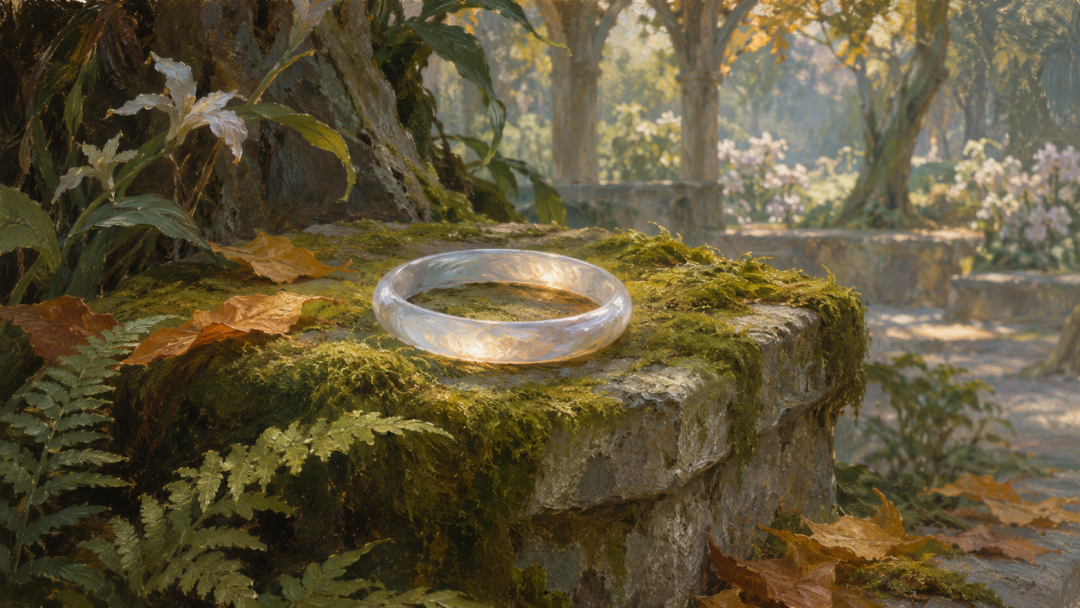
Celebrimbor forged the Three Elven Rings without Sauron’s hand touching them. As Elrond explains at the Council, their purpose was not war or conquest but “understanding, making, and healing.” They could resist decay and postpone weariness. Yet their making drew on the ring-lore Sauron had helped develop, and he secretly forged the One Ring to dominate the others. The Elves recognised his design and removed their rings, but the consequences included war, the ruin of Eregion, and Celebrimbor’s death.
The Three were not evil objects disguised as good ones. Once Sauron lost the One, their guardians could use them to sustain havens of extraordinary peace. Their vulnerability lay in the connection Sauron had engineered: if he recovered the One, their works and their keepers would be exposed to him; if the One were destroyed, the power sustaining those works would also end. What protected Lórien could not be secured forever without leaving Sauron’s threat unresolved.
Galadriel gives this dilemma its clearest personal scene. When Frodo offers her the One Ring, she refuses the chance to become a ruler of overwhelming power. She already knows that destroying it will mean the fading of Lórien’s special preservation. Her choice does not prove that she loved the wood any less. It proves that she will not purchase its continued splendour through domination. In a letter, Tolkien called the Elves’ excessive effort to arrest change “a kind of embalming”: the danger is that protecting life can shade into refusing to let it move.
When love turns into possession
Fëanor is the starkest example of Elvish creativity becoming possessive. He makes the three Silmarils, jewels containing the light of the Two Trees. When Melkor steals them, Fëanor and his sons swear an oath to recover them from anyone who holds them. Their pursuit begins amid rebellion and the Kinslaying at Alqualondë, where Elves attack other Elves to seize ships. A work of surpassing beauty has become something for which its makers will destroy lives and betray kinship.
The oath keeps doing damage long after Fëanor himself is dead. His sons’ claims upon the jewels help bring further attacks upon Elven communities, including Doriath. Their courage and talents do not cancel the harm, and the story never requires us to believe that every Elf would have made the same choice. The tragedy comes from treating a created thing, however precious, as a possession that outranks every obligation to other people.
Thingol makes a different mistake. The king of Doriath comes to possess a Silmaril and has it set in the Dwarven necklace called the Nauglamír. When the Dwarven craftsmen refuse to surrender the completed treasure, their own desire for it meets his furious pride and contempt. They kill him, and the resulting violence contributes to Doriath’s ruin. This is not another account of Fëanor’s oath, but a separate warning: an old and powerful ruler can still let the splendour of an object distort his judgment.
There is no neat rule that every Elf becomes grasping with age. Celebrimbor’s craftsmanship also represents generous ambition, and the Three go on to shelter others. Galadriel can relinquish the power she desires; Elrond can support a quest whose success will diminish his own realm. Those choices matter precisely because possession is a temptation, not an inevitable flaw. Their stories ask whether love of a place or a work can survive the decision to let it pass.
What Men can do that Elves cannot
Men seem to have the worse bargain: short lives, ageing bodies, and death that can arrive before anything feels complete. Yet The Silmarillion presents mortality as the Gift of Ilúvatar. Human spirits leave the circles of the world for a destiny not revealed to the Elves. The gift does not make death painless or easy to understand, and it is not a claim that Men live more wisely. It gives them an exit from Arda’s long wearing-down that the Firstborn do not possess.
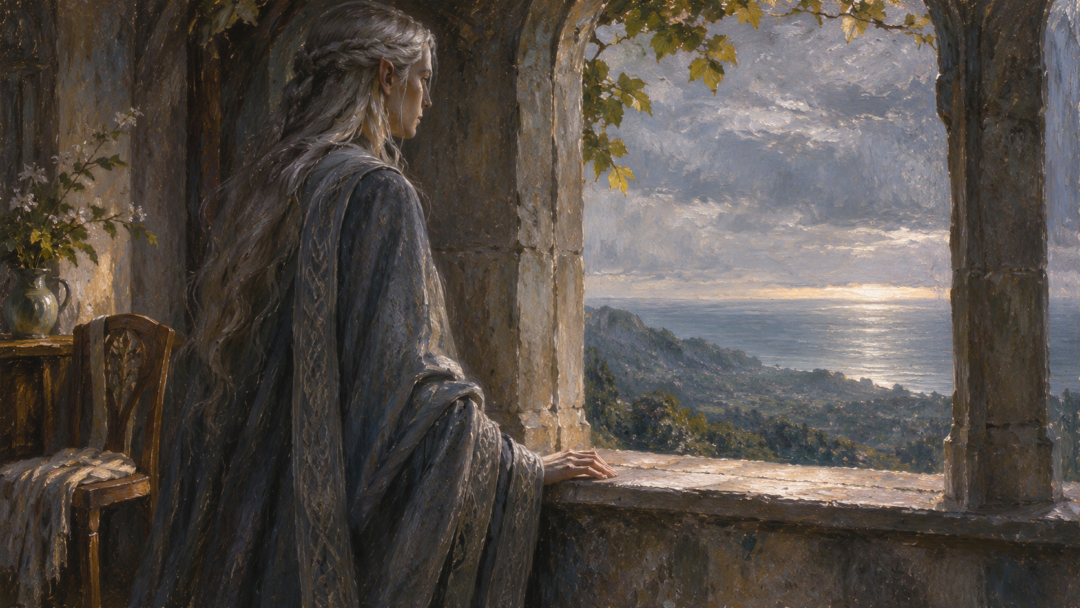
This difference makes the choice of Arwen especially poignant. As one of the Half-elven entitled to choose her fate, she accepts mortality to share a life with Aragorn. Her decision is exceptional, not something Elves in general can simply elect to do. The voyage west is a different matter: for Elves it offers healing and a dwelling beyond the familiar troubles of Middle-earth, but it does not release them from their bond to the world. What comes after the world’s end remains unknown to them.
At the Grey Havens, the ships carry away people whose greatest works cannot be carried into the next age of Middle-earth. Their leaving is neither punishment nor defeat. It is the cost of refusing to preserve a beloved world by ruling it. The golden leaves of Lórien were beautiful because they lived, not because they could be held forever.
Sources & Notes
- Elven life cycle - Tolkien Gateway — https://tolkiengateway.net/wiki/Elven_life_cycle
- The Encyclopedia of Arda - Fading Years — https://www.encyclopedia-of-arda.com/f/fadingyears.html
- Letter 131 - Tolkien Gateway — https://tolkiengateway.net/wiki/Letter_131
Read The Silmarillion on the different fates of Elves and Men; Morgoth’s Ring, ‘Laws and Customs among the Eldar’, on embodiment; and Letter 131 on preservation and resistance to change. The article’s account of memory and loss is interpretive, not a claim that every Elf is alike.