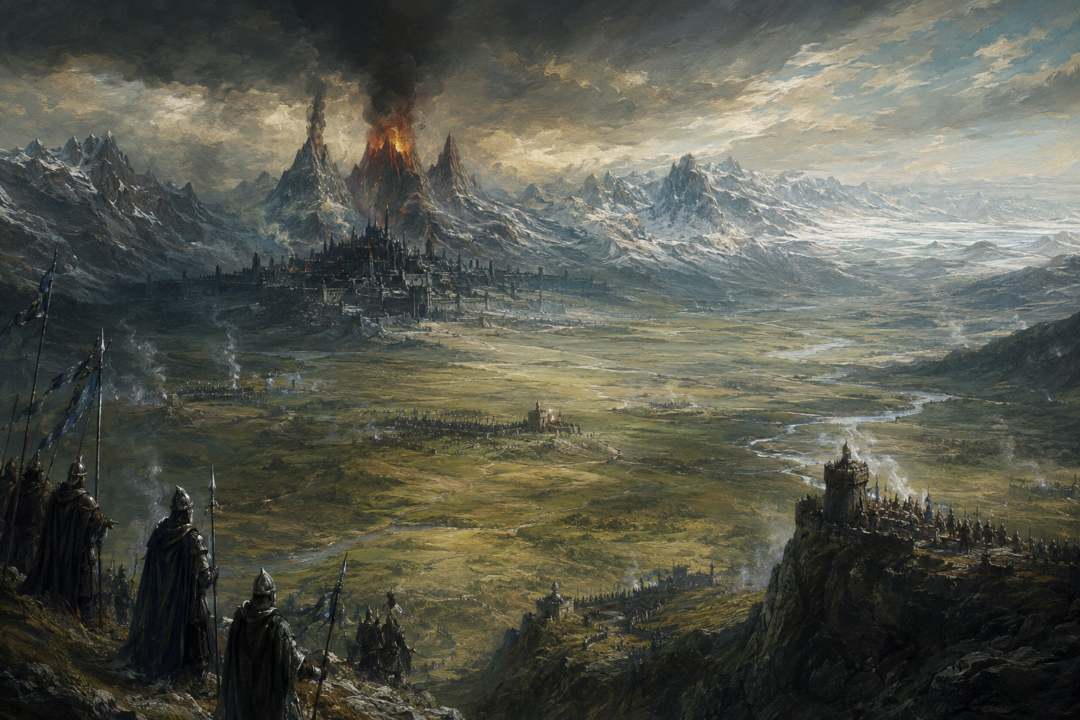
For nearly four hundred years, the Noldor watched Angband.
After their victory in the Dagor Aglareb, they tightened their guard around Morgoth’s fortress. The northern plain of Ard-galen lay beneath their eyes. The great approaches into Beleriand were defended. For generations, no great host of Morgoth could simply march south without meeting Elven resistance.
It sounds like containment.
But Angband was never sealed.
That distinction explains one of the most dangerous features of the Long Peace. Morgoth could be militarily restricted while remaining remarkably well informed. Behind Thangorodrim, he was not merely breeding Orcs and devising new weapons. He was learning about the people outside his walls—their divisions, their histories, their strengths, and the weaknesses they carried with them.
The Siege of Angband was therefore never only a contest of armies. It was also a contest of information, and on that battlefield the Noldor never achieved the isolation of their enemy that their apparent victory suggested.
The Siege Was Not a Complete Encirclement
The central fact is geographical.
After the Dagor Aglareb, the Noldor established the Siege of Angband and maintained it for nearly four centuries. Their princes guarded the approaches south of Morgoth’s realm: Fingolfin and Fingon in the west, the sons of Finarfin around Dorthonion and the Pass of Sirion, and the sons of Fëanor across the eastern marches.
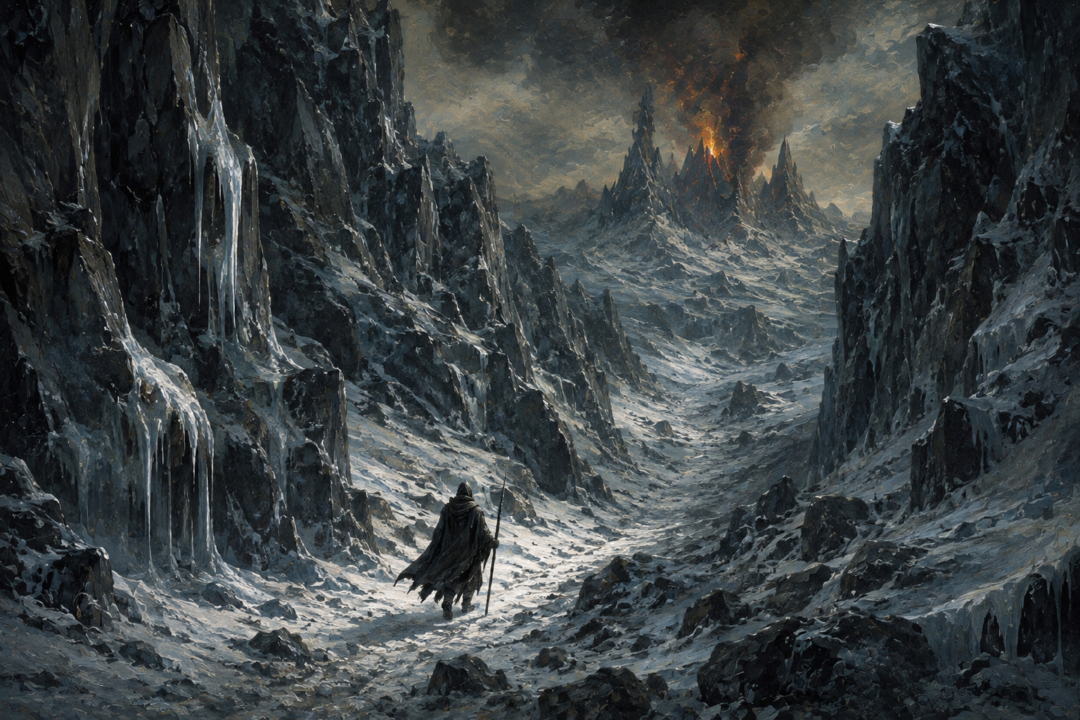
Yet Angband stood against the immense curve of the Iron Mountains.
Those mountains prevented the Noldor from surrounding Morgoth completely. Their snow and ice made them effectively impassable to the Elves maintaining the siege. Morgoth consequently retained an uncontrolled region behind Angband, toward the north.
That was the fundamental weakness of the entire leaguer.
The Noldor could watch the gates and dominate the southern approaches without possessing a true ring around the Enemy. Angband was blockaded from Beleriand, not hermetically sealed from the world.
And Morgoth exploited the difference.
Spies Could Leave Through the North
The account of the Siege makes the consequence explicit: Morgoth’s spies sometimes went out behind Angband and entered Beleriand by indirect routes.
That single detail changes how the Long Peace should be imagined.
A spy did not necessarily have to creep through the Elven lines beneath Thangorodrim. The northern wilderness offered another possibility. Agents could leave through territory beyond the reach of the Noldorin watch, travel around the fortified front, and eventually enter Beleriand elsewhere.
This was difficult country. The texts do not provide an organized map of permanent espionage trails, hidden stations, or courier networks, so none should be imagined as established fact.
What is stated is enough: the northern side of Morgoth’s realm was not enclosed, and his spies could use devious routes to reach Beleriand.
The Siege therefore had an intelligence problem built into its geography.
The Elves could prevent armies from passing where spies might still succeed.
Captivity Gave Morgoth Another Source of Knowledge
Morgoth did not depend only upon agents who voluntarily served him.
He also wanted prisoners.
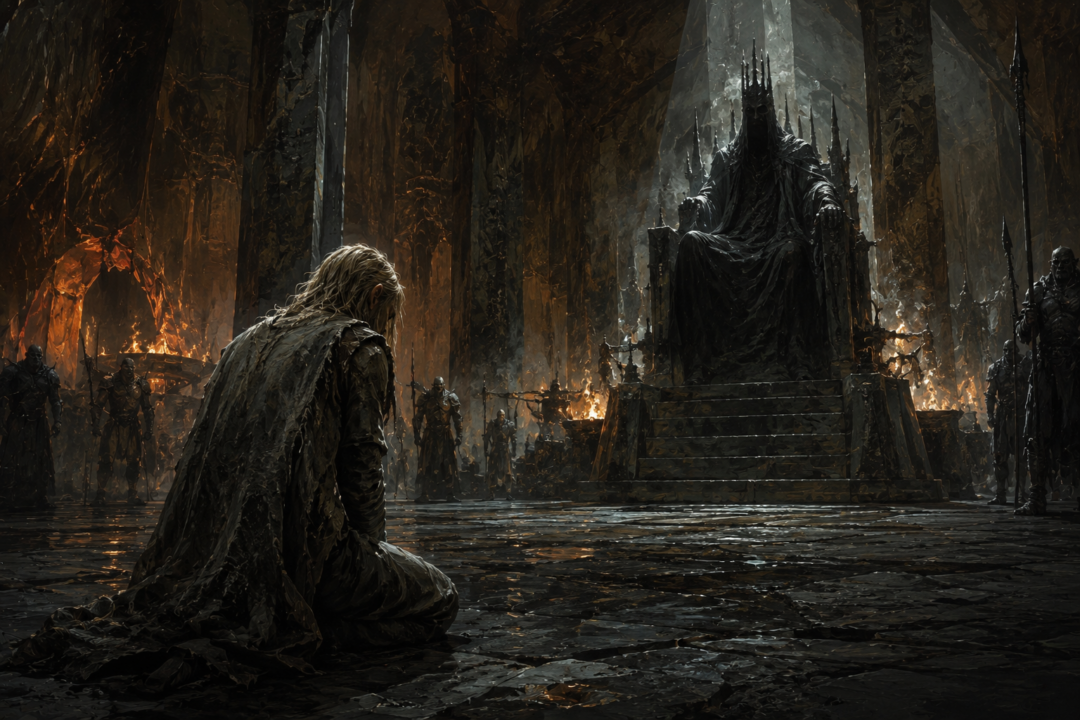
During the Siege, he ordered his Orcs to capture Elves alive whenever possible and bring them to Angband. The purpose was not merely imprisonment. Morgoth particularly desired to spread fear and division among the Eldar.
Some captives were so broken by the terror of Morgoth that afterward they served his will without needing chains.
This is one of the darker details of the First Age because it makes information gathering inseparable from psychological warfare.
A captured Elf potentially knew far more than troop positions. Such a prisoner belonged to a people, a household, and a history. The captives taken into Angband came from societies whose internal divisions mattered profoundly.
Through such means, Morgoth learned much about what had happened among the Noldor since the rebellion of Fëanor.
And what he learned pleased him.
The Most Valuable Intelligence Was Political
Morgoth discovered that his enemies were not united.
The Noldor had crossed into Middle-earth carrying grievances that no military victory could erase. Fëanor’s rebellion, the Kinslaying at Alqualondë, the abandonment of Fingolfin’s people, the crossing of the Helcaraxë, and the competing loyalties of the great houses had created fractures long before the Siege began.
Some wounds had partially healed. Maedhros had relinquished his claim to kingship in favor of Fingolfin, and cooperation between the houses made the victory of the Dagor Aglareb possible.
But reconciliation was not the same thing as forgetting.
Morgoth learned of these divisions and recognized their usefulness.
This is crucial because his intelligence gathering was not merely tactical. He was interested in relationships.
He wanted to know what his enemies feared, resented, concealed, and mistrusted.
An Orc scout might report where an Elven watchtower stood.
Knowledge of the Kinslaying could do something far greater.
It could damage alliances.
Morgoth Used Truth as a Weapon
Morgoth’s preferred form of deception was often more dangerous than a simple lie because it could contain enough truth to take root.
The hidden crimes and divisions of the Noldor offered exactly that opportunity.
The Sindar of Beleriand had not originally known the full story of the rebellion in Aman. Rumors eventually spread concerning the deeds of the Noldor before their return to Middle-earth. When Thingol learned the truth of the Kinslaying, his anger had serious political consequences, including his prohibition of Quenya among his people.
Morgoth cannot simply be credited with causing every dispute among his enemies. Their grievances were real, and the actions behind them belonged to the Noldor themselves.
That was precisely why the information was useful.
He did not have to invent the fault line.
He only had to press upon it.
The larger pattern is characteristic of Morgoth’s power throughout the First Age: corruption works most effectively when it finds something already damaged.
The Siege Also Gave Morgoth Time to Test His Enemies
Information came from reconnaissance by force as well.
The Long Peace was not absolute peace. Morgoth repeatedly tested the watch of the Noldor.
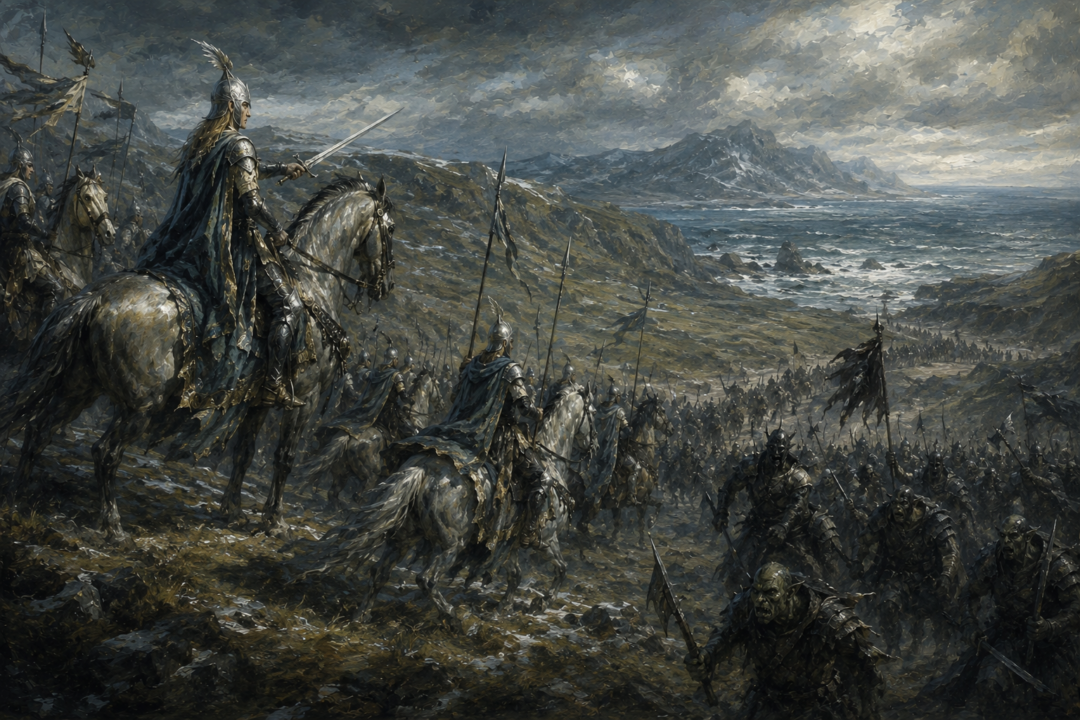
About a century after the Dagor Aglareb, he attempted a remarkable northern maneuver against Hithlum. Knowing the vigilance of Maedhros in the east, he sent an Orc-host northward through the frozen lands behind Angband. The army then traveled west and eventually turned south toward the Firth of Drengist, approaching Hithlum from the direction associated with Fingolfin’s earlier passage from the Helcaraxë.
The attempt failed. Fingon detected the force and destroyed it.
But the episode demonstrates the strategic possibilities created by Angband’s open northern rear.
It also shows that Morgoth was thinking beyond a straightforward attack across Ard-galen. He was probing geography and attempting to discover whether the defenses of the Noldor could be circumvented.
Later came another kind of experiment.
Glaurung emerged from Angband before he had reached his full strength. The young dragon caused terror, but Fingon rode against him with mounted archers, and Glaurung retreated.
Again Morgoth had failed to break the Siege.
But the enemy behind the mountains was not inactive.
He was developing weapons, testing responses, and learning.
The Noldor’s Success Created Its Own Danger
Perhaps the greatest weakness of the Siege was psychological.
For centuries, it worked.
The realms of the Eldar grew powerful. Men entered Beleriand and became allies of the Elven lords. Strongholds, kingdoms, and cultures flourished while Morgoth remained contained in the north.
Eventually Fingolfin became concerned precisely because this success could not last forever.
He urged an assault upon Angband while the strength of the Noldor and their allies was great. He understood that Morgoth remained free to devise dangers that would only become known when he chose to reveal them.
Most of the Noldor did not support the attack.
They had become accustomed to the existing balance, while an assault upon Angband promised enormous losses.
Their caution was understandable.
It was also exactly what Morgoth needed: time.
The Siege prevented him from openly ruling Beleriand, but it did not prevent him from preparing the means to destroy the Siege.
Angband Was Watching While Beleriand Felt Safe
This is the hidden contradiction at the center of the Long Peace.
From the outside, Angband looked trapped.
Inside, Morgoth was accumulating strength.
His enemies watched his gates, but they could not watch everything behind the Iron Mountains. His spies could escape by northern routes. Captives could be broken and turned to his purposes. Knowledge of the Noldor’s internal history gave him insight into their divisions. Military probes tested the vigilance of their defenses.
Meanwhile, the passage of centuries made the existing order feel increasingly permanent.
It was not.
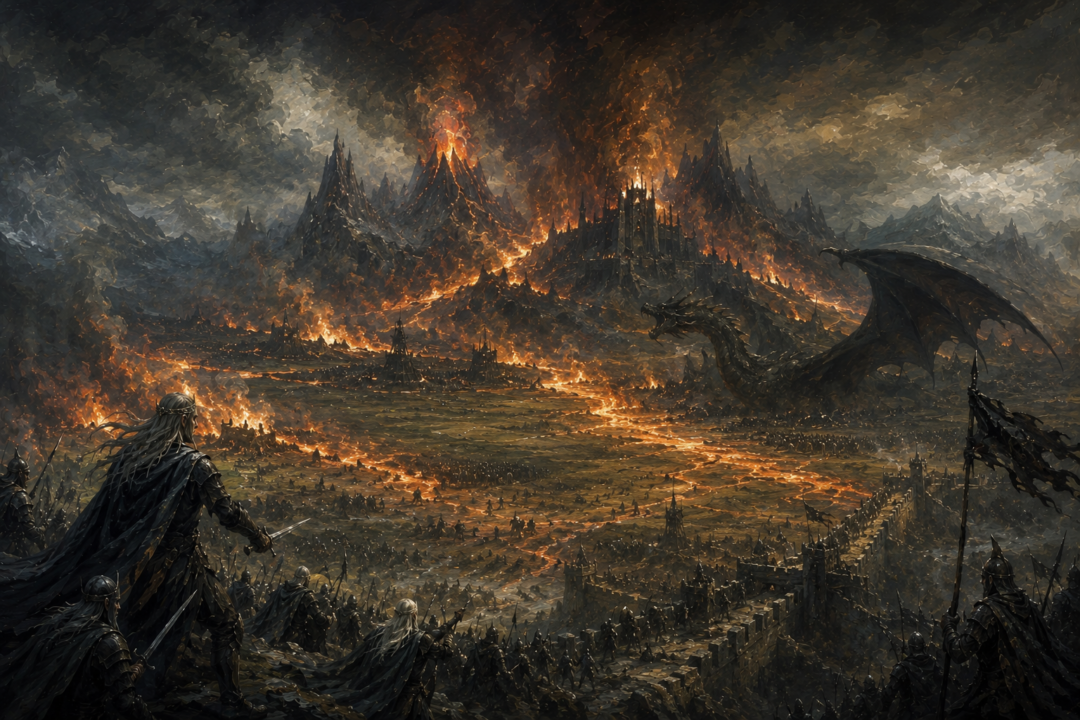
When Morgoth finally struck in the Dagor Bragollach, the attack was devastatingly different from the failed assaults that had preceded it. Fire poured from Thangorodrim across Ard-galen. Glaurung now came in his full might. Balrogs and enormous hosts of Orcs followed.
The Siege collapsed.
It would go too far to claim that Tolkien describes the Battle of Sudden Flame as the product of a detailed intelligence operation in the modern sense. The texts do not give us Morgoth’s battle plans or a catalogue of reports from spies.
But they establish something more fundamental.
Morgoth had never been blind.
The Long Peace Was Never a Locked Door
The Noldor’s mistake was not that they failed to build an impressive siege. Given the geography and the strength of Angband, their achievement was extraordinary.
Their problem was that containment was mistaken for something closer to mastery.
Angband still possessed depth behind the Iron Mountains. Morgoth still had servants abroad. Prisoners still disappeared into his fortress. News still reached him. Experiments still came out of his gates.
Most dangerously, he had time to understand the weaknesses of those opposing him.
That is why the Long Peace feels so ominous in retrospect. Its quietness belonged mainly to Beleriand.
Behind Thangorodrim, the war had never stopped.
Sources & Notes
- https://tolkiengateway.net/wiki/Siege_of_Angband
- https://tolkiengateway.net/wiki/Angband
- https://tolkiengateway.net/wiki/Morgoth
- https://tolkiengateway.net/wiki/Thangorodrim
References for Angband, its siege, Morgoth’s agents, and the northern geography.