Cirth: The Elvish Runes That Became the Secret Language of the Dwarves
The walls of Moria hold one of the most fascinating contradictions in Middle-earth: the Dwarves, a people often associated with secrecy and isolation, preserved and expanded a writing system that was not originally their own. The angular runes carved into stone, weapons, and ancient records across Middle-earth were known as the Cirth, a script whose history reveals something deeper than simple communication.
The story of the Cirth is not only about letters. It is about how knowledge travels between peoples, how cultures transform what they inherit, and how even a written language can carry the memory of alliances, migrations, and lost ages.
The runes that appear so naturally suited to the halls of the Dwarves were first created by Elves. Yet over time, the Dwarves of Middle-earth became their greatest users, adapting the script to their own needs and traditions. The journey of the Cirth reflects one of the recurring themes of Tolkien’s world: nothing made by the Free Peoples remains completely untouched by time.
The Elvish Origins of the Cirth
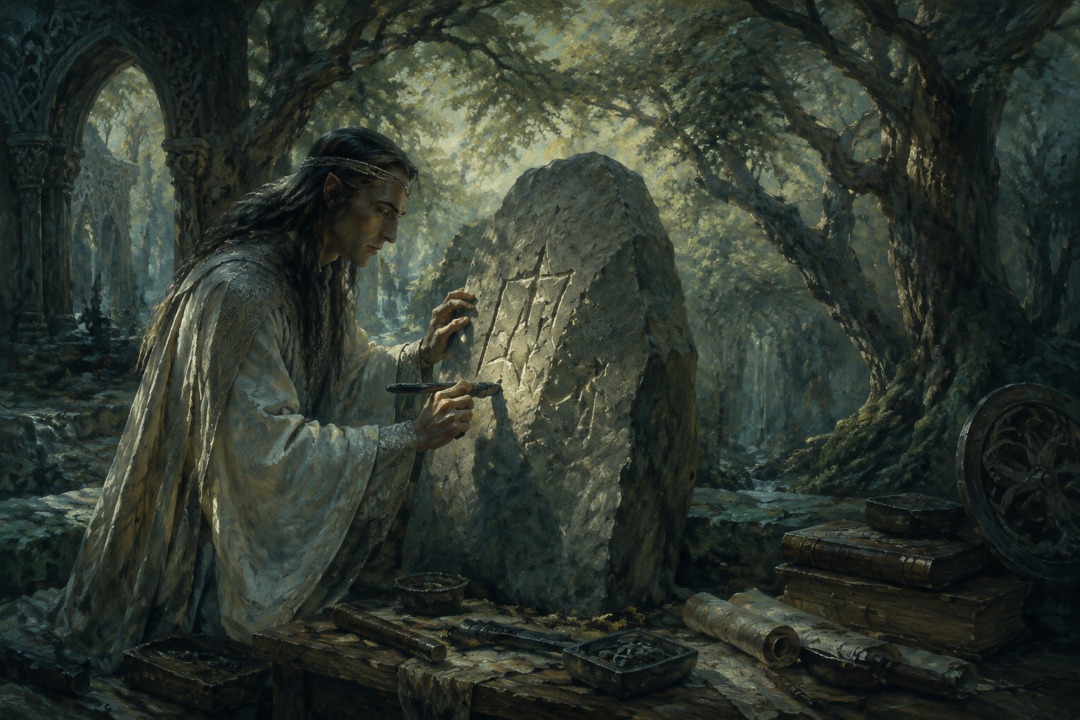
The Cirth originated among the Sindar, the Grey Elves of Beleriand, during the First Age. Unlike the flowing script traditions associated with the Eldar, the Cirth were designed primarily for inscription. Their shapes were built from straight lines and combinations of marks that could be carved into hard surfaces.
This practical quality was central to their later history. The Cirth were not originally created as a secret Dwarvish code or a mystical language of stone. They were a tool developed by Elves for recording information in a form suited to engraving.
The most important early development of the script was associated with Daeron, the loremaster and minstrel of Doriath. According to the traditions recorded in The Lord of the Rings appendices, Daeron devised the Cirth, and the script later spread beyond its original Elvish setting.
This spread reveals an important difference between spoken languages and writing systems in Middle-earth. Peoples could share a script even when they did not share a culture. A written system could cross borders, enter new communities, and take on new meanings.
Why the Dwarves Were Drawn to the Cirth
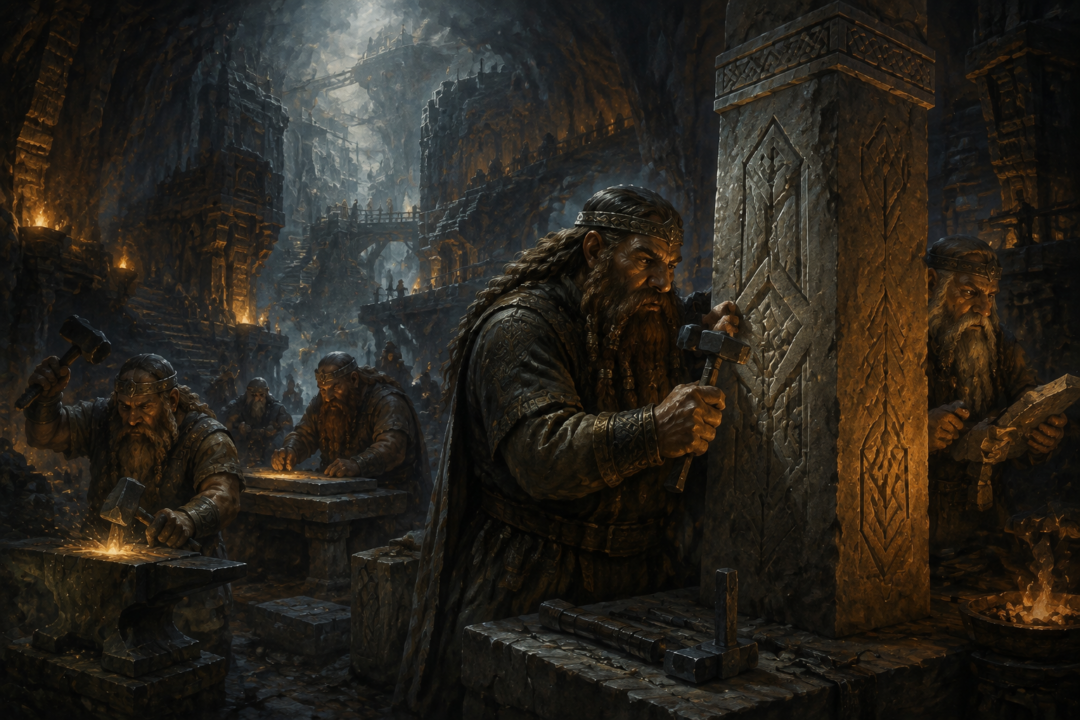
The Dwarves were uniquely suited to preserve and develop a rune system designed for carving. Their civilization was built around stone halls, underground kingdoms, metalwork, and long-lasting monuments. A script intended to be cut into durable surfaces naturally fit their environment.
The Dwarves did not simply borrow the Cirth unchanged. They adapted them.
In the later history of Middle-earth, the form most strongly associated with the Dwarves was Angerthas Moria, a developed version of the Cirth used by the Dwarves of Khazad-dûm. The name itself reflects this connection: the Angerthas were expanded and ordered rune systems, while Moria became one of the greatest centers of Dwarvish use.
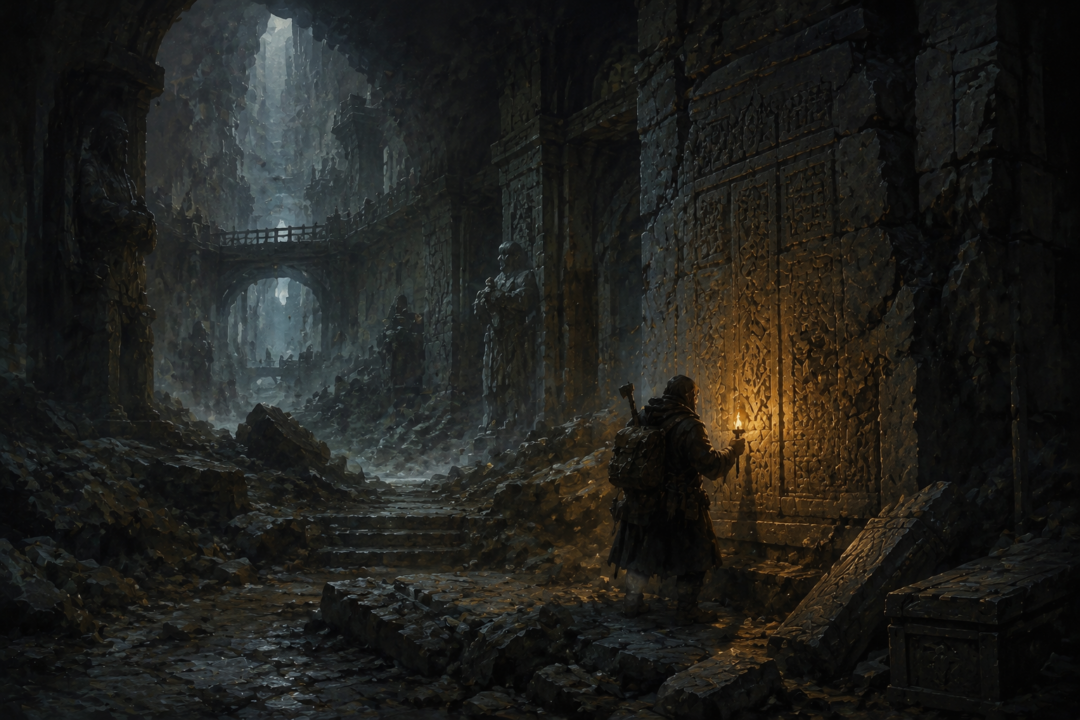
The famous inscription on Balin’s tomb in the Chamber of Mazarbul demonstrates this tradition. The record is written in Cirth, showing that the Dwarves used the script not only for decoration but for history, memory, and formal records.
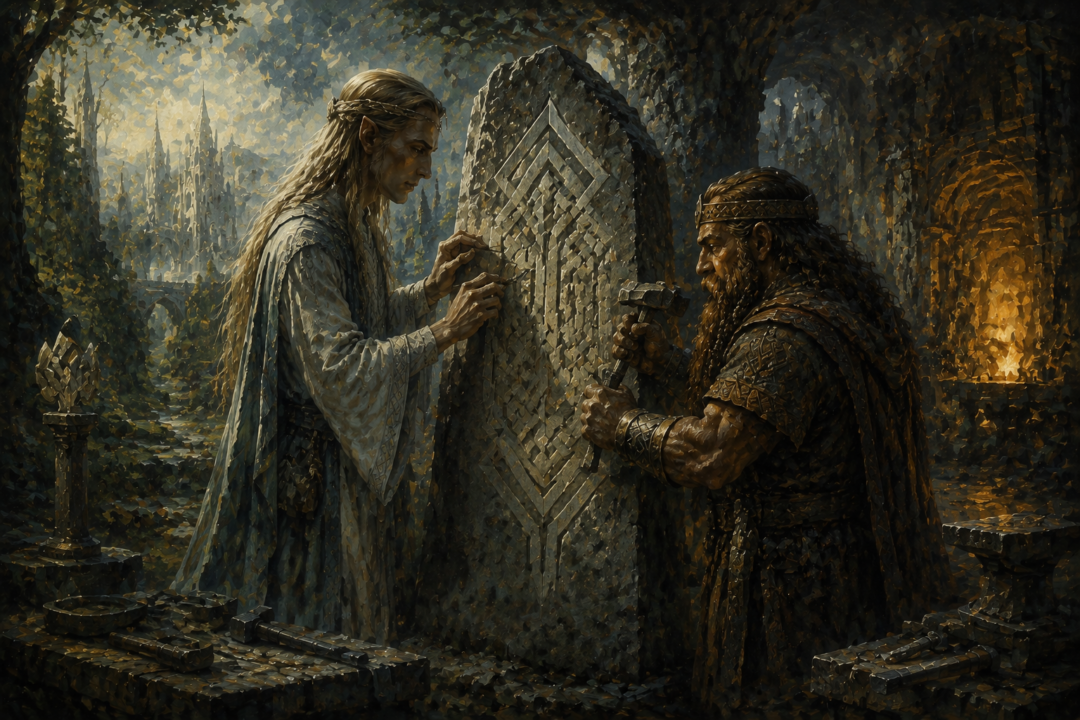
Yet the adoption of the Cirth was not a simple replacement of Elvish influence with Dwarvish ownership. The script remained a reminder of cultural exchange between peoples who were often separated by suspicion and misunderstanding.
The Transformation from Elvish Script to Dwarvish Tradition
One of the most interesting aspects of the Cirth is that the Dwarves changed something originally created by others into something deeply connected with their own identity.
The Dwarves were not known for abandoning their traditions easily. Their languages, crafts, and customs were carefully guarded, and their own tongue, Khuzdul, was rarely shared with outsiders. Yet they accepted and reshaped an Elvish writing system because it served their purposes.
This reflects a broader pattern in Tolkien’s histories. The peoples of Middle-earth are not isolated cultures frozen in place. Trade, conflict, friendship, and migration constantly move ideas between them.
The Noldorin Elves created much of the great lore of the First Age, but later generations inherited, changed, and preserved fragments of older knowledge. Men inherited swords, kingdoms, and languages from earlier ages. Hobbits preserved traditions whose origins they barely understood. The Dwarves transformed the Cirth into a script that became inseparable from their own written history.
The runes therefore represent continuity rather than ownership. A creation can belong to its maker while also becoming meaningful to those who inherit it.
Cirth, Khuzdul, and the Mystery of Dwarvish Writing
The relationship between the Cirth and the Dwarves’ own language is another important detail. The script was not itself a language. It was a writing system capable of representing different languages.
The Dwarves could use Cirth to write their own records, but the runes could also represent other tongues. This distinction matters because Tolkien often separates the identity of a people from the tools they use.
The secrecy surrounding Khuzdul sometimes creates the impression that everything Dwarvish was hidden from outsiders. However, the Dwarves did share certain written records and names in circumstances where practical communication was necessary. The Cirth became one of the bridges between their private traditions and the wider world.
The runes therefore occupy an unusual position: they are a public expression of a people who often valued privacy.
The Decline of the Cirth in the Later Ages
Like many things from the elder days, the Cirth carried the weight of fading history.
By the end of the Third Age, much ancient knowledge had declined or survived only in limited places. Kingdoms fell, great cities became ruins, and languages changed. The Cirth remained visible in old inscriptions, especially among the Dwarves, but the world around them was moving toward new forms.
The rise of the Common Speech and the scripts used by Men, especially the traditions associated with Gondor, reflects the changing balance of power in Middle-earth. The Cirth belonged to an older world of stone halls, hidden kingdoms, and ancient craftsmanship.
Their survival, however, is significant. The runes carved into tombs and doors are not merely marks from a vanished civilization. They are evidence that memory can endure even when the cultures that created great works begin to disappear.
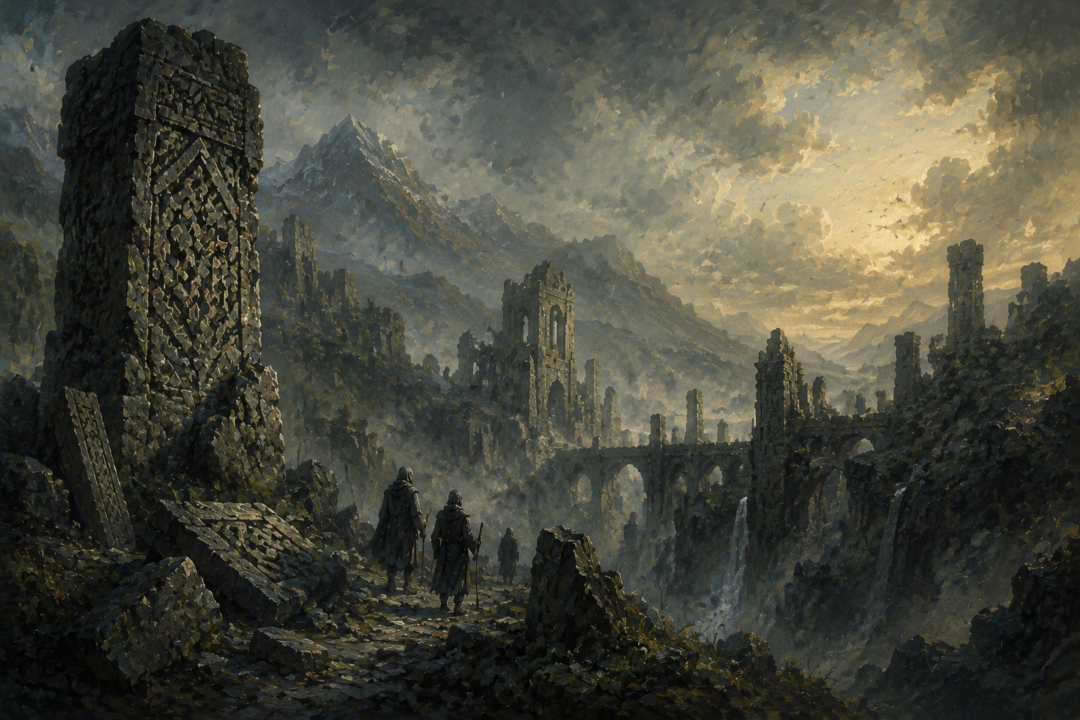
The Deeper Meaning of the Cirth
The history of the Cirth mirrors one of Tolkien’s most persistent ideas: the passing of ages does not erase the past completely.
A rune carved into stone is an act of resistance against forgetting. The Cirth survived because different peoples found value in preserving them. The Elves created them, the Dwarves adapted them, and later generations encountered them as traces of a much older world.
Their story also challenges the idea that cultures develop alone. Some of the most lasting traditions of Middle-earth emerged through contact between peoples who did not always understand each other.
The Cirth began as an Elvish invention, but their later identity became inseparable from Dwarvish history. They are a symbol of inheritance: a reminder that civilizations are shaped not only by what they create themselves, but also by what they choose to preserve, transform, and pass onward.
In the silent halls of Moria, the runes on the walls are more than writing. They are the marks left behind by friendships, rivalries, craftsmanship, and the long memory of Middle-earth.
Sources & Notes
- https://www.glyphweb.com/arda/c/cirth.html — The Encyclopedia of Arda: the Cirth as an Elvish rune system devised for inscription and later adopted by Dwarves
- https://www.glyphweb.com/arda/a/angerthas.html — The Encyclopedia of Arda: Daeron’s expanded rune rows and their later Dwarvish adaptations, including Angerthas Moria
- https://www.glyphweb.com/arda/d/daeron.html — The Encyclopedia of Arda: Daeron of Doriath as loremaster and inventor of the original Certhas
- https://www.glyphweb.com/arda/k/khazaddum.html — The Encyclopedia of Arda: Khazad-dûm’s Dwarvish culture and the Moria setting in which the adapted runes were preserved
Sources cover the Cirth, Angerthas, Daeron’s invention, and Khazad-dûm’s Dwarvish adaptation.