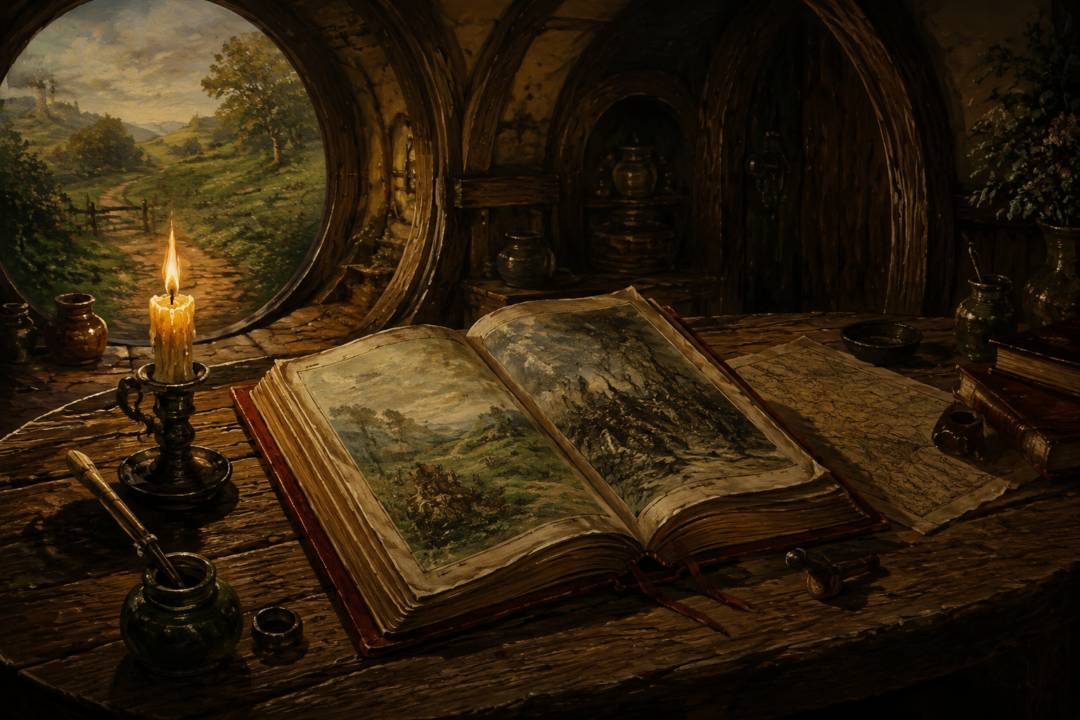
The One Ring is the most famous object in Middle-earth, but another book quietly carries a different kind of power. It does not corrupt its bearer, command armies, or alter the fate of kingdoms. Instead, the Thain’s Book preserves something far more fragile: memory.
When Frodo Baggins returns to the Shire after the War of the Ring, the greatest danger has already passed. Yet the struggle to preserve what happened is only beginning. Battles fade, heroes grow old, and even the greatest deeds can disappear if no one records them. The Thain’s Book represents the moment when history becomes larger than any single witness.
The irony is that the book’s value does not come from being the first record of everything it contains. Its importance comes from survival, continuation, and the way a community transforms one person’s experience into a lasting inheritance.
The Red Book Begins as a Personal Record of an Impossible Journey
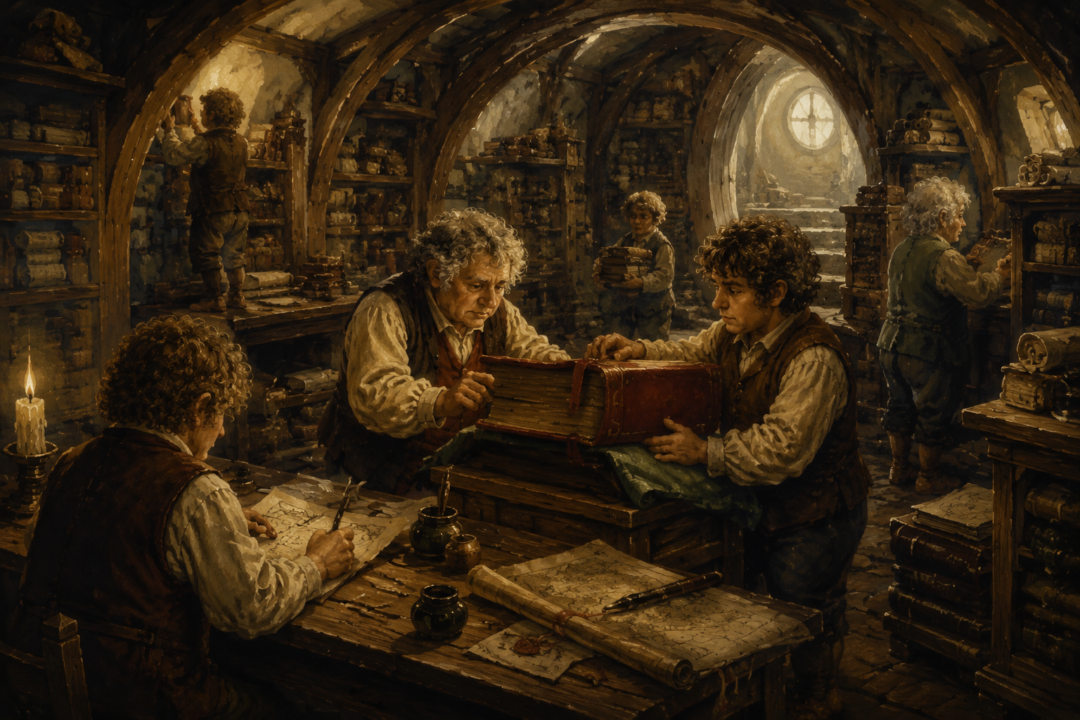
The foundation of the Thain’s Book is the Red Book of Westmarch, the collection of writings associated with Bilbo Baggins and Frodo Baggins. In The Lord of the Rings, Bilbo begins writing an account of his adventures, and Frodo later continues the record by documenting the events of the War of the Ring.
At first, the book is deeply personal. It comes from individuals who experienced events directly. Bilbo records his journey to Erebor, while Frodo records the long and painful road from the Shire to Mordor. Their accounts carry the weight of firsthand experience because they were written by those who endured the events themselves.
But a personal record has a limitation: it belongs to one moment in time. A single manuscript can be lost, damaged, or forgotten. Its survival depends on the choices of later generations.
This is where the Thain’s Book becomes significant.
The Thain’s Book Represents Preservation Rather Than Possession
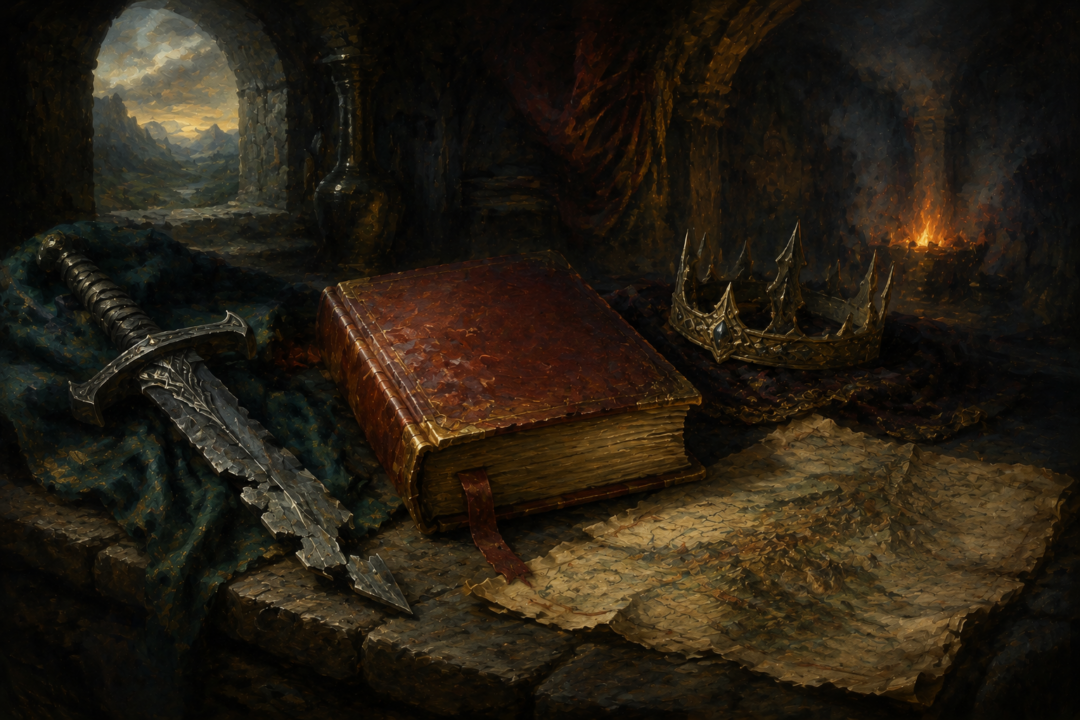
The title “Thain’s Book” refers to the copy of the Red Book kept in the possession of the Thains of the Shire. The original Red Book was preserved and expanded through copies, making the history of the War of the Ring available beyond the lifetime of its first writers.
This difference is crucial.
A single original manuscript may seem more valuable because it is closest to the first act of creation. Yet in Tolkien’s world, preservation often carries its own kind of importance. The survival of memory depends not only on the person who first records an event, but also on those who protect and transmit that record.
The Thain’s Book becomes valuable because it is part of a living tradition. It represents a society deciding that the past matters.
The Shire is not a place known for monuments, grand archives, or royal histories. Hobbits usually value gardens, meals, family traditions, and familiar places. The existence of a carefully preserved historical book therefore reveals something unusual: after the War of the Ring, even ordinary people recognize that they have lived through events worth remembering.
Why a Copy Can Become More Important Than the Original
In many histories, the original document is treated as the ultimate treasure. The first written version appears closest to truth. However, Tolkien’s treatment of the Red Book suggests a more complicated idea.
A surviving copy can become more valuable if it carries forward knowledge that would otherwise disappear.
The original writing of Bilbo and Frodo was created by individuals, but the continued existence of the story depends on readers, scribes, and guardians. The copy kept by the Thain preserves not only the words themselves but also the cultural decision that those words deserve protection.
The value is no longer only in authorship. It is in continuity.
This reflects a recurring theme throughout Middle-earth: things endure because someone chooses to preserve them. The memory of the Elder Days survives through records such as the writings collected by scholars, the traditions of Elves, and the histories maintained by later generations. The passing of ages threatens to erase the past, and preservation becomes an act of resistance against forgetting.
The Book Carries the Cost of the War, Not Just Its Glory
The Red Book is not valuable because it celebrates victory alone. Its importance comes from remembering the suffering behind that victory.
The War of the Ring is not simply a tale of triumph. Frodo returns to the Shire wounded in ways others cannot fully understand. Many who fought against Sauron carry losses that cannot be undone. The book preserves not only the fall of the Dark Lord but also the sacrifices required to achieve it.
This gives the Thain’s Book a different kind of importance from objects of power.
The One Ring changes the world through domination. The Thain’s Book changes the world through remembrance. One represents the desire to control the future; the other represents the responsibility to understand the past.
The book cannot prevent another darkness from rising by itself. It cannot defeat an enemy. But it can prevent later generations from losing the lessons paid for by those who came before them.
The Thain’s Book and the Hobbit View of History
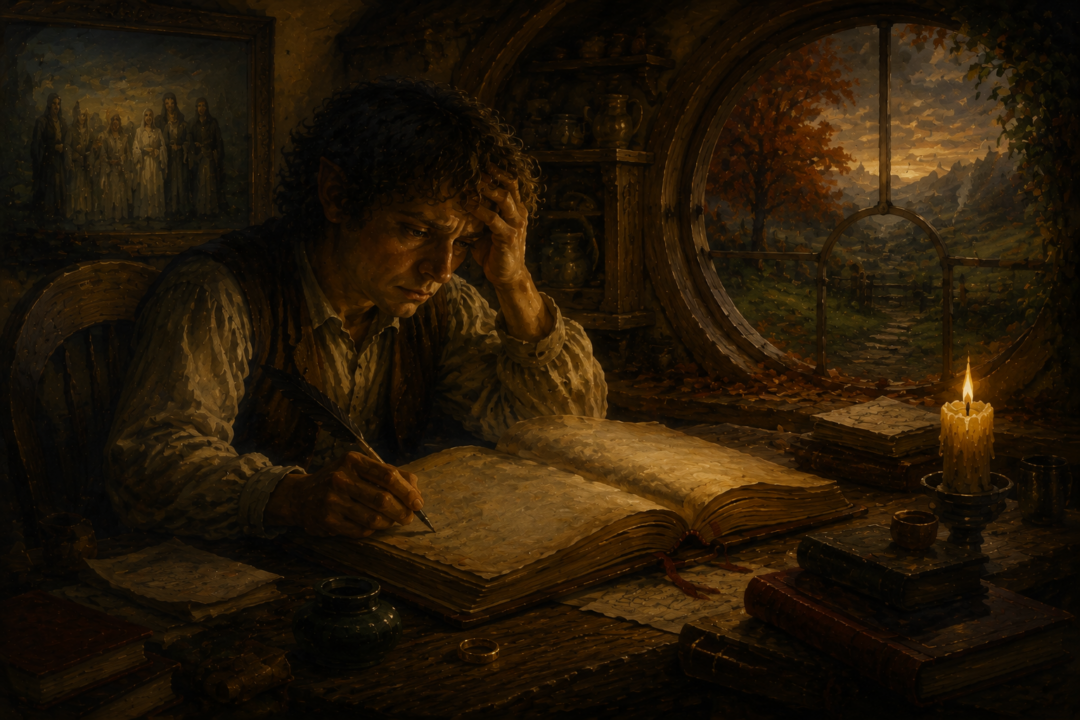
One of the most interesting aspects of the Thain’s Book is that it places a humble people at the center of history.
The great powers of Middle-earth are often represented by kings, warriors, ancient houses, and legendary weapons. Yet the final preservation of the story rests partly with hobbits.
This is fitting because Tolkien repeatedly shows that small acts can carry enormous consequences. Frodo’s journey succeeds not through military strength but through endurance, mercy, and the willingness to carry a burden no one else could bear.
The same principle applies to memory.
The great events of the Third Age could have vanished into rumor if they were not recorded. A hobbit’s book becomes a bridge between the extraordinary and the ordinary. It allows future generations to understand that history is not only made by kings and armies; it is also preserved by those who remember.
The Hidden Power of an Unremarkable Object
The Thain’s Book has no magical protection. It does not shine like the Silmarils, inspire fear like the Ring, or represent a lost kingdom like the shards of Narsil. Its power is quieter.
Its importance comes from what it prevents: forgetting.
In Middle-earth, the passing of time is one of the greatest forces of change. Kingdoms fall, languages disappear, and even great deeds become distant echoes. The Thain’s Book stands against that process by keeping a connection between the past and the future.
The book’s true value is therefore not that it is an original artifact. Its value is that it allows a story to survive.
A single voice can tell a story. A preserved tradition allows that story to become part of a people’s identity.
Why the Thain’s Book Matters Beyond the War of the Ring
The War of the Ring ends with the destruction of the One Ring, but the work of preserving its meaning continues afterward. The Thain’s Book represents the quieter aftermath of heroism: the responsibility to remember what was endured.
The greatest treasures in Middle-earth are not always the objects that command attention. Some are the things that keep fragile truths alive.
The Thain’s Book becomes more valuable than a single original because it embodies something Tolkien repeatedly returns to: survival depends not only on defeating darkness, but on carrying forward the memory of what happened.
In the end, the book is not powerful because it changes history.
It is powerful because it refuses to let history disappear.
Sources & Notes
- https://tolkiengateway.net/wiki/Red_Book_of_Westmarch — Tolkien Gateway: the Red Book’s authorship, contents, custody by Elanor and the Fairbairns, and later manuscript tradition
- https://tolkiengateway.net/wiki/Thain%27s_Book — Tolkien Gateway: the Thain’s Book as the Gondorian copy made for King Elessar, enriched with corrections and annotations, and preserved at Great Smials
- https://tolkiengateway.net/wiki/Findegil — Tolkien Gateway: Findegil’s role as King’s Writer and his completion of the Thain’s Book in Fourth Age 172
- https://tolkiengateway.net/wiki/Prologue_(The_Lord_of_the_Rings) — Tolkien Gateway: the Prologue and its Note on the Shire Records, the textual basis for the Red Book’s copies and transmission
- https://tolkiengateway.net/wiki/Translations_from_the_Elvish — Tolkien Gateway: Bilbo’s three-volume translations and their inclusion with the Red Book tradition
Sources document the Red Book manuscript tradition, the Thain’s Book’s Gondorian corrections, Findegil’s copy, the Prologue’s Shire-record account, and Bilbo’s translated volumes.