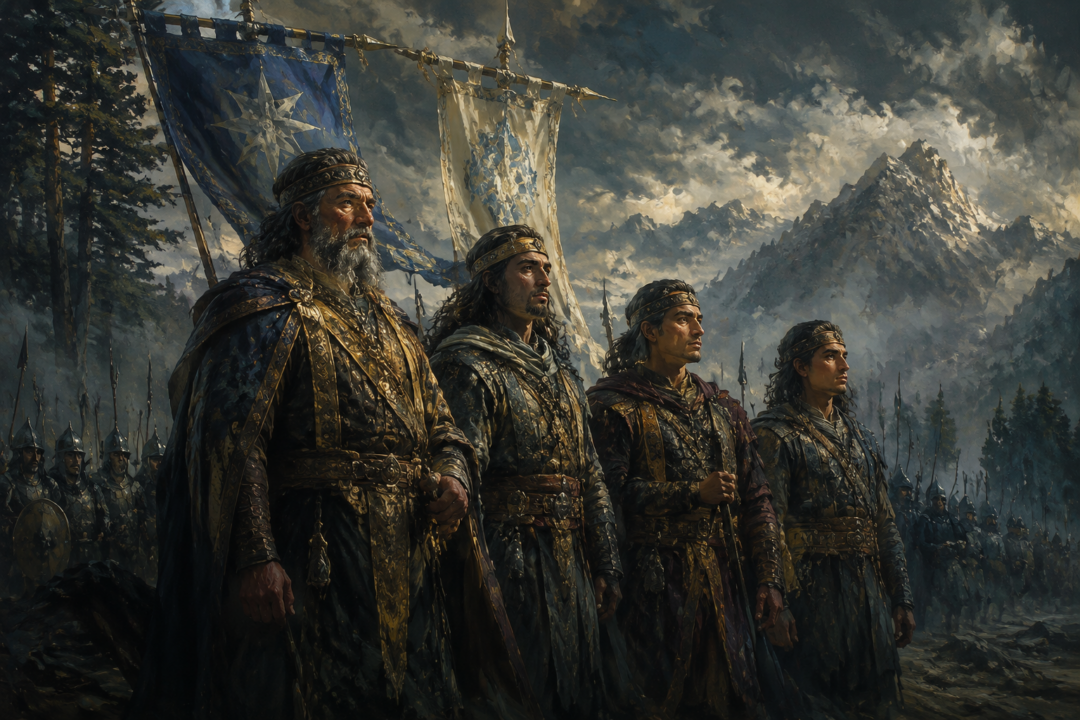
The Sons of Bór and the Forgotten Truth About the Easterlings of Middle-earth
When the armies of the First Age gathered beneath the shadow of the great war against Morgoth, one question shaped the fate of many kingdoms: could an enemy’s people ever be judged apart from the choices of their leaders?
Among the Easterlings who entered Beleriand, the name of Bór is easy to overlook beside the greater names of Elves, Edain, and kings. Yet the brief story of Bór and his sons reveals one of the most important moral details in Tolkien’s history of Middle-earth: the peoples of the East were not defined by a single nature. They were divided by loyalties, pressures, ambitions, and individual decisions.
The Sons of Bór do not represent an exception that excuses a general rule. They demonstrate that the very idea of “the treacherous Easterling” is too simple. In the First Age, Men from the East could become servants of Morgoth, but they could also stand against him. Their choices mattered.
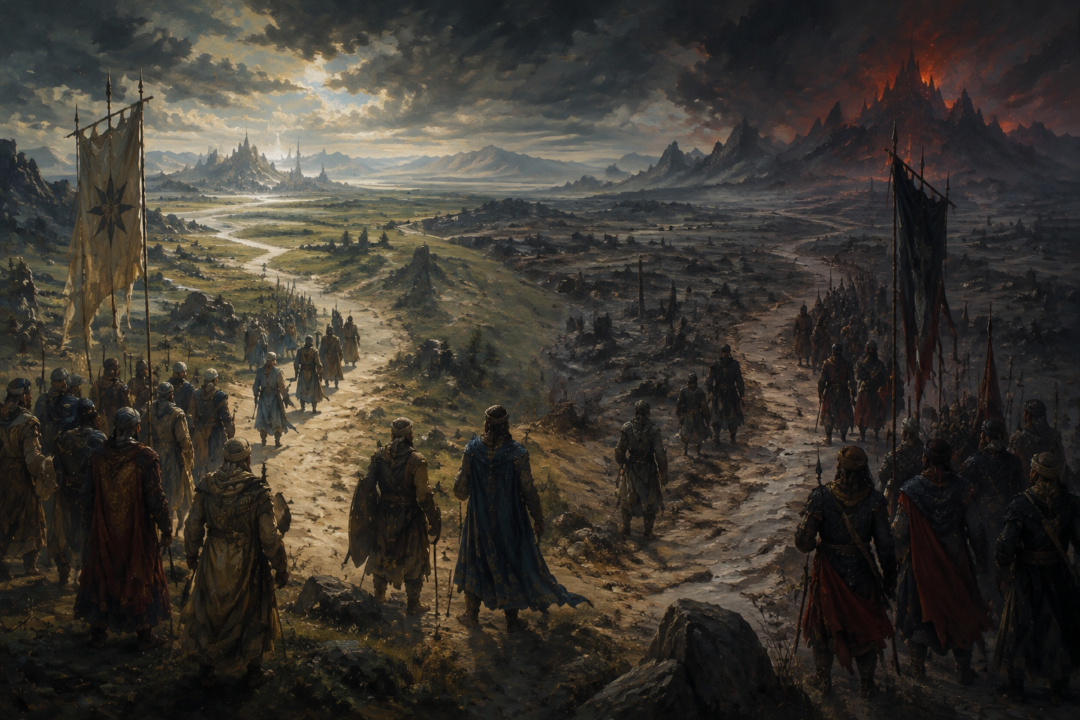
The Arrival of the Easterlings in Beleriand
The Easterlings first entered the history of Beleriand during the later years of the First Age. After the rising of the Sun and Moon, groups of Men from the East came westward into the lands of the Elves. These were not all united by one purpose or allegiance.
According to the traditions preserved in the histories of the First Age, the Easterlings came after the arrival of the Edain who had already formed alliances with the Elves. Some of these newcomers were welcomed by the Eldar and by the leaders among the Edain, while others secretly served Morgoth.
This distinction becomes especially important because Morgoth’s strategy depended on more than military strength. He sought to corrupt trust itself. If he could convince the Free Peoples that entire nations or races were naturally unreliable, he could turn fear into a weapon.
The story of Bór and his sons challenges that weapon.
Bór’s People Were Not Bound to Morgoth
Bór the Easterling came into Beleriand with his followers and entered the service of Maedhros and Maglor, the sons of Fëanor. Unlike some other Easterling leaders, Bór remained loyal to the Eldar who had accepted him.
Bór had three sons: Borlad, Borlach, and Borthand. They are remembered not because they founded kingdoms or changed the course of history through great deeds, but because their loyalty stands in direct contrast with the betrayal of another Easterling family.
Their existence creates an important contrast. The Easterlings were not a single political force moving together toward one goal. They were a collection of peoples and leaders who could make different choices.
The texts do not suggest that Bór’s sons were morally perfect or that all Easterlings shared their values. Instead, their story provides clear evidence that origin alone did not determine allegiance.
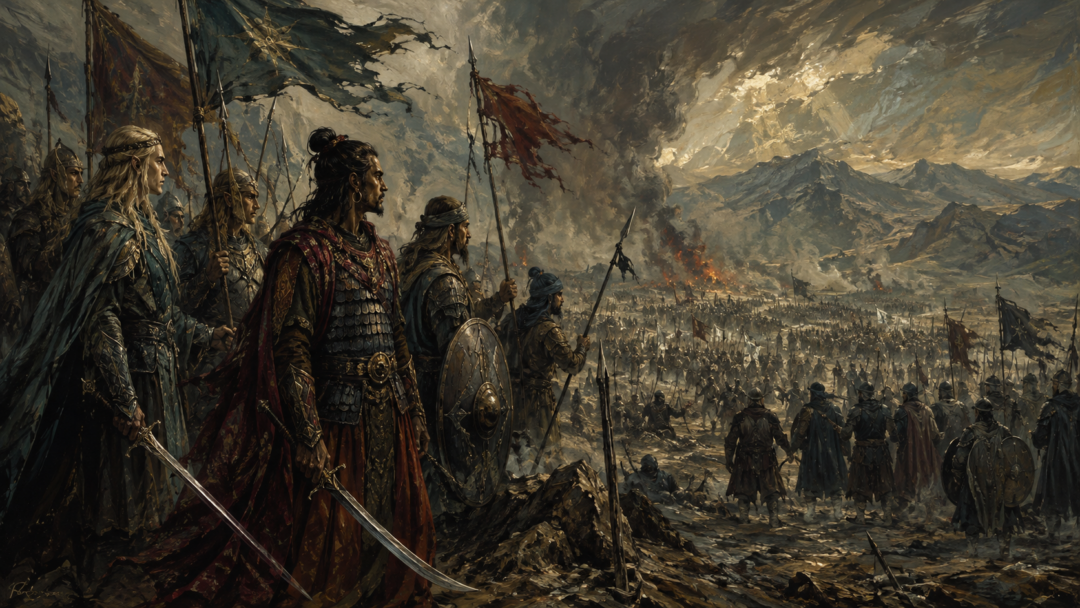
The Betrayal of Ulfang and the Danger of Generalization
The tragedy of the Nirnaeth Arnoediad, the Battle of Unnumbered Tears, was made worse by the betrayal of Ulfang and his sons. These Easterlings had entered the alliance against Morgoth but secretly served the Dark Lord.
Their treachery caused devastating harm to the forces opposing Morgoth. Because of this betrayal, the reputation of the Easterlings in later histories was deeply damaged.
However, the contrast between Bór and Ulfang is exactly what makes the story meaningful.
Both came from the East. Both entered the conflicts of Beleriand during the same broad period. Yet they chose opposite paths.
The lesson is not that one group was “good Easterlings” and another group was “bad Easterlings” in a simple division. The deeper point is that political loyalty was not inherited automatically from ancestry. Leaders could choose alliance, resistance, or submission to darkness.
Morgoth’s influence worked through promises, deception, and fear. Some Men accepted his gifts and power. Others rejected him. The difference was not where they came from, but what they chose.
The Sons of Bór Reveal a Political Reality, Not a Racial Rule
One of the most overlooked ideas in Tolkien’s histories is that Middle-earth is shaped by political decisions. Peoples are not always unified blocks. Within kingdoms, families, and cultures, different individuals may respond differently to the same crisis.
The Sons of Bór represent this reality among the Easterlings.
Their loyalty suggests that the Easterlings had their own internal divisions, rivalries, and competing interests. Some may have been motivated by fear of Morgoth, some by desire for power, some by survival, and some by genuine allegiance to the enemies of the Dark Lord.
Tolkien’s world repeatedly avoids the idea that ancestry determines morality. The Noldor themselves contain examples of both greatness and terrible failure. The Men of Númenor later demonstrate both wisdom and corruption. The same pattern appears among many peoples of Middle-earth.
The Easterlings are not presented as a people with an unchangeable character. They are shown as a people caught within the struggles of history.
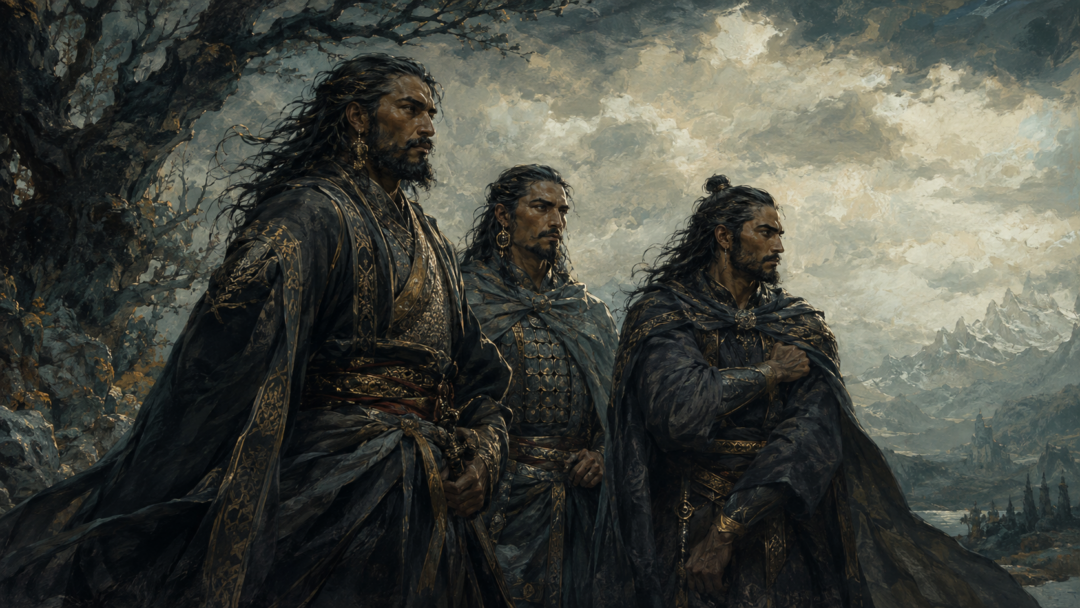
Why Morgoth Needed Treachery Among Men
The betrayal of Ulfang was valuable to Morgoth because it damaged more than an army. It damaged hope and cooperation.
The alliance against Morgoth depended on different peoples trusting one another. Elves and Men, despite their differences, had to believe that cooperation was possible. A single betrayal could create suspicion far beyond the individuals responsible.
This makes Bór’s loyalty even more significant. In a world where deception had become one of Morgoth’s greatest weapons, faithfulness itself became an act of resistance.
The Sons of Bór did not defeat Morgoth or reshape the fate of Beleriand. Their importance comes from what they prove: darkness does not control every person it reaches, and a people associated with betrayal can still contain those who reject it.
The Tragedy of the Easterlings’ Reputation
The later memory of the First Age was shaped by the catastrophes that followed Morgoth’s victories. Because Ulfang’s betrayal occurred during one of the most devastating battles of the age, the actions of a few became connected with the identity of many.
Yet the story of Bór remains as a quiet correction to that memory.
The Easterlings who followed Morgoth were real. Their actions had terrible consequences. But they were not the only Easterlings who existed.
A more complete understanding of the First Age requires remembering both sides: the corruption that Morgoth spread and the resistance that still survived among those he tried to use.
The Sons of Bór stand as evidence that even among peoples drawn into the wars of darkness, loyalty was still possible.
A Small Story With a Larger Middle-earth Lesson
The history of Bór and his sons occupies only a small place in the vast events of the First Age, but its meaning reaches much further.
They show that the conflicts of Middle-earth are rarely about simple divisions between peoples. They are about choices made under pressure, about the temptation of power, and about whether individuals surrender to fear or remain faithful to what they believe is right.
The Easterlings were not inherently treacherous. The history of Bór’s sons proves that the shadow of Morgoth could influence people, but it could not remove their freedom to choose.
In Tolkien’s world, that freedom is one of the most important truths of all.
Sources & Notes
- https://www.glyphweb.com/arda/b/bor.html — The Encyclopedia of Arda: Bór’s Easterling following, alliance with Maedhros, and loyalty in contrast to Ulfang
- https://www.glyphweb.com/arda/b/borlad.html — The Encyclopedia of Arda: Borlad as one of Bór’s loyal sons and his death fighting Ulfang’s treacherous family
- https://www.glyphweb.com/arda/b/borlach.html — The Encyclopedia of Arda: Borlach’s loyalty in the Nirnaeth Arnoediad and resistance to the betraying Easterlings
- https://www.glyphweb.com/arda/b/borthand.html — The Encyclopedia of Arda: Borthand’s place among Bór’s sons and their opposing political allegiance
- https://www.glyphweb.com/arda/e/easterlings.html — The Encyclopedia of Arda: the distinct Easterling groups and divided allegiances found across Tolkien’s ages
- https://www.glyphweb.com/arda/u/ulfang.html — The Encyclopedia of Arda: Ulfang’s secret allegiance to Morgoth and betrayal as the deliberate contrast to Bór’s house
Sources cover Bór, all three loyal sons, the Easterlings’ divided allegiances, and Ulfang’s contrasting betrayal.