At Bag End, Gandalf puts Frodo’s gold ring into the hearth and brings it out again with its hidden writing exposed. The little fire has revealed the Ring’s identity, but it has not injured it. Later, Frodo cannot even bring himself to throw it back among the coals. Before anyone sets foot on the road to Mordor, two difficulties are already visible: the Ring resists ordinary destruction, and it resists the will of whoever holds it.
So how can Gandalf be sure that a volcano will do what a fireplace cannot? Strictly speaking, nobody in the story has tested the plan. The Wise rely on the Ring’s origin, their knowledge of other fires, and the limits of Sauron’s craft. Orodruin is not simply the hottest place they can think of. It is the place where the Ring was made, and therefore the one place they believe it can be unmade.
The fire Sauron used to make it
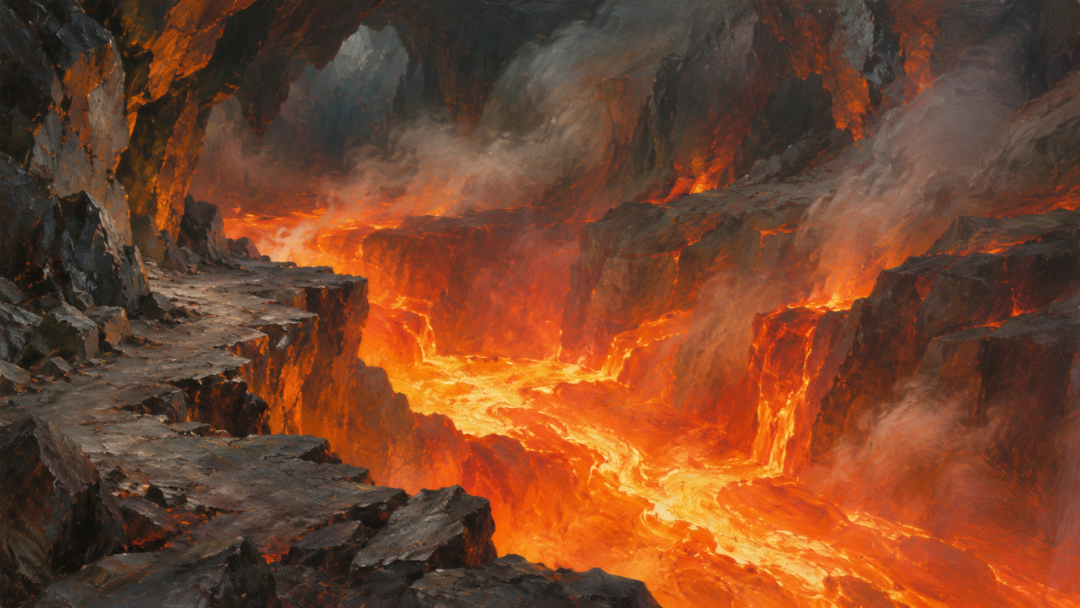
Orodruin, Mount Doom, rises from Mordor’s plain of Gorgoroth. In The Silmarillion, “Of the Rings of Power and the Third Age” explains that Sauron chose Mordor partly because of the fire welling from the mountain’s depths. He used that fire in sorcery and forging. The One Ring was fashioned there, not in the Elven-smiths’ workshops in Eregion where many of the other Rings of Power originated.
Sauron had helped teach the Elven-smiths the art of making rings, but he made the One secretly to govern the others. It was not merely a stronger example of their handiwork. He invested much of his power in it, binding his capacity to dominate other wills to an object he could wear. The Ring’s endurance belongs to that act of making, not to the toughness of gold alone.
Inside Orodruin lie the Sammath Naur, the Chambers of Fire, where a fissure opens into the burning depths. That is what Gandalf means by the Cracks of Doom. Merely reaching Mordor, or tossing the Ring into any stream of lava, is not the instruction the book gives. The destination is the fire associated with Sauron’s original work.
Letter 131 makes the rule explicit from outside the characters’ conversation. In explaining the story, Tolkien describes the Ring as resistant to ordinary smithcraft and to every fire except the subterranean fire in which it was made. He also explains what unmaking would accomplish: the power Sauron had put into the Ring would be dissolved, leaving him unable to recover his former strength. The letter confirms the story’s underlying rule; it is not evidence that Gandalf or Elrond performed an experiment and discovered it.
Why ordinary fire, smithcraft, and dragons fail
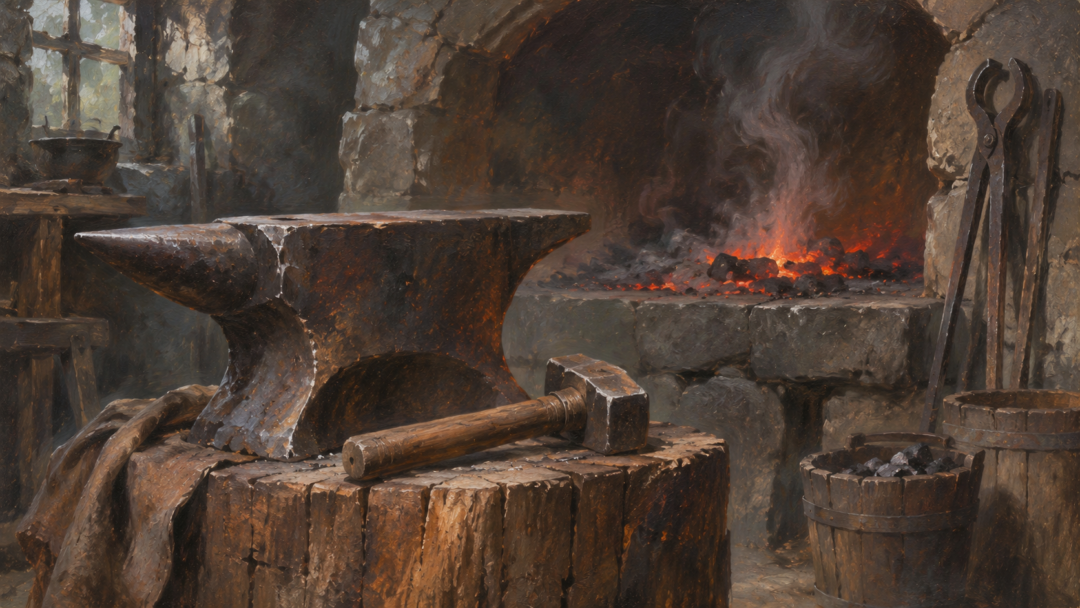
Gandalf’s explanation in “The Shadow of the Past” moves through possible methods almost as Frodo might think of them. A hammer sounds plausible until Gandalf says a heavy blow would leave no mark. Frodo’s hearth is too cool even for ordinary gold, and the Ring comes through it unharmed. But the wizard does not stop at a village fireplace. He rules out the furnaces of the Dwarves as well, despite their extraordinary skill in working metal.
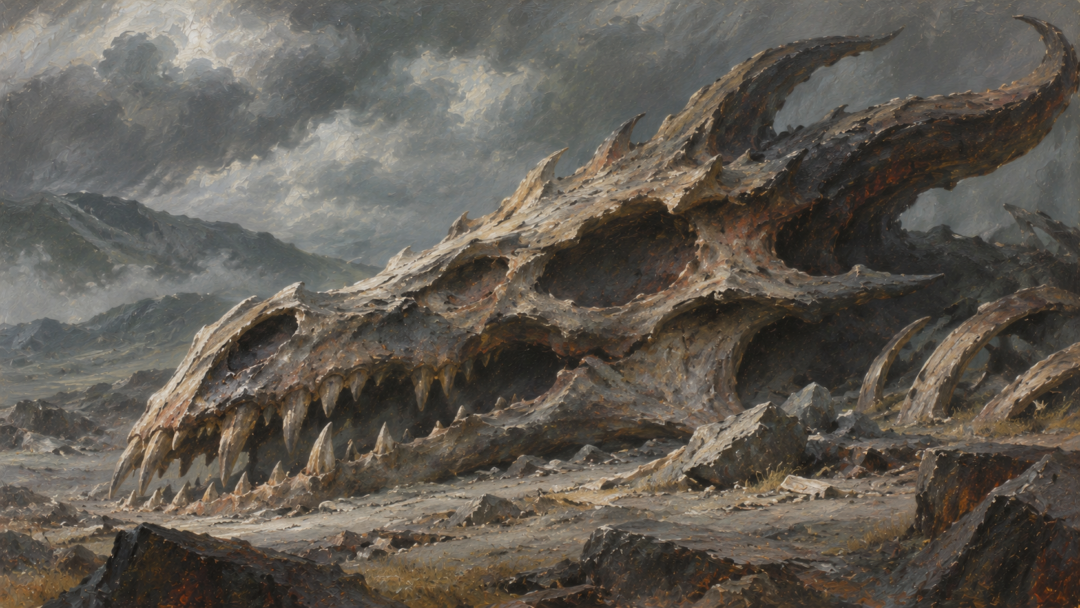
The most revealing comparison is dragon-fire. Gandalf says it has been said dragons could melt and consume Rings of Power. Earlier, he explains that dragons consumed four of the Seven rings held by the Dwarves. A Ring of Power could indeed perish in a dragon’s flames. But those losses cannot be generalized to the One, which Sauron himself made.
Gandalf is emphatic about the exception. No dragon surviving in his time possesses the old strength of fire, and he says that no dragon ever lived who could harm the Ruling Ring, “not even Ancalagon the Black.” Ancalagon was the immense dragon of the First Age, a creature associated with a far older and more terrible conflict than anything Frodo has witnessed. Invoking him closes the tempting loophole of finding a bigger, fiercer dragon somewhere beyond the map.
This is also why describing the plan as a simple comparison of temperatures is inadequate. The text certainly speaks of fire being hot enough, but it places Sauron’s own work at the centre of the One’s resistance. A dragon capable of destroying lesser rings is still insufficient. The mountain matters not only for its heat but for the fire in which this particular power was embodied. There is no scene in which the Wise measure its melting point or try competing furnaces. Gandalf’s confidence is a judgment drawn from lore.
The answer was known before Frodo
The idea did not arise suddenly at the Council of Elrond. Elrond had been present when Sauron was overthrown at the end of the Second Age. He recalls that Isildur took the Ring after the last battle on the slopes of Orodruin, where Sauron fell. Elrond and Círdan urged him not to keep it but to cast it into the nearby fire where it had been made. Isildur refused, claiming it as compensation for the deaths of his father and brother.
That memory is important evidence of an old conviction, though not proof of a successful method. Neither Elrond nor Círdan saw the One dissolved. Isildur walked away with it. The result of his choice was that Sauron’s physical defeat remained incomplete: the Ring survived, and with it the possibility of his return. Elrond points out that the foundations of Barad-dûr endured because they had been built with the Ring’s power. A victory over its maker had not erased his work.
What the Council does not know
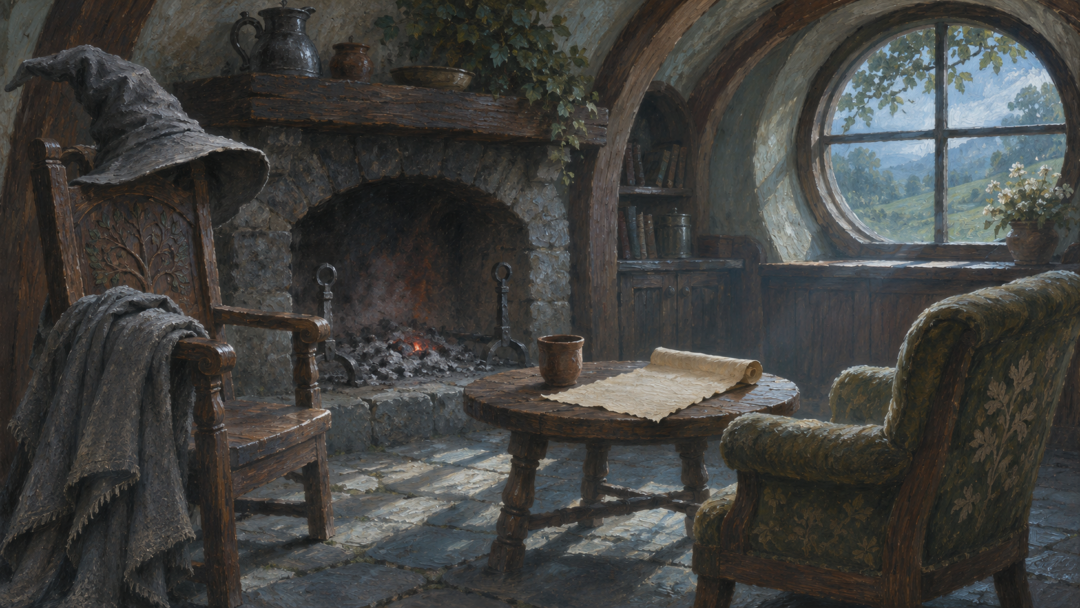
In the book’s Council of Elrond, the decisive words come after a debate about alternatives. The Ring could be hidden, sent away, or taken up as a weapon against Sauron. Each proposal carries a danger. Hiding it postpones the reckoning; trying to wield it risks producing another tyrant. Even keeping it beyond Sauron’s reach does not necessarily free Middle-earth from the threat it represents. Elrond finally says, “We must send the Ring to the Fire.”
Notice what follows from that decision. The debate is chiefly about whether anyone can get there and what price success might demand, not about whether a convenient forge has been overlooked. Erestor doubts that they have the strength to reach the place where the Ring was made. Gandalf answers that despair belongs to those who can see the end with certainty; they cannot. The quest is chosen because the other courses have been weighed and found wanting, not because the Council possesses a guarantee of victory.
Elrond is also frank about a different uncertainty. When Glóin asks what will happen to the Three Elven Rings if the One is destroyed, Elrond admits he cannot know for certain. Their power might fail, bringing the loss of beautiful things preserved by the Elves. The Council is prepared to accept that cost rather than let Sauron recover his mastery. That admission should not be mistaken for doubt about which fire could destroy the One: it concerns the consequences of succeeding.
The film gives the audience a faster, more categorical explanation. Gimli strikes the Ring with his axe, and Elrond immediately states that it can be unmade only in Mount Doom. The shattered axe is a movie scene, not an experiment recorded in the novel. On the page, Gandalf has already explained the limitations of ordinary methods to Frodo, while the Council spends its energy confronting the political, moral, and practical dangers of the choice.
One advantage of the plan is Sauron’s own blindness. Gandalf reasons that Sauron will expect anyone who possesses the One to desire its power. He can imagine rivals trying to claim or wield it more readily than enemies intending to destroy it. This is a strategic inference, not a promise that Mordor will be undefended. The unexpected purpose of the journey offers a narrow opening precisely because Sauron understands the Ring’s temptation so well.
When the fire finally answers
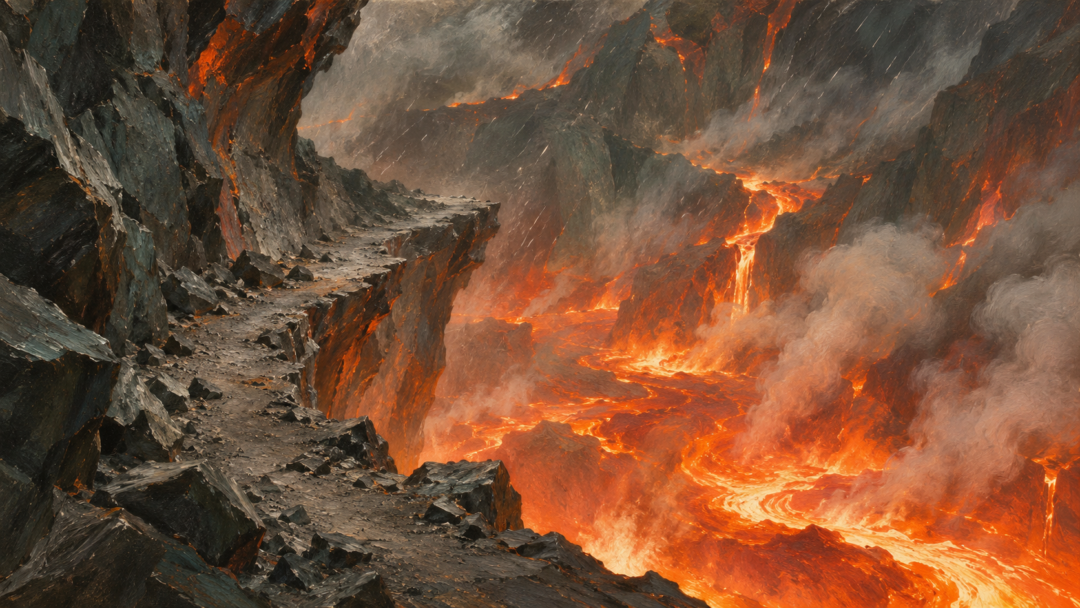
In “Mount Doom,” the last obstacle is not discovering whether the chambers are hot enough. Frodo and Sam reach the Sammath Naur, and Frodo stands at the Crack of Doom with the Ring. Yet after all the distance and suffering, he does not cast it in. He claims it and puts it on. The difficulty glimpsed beside the small hearth at Bag End has become overwhelming at the place where Sauron made it.
Gollum attacks the invisible Frodo, bites off the finger bearing the Ring, and exults in having recovered his treasure. In his joy he falls into the chasm with it. Only then does the story provide the result that no earlier character could have witnessed: the Ring perishes, Sauron’s power collapses, and the Dark Tower falls. The outcome confirms the Wise about the fire, but not about any imagined ease of completing the task.
In Letter 246, Tolkien explains why Frodo’s inability to surrender the Ring at the end should not simply be judged as a moral failure. After prolonged possession, exhaustion, and the Ring’s mounting pressure, voluntary destruction lay beyond his strength. The quest could succeed because Frodo had brought the Ring to the one place where its destruction was possible, and because Gollum was still there. The destination was necessary; reaching it was never sufficient.
So the answer lies in a very Middle-earth kind of knowledge: remembered craft, hard-earned judgment, and a road undertaken without certainty about its end. The Wise know where Sauron made the Ring and what lesser fires cannot do. What they cannot know is who, standing above the fissure with that small gold circle in hand, will find a way to let it fall.
Sources & Notes
- Tolkien Gateway — Mount Doom: Sauron chose Mordor because of Orodruin's fire, which he used "in his sorceries and his forging"; inside the cone lay the Sammath Naur and the Crack of Doom where the One Ring was forged https://tolkiengateway.net/wiki/Mount_Doom
- Tolkien Gateway — Cracks of Doom: Gandalf's statement in "The Shadow of the Past" that there is "only one way" — to cast the Ring into the Cracks of Doom in the depths of Orodruin; also Isildur's failure to do so against the counsel of Elrond and Círdan https://tolkiengateway.net/wiki/Cracks_of_Doom
- Tolkien Gateway — The Shadow of the Past: Gandalf explains that neither the forges of the Dwarves nor Elven magic could undo the Ring, and that its destruction required the fire where Sauron made it https://tolkiengateway.net/wiki/The_Shadow_of_the_Past
- Tolkien Gateway — Ancalagon: Ancalagon the Black, greatest of Morgoth's dragons and mightiest winged fire-dragon, the figure Gandalf invokes when he says no dragon could harm the Ruling Ring, "not even Ancalagon the Black" https://tolkiengateway.net/wiki/Ancalagon
- Tolkien Gateway — The Council of Elrond: the council concludes that the Ring cannot be wielded for good and must be destroyed in the fires of Mount Doom, with the debate turning on whether the quest can be achieved rather than on the method https://tolkiengateway.net/wiki/The_Council_of_Elrond
- Encyclopedia of Arda — Orodruin: the Fire-mountain in northern Mordor where the One Ring was forged, and where Elrond and Círdan urged Isildur to destroy it after Sauron's overthrow on its slopes https://www.encyclopedia-of-arda.com/o/orodruin.html
The articles' central rule — that only the fire in which the One was made can unmake it — is documented from Gandalf's account in "The Shadow of the Past" and the Cracks of Doom entry, which also records Isildur's refusal on Elrond's and Círdan's counsel. Mount Doom and the Encyclopedia of Arda entry supply Sauron's use of Orodruin's fire in forging and the identification of Sammath Naur with the Cracks of Doom, while the Ancalagon entry supports the dragon-fire comparison and the Council of Elrond entry shows the debate concerned reachability and cost rather than an untried alternative method.