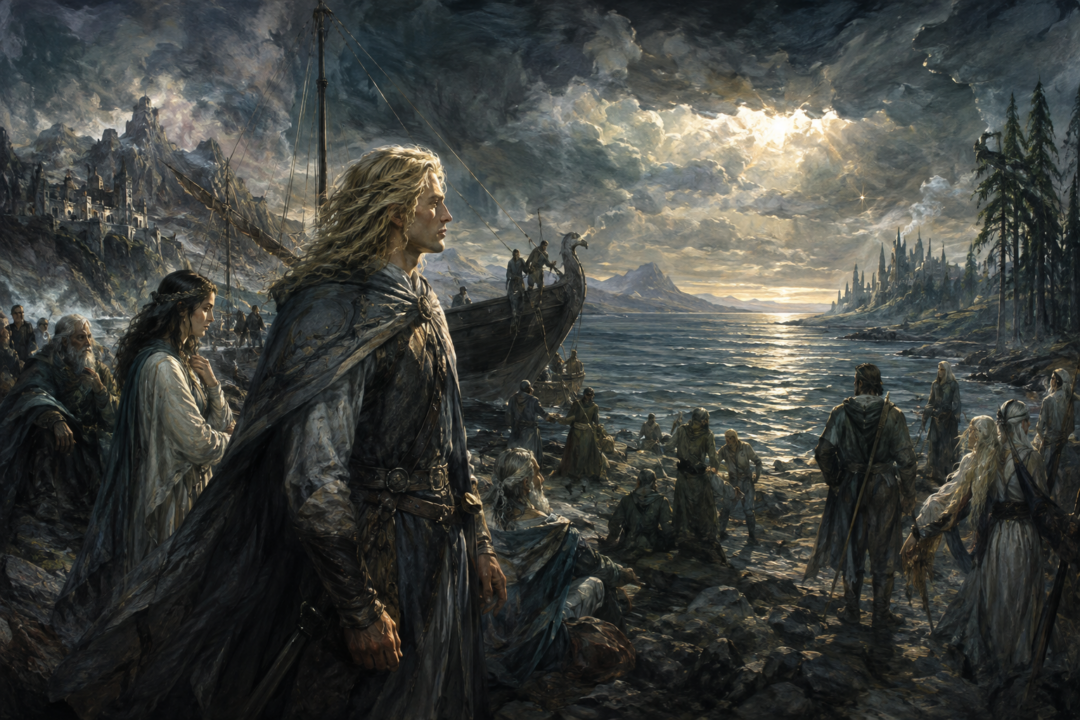
When Eärendil finally sailed into the West, he did not come before the Powers merely as a mariner who had somehow crossed the forbidden seas. Behind him stood an extraordinary convergence of the peoples whose histories had shaped the First Age.
His father was Tuor, a Man of the House of Hador. His mother was Idril Celebrindal, daughter of Turgon of Gondolin. His wife Elwing descended from Beren and Lúthien, and through Lúthien from Thingol and Melian.
Follow those branches farther back, however, and the pattern becomes even more remarkable.
Eärendil's ancestry reaches into all three Houses of the Edain. It reaches into the royal Noldorin line of Fingolfin, into the Vanyar through Idril's forebears, and—through his children with Elwing—joins that inheritance to the Sindarin royal house of Doriath and even to Melian the Maia.
This does not mean Eärendil literally descended from every important people of Beleriand. He did not. But few figures embody so many of the alliances, tragedies, and hopes of the Elder Days in a single family.
And that makes his final role strangely fitting.
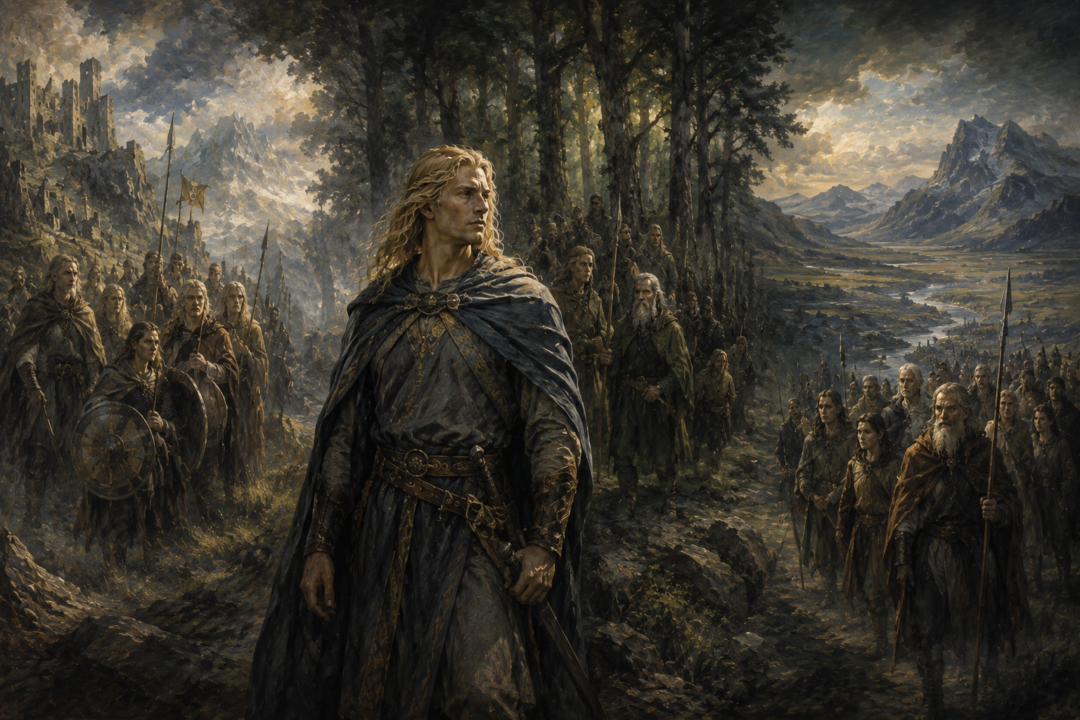
Tuor Brings All Three Houses of the Edain Together
The human side of Eärendil's ancestry is already more complicated than simply saying that his father belonged to the House of Hador.
Tuor was the son of Huor and Rían.
Through Huor came the line of Hador, the great Third House of the Edain associated especially with Dor-lómin. Yet Huor's mother was Hareth, daughter of Halmir of the People of Haleth. That means the blood of the Second House of the Edain also entered Tuor's ancestry.
Rían supplied the remaining great Mannish lineage. She was the daughter of Belegund, who belonged to the House of Bëor.
Thus Eärendil inherited through Tuor ancestry from all three Houses of the Edain: Bëor, Haleth, and Hador.
This is easy to overlook because Tuor is normally identified, correctly, with the House of Hador. Political and familial identity did not require Tolkien's genealogies to list every ancestral branch whenever a character was introduced.
Genealogically, however, the convergence is there.
The three great Elf-friend houses that entered Beleriand and became entangled in the wars against Morgoth had, within a few generations, converged in Tuor and then Eärendil.
It is an extraordinary concentration of the history of mortal Beleriand.
Idril Carries the Royal House of Fingolfin
Eärendil's mother gives him an equally significant Elvish inheritance.
Idril Celebrindal was the daughter of Turgon, King of Gondolin. Turgon was the son of Fingolfin, High King of the Noldor, and therefore Idril belonged directly to one of the greatest royal houses of the Exiled Noldor.
That ancestry places Eärendil within the family at the center of some of the First Age's defining events.
Fingolfin led his people across the Helcaraxë and later died in single combat with Morgoth. Fingon inherited the High Kingship after him and fell in the Nirnaeth Arnoediad. Turgon survived that catastrophe and remained hidden in Gondolin until the city's destruction.
Eärendil was born in that hidden city.
The history of the Noldor was therefore not distant legend to his family. Its final great hidden kingdom was the home of his childhood, and its king was his grandfather.
When Gondolin fell, Eärendil escaped with the remnant led away by Tuor and Idril. In him, the royal line survived the ruin of the city.
That pattern—inheritance surviving catastrophe—will repeat throughout his story.
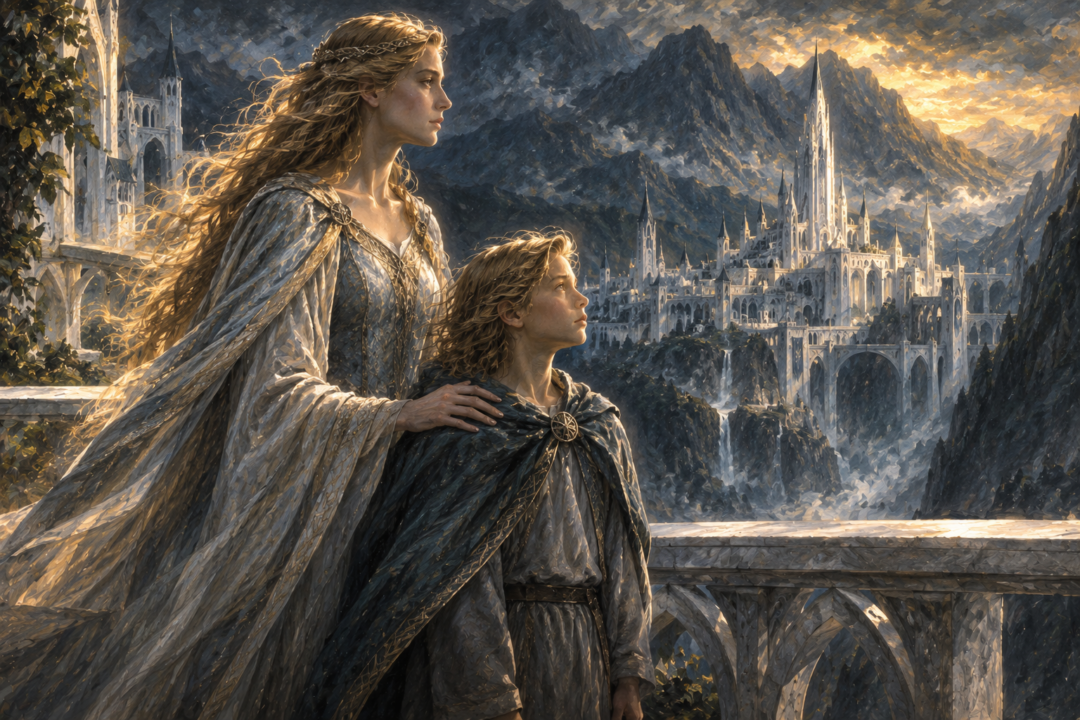
There Is Vanyarin Ancestry Here Too
The Noldor are not the only Eldarin people represented on Idril's side.
Fingolfin's mother was Indis of the Vanyar, the second wife of Finwë. Idril's mother Elenwë was also a Vanyarin Elf.
Eärendil therefore inherited substantial Vanyarin ancestry through Idril.
This matters because the Vanyar largely remained in Aman and play relatively little direct part in the long wars of Beleriand until the host of the West came against Morgoth at the end of the First Age.
Yet their lineage was already present in the family of Gondolin.
So Eärendil's maternal ancestry does not represent only the Exiled Noldor. It reaches back toward the Eldar who remained in the Blessed Realm as well.
His family tree was already crossing divisions created by the history of the Elves long before he physically crossed the Sea.
Elwing Brings Doriath Into the Union
Strictly speaking, the Sindarin and Maia lines enter the ancestry of Eärendil's sons through his marriage rather than Eärendil's own birth.
That distinction is important.
Eärendil himself was the son of Tuor and Idril. It was his union with Elwing that brought together his Gondolin inheritance with the surviving royal line of Doriath.
Elwing was the daughter of Dior.
Dior was the son of Beren and Lúthien.
Lúthien, in turn, was the daughter of Elu Thingol, King of Doriath, and Melian the Maia.
Through Elwing, therefore, the family formed by Eärendil reaches into the Sindar of Beleriand and beyond the Children of Ilúvatar altogether, because Melian belonged to the Maiar.
There is another Elvish connection as well. Elwing's mother was Nimloth of Doriath, herself one of the Sindar.
The marriage of Eärendil and Elwing consequently united the surviving heirs of two legendary realms that Morgoth's age had destroyed: Gondolin and Doriath.
Neither kingdom survived.
Their lines did.
Two Great Unions of Elves and Men Meet
There is an even more deliberate-looking symmetry in the genealogy.
The story of Beren and Lúthien is the first great recorded union of the Eldar and the Edain.
The marriage of Tuor and Idril is the second.
Those two lines eventually meet when Eärendil, son of Tuor and Idril, marries Elwing, great-granddaughter of Beren and Lúthien.
The consequences extend far beyond the First Age.
Their sons were Elrond and Elros.
Through Elros came the royal line of Númenor and, eventually, the line from which Aragorn descended.
Through Elrond the lineage remained among the Eldar, and much later another union of the ancient lines occurred when Aragorn married Arwen, Elrond's daughter.
The genealogies therefore connect stories separated by thousands of years.
The ancestry behind the marriage of Aragorn and Arwen reaches all the way back to the houses and kingdoms of the Elder Days.
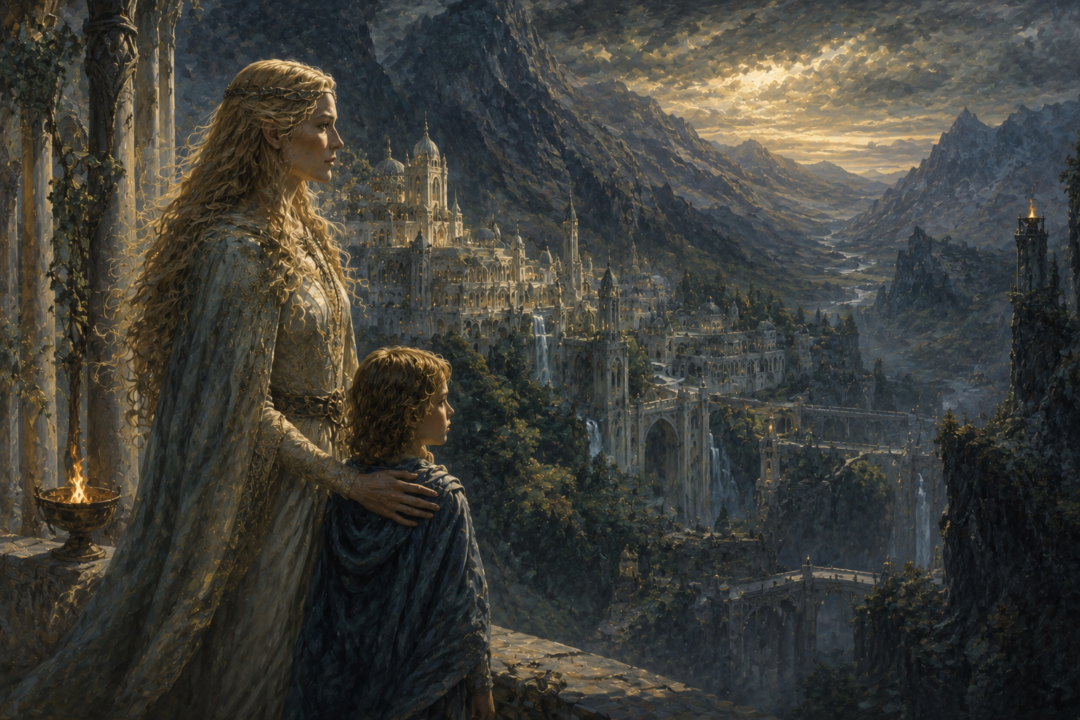
The Silmaril Makes the Convergence Even More Powerful
Bloodline alone does not explain Eärendil's importance.
There is also the Silmaril.
The jewel that eventually shone upon Eärendil had been recovered from Morgoth's crown by Beren and Lúthien. It passed eventually to Dior and then, after the destruction of Doriath, to Elwing.
Elwing carried it to the Havens of Sirion.
There the surviving peoples of ruined realms gathered together: refugees connected with Doriath and Gondolin, Sindar and Noldor, Elves and Men.
But the Oath of Fëanor still pursued the Silmaril.
The resulting attack on the Havens was another catastrophe. Elwing escaped with the jewel by casting herself into the sea; in the account of The Silmarillion, Ulmo saved her and gave her the form of a great white bird, and she eventually reached Eärendil.
With the Silmaril, Eärendil at last found the way to Aman.
The jewel therefore connects his voyage directly to Beren and Lúthien's earlier struggle.
Something taken from Morgoth at terrible cost became the light that helped Eärendil cross the Shadowy Seas.
Why Eärendil Was the Fitting Messenger
When Eärendil came to Aman, he pleaded for aid for Elves and Men.
That wording matters.
He was not simply asking for the rescue of one kingdom or one people.
By then, the old political world of Beleriand had largely collapsed. Doriath was ruined. Gondolin had fallen. Nargothrond was gone. The great domains of the Edain had been destroyed or overrun.
Eärendil came from the survivors of that broken world.
His ancestry does not magically give him legal authority to represent every free people, and the texts do not establish such a genealogical rule. His mission should therefore not be interpreted as though the Valar accepted him because he possessed the correct combination of bloodlines.
What the genealogy provides is thematic force.
The man who pleaded for both Elves and Men was himself descended from both.
Behind his father's ancestry stood all three Houses of the Edain. Behind his mother stood Gondolin, Fingolfin's Noldorin house, and Vanyarin ancestry. Through Elwing his family was joined to Beren, Lúthien, Thingol, the Sindar of Doriath, and Melian.
Eärendil did not merely witness the end of Beleriand.
His family carried much of its surviving memory.
Who Is Missing From the Family Tree?
Calling Eärendil a convergence of "nearly every major free lineage" requires one important qualification.
Not everyone is represented.
There is no Dwarven ancestry, of course. Nor does Eärendil descend directly from the houses of Fëanor or Finarfin merely because all belonged to the wider royal kindred of the Noldor. His direct Noldorin royal descent comes through Fingolfin.
Other peoples of Middle-earth likewise stand outside this genealogy.
The remarkable point is therefore not literal universality.
It is concentration.
Within the family of Eärendil, Elwing, Elrond, and Elros converge the Three Houses of the Edain, the royal Noldor of Fingolfin, Vanyarin ancestry, the Sindarin royal line of Thingol, and the unique Maia inheritance of Melian.
Few family trees could better summarize the alliances of the First Age.
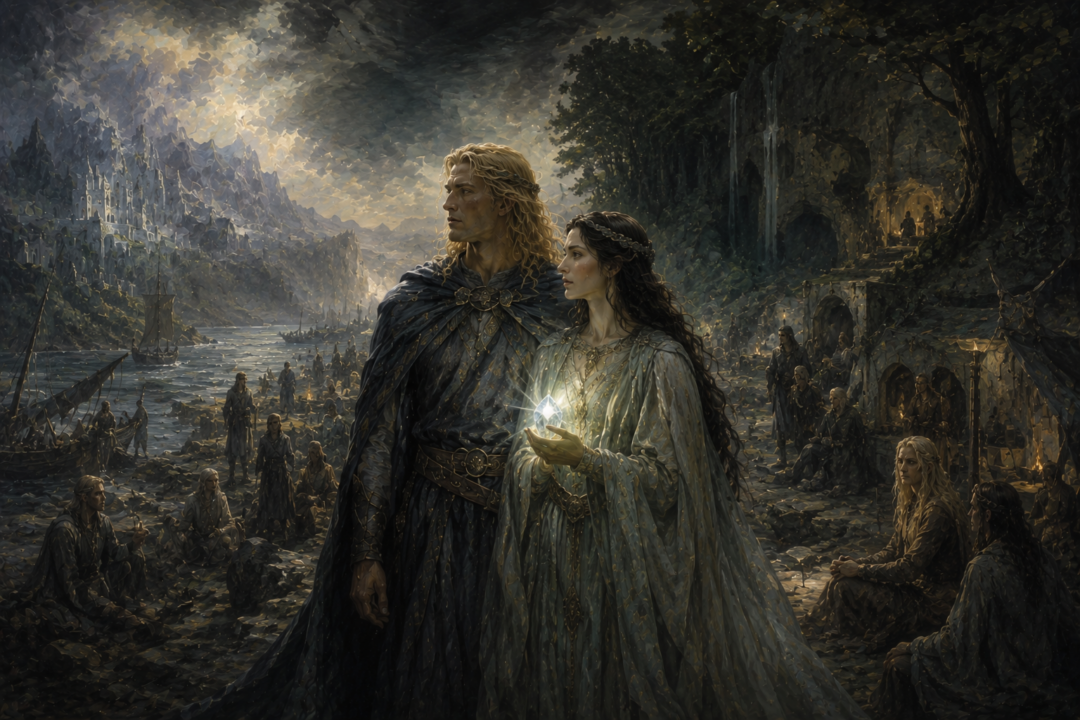
The Survivor of a World That Was Ending
Eärendil is often remembered first as the mariner in the heavens, bearing the Silmaril as a star.
But before he became a sign of hope, he was the child of survivors.
His father came from a Mannish people devastated by Morgoth's wars. His mother escaped the destruction of Gondolin. His wife survived the ruin of Doriath, and later the assault upon the Havens of Sirion.
Almost every major branch converging around him carries a story of loss.
That may be the most important thing about the genealogy.
Eärendil's ancestry is not simply an impressive collection of famous names. It is a map of Beleriand's destruction—and of what survived it.
Hador's people, Haleth's people, Bëor's people, Fingolfin's house, Gondolin, Doriath, Beren and Lúthien, Thingol and Melian: their histories narrow toward one family standing beside the Sea at the end of the age.
Then Eärendil sails west.
The old kingdoms cannot be restored. The dead cannot simply be returned, and much of Beleriand itself will disappear in the catastrophe that ends the war.
But the scattered lines have come together.
And from that convergence comes the messenger whose plea precedes the final overthrow of Morgoth—and whose descendants will carry the memory of the Elder Days into the ages that follow.
Sources & Notes
- https://tolkiengateway.net/wiki/E%C3%A4rendil
- https://tolkiengateway.net/wiki/Tuor
- https://tolkiengateway.net/wiki/Idril
- https://tolkiengateway.net/wiki/Elwing
Genealogical references for Eärendil, Tuor, Idril, and Elwing.