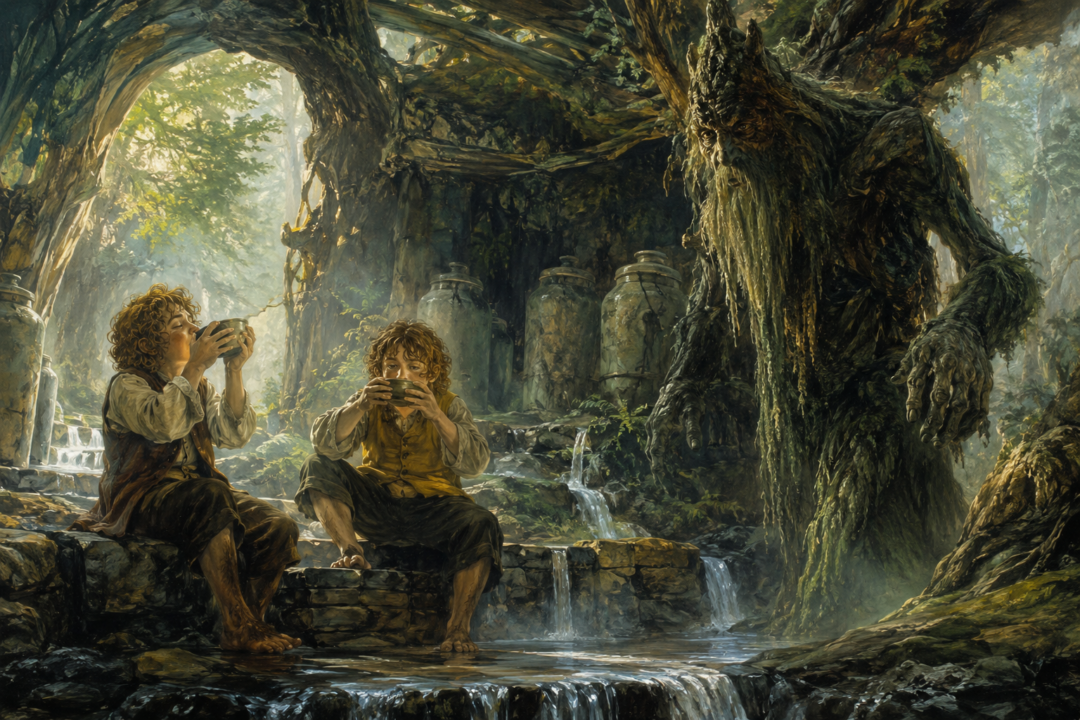
When Merry Brandybuck and Pippin Took meet Treebeard in Fangorn, one of the strangest transformations in The Lord of the Rings begins with something remarkably ordinary: a drink of water.
Or at least, something that looks like water.
Treebeard gives the hobbits an Ent-draught at Wellinghall, drawn from one of the tall stone jars kept there. It resembles the water they had already drunk from the Entwash, but carries an elusive quality that reminds them of a distant forest borne on a cool night wind. Its effect travels upward through their bodies, filling every limb with refreshment and vigour. Even their hair seems to respond, standing, curling, and growing.
Later, the visible consequence becomes impossible to miss.
Merry and Pippin have grown.
That is the famous part of the story. By the end of their adventures, they are remembered as exceptionally tall hobbits, surpassing even the legendary Bandobras “Bullroarer” Took.
But height is only the most measurable thing the Ent-draught changes.
The encounter in Fangorn sits at the center of a much larger transformation. Merry and Pippin enter the forest as escaped prisoners—hungry, wounded, exhausted, and still easily mistaken for the least important members of the Fellowship. They leave Fangorn restored, physically enlarged, entangled in the awakening of an ancient power, and moving rapidly toward responsibilities neither possessed when they left the Shire.
The text never says that Ent-draught magically makes them wiser, braver, or more mature. That distinction matters.
Yet what the draught does explicitly—restore, nourish, invigorate, and enlarge them—fits almost perfectly beside what Fangorn does to them as characters.
The First Change Is Restoration, Not Height
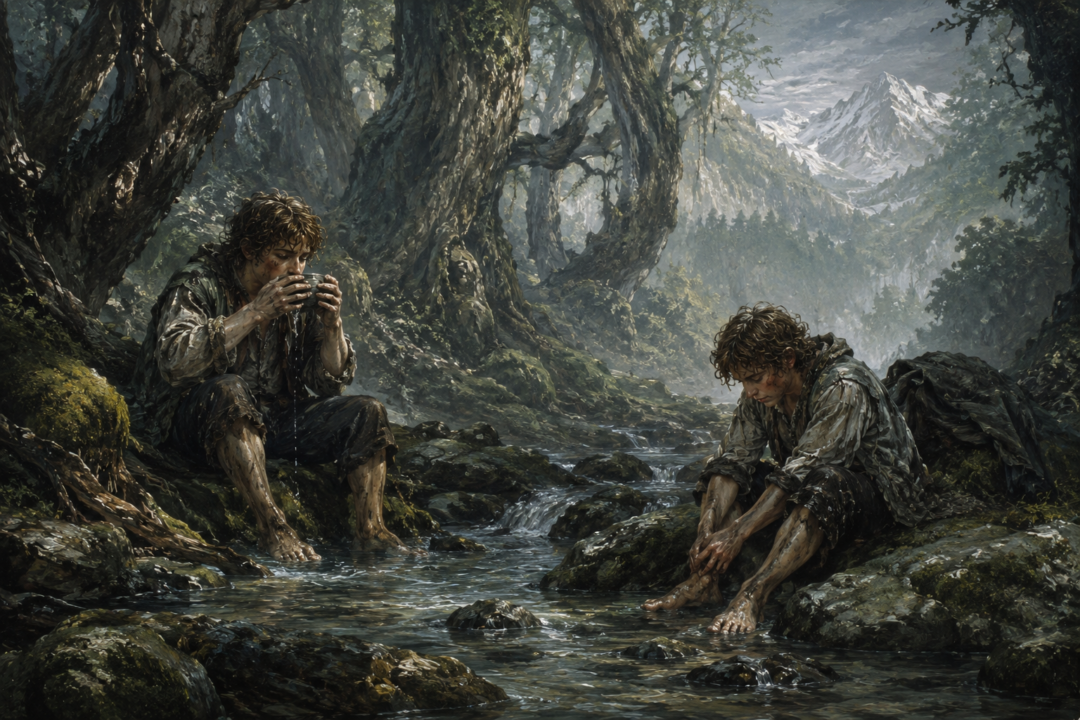
Merry and Pippin do not arrive in Fangorn in good condition.
They have been captured by Orcs, forced through a brutal march across Rohan, and injured along the way. Their escape during the battle between the Orcs and the Rohirrim brings freedom, but not comfort. They enter Fangorn as fugitives searching for water and safety.
Even before reaching Wellinghall, the water associated with the Entwash brings remarkable refreshment.
The Ent-draught Treebeard later serves is more powerful still.
Its effect is described as moving from their toes upward through every limb, bringing refreshment and vigour. This is important because the immediate effect is not presented primarily as supernatural enlargement. The hobbits experience renewal.
Their bodies feel alive again.
The next morning Treebeard serves them another draught from a different jar. This one tastes different: earthier, richer, and more sustaining—almost food-like.
So the text gives us at least two experiences of Ent-draught. One is intensely refreshing; another is notably nourishing.
Whatever its exact nature, which is never explained, Ent-draught is clearly more than ordinary water.
Their Growth Begins Before Anyone Measures Them
The physical transformation is foreshadowed almost immediately.
After drinking at Wellinghall, Merry and Pippin feel as though their hair is standing, waving, curling, and actually growing.
That strange sensation matters because their later increase in stature does not come completely without warning. The draught seems to stimulate growth throughout them.
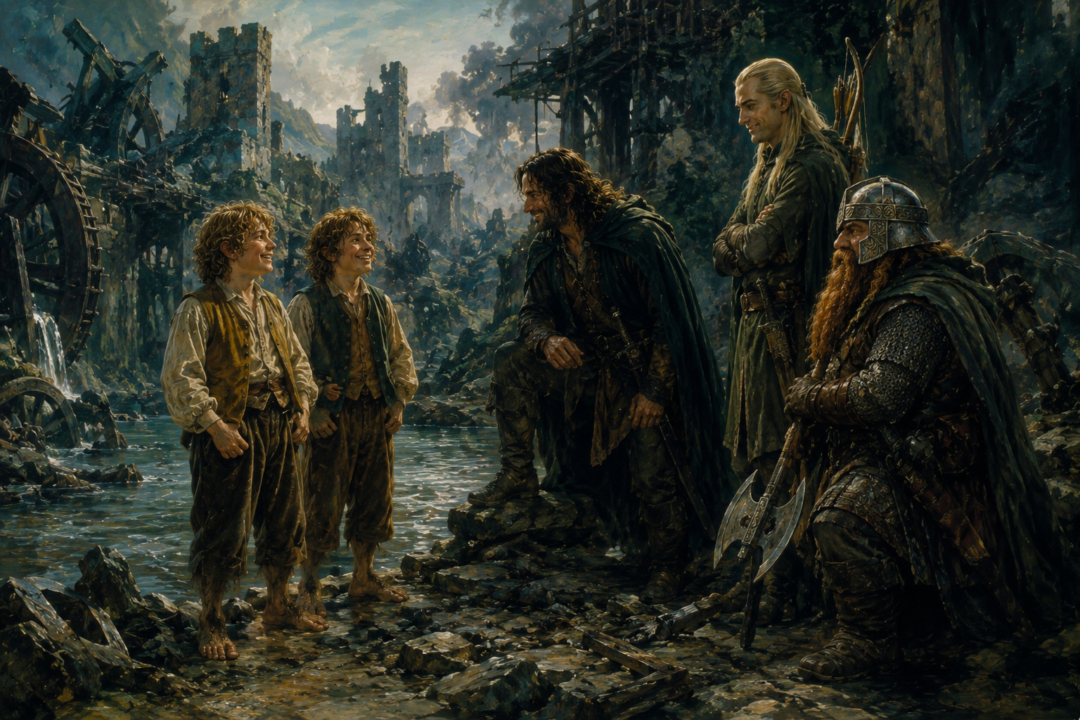
When Aragorn, Legolas, and Gimli finally encounter Merry and Pippin again at Isengard, Aragorn notices something different about them. He eventually concludes that the hobbits have grown, estimating that they have gained roughly three inches since he last saw them.
Legolas connects the change with Fangorn and the Ent-draughts.
The transformation is therefore real within the book, not merely a joke or an impression.
The Prologue to The Lord of the Rings later records that Merry and Pippin became the tallest hobbits known in the Shire's history, exceeding even the Bullroarer, who had previously been exceptional among hobbits.
And there is no textual indication that this growth wears off.
Ent-Draught Does Not Explicitly Make Them Stronger Warriors
This is where a tempting interpretation needs restraint.
Because Merry and Pippin later perform extraordinary deeds, it is easy to imagine that Ent-draught functions like a fantasy enhancement potion: increased height, increased strength, perhaps increased durability.
The text does not establish that.
It explicitly describes refreshment and vigour, and it explicitly gives evidence of unusual physical growth. But it never provides a rule stating that Merry or Pippin permanently gains supernatural strength, resistance to injury, greater speed, or enhanced fighting ability because of the drink.
Their later achievements therefore should not be credited directly to Ent-draught.
Merry's role in the fall of the Witch-king depends on courage, circumstance, Éowyn's intervention, and the special history of the blade he carries from the Barrow-downs. Pippin's later service in Gondor likewise depends on his choices, loyalty, courage, and experiences.
Ent-draught changes their bodies.
Their decisions change the rest.
That distinction actually makes their story more interesting.
Fangorn Enlarges Their Place in the Story
Before Fangorn, Merry and Pippin are frequently treated as the junior members of the Fellowship.
Pippin in particular is young even by hobbit standards. Elrond initially questions whether he should accompany the Company at all. Both hobbits are courageous, but neither begins the journey with Aragorn's experience, Boromir's military stature, Gimli's toughness, or Legolas's long perspective.
Then the Fellowship breaks.
Boromir dies defending Merry and Pippin. The two hobbits are carried away by Orcs, separated from their protectors, and forced to survive through their own intelligence.
Pippin deliberately leaves his Elven brooch behind as a clue for pursuers. The pair exploit the chaos among the Orcs and escape into Fangorn.
Then they encounter Treebeard.
Suddenly the supposedly minor members of the Company become witnesses to one of the great awakenings of the War of the Ring.
They tell Treebeard about the outside world. Treebeard already has his own grievances against Saruman, especially the destruction of trees, and the Ents make their own decision at the Entmoot. Merry and Pippin do not simply command the Ents into war.
But their arrival matters.
The two smallest travelers in the Fellowship become caught up in the movement of some of Middle-earth's oldest inhabitants.
Their physical growth is almost an emblem of that narrative change.
The Draught Connects Hobbits to the Deep Life of Fangorn
There is another reason the scene feels more significant than a magical growth episode.
Ent-draught is inseparable from place.
Its flavour evokes woods. One draught is earthy and sustaining. Treebeard keeps it in stone jars in his Ent-house, beside the waters descending from the mountains.
The books never provide a recipe, nor do they explain a precise mechanism behind its power. Claims about secret ingredients or detailed magical properties go beyond what is stated.
What the text does establish is an association between the drink, the Ents, water, growth, and the living world of Fangorn.
That makes Merry and Pippin's response particularly appropriate.
Hobbits themselves are deeply connected to growing things. The Prologue emphasizes their fondness for peace, cultivated earth, food, and ordinary rural life. They are not forest spirits or supernatural beings, but their culture is profoundly grounded in soil and growth.
In Fangorn, that familiar hobbit affinity encounters something vastly older and stranger.
The result is not corruption.
It is flourishing.
Compare Ent-Draught With the Ring
This creates one of the most revealing contrasts in the story.
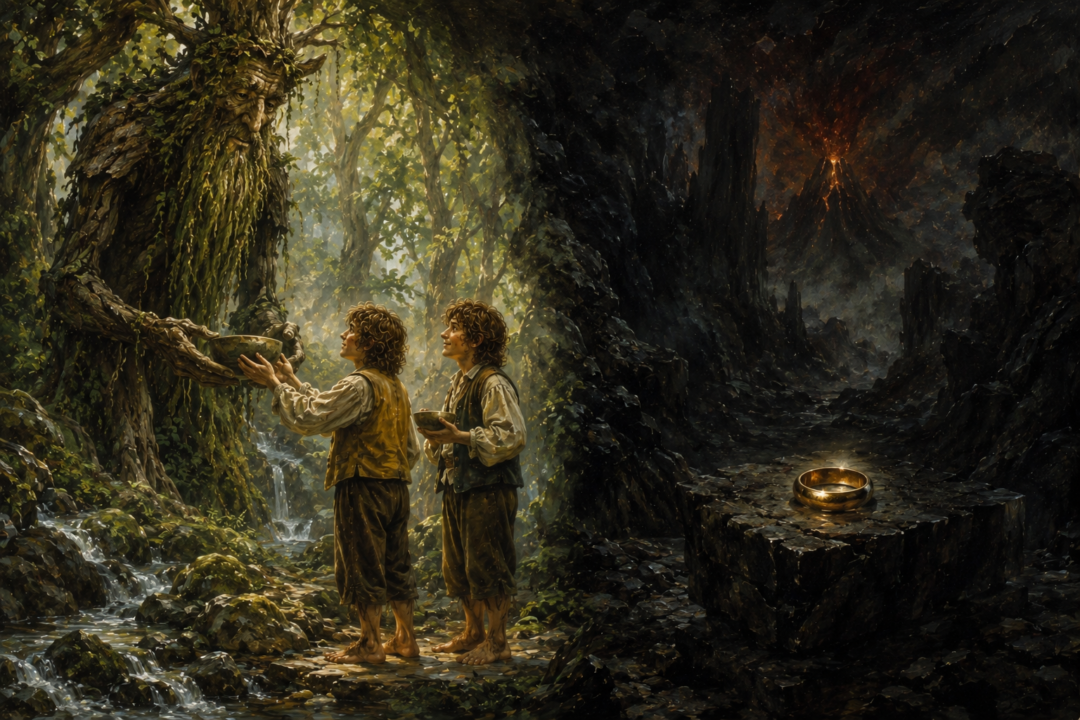
The One Ring also promises enlargement—but of a completely different kind.
The Ring tempts people through power. It works upon desire, fear, ambition, and the wish to impose one's will. Even when someone imagines using it for a good purpose, domination lies behind its power.
Ent-draught enlarges Merry and Pippin without making them masters of anyone.
They become physically greater while remaining recognizably themselves.
They do not emerge from Wellinghall hungry for authority. They do not attempt to dominate Treebeard. They do not claim ownership over Fangorn's power.
This contrast should not be turned into a formal magical rule; the text never presents Ent-draught as an intentional opposite to the Ring.
But as a thematic comparison, it is striking.
Middle-earth contains forms of increase that are not based on domination.
Merry and Pippin grow because they receive hospitality from Treebeard.
They are given rather than taking.
And nothing is demanded from them in exchange.
Their Real Transformation Cannot Be Bottled
After Fangorn, Merry and Pippin continue along separate paths.
Pippin looks into the palantír of Orthanc, encounters Sauron's terrifying presence through it, rides with Gandalf to Minas Tirith, enters the service of Denethor, and risks himself to help save Faramir.
Merry becomes Théoden's esquire. Prevented from openly riding to war, he nevertheless reaches the Pelennor Fields with Éowyn and plays a crucial role in the confrontation with the Lord of the Nazgûl.
Neither journey is easy.
Neither can be explained by Ent-draught.
That is precisely the point.
Fangorn gives them restoration and growth, but experience forces them into adulthood of another kind. They encounter grief, responsibility, loyalty, terror, and war.
By the time they return to the Shire, their unusual height is only the most visible evidence that the travelers who left home are not the same ones who have returned.
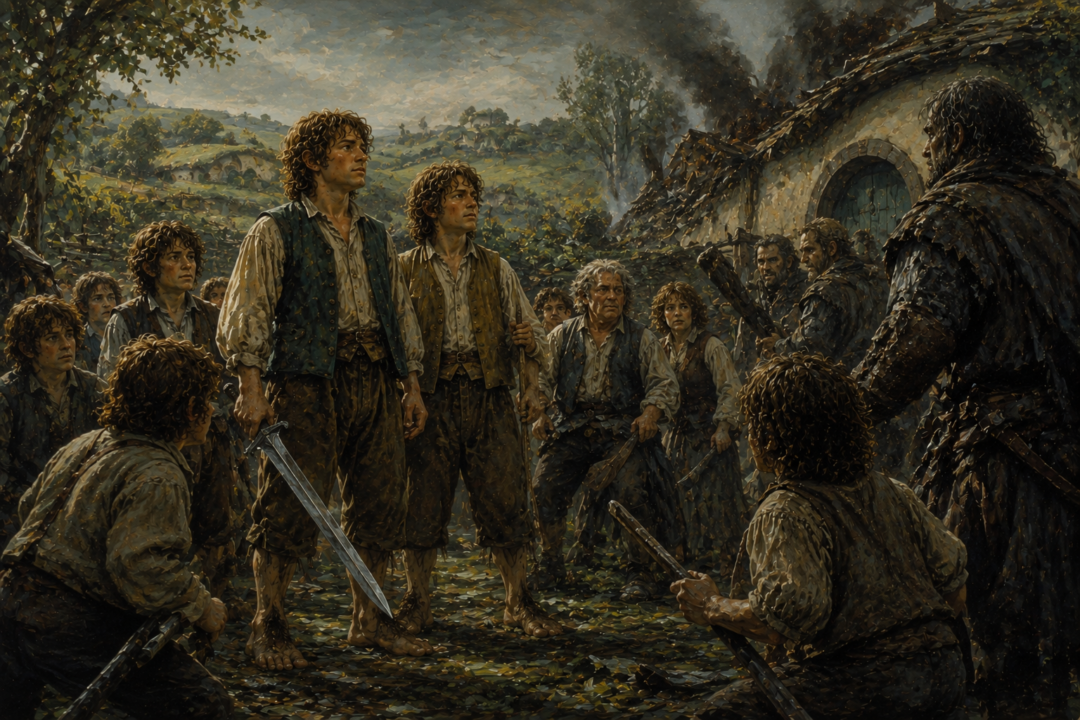
During the Scouring of the Shire, Merry and Pippin are no longer helpless young wanderers following greater heroes. They can organize, command, and act decisively alongside their fellow hobbits.
Their stature now matches their presence.
But only one of those things came from Treebeard's jars.
Why the Three Inches Matter
It would be easy to treat Merry and Pippin's growth as one of the story's charming curiosities.
It is much better placed than that.
Their encounter with Ent-draught occurs at exactly the point when their role in the War of the Ring begins to expand dramatically. Two hobbits who have been captured and carried across Rohan stumble into an ancient forest, drink something belonging to an older order of life, and emerge physically changed.
The draught restores them.
It nourishes them.
It fills them with vigour.
It causes extraordinary growth.
Beyond those effects, caution is necessary. The books never say it grants wisdom, courage, combat ability, longevity, or any other permanent supernatural enhancement.
Yet the timing gives the transformation an unmistakable resonance.
Merry and Pippin spend the remainder of the story growing in another sense entirely.
They enter Fangorn as people others repeatedly protect.
They eventually return to the Shire as people capable of protecting others.
Ent-draught does not cause that moral transformation.
But it gives it a wonderfully visible symbol.
Treebeard makes the hobbits taller.
The journey makes them larger.
Sources & Notes
- The Encyclopedia of Arda, “Ent-draughts” — https://www.glyphweb.com/arda/e/entdraughts.html
- The Encyclopedia of Arda, “Peregrin Took” — https://www.glyphweb.com/arda/p/peregrintook.html
- The Encyclopedia of Arda, “Treebeard” — https://www.glyphweb.com/arda/t/treebeard.html
Reference entries document the people, places, events, and objects directly discussed in this article.