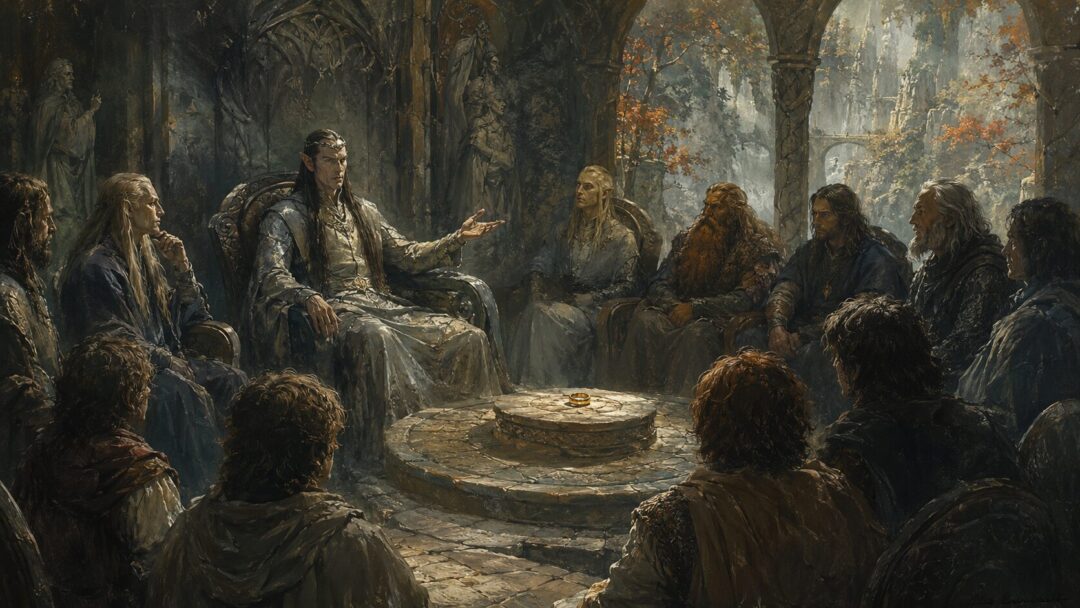
At the Council of Elrond, the fate of the One Ring is debated in one of the most important conversations of the Third Age.
The Ring has been found.
Sauron is rising again.
Gondor is under pressure.
And Boromir asks the question that many readers have wondered themselves: why not use the Enemy’s own weapon against him?
On the surface, it seems practical. The Ring is powerful. Sauron fears its loss. If the Free Peoples are desperate, why should they not take that power and turn it back upon Mordor?
Elrond’s answer is immediate and severe.
The Ring cannot be used safely. It belongs to Sauron. It was made by him alone. Its strength is too great for anyone to wield at will, except perhaps those already possessing great power—and for them, Elrond says, the danger would be even deadlier.
Then he gives the line that changes the whole meaning of the warning:
“Nothing is evil in the beginning. Even Sauron was not so.”
It is a small sentence, but it opens one of the deepest truths in Middle-earth.
Elrond is not simply explaining Sauron’s origin.
He is explaining why the Ring must be destroyed.
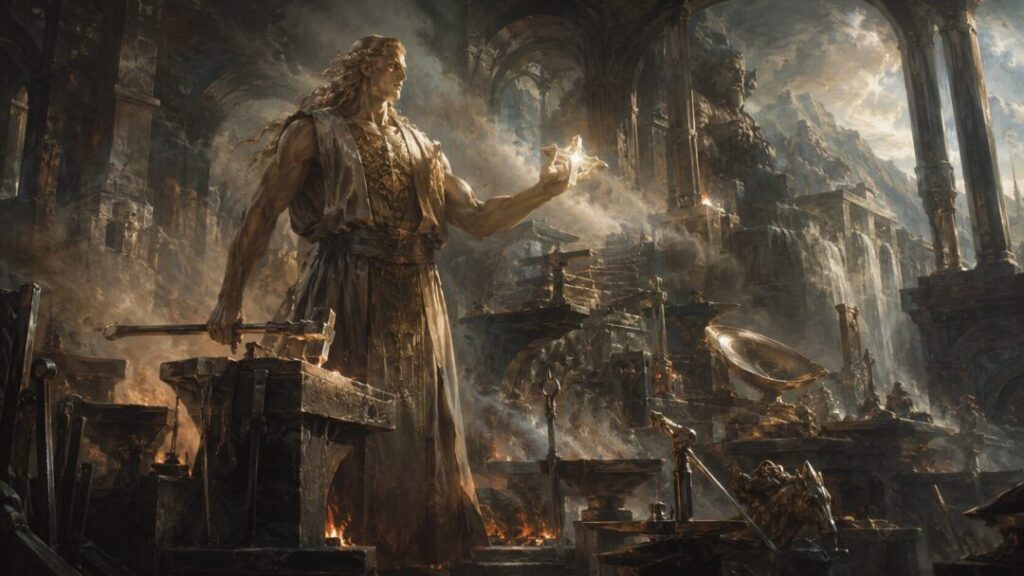
Elrond Was Not an Eyewitness to Sauron’s Beginning
The first thing to make clear is what Elrond is not saying.
Elrond did not personally see Sauron before his fall.
Elrond was born late in the First Age, in the Havens of Sirion, long after Sauron had already become a servant of Morgoth. By the time Elrond enters the story of the Elder Days, Sauron is already a name of terror: a sorcerer, a commander, and a power of darkness in Beleriand.
So Elrond’s knowledge cannot come from direct memory of Sauron’s earliest existence.
That matters.
Elrond’s statement is not the casual recollection of someone who once knew Sauron before he changed. It is the judgment of a lore-master speaking from ancient knowledge, inherited memory, and long reflection.
Rivendell is not merely a refuge. It is a house of lore. Elrond preserves histories, lineages, songs, weapons, and memories that reach back into the Elder Days. He is the son of Eärendil and Elwing, descended from both Elves and Men, connected to the greatest stories of the First Age.
He has also lived through the Second Age and nearly all of the Third.
That gives his words a particular weight.
He does not know Sauron’s beginning because he watched it happen.
He knows it because the Wise remember what kind of being Sauron was before he became the Dark Lord.
Sauron Was Not Created as a Dark Lord
Sauron’s beginning is not in Mordor.
It is not in Barad-dûr.
It is not even in Middle-earth as a kingdom of darkness.
The older lore places Sauron among the Maiar, spirits of the same order as the Valar but of lesser degree. More specifically, he was associated with Aulë, the great power connected with craft, making, substance, and skill.
This is crucial.
Sauron’s first nature was not described as chaos, destruction, or hatred for creation. The texts connect him with knowledge, order, and craft. His later evil does not come from being a creature made evil from the start. It comes from corruption, pride, and the desire to impose his own will.
That is why Elrond’s line is so disturbing.
If Sauron had always been evil, he would be easier to understand. He would be a monster from the beginning, a shadow that simply remained a shadow.
But Middle-earth rarely treats evil that simply.
Melkor himself falls through rebellion and desire for mastery. Sauron follows him and becomes his greatest servant. What begins as a being of order and craft becomes domination, deceit, and tyranny.
The road is not random.
It is a corruption of something that once had another shape.
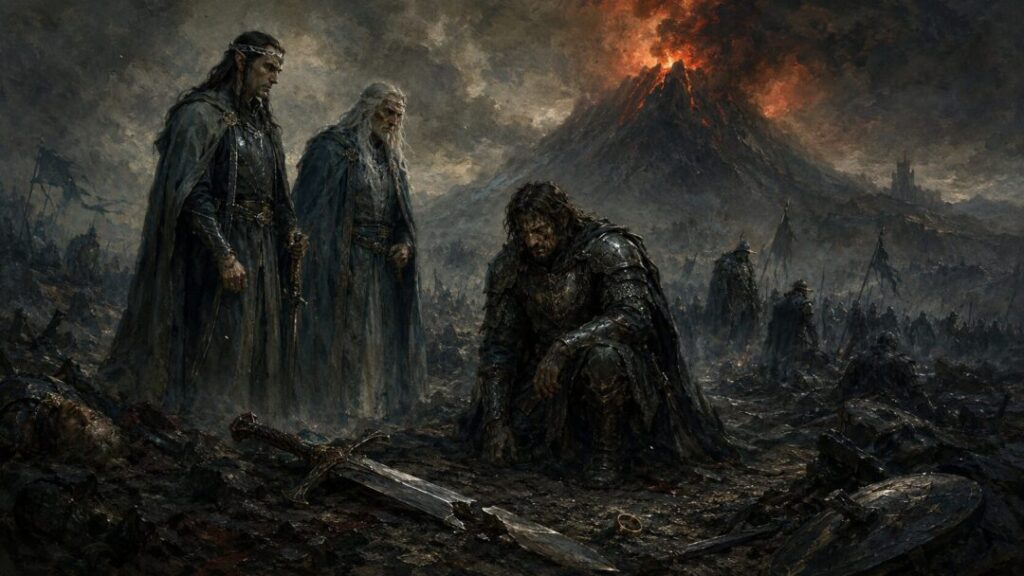
Why Aulë Matters
The connection to Aulë is one of the most important details in understanding Sauron.
Aulë is associated with making, smithcraft, and the shaping of the material world. The Dwarves themselves were made by Aulë, though their true life came only by the will of Ilúvatar.
Sauron’s later works still bear a dark reflection of that origin.
He is a maker.
He builds.
He plans.
He teaches craft to the Elven-smiths of Eregion in fair disguise.
He forges the One Ring.
This does not mean his craftsmanship was evil in itself. Craft is not condemned in Middle-earth. Aulë is not evil. The making of beautiful and useful things is not evil.
The danger comes when making becomes possession.
When order becomes control.
When skill becomes a way to bind the wills of others.
That is the path Sauron takes.
He does not become a Dark Lord by abandoning his gifts. He becomes one by turning those gifts toward domination.
This is why the One Ring is not simply a weapon.
It is Sauron’s nature made into an object: craft joined to command, power joined to control, order twisted into enslavement.
Why Elrond Says It During the Ring Debate
Elrond’s line appears at exactly the right moment.
Boromir has not asked about Sauron’s origin. He has asked about using the Ring.
So why does Elrond answer with a statement about beginnings?
Because Boromir’s suggestion contains the same danger.
Boromir is not presented as a servant of Sauron. He is brave, noble, and burdened by the defense of Gondor. He wants victory. He wants strength enough to protect his people. His desire is understandable.
That is precisely why it is dangerous.
Elrond is warning that evil does not always begin by wanting evil things.
Sometimes it begins with the desire to do good by means that cannot remain good.
The Wise might take the Ring intending to overthrow Sauron. A great lord might wield it hoping to defend the West. A ruler might claim it for order, protection, and peace.
But the Ring was made for mastery.
To use it would be to enter Sauron’s logic.
Elrond’s warning is not, “Do not use the Ring because you are already evil.”
It is, “Do not use the Ring because even those who are not evil can be drawn into becoming what they oppose.”
That is why he brings up Sauron.
Sauron himself is the example.
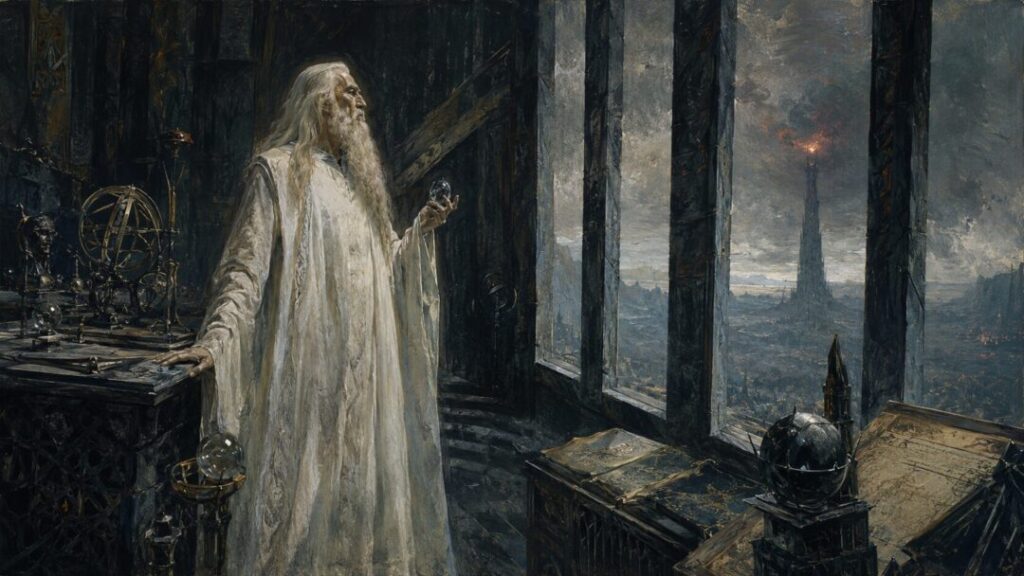
Elrond Had Seen This Pattern Before
Elrond’s words are not abstract philosophy.
He has seen too many victories turn bitter.
He says at the Council that he has seen three ages in the West of the world, and many defeats, and many fruitless victories. That phrase matters. Elrond understands that not every triumph heals the world. Some victories leave behind wounds that grow in silence.
He saw the end of the Second Age.
Sauron was overthrown.
Barad-dûr fell.
The Last Alliance achieved what seemed impossible.
And yet the Ring survived.
Isildur took it.
Sauron’s body was destroyed, but his power was not ended.
Elrond and Círdan urged Isildur to destroy the Ring, but Isildur refused. The text does not portray Isildur as a fool from the beginning. He had fought in a terrible war. His father and brother had died. He claimed the Ring as weregild for his losses.
That does not make the choice safe.
The Ring remained, and with it the seed of Sauron’s return.
Elrond knows how easily victory can fail when power is kept.
The Warning Is Also About Saruman
Elrond specifically tells Boromir to consider Saruman.
This is another key part of the scene.
Saruman was one of the Wise. He was not originally a servant of Sauron. He had knowledge, authority, and a mission against the Shadow. Yet he became ensnared by the desire for power, and by the time of the War of the Ring, he had begun to imitate the very evil he claimed to oppose.
That parallel matters.
Sauron was not evil in the beginning.
Saruman was not evil in the beginning.
Boromir is not evil when he first proposes using the Ring.
The pattern is the point.
Elrond is not interested in comforting distinctions between “good people” and “evil people” as if the Ring only threatens one category. The Ring is dangerous because it works upon desire, fear, pride, pity, ambition, and the longing to set things right by force.
The stronger the person, the greater the danger.
For the Wise, the Ring would not merely tempt them to serve Sauron.
It would tempt them to replace him.
Elrond’s Knowledge Comes from Lore and Wisdom
So how did Elrond know Sauron was not evil in the beginning?
The most careful answer is this:
The texts do not show Elrond learning this information in a specific scene. They do not give us a moment where someone teaches him Sauron’s origin.
But they give us enough to understand why he would know it.
Elrond is one of the greatest lore-masters remaining in Middle-earth. He is connected to the histories of the Elder Days. He lived among the High Elves. He served Gil-galad. He was present during the great wars against Sauron in the Second Age. He knew the Wise. His house preserved memory at a time when much of Middle-earth was forgetting.
Through that lore, Elrond would know what Sauron was: not a mortal tyrant who rose from nowhere, but a fallen Maia, once connected with the order of Aulë.
But knowledge alone is not the whole answer.
Elrond also understands the meaning of that knowledge.
He does not say, “Sauron was not evil in the beginning” as a piece of trivia.
He says it as a warning about the soul.
Sauron’s Fall Makes the Ring More Terrible
The Ring is terrifying because it does not need to create desire from nothing.
It only needs to find what is already there.
A wish to defend one’s city.
A hunger to repair a broken world.
A longing to bring order out of fear.
A belief that one is wise enough to use power without being changed by it.
Sauron’s own history shows where that road can lead. His original association with craft and order was not evil. But when order became domination, and domination became the center of his will, he became the Dark Lord.
That is why Elrond refuses the Ring so completely.
He will not take it to hide it.
He will not take it to wield it.
He will not place himself near the center of that temptation.
This is not weakness.
It is wisdom.
Elrond understands that the most dangerous evil is not always the evil that announces itself openly. Sometimes it begins in the mind as certainty: I can control this. I can use this. I can make the world better if only I have enough power.
That is the thought the Ring feeds.
The Line Is Not About Sympathy for Sauron
It is important not to soften Sauron into a tragic victim.
By the time of the War of the Ring, Sauron is wholly committed to domination. The peoples of Middle-earth are right to resist him. Elrond’s statement does not reduce Sauron’s guilt.
If anything, it increases the horror.
Sauron was not made as a Dark Lord, and yet he became one.
He was not forced to be what he became from the first moment of his existence. His fall is real. His choices matter. His corruption is not innocence.
Elrond’s line does not ask us to pity Sauron.
It asks us to fear the road that made him.
That distinction is essential.
The moral force of the scene depends on it. Elrond is not saying, “Sauron was once good, so perhaps he should be forgiven.” He is saying, “Sauron was not evil in the beginning, so do not imagine that your good beginning will protect you if you take up his weapon.”
Why This Moment Matters
Elrond’s warning is one of the clearest explanations of evil in The Lord of the Rings.
Evil is not treated merely as a tribe, a costume, or a distant fortress in Mordor. It is a corruption of will. It is the twisting of gifts. It is the desire to dominate disguised as the desire to heal.
That is why the Ring cannot be used for good.
It does not matter whether the first intention is noble.
It does not matter whether the bearer hates Sauron.
It does not matter whether the cause is desperate.
The Ring belongs to a pattern of power that turns the user toward mastery. And mastery is exactly Sauron’s way.
Elrond knows Sauron was not evil in the beginning because the old lore remembers what Sauron was before the fall.
But he says it because he knows what Sauron became.
That is the deeper warning.
Not that evil begins as evil.
But that it often does not.
And by the time it has given itself a crown, built a tower, and called domination by the name of order, it may no longer remember the moment it first turned aside.
Sources & Notes
- J.R.R. Tolkien, The Lord of the Rings, Book II, Chapter 2, “The Council of Elrond” — Elrond rejects Boromir’s plan to wield the Ring and says, “Nothing is evil in the beginning. Even Sauron was not so.”
- J.R.R. Tolkien, The Silmarillion, “Valaquenta: Of the Enemies” — Sauron is identified as a Maia of Aulë’s people before becoming Morgoth’s greatest servant, grounding the article’s “not evil from the first” point.
- J.R.R. Tolkien, The Silmarillion, “Of the Rings of Power and the Third Age” — Sauron’s Annatar disguise, instruction of the Elven-smiths, and forging of the One Ring show craft turned toward mastery and domination.
- J.R.R. Tolkien, The Lord of the Rings, Book II, Chapter 2, “The Council of Elrond” — Elrond’s “fruitless victories,” Isildur’s refusal, and his warning to consider Saruman support the article’s pattern of corrupted good beginnings.
- J.R.R. Tolkien, The Letters of J.R.R. Tolkien, Letter 131 — Tolkien describes Sauron’s relapse into evil as a desire to order all things according to his own wisdom, clarifying order twisted into domination.