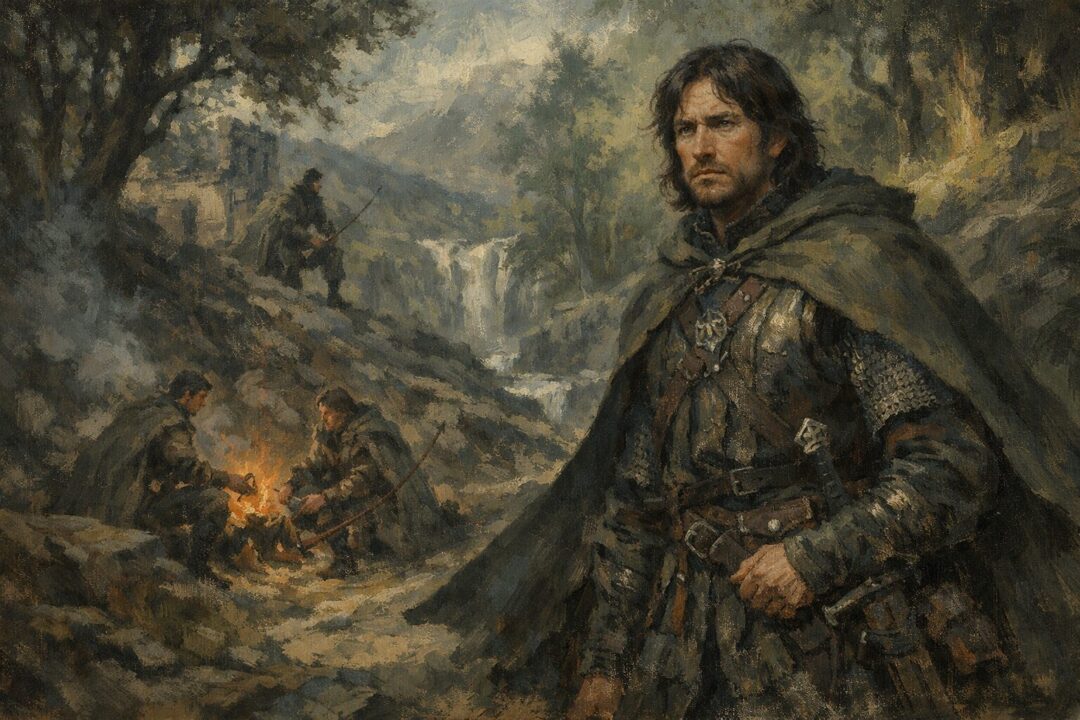
Most discussions of Faramir and Tolkien begin with a single line from a letter.
“As far as any character is ‘like me’, it is Faramir.”
It is one of the most quoted remarks attached to The Lord of the Rings, and for good reason. It sounds direct. Final. Almost like an answer already complete.
But the moment you look more closely, that answer opens outward instead of closing.
Because Tolkien did not merely say that Faramir resembled him. He connected himself to Faramir at several different levels: in temperament, in values, and in one deeply private image that appears inside the story with almost no warning.
That matters.
It means the likeness is not just biographical trivia. It is not simply a charming note about an author favoring one of his own characters. It is a clue to why Faramir feels so different when he enters the story.
He is not the loudest man in Gondor.
He is not the most famous.
He is not the most celebrated for martial brilliance.
And yet he is one of the most inwardly distinct figures in all of Middle-earth.
To understand what Faramir and Tolkien had in common, we have to begin with the obvious answer.
And then go beyond it.
The Famous Answer Is Real, but Incomplete
The basic fact is certain.
Tolkien wrote that Faramir was the character most like himself, though he added, with characteristic irony, that he himself lacked the courage his characters possessed. That statement alone is enough to show that any comparison between them is not fanciful invention by readers. It comes from Tolkien directly.
But the quote by itself can be misleading.
Used in isolation, it can make the connection sound broad and vague, as if Tolkien simply meant that he liked Faramir, or saw something of his own personality reflected in him. That is true as far as it goes. But it does not yet explain what sort of likeness is involved.
The texts give a clearer shape to that likeness.
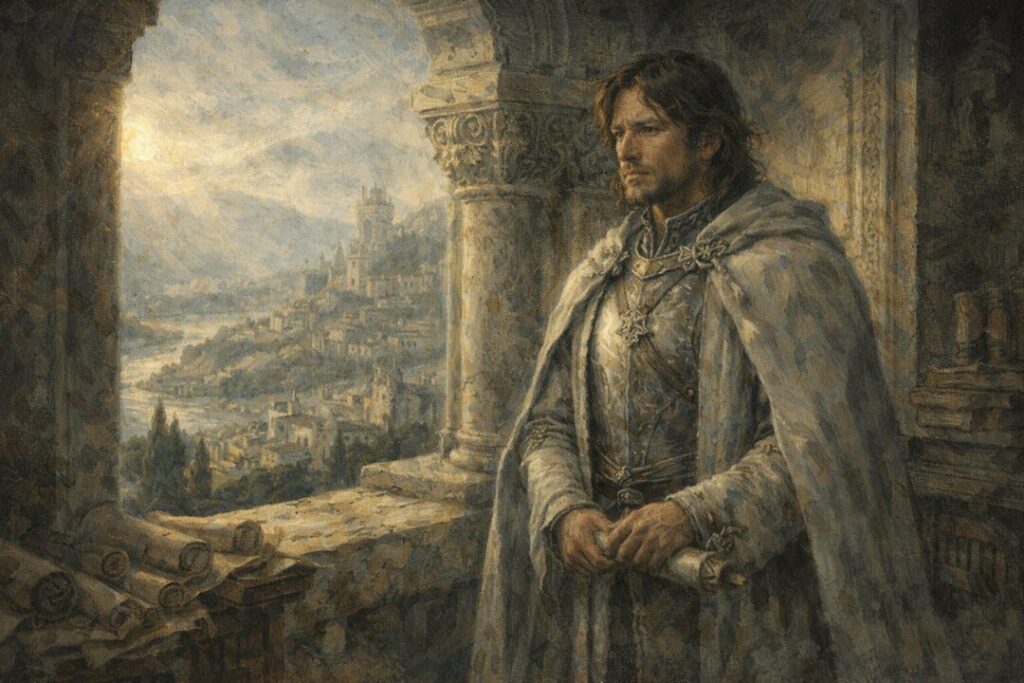
Faramir is repeatedly defined by a combination that others find unusual: he is both a captain and a man of lore. Beregond says that men are slow to believe that someone can be learned in “the scrolls of lore and song” and still possess hardihood and swift judgment in the field, but that such is Faramir. Appendix A adds something even more revealing: he is a lover of lore and music, more inclined to pity than scorn, and judged by some to be less courageous only because he does not seek danger without purpose.
That combination already points toward Tolkien with unusual force.
Not because Faramir is a scholar in the modern sense, and not because Tolkien was literally a captain of Gondor, but because both stand in the same moral position toward conflict.
They are close enough to war to know its necessity.
Far enough from its glamour to resist loving it.
Faramir’s View of War Is the Clearest Surface Parallel
One of Faramir’s most famous lines is also one of the clearest windows into why readers so often connect him with Tolkien:
“War must be, while we defend our lives against a destroyer who would devour all; but I do not love the bright sword for its sharpness… I love only that which they defend.”
This is not the speech of a pacifist who denies the reality of evil.
Nor is it the speech of a warrior intoxicated by battle.
It belongs to someone who accepts war as a burden, not a glory. Someone who sees defense as tragically necessary, yet refuses to confuse necessity with admiration.
That distinction is essential.
Faramir is brave. The text is explicit on that point. He is not timid, not hesitant, and not soft in the weak sense. He leads men in deadly conditions. He holds Ithilien under the shadow of Mordor. He rides on the doomed mission to defend Osgiliath. His courage is never absent.
But his courage is ordered toward preservation, not display.
He does not seek renown in danger for its own sake. He values what stands behind the sword: memory, beauty, inheritance, wisdom, the dignity of a people and their city. Appendix A makes the same point in a different register when it says his courage was judged less only because he did not seek glory in peril without reason.
This is one of the most important overlaps with Tolkien.
Tolkien was a veteran of the First World War, and although The Lord of the Rings is not an allegory of that war, his writings and letters consistently reject any sentimental glorification of conflict. His association of himself with Faramir strongly suggests that Faramir’s moral stance toward war is one of the places where Tolkien felt most closely represented. Tolkien Gateway explicitly notes that Faramir “in many ways speaks for Tolkien” in this respect.
That does not mean Faramir is a direct self-portrait.
But it does mean the resemblance is moral before it is merely narrative.
A Man of Memory, Not of Appetite
The contrast between Boromir and Faramir helps sharpen the point.
Boromir is not a villain. He is valiant, loyal, and sincerely devoted to Gondor. But he is drawn more powerfully toward arms, strength, and open action. Appendix A says he delighted chiefly in arms and cared little for lore except tales of old battles. Faramir, by contrast, was like him in looks but otherwise in mind. He read the hearts of men, was moved sooner to pity than to scorn, and loved lore and music.
That contrast is not just between two brothers.
It is between two ways of facing a world under siege.
Boromir responds first through force.
Faramir through understanding.
Boromir wants the weapon that might save Gondor.
Faramir wants the city preserved for its memory, beauty, and wisdom, not merely its power.
This is why Faramir’s refusal of the Ring matters so much.
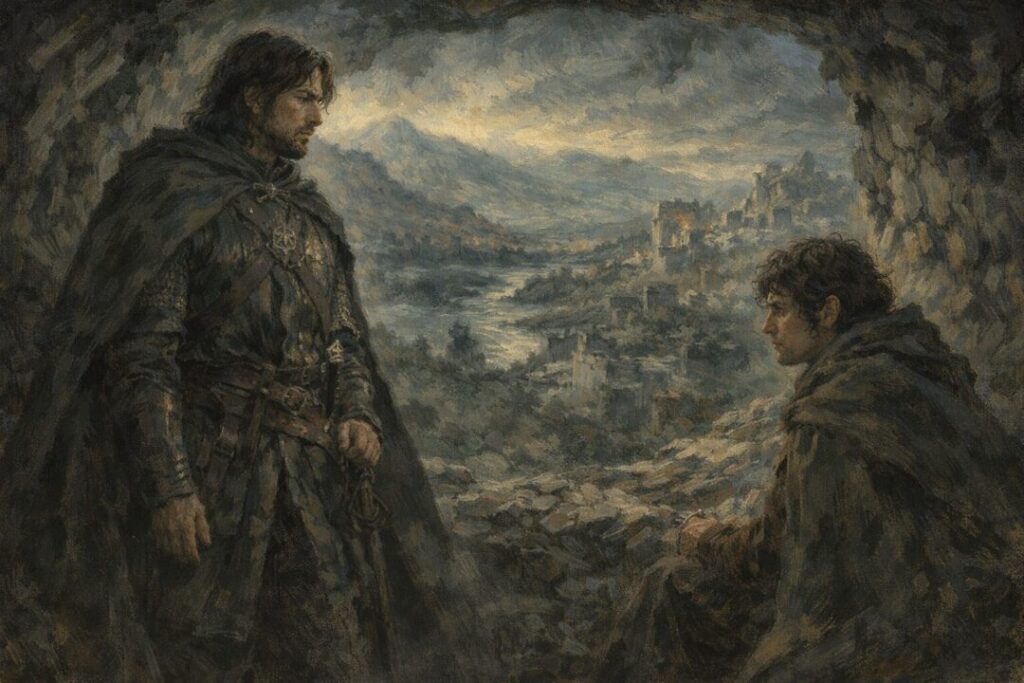
When Frodo reveals what Isildur’s Bane is, Faramir does not seize it. He says he would not take it if he found it by the highway. That moment is not proof that he is somehow beyond temptation in an absolute sense. The text does not say that. It does, however, show the shape of his character with unusual clarity: he is less susceptible to the appeal of domination because he does not prize mastery in the same way.
That, too, is part of the likeness.
Not that Tolkien was “Faramir” in a literal biographical sense.
But that Faramir embodies a kind of inner resistance: to empty glory, to pride, to appetite disguised as duty.
The Deeper Connection Is Stranger
If the comparison ended there, it would already be significant.
But Tolkien goes further.
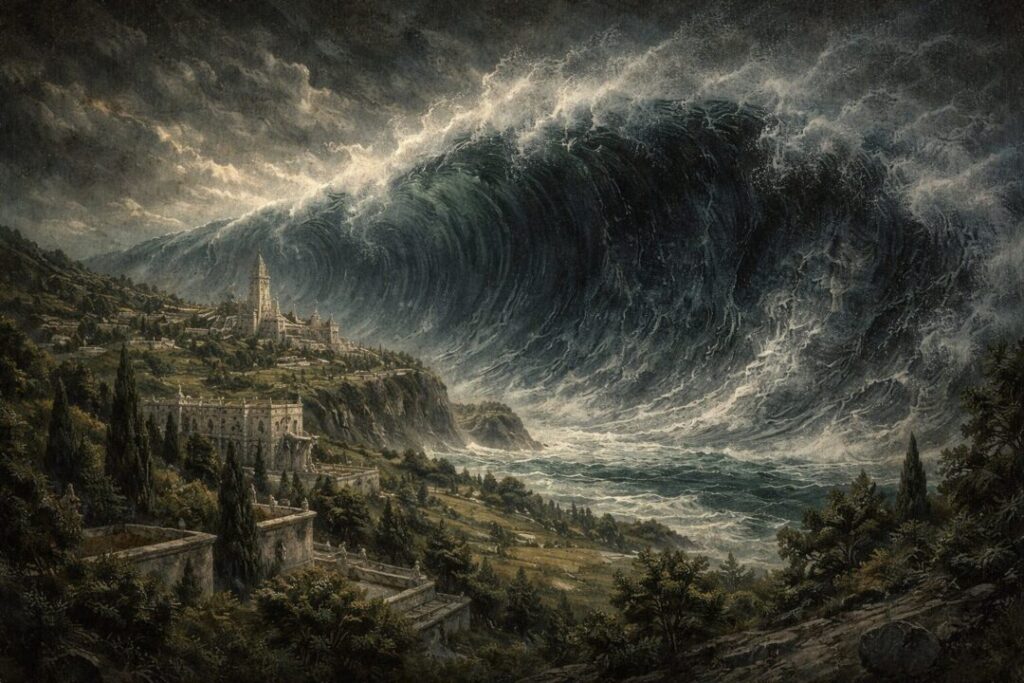
In Letter 180, as summarized by Tolkien Gateway, he says that when Faramir speaks of a vision of a Great Wave, he speaks for him. In the earlier 1955 letter to W. H. Auden, published by the Tolkien Estate, Tolkien describes his own recurring dream of a vast wave coming inescapably over green land and says plainly: “I bequeathed it to Faramir.”
This is where the resemblance becomes much more intimate.
It is no longer just about attitude or temperament.
It is about an image from Tolkien’s private inner life entering the story through Faramir.
In The Return of the King, Faramir tells Éowyn that he often dreams of Númenor: of Westernesse foundering, and of a great dark wave climbing over green lands and hills, “darkness unescapable.” The language is hauntingly close to Tolkien’s own account of his recurring dream.
That matters more than it may first appear.
Because it shows that Faramir is not simply the character Tolkien judged most sympathetic to himself in outlook. He is also the vessel for one of the most personal symbolic burdens Tolkien ever acknowledged.
The dream was not invented casually for atmosphere.
It came from somewhere already deeply rooted.
Why the Great Wave Matters
The wave is tied in the legendarium to Númenor, the great island kingdom that fell through pride, disobedience, and the desire to overpass mortal limits.
But in Tolkien’s own remarks, the dream predates or exceeds its final literary placement. He describes it as something recurrent and troubling, an “Atlantis complex,” a vision that had been with him for years. Writing the Downfall of Númenor seems, by his own account, to have helped externalize it.
So when Faramir dreams that same darkness, the resemblance is not abstract.
Faramir becomes the point where private dread and legend touch.
This does not mean Faramir is secretly a coded autobiography. That would go much too far. The evidence does not support such a claim.
But it does mean that Tolkien entrusted Faramir with more of his inward life than he did many other figures.
And that helps explain why Faramir often feels so unusually alive.
Not louder.
Not grander.
Just more inwardly transparent.
Why It Was Faramir
This is perhaps the most interesting question of all.
Why did this likeness settle on Faramir and not on Aragorn, Frodo, or Gandalf?
Part of the answer is probably visible in the way Faramir stands slightly aside from the main heroic spotlight. He is great, but not central in the way Aragorn is central. He is noble, but not burdened with the Ring as Frodo is burdened. He is wise, but not angelic or superhuman like Gandalf.
He is a man.
A mortal man of high lineage, under pressure, in a failing realm, trying to preserve what is worth preserving without surrendering to power for its own sake.
That makes him a particularly fitting place for this kind of likeness.
He is near enough to ordinary human cost to carry pity, weariness, memory, and inner conflict. But he is elevated enough in character that those things appear clarified rather than merely broken.
Even his relationship with Denethor sharpens this.
Faramir is the son least valued by the father who should have known him best. Yet the text repeatedly shows that his apparent gentleness conceals no weakness. He is stern when needed, perceptive, disciplined, and brave. He sees more deeply than many around him, but that depth isolates him.
That combination of inwardness, restraint, and tested courage makes him an ideal bearer of Tolkien’s own moral and imaginative imprint.
Not a Self-Insert, but a Nearness
The safest conclusion is also the strongest one.
Faramir is not a self-insert in the shallow modern sense. Tolkien did not flatten himself into a character and place that figure inside the story as a disguised portrait.
The likeness is subtler than that.
Faramir shares Tolkien’s refusal to romanticize war.
He shares his love of what is old, beautiful, and worth defending.
He shares his combination of thoughtfulness and courage.
And he shares, most strikingly, the image of the Great Wave: a private recurring vision Tolkien explicitly said he gave to Faramir.
That is more than a casual resemblance.
It is one of the rare moments where the distance between author and character visibly narrows.
Why This Changes the Way Faramir Feels
Once you see all this together, Faramir changes.
He is no longer just the unexpectedly wise captain in Ithilien.
No longer only the brother who succeeds where Boromir falls.
No longer only the man who resists the Ring.
He becomes one of the places where Middle-earth briefly comes nearest to confession.
Not overt confession.
Not autobiography in disguise.
Something quieter than that.
A convergence.
A man shaped by war but not seduced by it.
A lover of lore and memory in an age of ruin.
A figure of pity, restraint, and moral clarity.
And behind him, half-seen, the shadow of a recurring wave climbing over green fields.
That is what Faramir and Tolkien had in common.
Not just personality.
A way of seeing.
A way of valuing.
And, in one haunting image, a shared darkness carried into story.
Sources & Notes
- J.R.R. Tolkien, The Letters of J.R.R. Tolkien, Letter 163 — Tolkien’s letter to W. H. Auden identifies Faramir as the character most like himself and describes the recurring Great Wave dream he “bequeathed” to Faramir.
- J.R.R. Tolkien, The Lord of the Rings, Book IV, Chapter 5, “The Window on the West” — Faramir’s clearest statements on war, lore, Númenor, Boromir, and his refusal to take the Ring by force.
- J.R.R. Tolkien, The Lord of the Rings, Appendix A, “The Stewards” — the contrast between Boromir and Faramir: arms and glory set beside lore, music, pity, and courage without love of danger.
- J.R.R. Tolkien, The Lord of the Rings, Book V, Chapter 4, “The Siege of Gondor” — Faramir’s return to Minas Tirith, Denethor’s treatment of him, and the doomed ride toward Osgiliath.
- J.R.R. Tolkien, The Lord of the Rings, Book VI, Chapter 5, “The Steward and the King” — Faramir tells Éowyn of his dream of Númenor’s dark wave overwhelming green lands, matching Tolkien’s own acknowledged image.