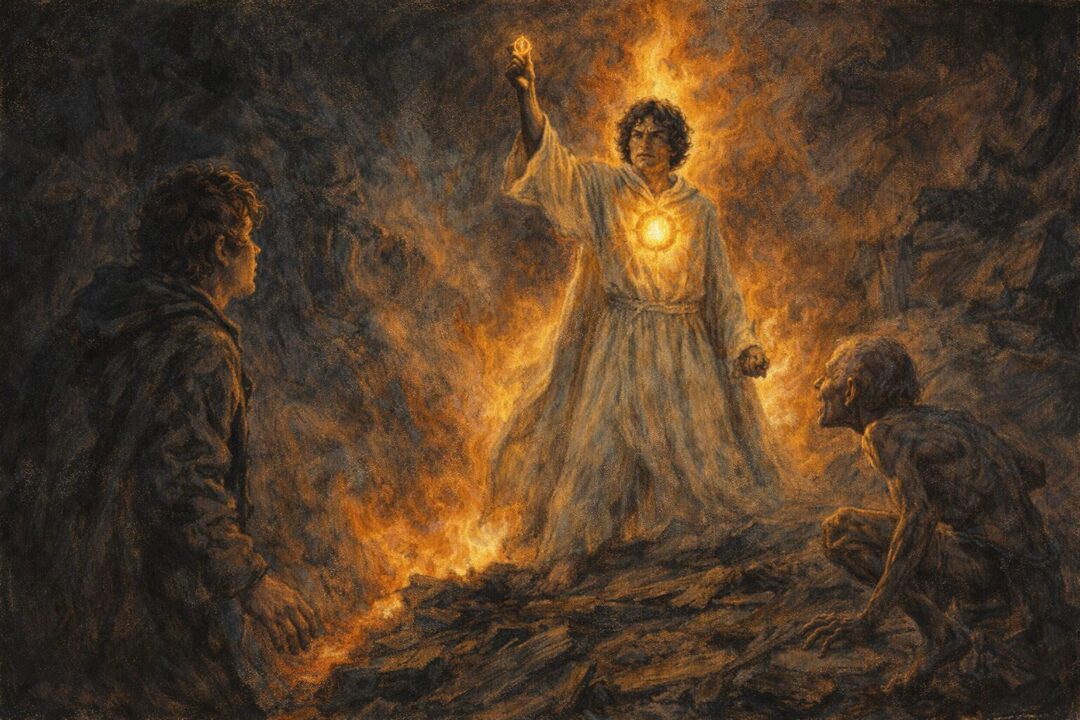
The One Ring is often remembered as if it were the ultimate magical device in Middle-earth.
It vanishes its bearer.
It unnerves enemies.
It corrupts everyone who touches it.
And in many retellings, it begins to feel almost limitless: a dark object that can hide, protect, empower, dominate, and perhaps even save the right person if only they are bold enough to wield it.
But the text itself is stricter than that.
The Ring is dreadful precisely because its powers are real, yet narrower than many readers first assume. It does not do everything. It does not obey everyone equally. And some of the things it appears to offer are not gifts at all, but traps disguised as advantages.
Once that becomes clear, the Ring grows more frightening, not less.
Because its danger lies not in unlimited magic, but in the way it offers just enough power to mislead almost anyone.
The Ring Cannot Make a Mortal Truly Immortal
One of the most persistent misunderstandings is that the Ring grants something like immortality.
It does not.
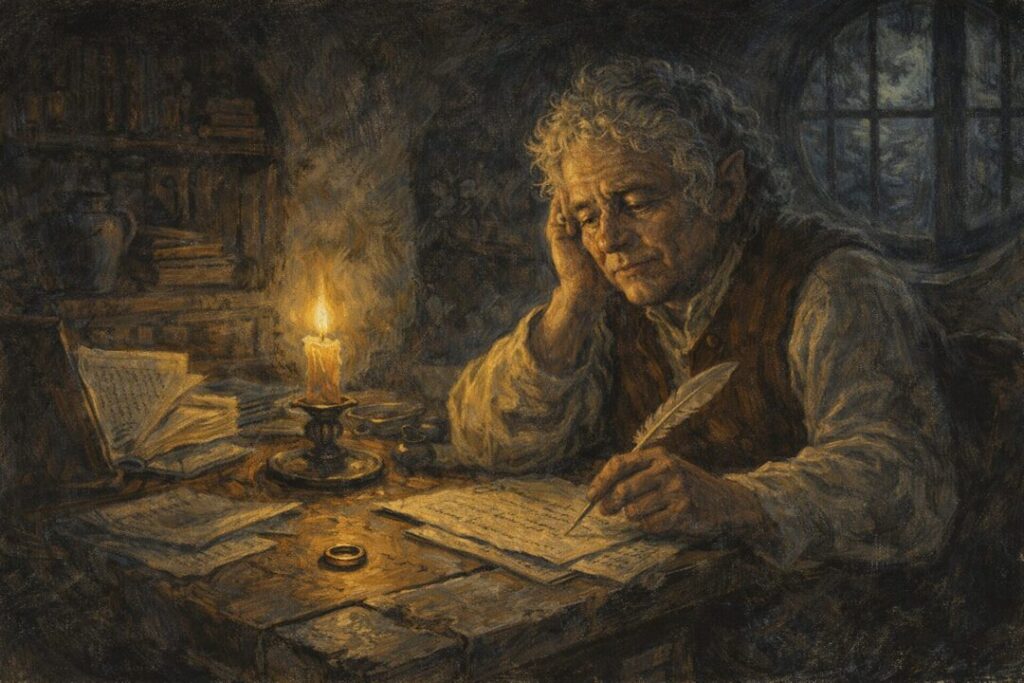
Gandalf explains this with unusual clarity early in the story. A mortal who keeps one of the Great Rings does not die in the ordinary course, but neither does he gain more life. He merely continues, until every minute becomes a weariness. Frequent use of the Ring to become invisible leads instead toward fading, until the bearer becomes permanently invisible and walks in the twilight under the eye of the Dark Power that rules the Rings.
That matters because the Ring’s promises are often mistaken for preservation.
Bilbo appears unusually well-preserved for many years, and Gollum’s life is grotesquely extended. But the underlying pattern is not healing, renewal, or blessed longevity. It is suspension. The self is stretched unnaturally. Time is not conquered. It is made harder to bear.
So the Ring cannot truly preserve mortal life in any wholesome sense.
It can only prolong possession and deepen bondage.
The Ring Cannot Turn Just Anyone into a Dark Lord
Another common assumption is that if someone physically possesses the Ring, they can simply use its full power.
The text repeatedly says otherwise.
When Frodo asks Galadriel why he cannot perceive all the other Rings and know the thoughts of those who wear them, her answer is revealing. The Rings give power according to the measure of each possessor. Before Frodo could use that power, he would need to become far stronger and train his will toward domination.
This is one of the clearest statements in the entire legendarium about the Ring’s limits.
Possession is not the same as mastery.
A weak bearer does not suddenly become omnipotent. The Ring enhances, tempts, and opens certain perceptions, but it does not instantly supply the inner stature needed to wield its highest powers. That is why the danger of figures like Gandalf, Galadriel, or perhaps Elrond is treated differently from the danger posed by Frodo or Sam. Later commentary on Frodo’s claim at the Crack of Doom makes the same point from another angle: even with the Ring, Frodo would have been vulnerable before the Nazgûl and ultimately before Sauron. By contrast, Gandalf or Galadriel, had they tried to wield it successfully, would have become far more terrible rulers.
So the Ring cannot make an ordinary bearer all-powerful on demand.
Its power scales with the bearer, and even then at terrible moral cost.
The Ring Cannot Be Used as a Safe Hiding Place
Adaptations often make the Ring look like a near-perfect escape device.
Put it on, disappear, slip away.
In the books, that is only half true.
Yes, the Ring can render a mortal unseen to ordinary eyes. Gandalf says repeated use to make oneself invisible leads toward fading, and the broader lore of the Rings of Power connects this invisibility to movement into the Unseen rather than simple concealment like a trick of light.
But the crucial point is that invisibility is not safety.
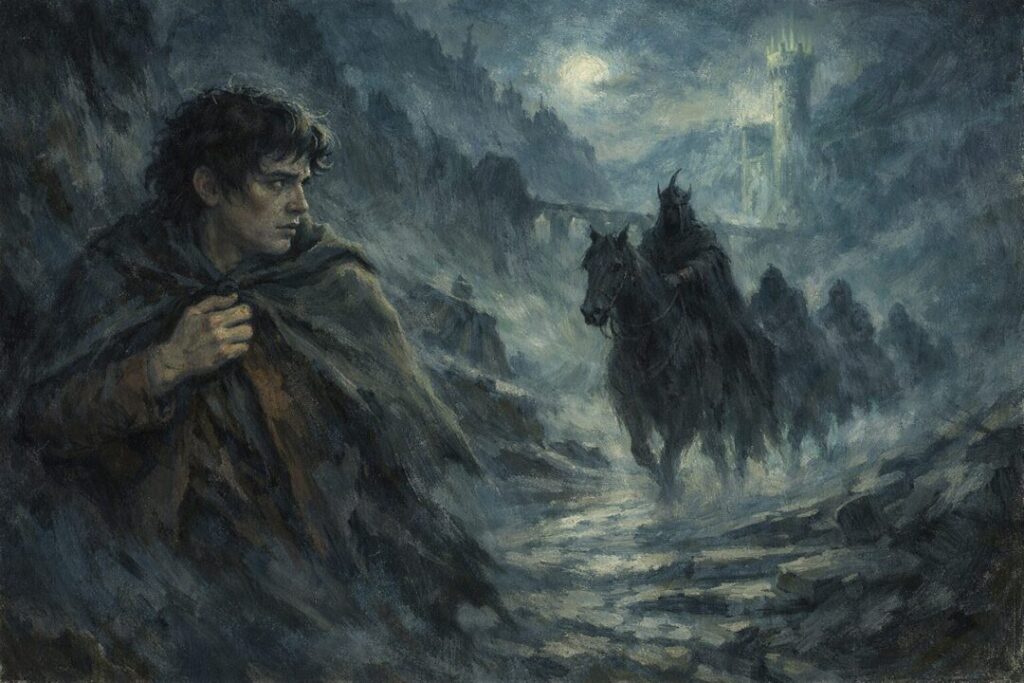
Frodo learns this the hard way. On the Morgul road, under the pressure of the Nazgûl, he feels the command to put on the Ring. Yet he resists because he knows the Ring would only betray him, and that even if he wore it, he still would not have the power to face the Morgul-king.
That moment strips away a major illusion.
The Ring can hide a bearer from ordinary sight, but in moments of greatest danger it also exposes the bearer to the realm in which Sauron’s servants are strongest. It is not a neutral cloak. It is entry into a more perilous condition. Gandalf’s warning about fading under the Dark Power and Galadriel’s remarks about sharpened perception both point in the same direction: wearing the Ring changes what world you are most vulnerable to.
So the Ring cannot be treated as reliable protection.
Very often, it is the opposite.
The Ring Cannot Be Made Harmless by Giving It to the “Right” Keeper
This is where Tom Bombadil becomes important.
He is the strongest proof in the narrative that being unaffected by the Ring is not the same thing as solving the Ring.
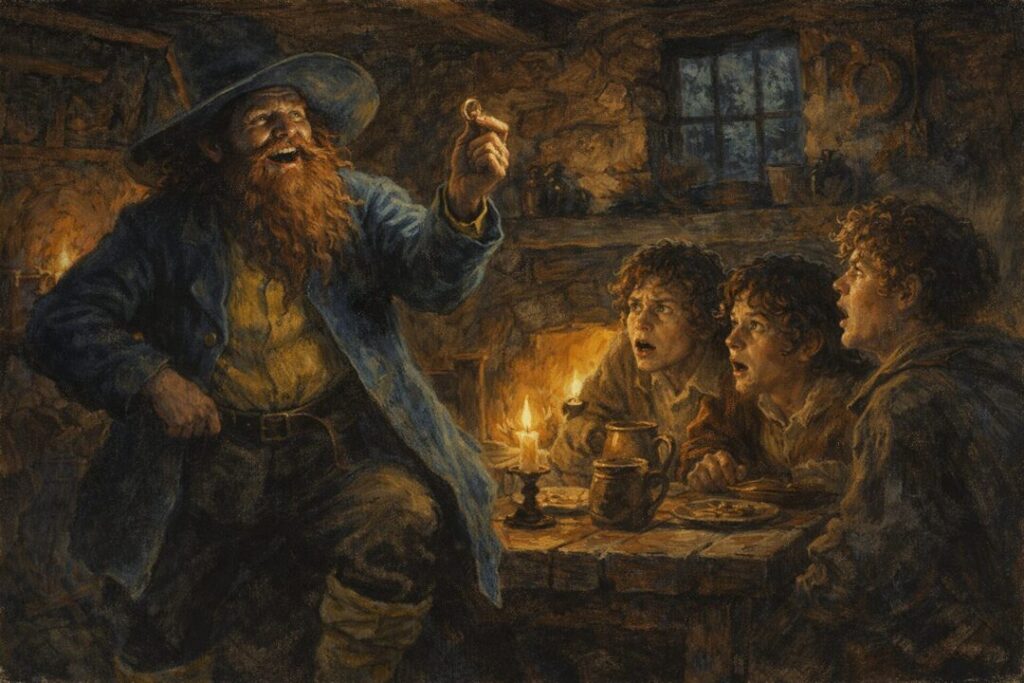
In Tom’s house, Frodo hands him the Ring. Tom puts it to his eye, slips it on his little finger, and does not disappear. At the Council, Gandalf explains the meaning of this more carefully: not that Tom can neutralize the Ring, but that the Ring has no power over him. And then comes the crucial limitation — Tom cannot alter the Ring itself, nor break its power over others.
That is a remarkable boundary.
Even a being who stands outside the Ring’s hold cannot rewrite what it is.
The Council follows the logic further. Tom might keep it for a while, but he would not understand the need. He might forget it or throw it away. He is an unsafe guardian, not because he is weak in a simple sense, but because the Ring’s destruction requires engagement in precisely the kind of struggle Tom does not inhabit. Gandalf and Galdor also make clear that Bombadil is no answer to Sauron’s full power.
So the Ring cannot be rendered harmless by handing it to someone untouched by temptation.
Its nature remains what it is.
The Ring Cannot Even Be Easily Surrendered
One of the Ring’s most important limits is also one of its most revealing.
It cannot be treated as a mere tool because it begins to claim the will of its bearer very quickly.
Gandalf tells Frodo that a Ring of Power looks after itself. It may slip away treacherously, but its keeper does not simply abandon it. Bilbo is extraordinary precisely because he really gives it up, and even then only with help. Frodo, after hearing the truth, already finds that he cannot easily let it go or even will to damage it.
This is why the idea of “using it a little” is so dangerous.
The Ring is not an instrument that remains external to the user. The more it is used, the less likely surrender becomes. Even before mastery is achieved, attachment deepens. By the time Frodo reaches Sammath Naur, the process reaches its end: he does not complete the act of destruction, but claims the Ring for his own.
So the Ring cannot be borrowed safely for a good cause and then calmly put aside.
The structure of the story denies that possibility from the beginning.
The Ring’s Real Horror Is Its Narrowness
What the Ring cannot do tells us as much as what it can.
It cannot make mortals deathless in any true sense.
It cannot instantly turn the weak into masters.
It cannot be trusted as safe concealment.
It cannot be neutralized by a keeper who happens to resist it.
It cannot be used without tightening its hold on the will.
And that is exactly why it is so dangerous.
If it were merely an all-purpose weapon, the moral shape of the story would be simpler. Someone powerful could take it, use it properly, and end the war.
But the Ring is not built for that.
It was made to rule, to bind, and to return to the order of domination from which it came. Even when it offers visibility, power, or advantage, those things are bent toward that end. The bearer does not stand outside the Ring while using it. The bearer is being drawn inward.
That is why the question is never really whether someone can do something with the Ring.
The harder question is whether anything done with it can remain clean.
And in Middle-earth, that answer grows darker the closer one comes to the fire.
Sources & Notes
- J.R.R. Tolkien, The Lord of the Rings, Book I, Chapter 2, "The Shadow of the Past" — Gandalf explains that a Great Ring prolongs mortal life without giving true life, and that repeated use draws the bearer toward fading.
- J.R.R. Tolkien, The Lord of the Rings, Book II, Chapter 7, "The Mirror of Galadriel" — Galadriel tells Frodo that the Ring gives power according to the possessor’s measure, not instant mastery.
- J.R.R. Tolkien, The Lord of the Rings, Book I, Chapter 7, "In the House of Tom Bombadil", and Book II, Chapter 2, "The Council of Elrond" — Tom is untouched by the Ring, yet the Council rejects him as a solution or safe keeper.
- J.R.R. Tolkien, The Lord of the Rings, Book VI, Chapter 3, "Mount Doom" — Frodo’s final claim of the Ring shows that it cannot be used or even surrendered as a harmless tool at the end of its road.
- J.R.R. Tolkien, The Letters of J.R.R. Tolkien, Letter 246 — Tolkien discusses Frodo’s claim at the Sammath Naur and why even possession of the Ring would not make him able to withstand Sauron’s servants or Sauron himself.