How the Mountains of Shadow Protected Hithlum, Dor-lómin, and the Western Road into Beleriand
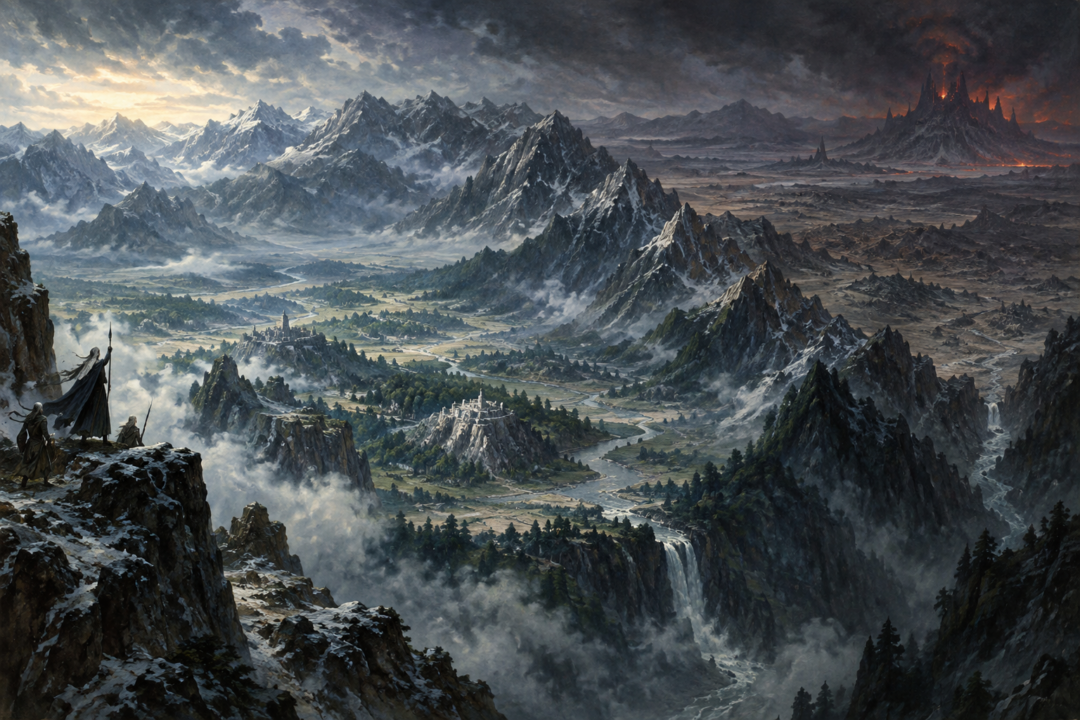
When the armies of Morgoth looked west from Angband, Hithlum was not simply another Elven realm waiting beyond an open plain. Between the northern enemy and the lands of Fingolfin stood the Ered Wethrin—the Mountains of Shadow—an immense natural wall wrapped around the eastern and southern sides of Hithlum.
That wall helps explain one of the most important geographical facts of the First Age: Morgoth could devastate Ard-galen and break much of the northern defense of Beleriand without immediately overrunning Hithlum.
But the mountains did something more subtle as well. Their eastern end stood beside the beginnings of Sirion, while farther south the river entered the strategically vital Pass of Sirion. In effect, the same mountain system that sheltered Hithlum also shaped one of the principal corridors by which the Enemy could penetrate into western Beleriand.
The Ered Wethrin were therefore both shield and funnel. They made invasion difficult—but they also made the few usable approaches extraordinarily important.
Hithlum Was Almost a Mountain Fortress
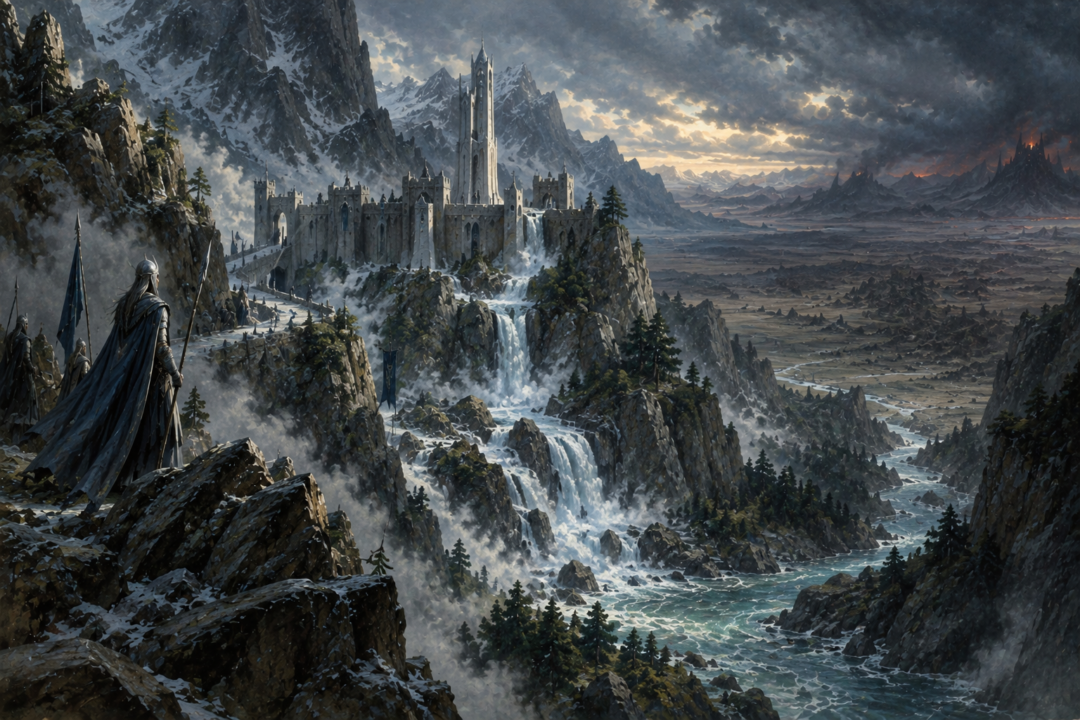
Hithlum lay in the northwest of the lands involved in the wars of Beleriand. Its geography was unusually defensible.
The Ered Lómin, the Echoing Mountains, formed its western barrier, while the Ered Wethrin enclosed it from the east and south. Within Hithlum were Mithrim and Dor-lómin, the latter eventually becoming the great fief of the House of Hador.
The Silmarillion describes Hithlum as a fair but cool country, with severe winters. Its isolation was not merely climatic. The surrounding mountains limited the directions from which large hostile forces could easily approach.
That mattered because Angband lay to the northeast.
An army advancing from Morgoth's stronghold could cross the northern plains, but reaching the heart of Hithlum meant confronting the Ered Wethrin and their restricted passages.
This was exactly why Fingolfin could use Hithlum as a secure western base. After his people entered Middle-earth, the mountain barrier became part of the strategic architecture of the Noldorin resistance.
Yet a wall is only as strong as its gates.
And the most important of those gates stood beside Sirion.
Eithel Sirion Was More Than the Source of a River
Sirion, the greatest river of Beleriand, began at Eithel Sirion in the eastern Ered Wethrin.
This was not a remote spring of purely geographical importance. A pass through the mountains lay there, providing access westward into Hithlum. Consequently the Noldor fortified the position.
Barad Eithel—the Tower of the Well—became the chief stronghold of Fingolfin and later Fingon. From this position the High Kings could watch the northern lands while guarding an important entrance through the mountains.
The placement reveals the logic of the entire defensive system.
The mountains themselves prevented an enemy from advancing everywhere. The defenders therefore concentrated strength where geography permitted passage.
During the long Siege of Angband, Fingolfin's realm was not protected by an uninterrupted chain of fortresses stretching across every mile of mountain. It did not need to be. Difficult terrain performed much of that work.
Men and Elves could instead defend the approaches.
This is one reason mountain geography matters so much in the wars of the First Age. A comparatively narrow passage could determine whether an army reached an entire kingdom.
Dor-lómin Lay Behind the Shield
Dor-lómin occupied the southwestern portion of Hithlum, west of Mithrim. The Mountains of Mithrim separated the two regions, while the greater mountain systems around Hithlum isolated both from the more exposed northern and southern lands.
When Fingolfin granted Dor-lómin to Hador, it became the homeland of the House of Hador.
That location offered substantial protection during the centuries in which the Noldor maintained the Siege of Angband. Morgoth's principal power remained beyond the mountain barriers rather than directly beside the settlements of Dor-lómin.
This does not mean Dor-lómin was invulnerable.
Its security depended upon the survival of the wider northern defense.
The distinction is crucial. The Ered Wethrin could obstruct armies, channel movement, and make certain approaches defensible. They could not compensate indefinitely for the destruction of the forces defending those approaches.
The tragedy of Dor-lómin after the Nirnaeth Arnoediad demonstrates the limit of geography. Once Fingon's northern power was broken and organized resistance in Hithlum collapsed, the mountains that had helped shelter the land could no longer preserve its freedom.
Indeed, isolation could become a trap as easily as a refuge.
The Mountains Also Guarded the Road Toward Sirion
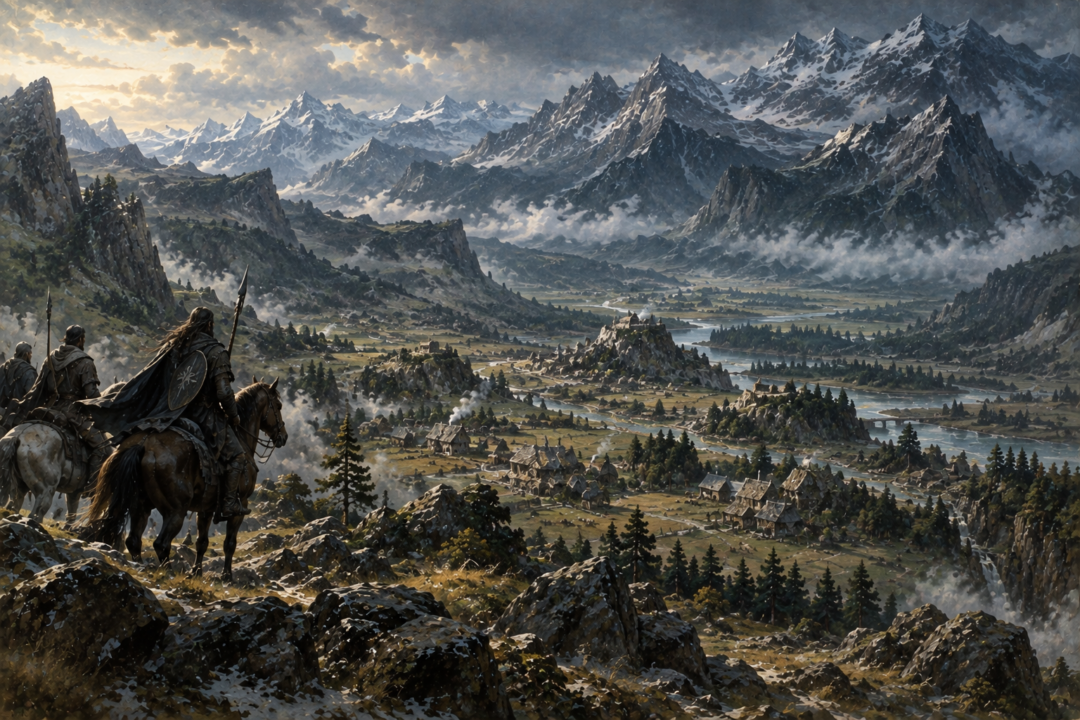
The eastern Ered Wethrin were tied directly to another strategic system: the upper Sirion.
From Eithel Sirion the river flowed southward, eventually reaching the Fen of Serech and the narrow corridor known as the Pass of Sirion.
Here the geography of northern Beleriand constricted movement dramatically.
The Pass of Sirion ran between the Ered Wethrin on the west and the mountains associated with the Echoriath on the east. The river itself passed through this corridor toward the southern lands.
This made the route one of the critical entrances from the northern regions into West Beleriand.
An invading force that gained control of it would possess something more important than a patch of ground. It would gain a road south.
The defenders understood this.
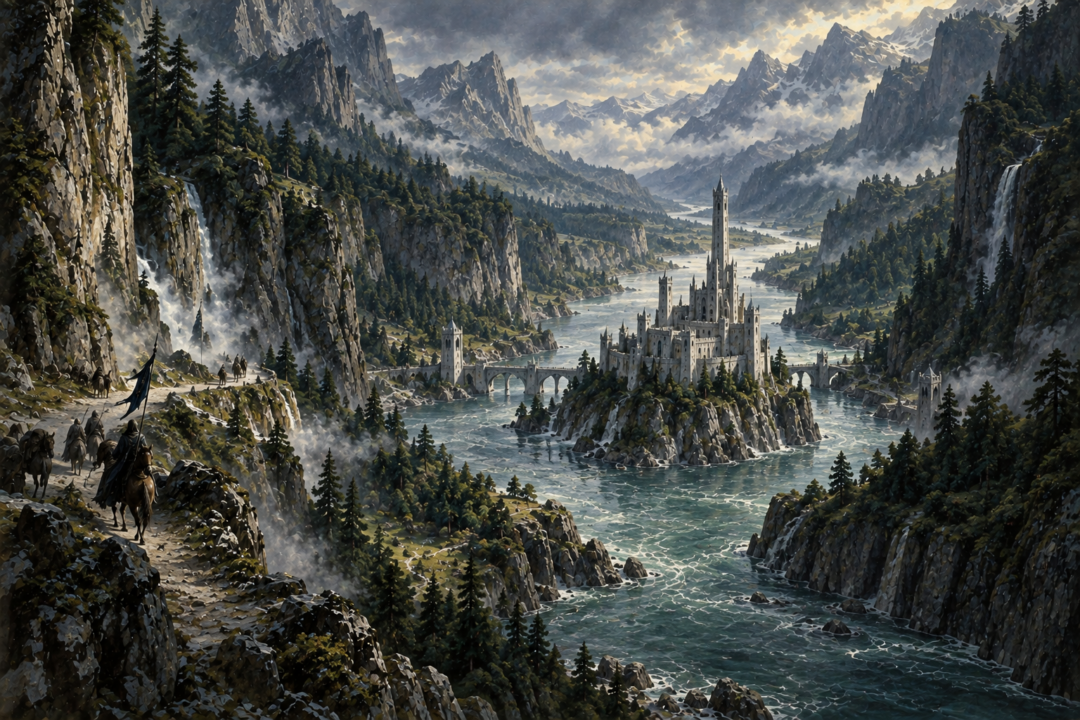
Finrod Felagund built Minas Tirith upon Tol Sirion, an island in the river within the pass. The fortress was later entrusted to Orodreth.
Thus two complementary defensive positions existed around the upper Sirion.
Barad Eithel guarded the approaches associated with Hithlum and the source of Sirion.
Minas Tirith guarded the river corridor farther south.
The landscape itself connected their purposes.
Morgoth's Problem Was Geography
During the Siege of Angband, Morgoth faced a defensive network built around natural barriers.
Dorthonion guarded another portion of the northern frontier. The Ered Wethrin shielded Hithlum. The Pass of Sirion was fortified. Other Elven realms lay farther south behind these northern defenses.
This did not create an impenetrable wall. Tolkien's accounts repeatedly show that passes, valleys, river crossings, and open plains could become points of catastrophic weakness.
But it forced Morgoth to break specific positions rather than simply march everywhere at once.
That becomes especially clear during the Dagor Bragollach.
The sudden assault shattered the long Siege of Angband. Ard-galen was burned and became Anfauglith. Dorthonion was overwhelmed, and the northern Noldorin position suffered disastrous losses.
Yet Hithlum itself did not immediately fall.
The Ered Wethrin helped preserve it.
Fingolfin and Fingon could still hold behind the mountains even while much of the defensive system farther east collapsed.
The geography had bought them something enormously valuable: time.
The Fen of Serech Shows the Cost of Holding the Corridor
The upper Sirion was repeatedly drawn into warfare because armies moving between north and west were forced toward its approaches.
At the Fen of Serech, near the northern entrance of the Pass of Sirion, Finrod Felagund was surrounded during the Dagor Bragollach.
Barahir came to his aid and saved him, establishing the debt that would later have profound consequences in the story of Beren.
The episode illustrates how unforgiving this geography could become.
The same narrow approaches that allowed defenders to restrict an enemy could also trap troops when the surrounding front collapsed.
A mountain wall does not merely stop movement.
It channels movement.
That is the deeper strategic importance of the Ered Wethrin. Their value cannot be understood only by imagining high peaks blocking Orcs. The mountains shaped where armies could march, where fortresses mattered, where reinforcements could arrive, and where retreat might become impossible.
When the Gates Failed, the Shield Began to Fail
Seven years after the Dagor Bragollach, Morgoth launched another assault against Hithlum.
His forces attacked the mountain defenses, and Galdor, father of Húrin and Huor, was slain at Eithel Sirion.
The attack was defeated, and another assault was frustrated with unexpected aid from Círdan's people, who came by sea into the Firth of Drengist and struck the Orcs from the west.
That episode demonstrates something important.
Even after the catastrophic breaking of the Siege, Hithlum remained difficult to conquer directly.
The Ered Wethrin still mattered.
Morgoth could destroy armies beyond them, but forcing the mountain entrances was another problem.
Ultimately, however, Hithlum did not fall because Morgoth somehow erased its mountains. Its political and military defense collapsed after the Nirnaeth Arnoediad, when Fingon's host was destroyed and the power of the House of Hador was broken.
The natural fortress remained.
The defenders did not.
The Cruel Irony of Hithlum's Mountains
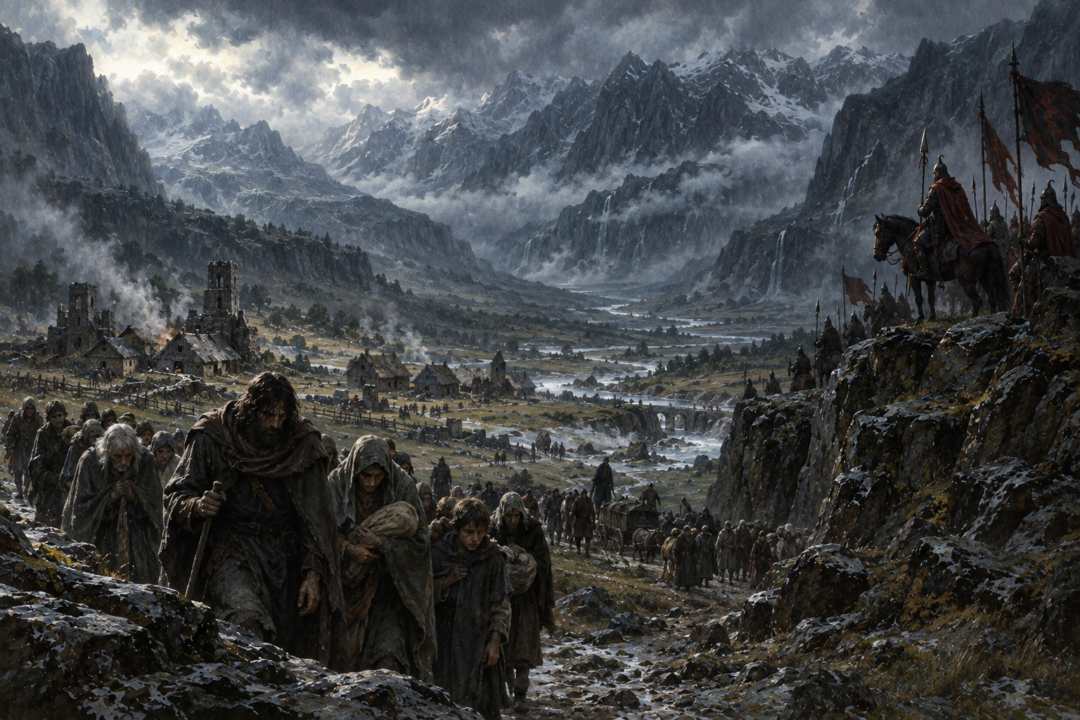
After the Nirnaeth Arnoediad, Morgoth sent Easterlings into Hithlum and confined them there along with the surviving people they oppressed.
The geography that had once protected Dor-lómin now contributed to its isolation.
That is one of the darker ironies of the First Age.
During the strength of Fingolfin and Fingon, the mountains allowed Hithlum to function as a bastion against Angband. Behind them lay Mithrim, Dor-lómin, and generations of people who could live at some distance from the immediate northern front.
After the military disaster, the same enclosed landscape offered no automatic escape from Morgoth's domination.
Mountains are not loyal.
They favor whoever controls their passages.
The Hidden Architecture of the Western War
The Ered Wethrin are easy to treat as background on a map, but the history of northern Beleriand makes far more sense once their role is understood.
They sheltered Hithlum and Dor-lómin behind formidable eastern and southern barriers. At Eithel Sirion, their geography created a defensible gateway into Fingolfin's realm. Along the upper Sirion, their eastern flank helped shape the corridor leading toward the Pass of Sirion and the western lands beyond.
Barad Eithel and Minas Tirith were therefore not isolated fortresses placed randomly beside a river.
They belonged to a landscape in which rivers, mountains, marshes, and narrow passes determined the possible roads of war.
For centuries, that landscape helped the enemies of Morgoth contain him.
But the lesson of Hithlum is harsher than the simple claim that mountains provide safety.
The Ered Wethrin could delay an invasion. They could narrow the battlefield. They could make a small number of strong positions extraordinarily valuable.
They could not save a realm after its armies were destroyed.
And when Hithlum finally passed under the Shadow, the great mountains still stood around it—no longer merely a shield against the Enemy, but the walls of an occupied land.
Sources & Notes
- Tolkien Gateway, “Ered Wethrin” — https://tolkiengateway.net/wiki/Ered_Wethrin
- Tolkien Gateway, “Hithlum” — https://tolkiengateway.net/wiki/Hithlum
- Tolkien Gateway, “Dor-lómin” — https://tolkiengateway.net/wiki/Dor-l%C3%B3min
- Tolkien Gateway, “Pass of Sirion” — https://tolkiengateway.net/wiki/Pass_of_Sirion
Reference entries document the characters, places, events, and textual details discussed in this article.