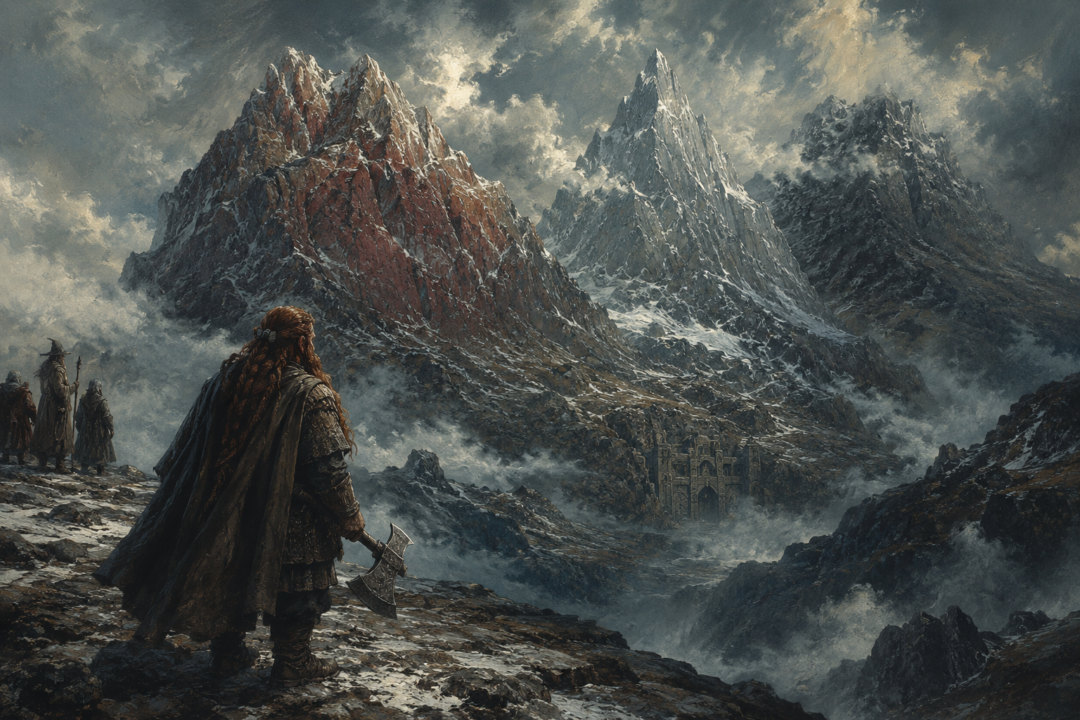
When Gimli looked toward the mountains above Moria, he did not know them only as Caradhras, Celebdil, and Fanuidhol. To him they were Barazinbar, Zirakzigil, and Bundushathûr.
That distinction reveals something unusual about the Dwarves. Their own language, Khuzdul, was deliberately guarded from outsiders. Even the true personal names of Dwarves were kept so private that they were not normally revealed to people of other races. Yet the landscape around their greatest mansions openly preserved Khuzdul words.
The apparent contradiction is important. Khuzdul survived in Middle-earth not because the Dwarves abandoned secrecy, but because secrecy was selective. Personal identity could remain hidden while mountains, valleys, lakes, rivers, and cities carried Dwarvish names across thousands of years.
Place-names became one of the places where the secret language touched the outside world.
A Language the Dwarves Refused to Give Away
Khuzdul was fundamentally different from the Elvish languages surrounding it. According to Dwarvish tradition, their language came ultimately from Aulë, whom they called Mahal, the Maker. The Dwarves therefore regarded their tongue as an inheritance of extraordinary antiquity.
They were also remarkably protective of it.
Appendix F of The Lord of the Rings explains that Dwarves readily learned the languages of other peoples while generally keeping their own language secret. Their public names demonstrate the same habit. Names familiar to readers—Thorin, Balin, Dwalin, Glóin, Gimli—are not presented as the private Khuzdul names of those individuals.
The Dwarves possessed inner names that they did not disclose to outsiders.
This secrecy extended even beyond death. The inscription on Balin’s tomb in Moria identifies him by the name known outside the secret linguistic world of the Dwarves rather than exposing an otherwise hidden personal name.
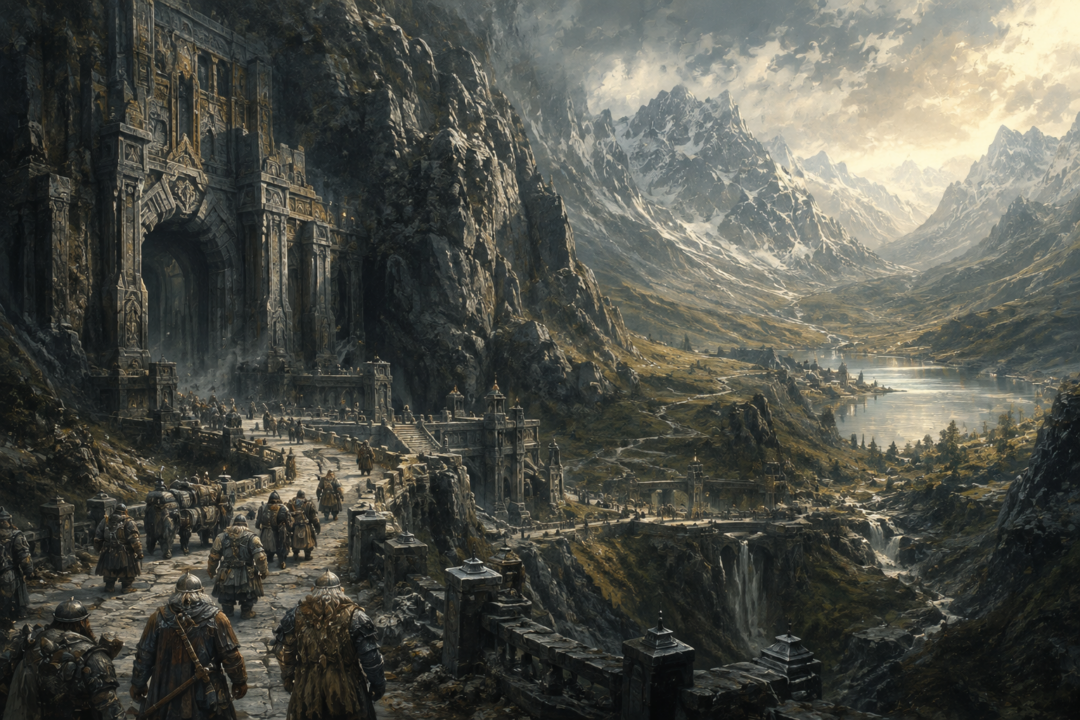
Yet only a short distance from that tomb lay places whose Khuzdul names were remembered openly.
That suggests the boundary around the language was not simply “Khuzdul must never be heard.”
It depended on what the words revealed.
Khazad-dûm Was Already a Khuzdul Name
The most obvious example is the greatest Dwarven mansion itself.
Khazad-dûm is Khuzdul. The element Khazâd means “Dwarves,” making the name itself evidence of the Dwarves’ own language. Outsiders also knew the place through other names, most famously Moria, the Sindarin name that became dominant after the ancient kingdom fell into darkness.
But Khazad-dûm never vanished from memory.
This matters because the name preserves one of the clearest known Khuzdul words: Khazâd. The language remained secret, yet the name of the kingdom publicly declared what its inhabitants called themselves.
That is not the behavior of a people trying to prevent every syllable of their language from escaping.
Instead, the evidence points toward controlled disclosure. Some words could be known without granting outsiders meaningful access to Khuzdul as a functioning language.
Knowing that Khazâd means Dwarves does not teach someone how to hold a conversation in Khuzdul. Nor does knowing the name Khazad-dûm expose the private identity of an individual Dwarf.
A place-name could be shared while the language behind it remained largely closed.
The Mountains Above Moria Became Linguistic Fossils
The mountains surrounding Khazad-dûm provide an even clearer example.
Caradhras was Barazinbar in Khuzdul, with the Dwarvish name corresponding to “Redhorn.” Celebdil was Zirakzigil, the Silvertine. Fanuidhol was Bundushathûr, Cloudyhead.
When Gimli sees the mountains during the Fellowship’s journey, he uses shortened Dwarvish forms: Baraz, Zirak, and Shathûr.
These are more than atmospheric fantasy names. Together they preserve pieces of Khuzdul vocabulary.
Barazinbar contains the element associated with “red.” Zirakzigil provides evidence connected with “silver” and “tine.” Bundushathûr preserves another Dwarvish geographical compound.
Because equivalent names existed in Sindarin and the Common Speech, comparison could sometimes reveal what the Khuzdul names meant even when outsiders had little knowledge of Khuzdul grammar.
That is how place-names can become linguistic fossils.
A language may be inaccessible as ordinary speech while individual words remain embedded in geography. Anyone could repeat the name of a mountain without understanding the linguistic system that produced it.
The mountain becomes a container for the word.
Azanulbizar Shows How Memory Outlived Possession
East of Moria lies another important example: Azanulbizar.
It is the Dwarvish name associated with the valley known in the Common Speech as Dimrill Dale and in Sindarin as Nanduhirion. Interpretations of the precise Khuzdul formation require caution, but it is connected with the shadowed streams of the valley.
For the Dwarves, however, Azanulbizar was not merely geography.
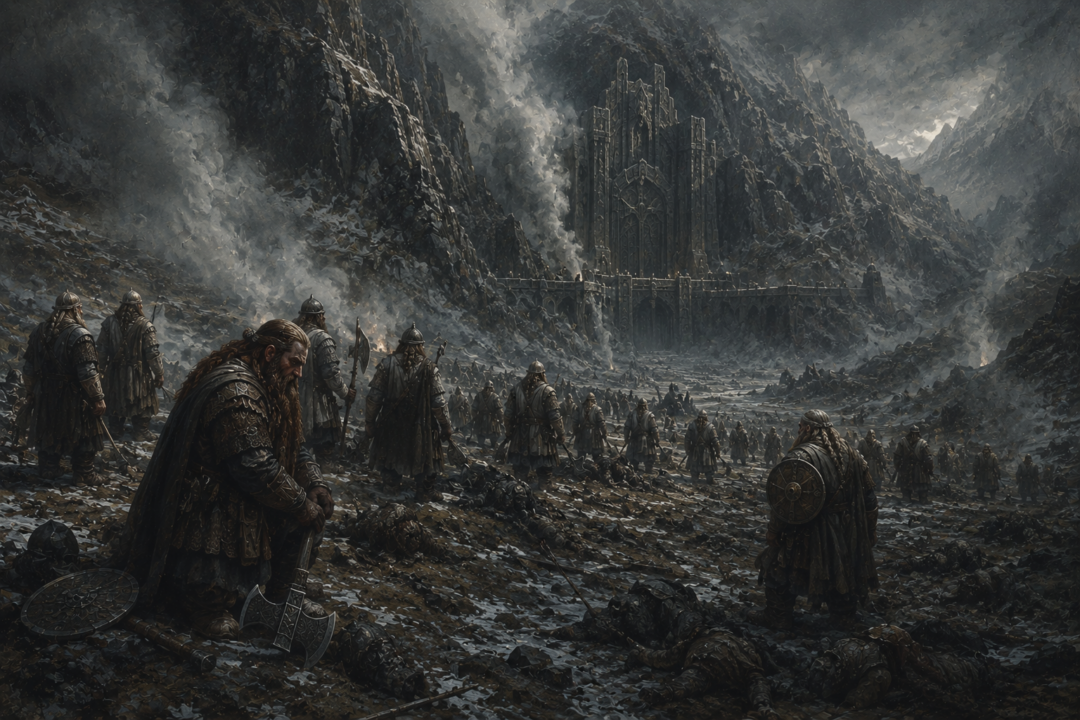
In Third Age 2799, the great war between the Dwarves and Orcs culminated there. The battle was catastrophic. Dáin Ironfoot killed Azog, but the victory did not lead to the immediate recolonization of Khazad-dûm. Durin’s Bane still remained within.
The place therefore accumulated historical memory while retaining its Khuzdul name.
This is another mechanism by which secret languages endure. Events attach themselves to locations, and locations preserve names.
A Dwarf did not need to explain Khuzdul grammar to speak of Azanulbizar. The name could survive because Dwarvish history demanded that the place itself be remembered.
Language survived inside memory.
Kheled-zâram Was More Than a Label
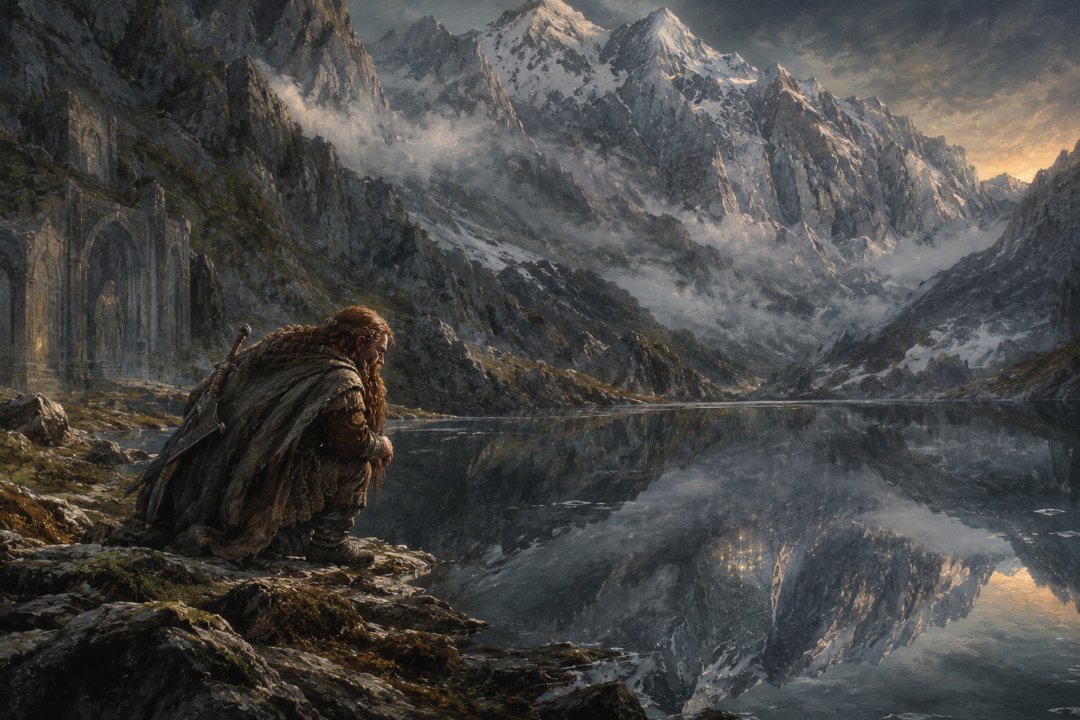
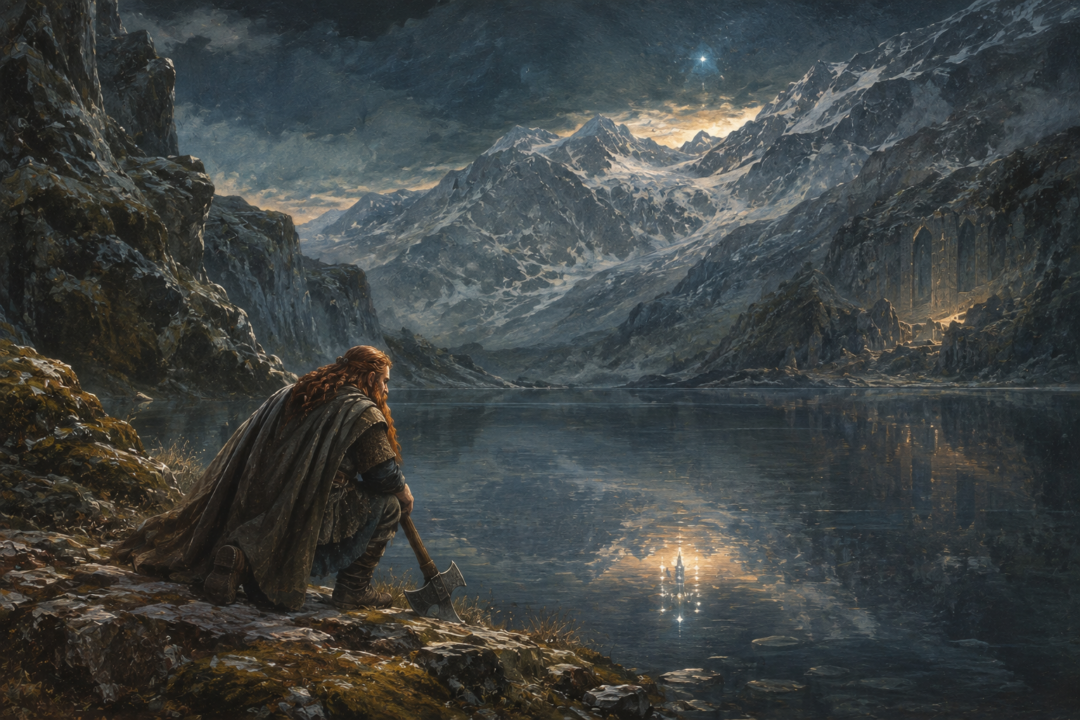
The same pattern appears at Kheled-zâram, the Mirrormere.
The lake beneath the eastern side of Moria was deeply associated with Durin. Dwarvish tradition held that Durin the Deathless looked into its waters and saw stars reflected there even in daylight, with a crown appearing above his reflected head. The place became bound to the identity and memory of Durin’s Folk.
When Gimli reaches the Mirrormere with the Fellowship after escaping Moria, the moment is not treated as casual sightseeing. He is standing before a place central to the inherited memory of his people.
The Khuzdul name therefore carries something that a translation cannot entirely replace.
“Mirrormere” identifies the lake for speakers of the Common Speech. Kheled-zâram belongs to another cultural layer: the Dwarves’ own relationship with that landscape.
This helps explain why geographical names could remain powerful even when Khuzdul itself was concealed. A place-name could function almost like an heirloom.
Its survival did not require outsiders to understand the language. It required Dwarves to keep saying the name.
Why Geography Was Safer Than Personal Names
The contrast with Dwarvish personal names is revealing.
A private name identifies a person. The Dwarves treated such names as intimate possessions and withheld them from outsiders.
A mountain name does something different.
Barazinbar identifies a mountain that everyone can see. Kheled-zâram identifies a lake that cannot be hidden. Azanulbizar identifies a valley through which armies and travelers might pass.
Sharing those names therefore did not necessarily violate the same boundary as revealing a Dwarf’s inner name.
The texts never give us a formal Dwarvish rule stating that geographical Khuzdul was permissible while personal Khuzdul was forbidden. That distinction should not be turned into a law Tolkien never explicitly states.
But the surviving evidence strongly supports the pattern.
Private names remain concealed. Geographical names repeatedly appear.
The result is a culture that protects linguistic intimacy without erasing its language from the map.
Translation Actually Helped Preserve Khuzdul
There is another paradox.
The existence of names in several languages may have helped Khuzdul forms remain intelligible.
Barazinbar could stand beside Caradhras and Redhorn. Zirakzigil could stand beside Celebdil and Silvertine. Bundushathûr could stand beside Fanuidhol and Cloudyhead. Azanulbizar could stand beside Nanduhirion and Dimrill Dale.
Middle-earth therefore contains overlapping maps.
Men, Elves, and Dwarves could look at the same mountain and name it differently.
Instead of one language necessarily replacing another, parallel naming sometimes preserved the older cultural claims upon a landscape. A traveler might use the Common Speech form while a Dwarf retained the Khuzdul one.
Translation created bridges without dissolving difference.
An outsider could learn what Barazinbar referred to without learning Khuzdul. A Dwarf could communicate about the mountain while keeping the deeper structure of the ancestral language within Dwarvish society.
Khuzdul Survived Because It Was Not Treated Like Ordinary Speech
Khuzdul’s endurance becomes less mysterious once secrecy and survival are understood as complementary rather than contradictory.
The Dwarves did not need their language to become an international tongue. In fact, widespread adoption would have worked against their established habits.
They needed transmission within their own people.
They needed old words remembered.
And they needed names attached to things that endured.
Few things endure better than mountains.
Kingdoms fall. Roads disappear. Populations migrate. Khazad-dûm itself became Moria to much of the outside world.
But Barazinbar remained Barazinbar to the Dwarves.
Zirakzigil remained Zirakzigil.
Kheled-zâram still waited beneath the mountains.
That may be the most fitting survival mechanism imaginable for Khuzdul. The language of a people famous for carving memory into stone was itself preserved partly through the names they gave to stone, water, valley, and mountain.
Khuzdul was hidden, but it was never voiceless.
Its most durable words were written across the landscape.
Sources & Notes
- Encyclopedia of Arda — Khuzdul: the Dwarves’ guarded language, its origin in Aulë, and the survival of words in names: https://www.glyphweb.com/arda/k/khuzdul.php
- Encyclopedia of Arda — Khazad-dûm: the Khuzdul name of the Dwarves’ ancient mansion and its later name Moria: https://www.glyphweb.com/arda/k/khazaddum.php
- Encyclopedia of Arda — Azanulbizar: the Dwarvish place-name, its translated forms, and its place in Dwarven memory: https://www.glyphweb.com/arda/a/azanulbizar.php
Sources document Khuzdul secrecy and the survival of Dwarvish vocabulary in major place-names.