Gandalf and Saruman entered Middle-earth as members of the same order, sent against the same enemy. Yet one became a defender of the freedom of others, while the other tried to become a power in his own right.
Their difference did not begin with the staffs they carried.
Before either was a Wizard, both were Maiar: spirits of the same primordial order as the Valar, though of lesser degree. And long before the Third Age, the Maiar were already associated with particular Valar. Curumo, later Saruman, belonged to Aulë. Aiwendil, later Radagast, was associated with Yavanna. Olórin, later Gandalf, had deep connections with several of the Valar and especially learned pity and patience from Nienna.
These relationships clearly mattered. Service could shape a Maia’s knowledge, sympathies, habits, and sphere of action.
But it did not erase personality.
More importantly, it did not erase moral choice.
The Maiar Were Servants, Not Extensions of Their Masters
The Valaquenta describes the Maiar as spirits of the same order as the Valar who entered Eä and aided them in their labours. Many became associated so closely with particular Valar that they are described as their people or servants.
That language can sound almost hierarchical enough to suggest that a Maia simply reflects the nature of the Vala served.
The stories show otherwise.
The relationship seems better understood as one of affinity, instruction, allegiance, and shared work. A Maia might learn within a Vala’s sphere and become particularly skilled in it, but remained an individual being.
This distinction becomes crucial because Maiar serving the same Vala could ultimately make radically different choices.
Aulë provides the clearest example.
Among the spirits connected with him were both Sauron and Curumo. Their later careers retained recognizable elements of Aulë’s world: craft, knowledge, ordering, making, machinery, and mastery of substances.
Yet Aulë himself did not fall.
The similarity of skill did not produce similarity of morality.
Aulë Shows Why Craft Is Not the Problem
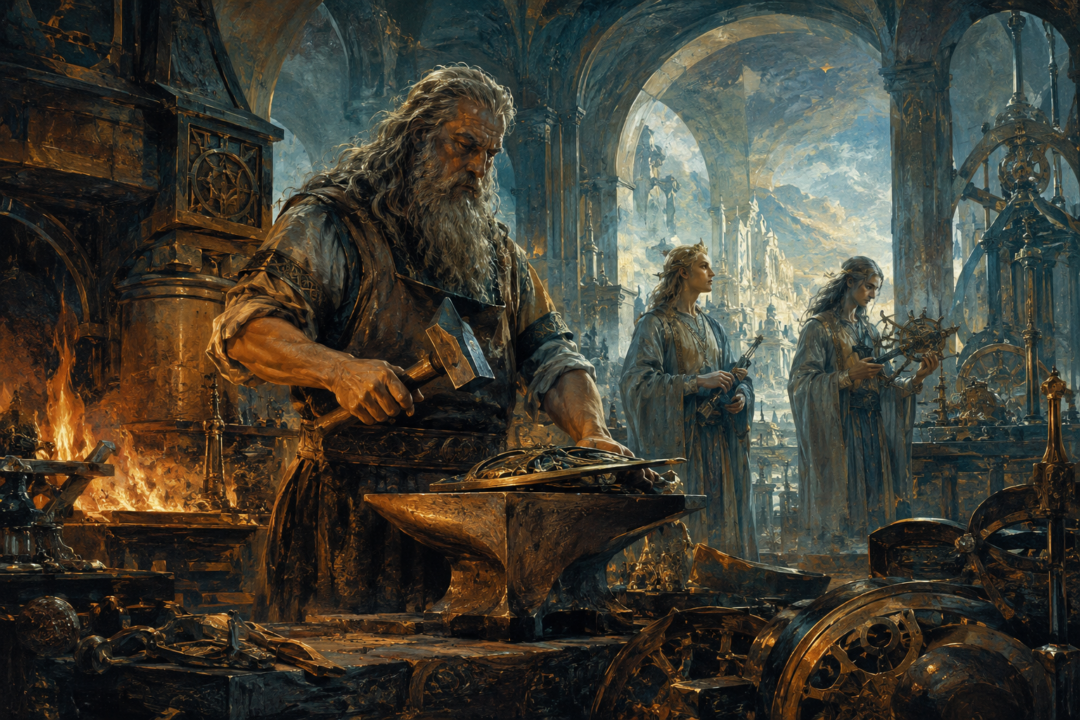
Aulë is one of the great makers of Arda. His concern is with substances, craftsmanship, invention, and the act of making itself.
He also comes dangerously close to overstepping his proper place when, impatient for the coming of the Children of Ilúvatar, he secretly makes the Dwarves.
What happens next reveals the moral distinction at the heart of his character.
When confronted by Ilúvatar, Aulë does not defend his achievement as something he has a right to possess. He repents and submits his work to a higher authority, even becoming willing to destroy what he has made.
His creativity is therefore joined to humility.
That combination matters enormously when compared with two Maiar associated with him.
Sauron was originally of Aulë’s people. Curumo was also associated with Aulë before becoming Saruman.
Both became makers and organizers.
Both also fell into domination.
The lesson is not that Aulë somehow transmitted corruption to his servants. The opposite is closer to the truth. Aulë demonstrates the boundary they later crossed.
Making becomes dangerous when love of order becomes desire for control.
Sauron Carries the Skill but Rejects the Restraint
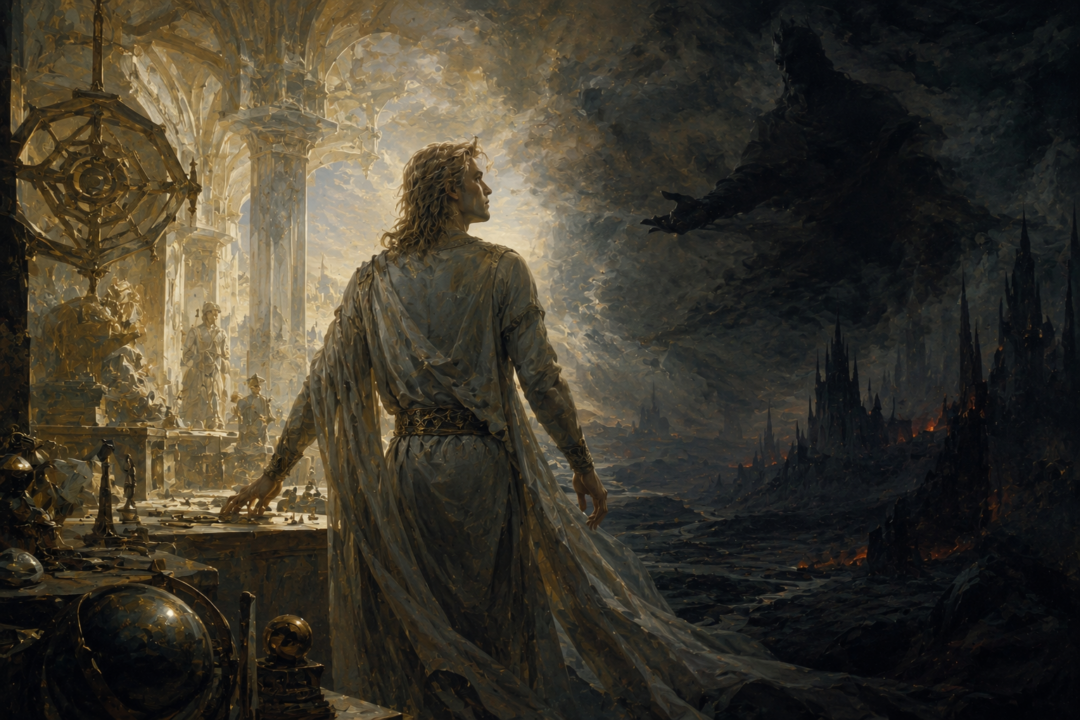
Sauron is perhaps the most extreme demonstration that service shapes a Maia without determining him.
Before his corruption, he possessed great knowledge associated with Aulë. His later abilities remained strongly connected with craft, organization, planning, and control.
But Melkor drew him away.
The Valaquenta connects Sauron’s fall with his admiration for Melkor’s ability to accomplish designs rapidly and masterfully. What begins as an attraction to efficiency and order becomes service to tyranny.
That progression is revealing.
Sauron does not cease being a maker when he becomes evil. He redirects his gifts toward domination.
His fortresses, armies, systems of control, and ultimately the Ruling Ring all express an intelligence obsessed with bringing other wills beneath his own.
Aulë creates but can surrender what he has made.
Sauron creates in order to possess.
The same broad sphere of skill therefore leads to radically different moral outcomes because skill does not dictate what the wielder loves.
Saruman Repeats the Danger in a Different Form
Curumo provides an even more striking parallel.
In the account of the Istari preserved in Unfinished Tales, Curumo is associated with Aulë. When he reaches Middle-earth as Saruman, his interests again reveal that background.
He becomes exceptionally knowledgeable in the devices of the Enemy and in the lore of the Rings.
Knowledge itself is not his failure. The Istari were sent precisely because wisdom was needed against Sauron.
The failure comes when Saruman ceases merely to understand power and begins desiring it.
By the War of the Ring he is building his own military power in Isengard, breeding and commanding servants, manipulating others through his voice, and seeking the One Ring. His language to Gandalf reveals his belief that the Wise should seize control of events and direct lesser people for what they themselves judge to be good ends.
Again the shadow of Aulë’s sphere remains visible: skill, making, knowledge, organization.
But Aulë’s humility does not.
Service gave Curumo capacities and affinities. It did not guarantee that he would use them rightly.
Olórin Shows Another Kind of Formation
Olórin offers a contrasting example.
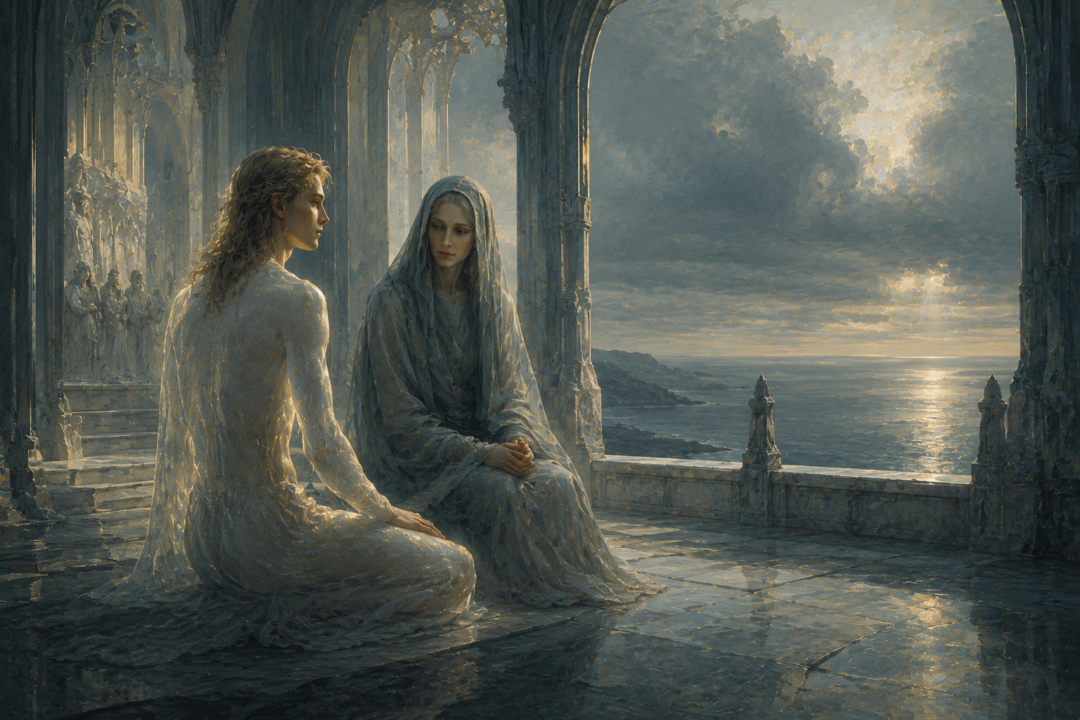
The Valaquenta describes him as the wisest of the Maiar. He dwelt in Lórien, but he also went often to the house of Nienna, where he learned pity and patience.
Those two virtues become astonishingly important in his later identity as Gandalf.
His mission in Middle-earth is repeatedly characterized not by ruling the Free Peoples but by awakening resistance, courage, and hope among them.
This is especially significant because the Istari were deliberately restricted. They were not sent to defeat Sauron by matching his power with greater power or to dominate Elves and Men.
Gandalf works largely through counsel, encouragement, friendship, warning, and carefully timed intervention.
His connection with Nienna does not mechanically program these choices. But his ancient schooling in pity helps explain why mercy is so central to his wisdom.
When Frodo wishes that Bilbo had killed Gollum, Gandalf insists that pity can have consequences beyond what immediate judgment can foresee.
That conviction eventually becomes essential to the destruction of the Ring.
Formation matters.
Choice still matters too.
Ossë Proves That Allegiance Could Actually Change
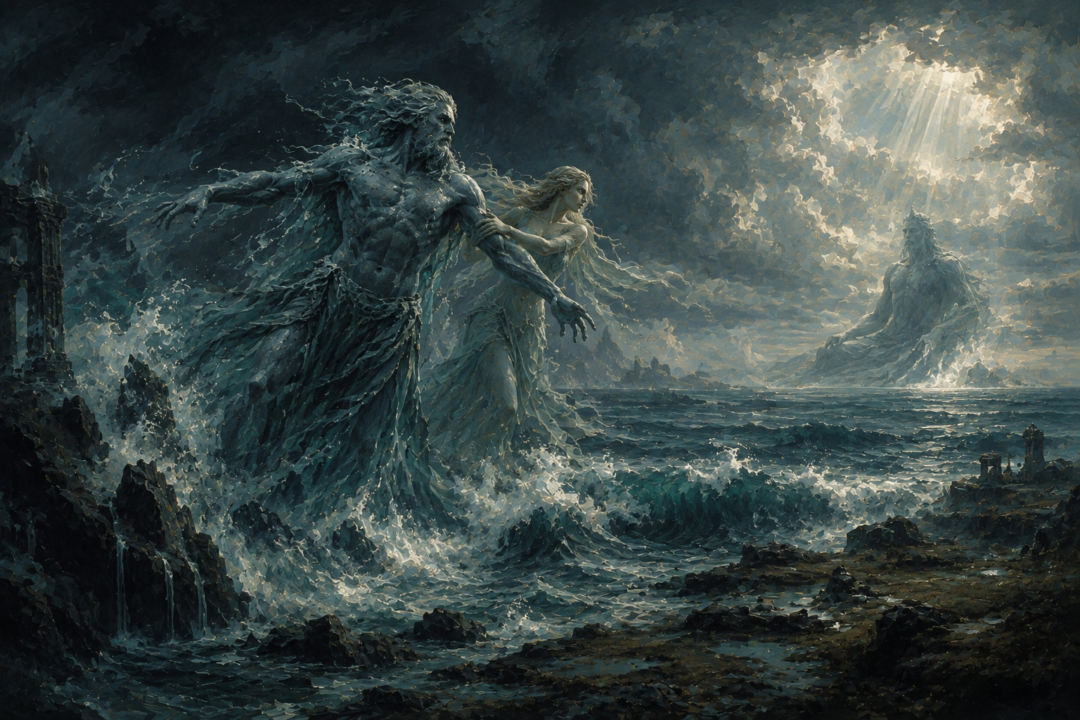
Perhaps no Maia demonstrates freedom more dramatically than Ossë.
Ossë served Ulmo and was associated with the coastal waters. Yet during the early shaping of Arda, Melkor attempted to draw him into rebellion by promising him Ulmo’s realm and power.
For a time, Ossë fell.
The seas became tumultuous, bringing destruction to the lands.
But his fall was not permanent. Uinen restrained him and brought him back, and Ulmo pardoned him. Ossë returned to his allegiance.
This episode would make little sense if Maiar were merely fixed expressions of whichever Vala they served.
Ossë can be tempted.
He can rebel.
He can repent.
He can return.
Even afterward his personality is not erased. His delight in violent storms remains, and mariners may love him without entirely trusting him.
Restoration does not turn him into a smaller version of Ulmo.
He remains Ossë.
Melian Shows That Service Does Not Confine a Maia’s Destiny
Melian provides another variation.
She is associated with Vána and Estë and dwells in Lórien before entering the history of Middle-earth in a completely different way.
There she encounters Elwë, later Thingol.
Their union changes the history of the world.
Melian becomes Queen of Doriath, mother of Lúthien, counsellor to Thingol, and a protective power within his realm. Through Lúthien, her lineage eventually enters both Elven and human history.
Nothing about Melian’s earlier service requires this path.
Her identity has been formed within the Blessed Realm, but it is not exhausted by that formation.
She can love, choose, advise, protect, and enter relationships that create consequences far beyond the immediate sphere of the Valar she once served.
Service Creates Affinity, Not Fate
The pattern becomes clearer when these figures are placed beside one another.
A Maia’s association with a Vala often tells us something important.
Aiwendil’s connection with Yavanna fits his later concern for animals and the natural world as Radagast. Curumo’s association with Aulë fits Saruman’s technical knowledge and fascination with devices. Olórin’s learning under Nienna illuminates Gandalf’s remarkable understanding of pity.
But none of these associations operates as destiny.
Radagast’s love of living creatures does not make him Yavanna incarnate.
Saruman’s craftsmanship does not make his betrayal Aulë’s betrayal.
Gandalf’s pity remains something he must practice under circumstances of fear, suffering, and temptation.
And Sauron proves most decisively that even immense gifts acquired within a noble order can be turned toward monstrous ends.
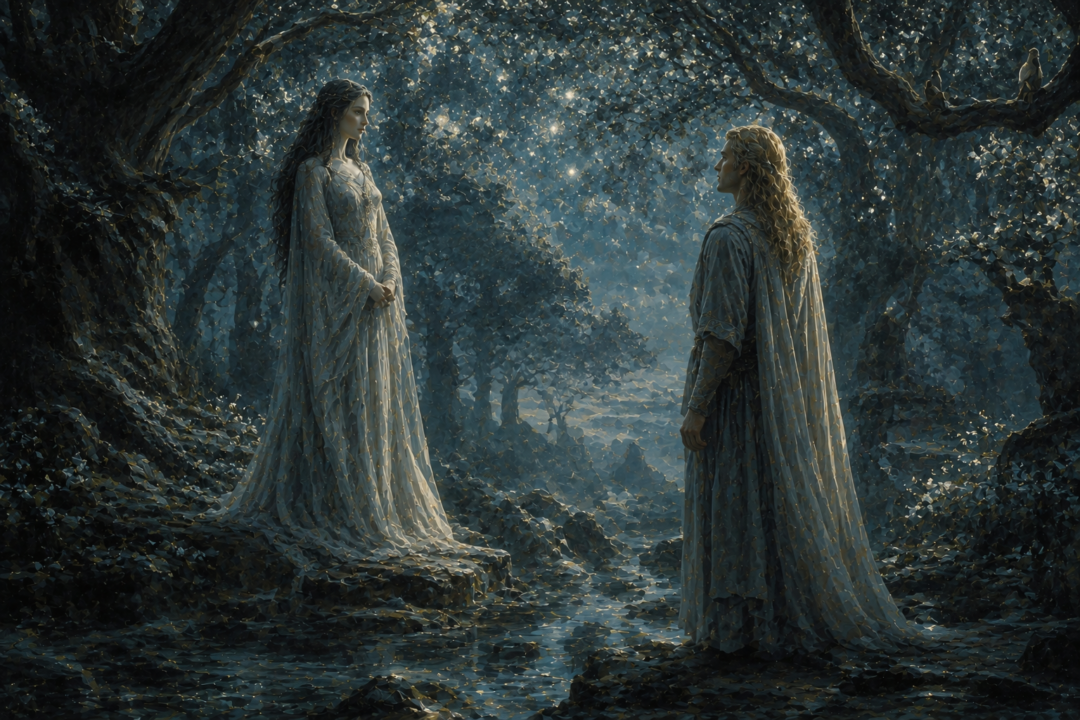
The Deeper Rule Is about Power and Freedom
This gives the relationships between Valar and Maiar a subtle importance.
The great powers of Arda do not function as competing gods manufacturing lesser beings in their own image. Valar and Maiar belong originally to the Ainur, each possessing an identity that precedes the history of the world.
Within Arda they cooperate, teach, serve, specialize, form allegiances, and influence one another.
Those relationships leave marks.
But moral responsibility remains personal.
That is why Sauron cannot blame Aulë for what he becomes. It is why Saruman’s knowledge does not excuse his hunger for mastery. It is why Ossë can be pardoned after abandoning his allegiance. And it is why Olórin’s long education in pity only becomes meaningful when he continues to choose pity in a world where domination often looks faster and more effective.
Service shapes the servant.
It gives knowledge, habits, loyalties, and ways of seeing the world.
But it never removes the decisive question: what will that being do with what has been given?
In Middle-earth, even an immortal spirit must answer that for himself.
Sources & Notes
- The Encyclopedia of Arda, “Maiar” — https://www.encyclopedia-of-arda.com/m/maiar.html
- The Encyclopedia of Arda, “Valar” — https://www.encyclopedia-of-arda.com/v/valar.html
- The Encyclopedia of Arda, “Ainur” — https://www.encyclopedia-of-arda.com/a/ainur.html
Reference entries document the characters, places, events, and textual details discussed in this article.