How Rómenna Became the Last Stronghold of the Faithful After Andúnië Was Lost
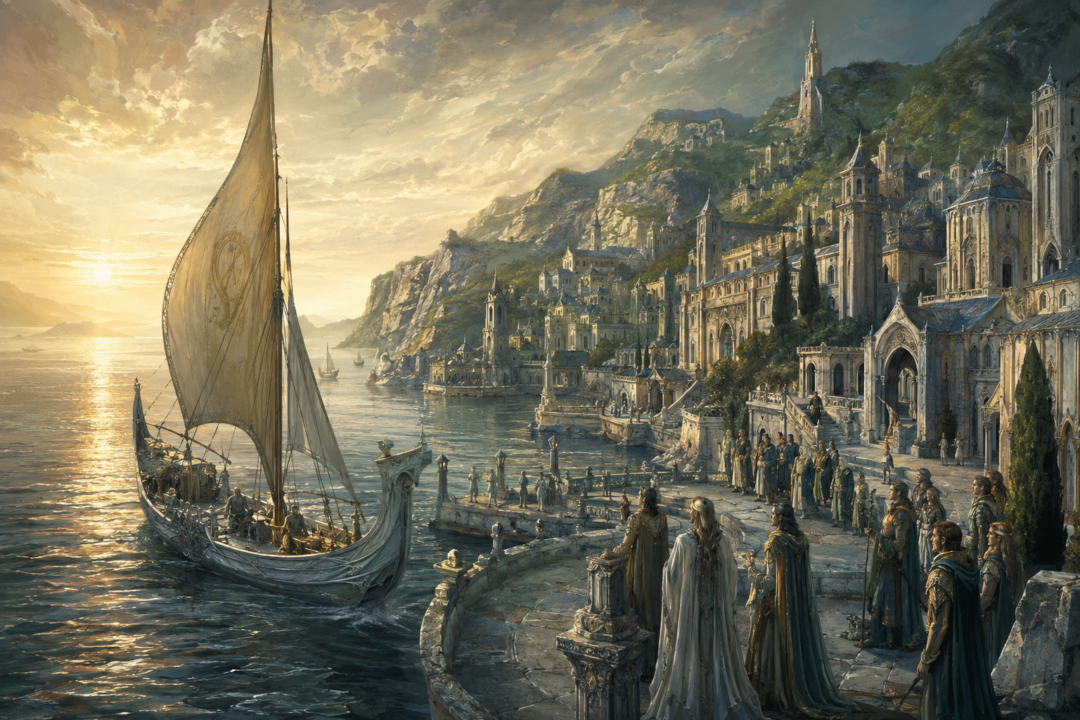
For generations, the western haven of Andúnië represented almost everything the Faithful still loved about Númenor.
It faced toward the Undying Lands. Ships of the Eldar had once come there from Tol Eressëa. Its lords belonged to a noble house descended from Silmariën, the eldest child of Tar-Elendil, and that house remained attached to friendship with the Eldar and reverence for the Valar even as much of Númenor turned away.
Then the political wind changed.
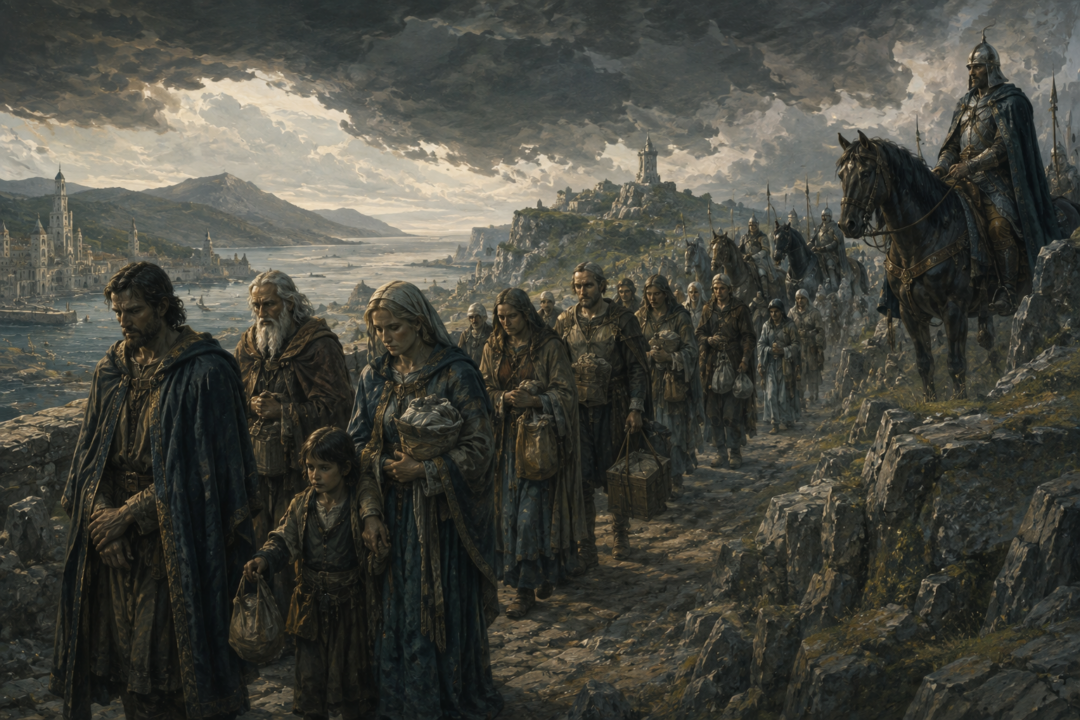
The Faithful did not voluntarily abandon their western heartland for a more useful port. Under Ar-Gimilzôr, they were compelled to move eastward, toward Rómenna, where the King could more easily watch them.
It was meant to weaken them.
Yet by the final years of Númenor, Rómenna had become the place where Amandil gathered those he trusted, where Elendil prepared the ships of escape, and from which the surviving tradition of the Faithful was carried into Middle-earth.
Rómenna did not replace Andúnië in dignity or memory. Nor did the Faithful suddenly acquire political dominance there. Its importance was darker and more practical.
The haven chosen to contain them became the haven from which they survived.
Andúnië Was More Than the Home of a Noble Family
Andúnië lay in the western region of Númenor, looking toward the sea that separated the island from Aman and Tol Eressëa.
In Númenor's earlier days, that direction carried none of the hostility it later acquired. The Eldar came to Númenor from the West, and Andúnië was closely associated with their visits. The Lords of Andúnië themselves became the most important hereditary representatives of the old friendship.
Their ancestry mattered.
Silmariën, eldest child of the fourth King, Tar-Elendil, did not inherit the Sceptre under the succession law then in force. Through her son Valandil, however, descended the Lords of Andúnië. Their house therefore belonged to the royal lineage of Elros even though it stood outside the ruling line.
That distinction eventually became enormously important.
As Númenor's kings grew increasingly hostile toward the Ban of the Valar and envious of the immortality of the Eldar, the Lords of Andúnië remained associated with the older Númenórean outlook. Those who shared it became known as the Faithful, or Elendili, the Elf-friends.
Andúnië was consequently not merely a geographic location. It embodied continuity with a Númenor that was disappearing.
That made its loss especially significant.
Ar-Gimilzôr Tried to Isolate the Faithful
By the reign of Ar-Gimilzôr, hostility toward the Eldar and the Valar had hardened into royal policy.
The use of Elven tongues was forbidden, and the Faithful were persecuted. Ar-Gimilzôr ordered those known as Elf-friends to move from the western parts of Númenor and dwell in the east, chiefly around Rómenna.
The purpose was control.
The Faithful were being removed from the region most strongly connected with their traditions and placed where they could be watched. There was another strategic reason for keeping them in the east: the King's Men feared that the Faithful might receive help from the Eldar of Tol Eressëa, or reveal Númenórean affairs to them.
The irony is difficult to miss.
The monarchy tried to solve a political problem by concentrating many of its suspected opponents near an eastern haven.
For the moment, that was humiliation rather than opportunity. The Faithful had lost freedom, influence and proximity to the western traditions that had defined them.
But geography would matter differently when Númenor's crisis reached its final stage.
Rómenna Changed the Geography of the Faithful
Rómenna stood on Númenor's eastern coast. Its very name is associated with the eastward direction.
This made it almost the opposite of Andúnië in symbolic geography.
Andúnië looked toward the West, toward the Eldar and the Blessed Realm beyond the sea. Rómenna faced toward Middle-earth, the lands where Númenórean ships had increasingly travelled and where Númenórean power had grown.
It would be too strong to claim that this contrast was deliberately constructed as a symbolic historical rule. The texts do not say that. But in the actual course of events, the change proved consequential.
The future of the Faithful would no longer depend upon preserving a protected community on Númenor's western shores.
Their future would lie eastward.
This is the deeper significance of Rómenna. It became important not because the Faithful defeated their enemies politically, but because the conditions of persecution placed them near the route by which a remnant could eventually escape.
Their centre of gravity had shifted from remembrance toward survival.
Amandil Turned Exile Into a Hidden Centre
There was briefly hope that Númenor might change course.
Tar-Palantir, son of Inzilbêth, repented of the policies of the King's Men and attempted to restore friendship with the Eldar and reverence for the Valar. But his efforts could not reverse generations of resentment.
After his death, Pharazôn seized the Sceptre and became Ar-Pharazôn.
Amandil, the last Lord of Andúnië, had been Pharazôn's friend in their youth. Even after Pharazôn became King, Amandil remained for a time among his counsellors.
Then Sauron came to Númenor.
After Ar-Pharazôn brought him from Middle-earth as a prisoner, Sauron rapidly gained influence over the King. Nearly all the royal counsellors began submitting to his influence, while Amandil remained opposed.
Eventually Amandil was dismissed.
Yet Sauron could not simply dispose of him without risk. Amandil was still held in honour by many because of his lineage, character and reputation as a great sea-captain.
So Amandil withdrew to Rómenna.
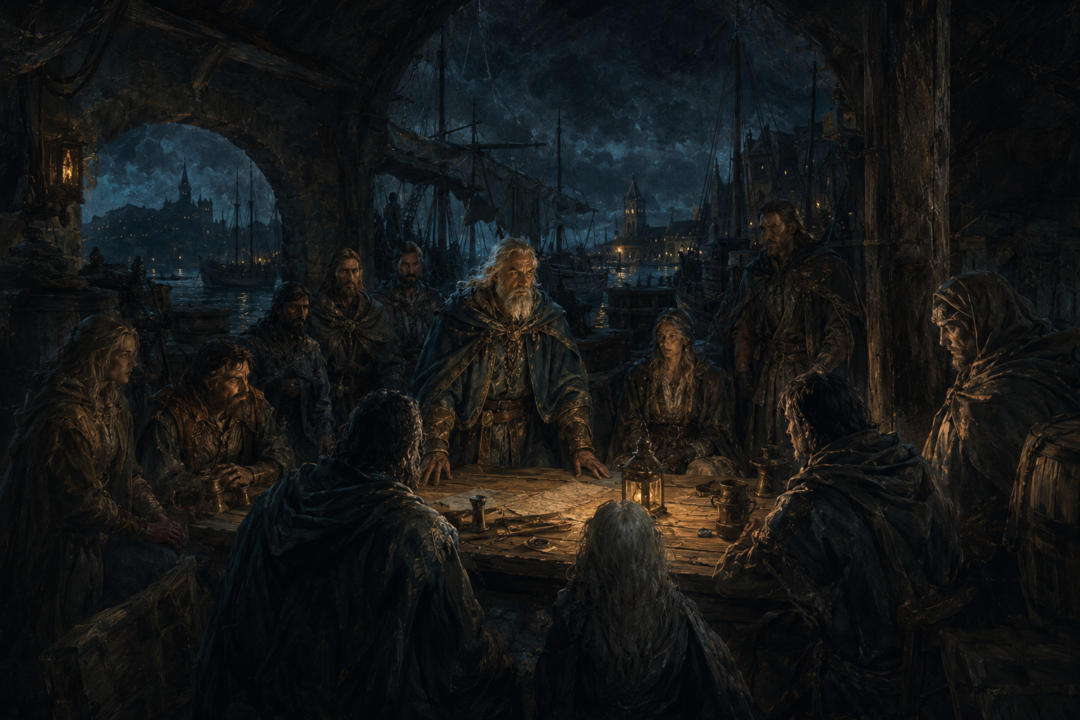
There he secretly summoned those whom he still trusted among the Faithful.
At that moment Rómenna became something more than the district to which dissidents had once been confined. It became the hidden gathering place of the remaining resistance to Sauron's corruption.
Not an army.
Not a rival government.
A remnant.
And that distinction is crucial.
The Faithful's New “Power” Was the Ability to Preserve
Sauron's domination of Númenor became increasingly terrible. The worship of Melkor was established, and the Faithful were persecuted as enemies.
They were in no position to overthrow Ar-Pharazôn.
Their greatest achievements in these years were therefore acts of preservation.
Isildur's rescue of a fruit from Nimloth, the White Tree, is the clearest example. When Sauron persuaded the King to destroy the tree, Isildur entered the guarded place in disguise and took a fruit before Nimloth was cut down. He was grievously wounded, but the line of the White Tree survived.
The same pattern defines Rómenna.
The Faithful could no longer save Númenor from itself. They could preserve things that might outlive Númenor: people, heirlooms, memory and allegiance.
That was the kind of power available to them at the end.
It was not the power to command the kingdom.
It was the power to ensure that the kingdom's nobler inheritance did not perish completely with it.
Amandil's Last Voyage Changed Everything
When Amandil learned that Ar-Pharazôn intended to sail against Aman, he understood that catastrophe was approaching.
He decided upon an extraordinary course.
Remembering the story of Eärendil, he would secretly sail west and attempt to seek mercy for the Númenóreans before the Valar.
Before departing, however, Amandil gave Elendil instructions that reveal exactly how important Rómenna had become.
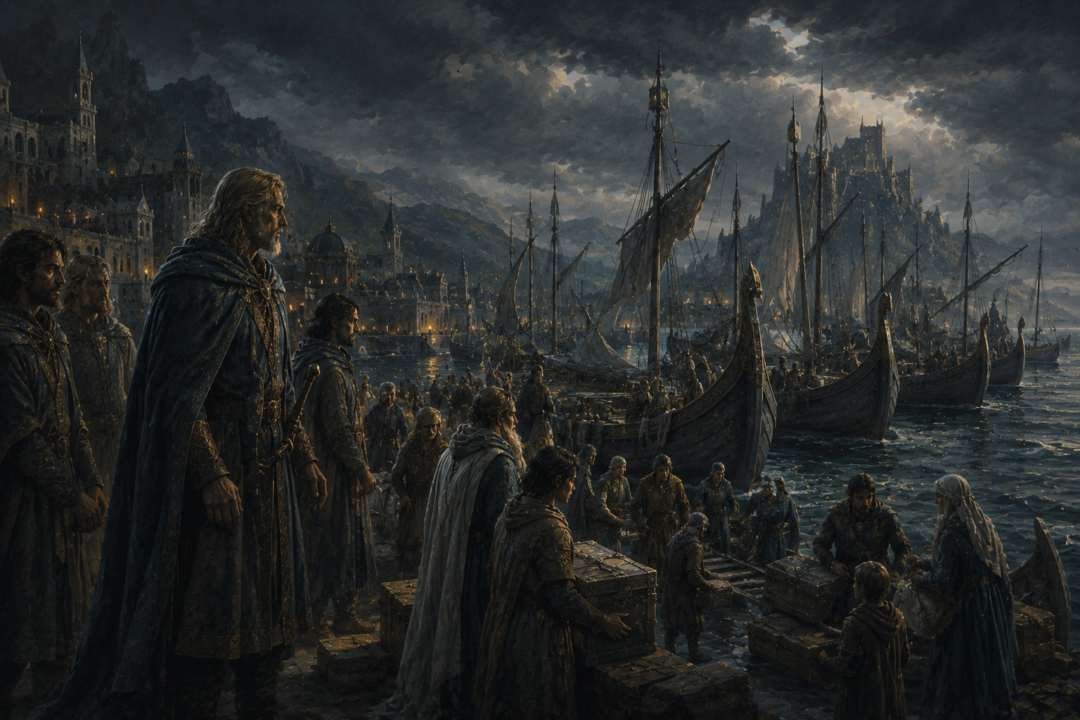
Elendil was to prepare ships.
He, his sons and those who remained faithful were to place themselves aboard with their families and possessions and be ready for what might come.
Amandil sailed first eastward, apparently to conceal his true intention, before turning west. He and his companions were never heard from again.
The texts do not reveal whether he reached his destination.
Elendil therefore had to act without knowing whether his father's desperate appeal had succeeded.
The Faithful waited near Rómenna while Ar-Pharazôn assembled the greatest armament Númenor had ever sent to sea.
The contrast could hardly have been greater.
One fleet represented Númenor's attempt to seize immortality by force.
The other consisted of nine ships prepared to save what could still be saved.
Nine Ships Carried Andúnië's Legacy East
When the Downfall finally came, Númenor was overwhelmed.
Elendil and his followers escaped in nine ships: four associated with Elendil, three with Isildur, and two with Anárion. The storm and great wind drove them eastward toward Middle-earth.
There the refugees founded the Realms in Exile.
Elendil established his northern realm, while Isildur and Anárion founded their power in the south. The Númenórean political world that had destroyed Andúnië and persecuted the Faithful vanished beneath the sea, but the line of the Lords of Andúnië survived.
So did objects and traditions connected with the old Númenor.
Most famously, the seedling descended from Nimloth survived through the Faithful and became the ancestor of the White Trees of the Númenórean realms in Middle-earth.
The transformation was now complete.
Andúnië had been a western haven defined by memory, friendship and inherited honour.
Rómenna became the eastern threshold through which that inheritance escaped destruction.
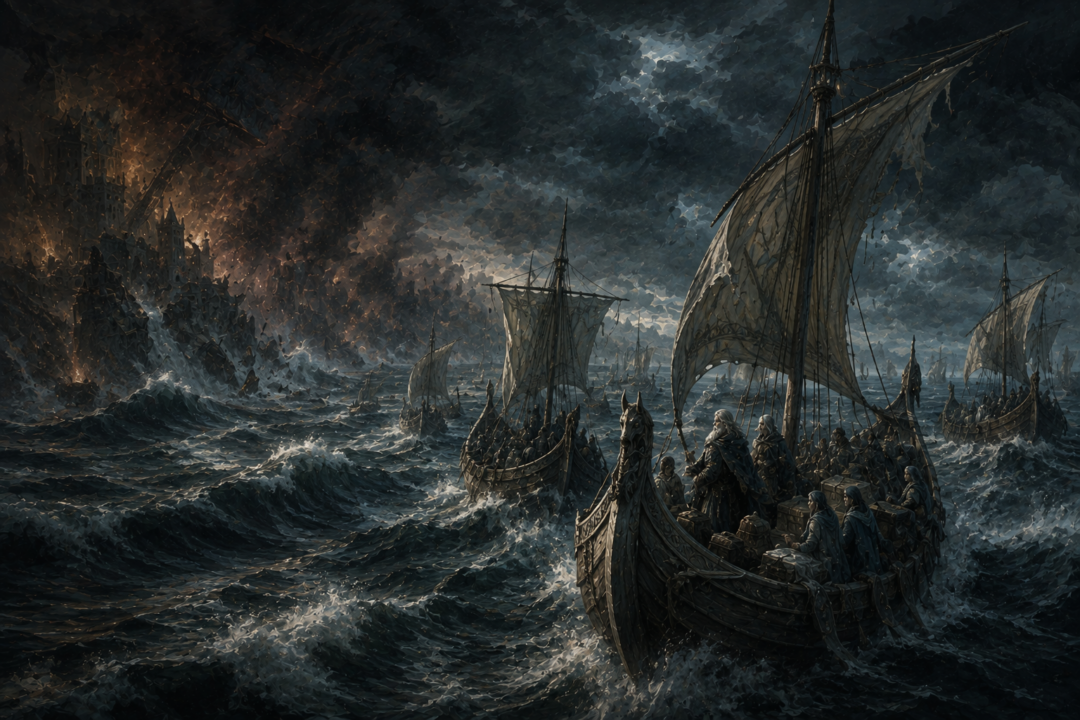
The Haven Meant to Contain Them Became Their Way Out
There is a powerful irony in the history of the two havens.
The enemies of the Faithful removed them from the west because they distrusted their connection with the Eldar. Concentrating them around Rómenna was intended to make them easier to control.
Instead, history turned that forced displacement into part of the conditions of survival.
That does not mean Ar-Gimilzôr accidentally “saved” the Faithful in any simple sense. The survival of Elendil's people came much later, after further changes of reign, escalating persecution, Amandil's leadership and deliberate preparation for disaster.
But the geographic reversal remains striking.
The Faithful lost Andúnië, their old home beside the western sea.
They gained no equivalent political sanctuary at Rómenna. What emerged there was something more fragile: a concealed community capable of preserving its people and inheritance when the kingdom itself could no longer be preserved.
In the end, the westward-looking haven disappeared beneath the waves with the rest of Númenor.
From the eastern haven sailed the people who would build Arnor and Gondor.
Rómenna's final importance was therefore born from defeat. The Faithful were pushed there because they had lost influence, watched because they were distrusted, and gathered there because open opposition had become impossible.
Yet when Númenor reached the edge of destruction, those apparent weaknesses produced one last possibility.
They could leave.
And through that escape, the house once rooted in Andúnië carried the memory of the lost kingdom into a new age of Middle-earth.
Sources & Notes
- The Encyclopedia of Arda, “Rómenna” — describes Númenor’s eastern haven and its role as the principal port from which Elendil and the Faithful escaped the Downfall. https://www.glyphweb.com/arda/r/romena.php
- The Encyclopedia of Arda, “Andúnië” — covers the western haven, its association with the Eldar, and the hereditary Lords of Andúnië. https://www.glyphweb.com/arda/a/andunie.html
- The Encyclopedia of Arda, “The Faithful” — summarizes the Elf-friends’ political position, persecution, concentration around Rómenna, and survival under Elendil. https://www.glyphweb.com/arda/f/faithful.php
- The Encyclopedia of Arda, “Ar-Gimilzôr” — documents the king’s hostility to the Eldar and his order removing the Faithful from western Númenor to Rómenna. https://www.glyphweb.com/arda/a/argimilzor.php
- The Encyclopedia of Arda, “Downfall of Númenor” — provides the final chronology of Ar-Pharazôn’s assault, Númenor’s destruction, and the escape of Elendil’s ships. https://www.glyphweb.com/arda/d/downfallofnumenor.php
Sources added for Rómenna, Andúnië, the Faithful's forced relocation, and the Downfall chronology.