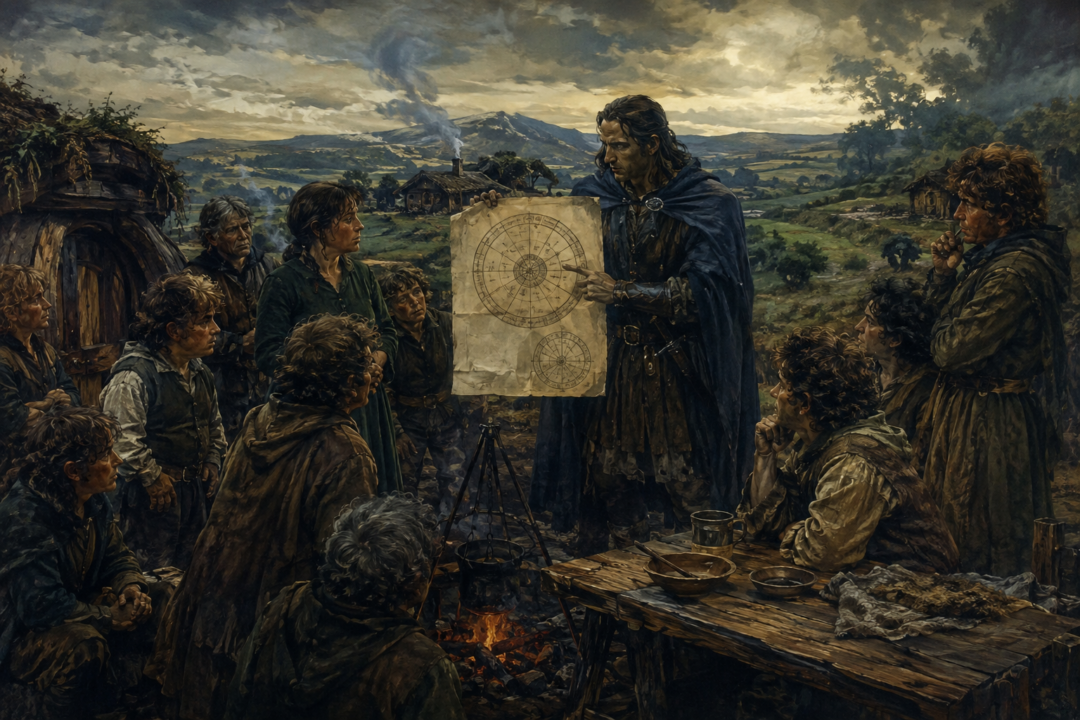
Bilbo and Frodo shared their birthday on September 22. In the Shire, that date had another remarkably convenient property: year after year, the same date always fell on the same day of the week.
That sounds like an insignificant piece of Hobbit housekeeping. It was not.
Behind the Shire Calendar lay a system of reckoning inherited from the Dúnedain of the North, themselves heirs of Númenor. The Hobbits had taken an ancient royal calendar, adapted it to their own customs, and eventually made one ingenious alteration that even their neighbors in Bree adopted.
The result was something characteristically Hobbitish: an inheritance from vanished kings transformed into a calendar so practical that its ancient ancestry became almost invisible.
But there is an important distinction. The famous Shire-reform itself was a Hobbit innovation, not a reform created in Arnor. What the Shire inherited from Arnor was the older framework that made that reform possible.
Understanding that distinction reveals just how much forgotten history survived in ordinary Hobbit life.

Before the Shire, the Hobbits Kept Time Differently
Appendix D of The Lord of the Rings gives an unusually revealing glimpse into early Hobbit culture.
Before settling permanently in Eriador, Hobbits apparently possessed no week at all. They had months associated more or less with the Moon, but their dating and calculations were comparatively imprecise.
That changed as they settled in the western lands.
There they adopted the Kings’ Reckoning of the Dúnedain.
This was no local rustic calendar. The Kings’ Reckoning had been used in Númenor and was preserved afterward in the realms founded by the Faithful in Middle-earth: Arnor in the north and Gondor in the south. Its ancestry reached even farther back, since Appendix D describes the system as ultimately Eldarin in origin.
So when Hobbits began counting seven-day weeks and arranging their year according to this system, they were participating—probably without thinking of it in such grand terms—in a tradition stretching through several civilizations.
The road from Elvish timekeeping to Númenor, from Númenor to Arnor, and from the Dúnedain of Eriador to the Hobbits ended somewhere remarkably humble: in Hobbit letters, birthdays, market days, and feast days.
The Shire Was Founded Inside the Memory of Arnor
The connection is especially significant because the Shire itself was not created independently of the northern Dúnedain.
In Third Age 1601, Marcho and Blanco led Hobbits westward from Bree and received permission from King Argeleb II of Arthedain to settle the lands beyond the Baranduin. The Hobbits later counted this settlement as Year 1 of the Shire-reckoning.
In other words, even the starting point of their local chronology was tied to the northern kingdom.
The Shire Calendar was therefore not simply an ancient Hobbit invention carried into a new homeland. The Hobbits adapted the Kings’ Reckoning they had encountered in Eriador and then counted their own years from the foundation of the Shire.
This produced an interesting cultural layering.
The names could be Hobbitish. The festivals could be Hobbitish. The year number could commemorate Hobbit settlement.
But underneath those local features remained the skeleton of the Dúnedain calendar.
The Shire had made the system its own so thoroughly that its foreign origin became easy to overlook.
What the Hobbits Changed
The Kings’ Reckoning divided the ordinary year into twelve months while also using special days associated with the beginning, middle, and end of the year. Leap years received an additional adjustment around midsummer.
The Shire preserved the broad architecture but altered details.
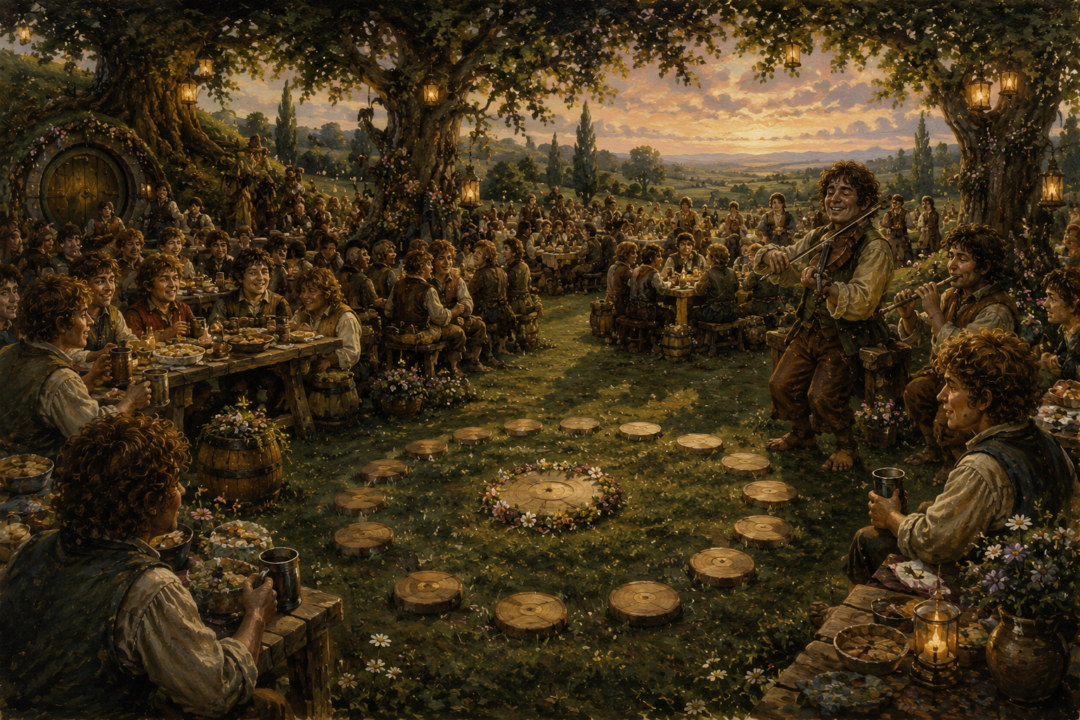
Its twelve months contained thirty days each. Around midsummer came the Lithedays, including Mid-year’s Day, while leap years gained the additional Overlithe. Yule marked the turning of the year and became one of the Shire’s great festive periods.
The result suited Hobbit life extremely well.
But one problem remained.
Because an ordinary solar year contains 365 days rather than an exact number of seven-day weeks, weekday names naturally shift against calendar dates from one year to another. A date that falls on one weekday this year falls on another the next.
To the Shire-folk, this was apparently intolerably untidy.
And several centuries before Bilbo’s time, they decided to fix it.
The Real Shire-reform
During the time of Isengrim Took II, who was Thain from Shire-reckoning 1083 to 1122, the Hobbits introduced what Appendix D explicitly calls the Shire-reform.
Their solution was beautifully simple.
Mid-year’s Day would belong to no week.
In leap years, Overlithe would likewise possess no weekday name.
Those days still existed. They were still celebrated. They simply stood outside the repeating seven-day sequence.
That removed the extra day—or days—that would otherwise push the weekday cycle forward.
The consequence was extraordinary.
Every year now began on the same weekday and ended on the same weekday. More importantly, every numbered calendar date permanently corresponded to the same weekday.
The calendar had become perennial.
A Hobbit did not need a new arrangement of dates and weekdays every year because the relationship never changed.
This is the actual Shire-reform, and the text is clear that it was the Shire-folk’s own innovation. It should therefore not be attributed directly to Arnor.
What Arnor had supplied was the inherited system upon which the Hobbits performed their modification.
A Númenórean Framework Became Intensely Hobbitish
That transformation is what makes the calendar so revealing.
The original Kings’ Reckoning belonged to royal civilization on an enormous historical scale. It had been used by Númenórean kings and their descendants. Its rules dealt with leap years and the slow discrepancy between calendar years and the actual solar year.
The Hobbits inherited the system but approached it according to their own priorities.
Their great complaint was not dynastic symbolism or astronomical theory.
It was inconvenience.
Weekdays wandering across dates were untidy.
So they removed the offending festival days from the weekly sequence.
This did not erase the older system. It domesticated it.
Something inherited from the Dúnedain became so perfectly adapted to Hobbit society that by the late Third Age it looked entirely native.
That is perhaps the deeper significance of the Shire Calendar. Hobbit culture was not isolated from the history surrounding it. It had absorbed pieces of that history and made them ordinary.
The Reform Changed Everyday Life
Appendix D notes a wonderfully practical consequence.
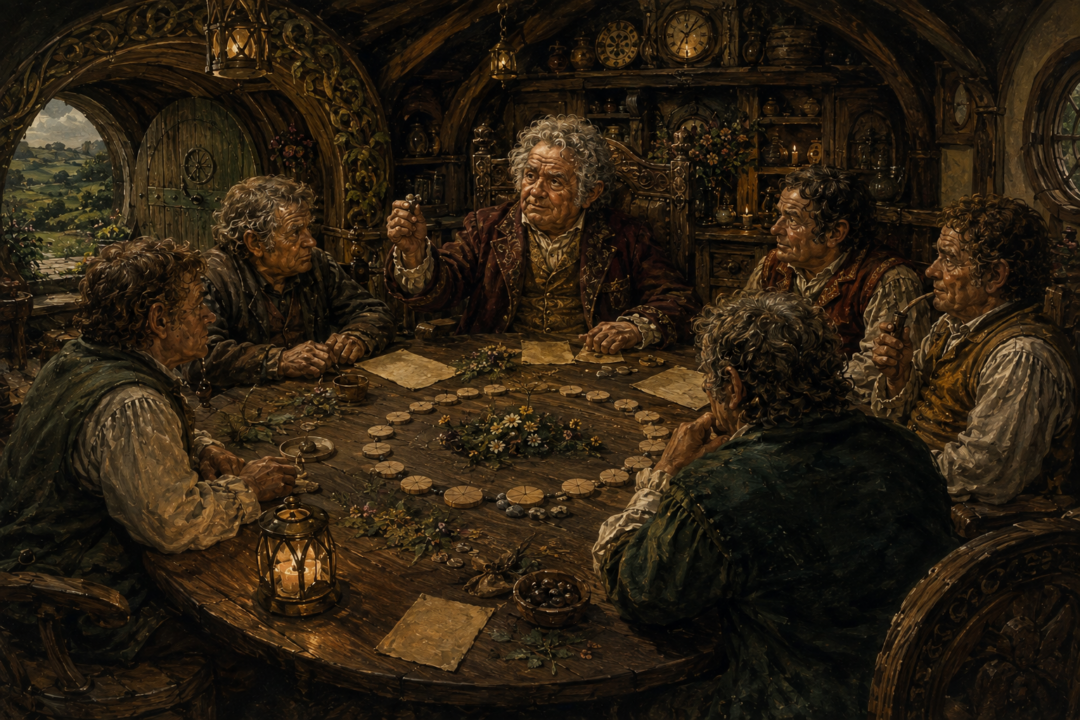
Because dates always corresponded to the same weekdays, Shire-folk eventually stopped bothering to write weekday names in their letters and diaries.
The date alone was enough.
The reform even produced a joke. Since the arrangement ensured that no month began on Friday, the expression “Friday the first” could refer to something impossible or exceedingly unlikely, with the fuller proverbial form referring to the first of Summerfilth.
This is how completely the reform entered Hobbit culture.
An adjustment to a calendar became an assumption of daily life, then a linguistic joke.
And there was a limit to its convenience.
The system worked splendidly at home, but Appendix D observes that it was less convenient for Hobbits who travelled farther than Bree. Outside the regions using the reform, their fixed relationship between dates and weekdays could no longer be assumed.
The calendar that made the Shire simpler also quietly emphasized how self-contained the Shire had become.
Bree Reveals That the Shire Was Not Entirely Alone
Bree is an important part of the story because the Shire-reform was eventually adopted there as well.
That makes historical sense.
The Shire-hobbits had come from the Bree region, and the two communities remained culturally connected despite developing separately. Their calendars were not identical in every local usage, but both belonged to the same broader tradition.
Bree’s adoption of the reform demonstrates that the innovation was useful beyond the borders of the Shire.
Yet it also marks roughly where its cultural reach ended.
The reform did not become the universal calendar of western Middle-earth.
Gondor had followed its own development. The old Kings’ Reckoning was eventually replaced there by the Stewards’ Reckoning, introduced under Mardil, and after the War of the Ring a New Reckoning was established.
The Shire, meanwhile, preserved its peculiar descendant of the older northern tradition.
The Lost Kingdom Survived in Hobbit Habits
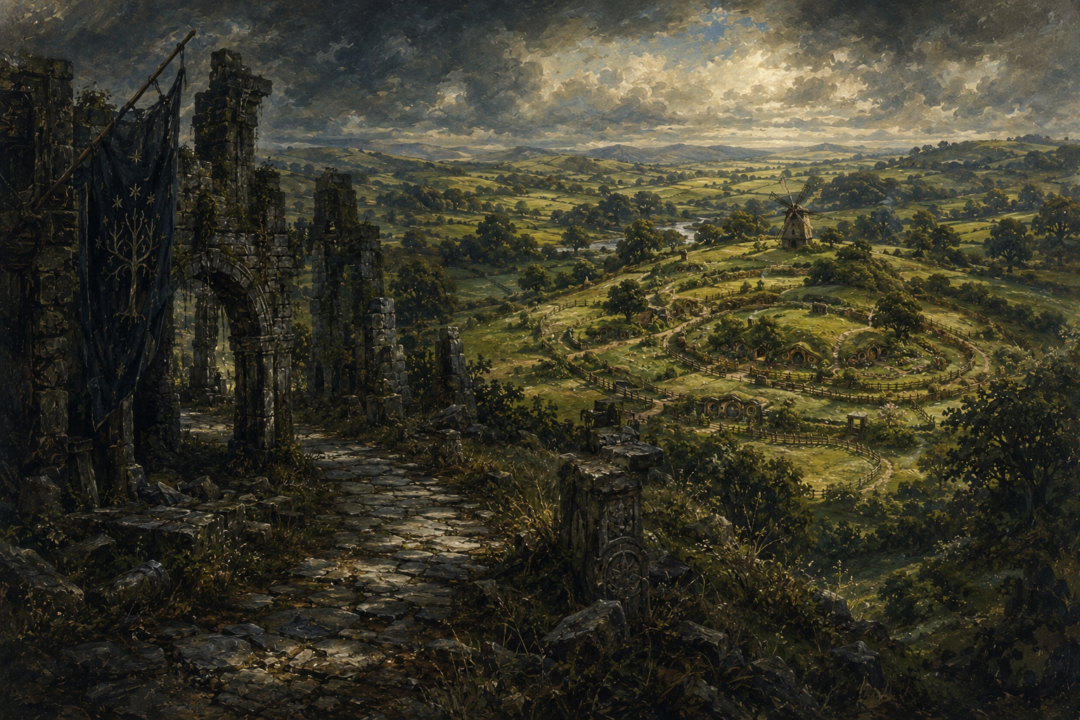
By Frodo’s lifetime, Arnor had been gone for roughly two thousand years.
Its successor kingdoms had fallen. The northern Dúnedain had become a hidden and wandering people. To most Hobbits, Rangers were suspicious strangers rather than heirs of the kings whose civilization had once shaped Eriador.
Yet every Hobbit calendar preserved part of that vanished world.
That does not mean the Shire-reform itself came from Arnor. The evidence says the opposite: the reform was specifically a Hobbit innovation.
The more interesting truth is subtler.
The Hobbits inherited the Kings’ Reckoning, altered its months and festivals, anchored their year-count to the founding of their own land, and finally changed the weekly cycle itself under Isengrim II.
What emerged was neither purely Númenórean nor purely Hobbit.
It was an ancient structure made local.
And that is one of the quiet patterns running through the Shire. Its people believed themselves comfortably removed from the affairs of kings, yet their borders, their political traditions, and even their way of counting days carried memories of the northern realm.
The old kingdom did not survive only in ruins, swords, tombs, or the wandering heirs of Isildur.
Part of it survived every time a Hobbit looked at the date.
Sources & Notes
- https://www.glyphweb.com/arda/k/kingsreckoning.html — The Encyclopedia of Arda’s overview of the King’s Reckoning, including its Númenórean origin, use in Arnor and Gondor, twelve-month structure, and special days outside the months.
- https://www.glyphweb.com/arda/s/shirecalendar.html — The Encyclopedia of Arda’s Shire Calendar entry, covering the Hobbits’ adaptation of the Dúnedain system, month names, Yule and Lithe days, and Overlithe in leap years.
- https://www.glyphweb.com/arda/s/shirereform.html — The Encyclopedia of Arda’s dedicated account of the Shire-reform under Isengrim Took II, which removed Mid-year’s Day and Overlithe from the weekly cycle so dates retained the same weekday.
- https://www.glyphweb.com/arda/s/shirereckoning.html — The Encyclopedia of Arda’s Shire-reckoning chronology, explaining that Shire-reckoning begins with the Hobbits’ settlement in Third Age 1601 and differs from Third Age dates by 1600 years.
- https://www.glyphweb.com/arda/a/arnor.html — The Encyclopedia of Arda’s history of Arnor, the northern Dúnedain realm whose successor kingdom of Arthedain authorized the Hobbits’ settlement beyond the Baranduin.
Sources document the inherited King’s Reckoning, the Shire Calendar’s structure, the Hobbit Shire-reform, the chronology of Shire-reckoning, and its historical setting in Arnor.