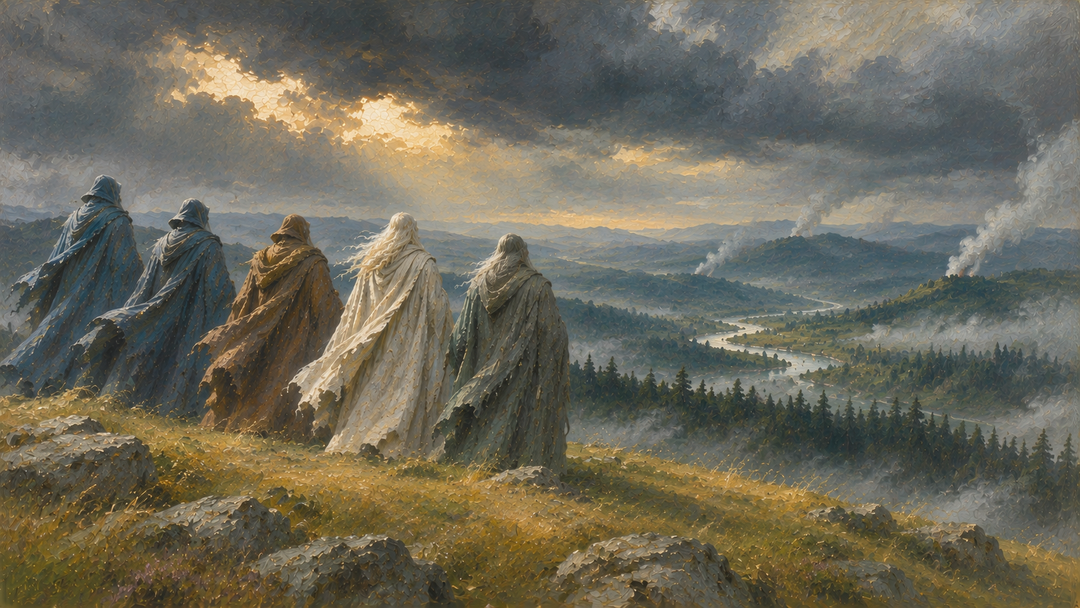
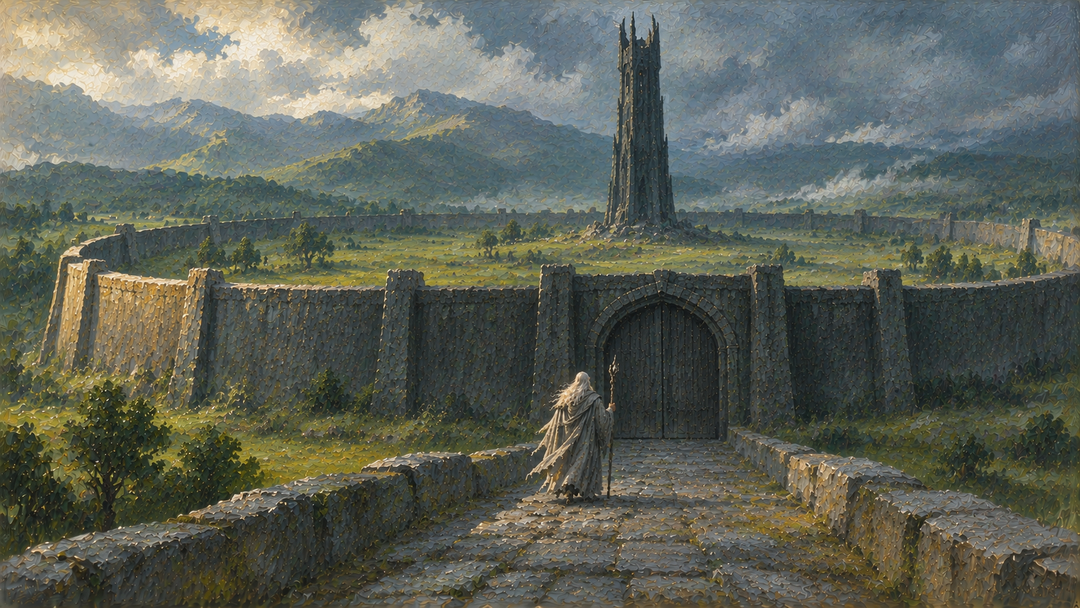
In the summer of 3018 of the Third Age, Gandalf went to Isengard expecting counsel from Saruman and was imprisoned instead. Saruman, the recognised head of the Wizards, wanted the One Ring for himself. That betrayal cost the resistance a powerful adviser while the Ringwraiths hunted Frodo, and turned Isengard into a threat to Rohan.
If all five Istari had cooperated loyally, the War of the Ring would probably have been shorter and less destructive for the Free Peoples. The greatest advantage would not have been five spellcasters overpowering Sauron. It would have been the removal of Saruman’s treachery, stronger coordination between threatened kingdoms and greater disruption of Sauron’s allies. Destroying the Ring would still have been essential, and five Wizards could not guarantee that.
Five Wizards were not five unrestricted powers
The five best-known Istari were Gandalf, Saruman, Radagast and the two Blue Wizards; Tolkien leaves the Order’s total membership uncertain. In the account published in Unfinished Tales, they were Maiar, spiritual beings sent to Middle-earth in the bodies of old men. Their bodies were real: they could become tired, hungry and wounded, and could be killed. Their task was to encourage resistance to Sauron, not take political command of the peoples they had come to help.
That restriction matters more than rankings of magical strength. The Istari were forbidden to dominate the wills of Elves and Men through displays of power. A faithful Saruman could advise Théoden or Denethor, but not simply take over their kingdoms for the greater good. Nor could the five legitimately gather their full supernatural might and rule Middle-earth themselves. Doing so would reproduce the temptation they had been sent to oppose.
Gandalf’s actual methods show what successful intervention looked like. He gathered information about Bilbo’s ring, persuaded the Council of Elrond to confront the problem, supported Aragorn and helped Théoden recover his judgement. As Gandalf the White, he rallied Minas Tirith. These were major contributions, but they worked through the decisions and courage of other people.
He also defeated the Balrog in Moria, dying in the struggle and returning through an extraordinary intervention beyond ordinary Wizardly ability. That confrontation does not prove five Istari could defeat Sauron directly. Sauron had armies, fortresses and a unique connection to the Ring, into which he had invested much of his power.
In The Fellowship of the Ring, the Council of Elrond rejects using the Ring as a weapon against its maker. Gandalf himself refuses Frodo’s offer to give it to him, recognising that his desire to do good could become a route to tyranny. Five united Wizards would face the same moral and strategic obstacle. Their mission could create an opportunity for the Ring-bearer; it could not substitute for the Ring’s destruction.
A loyal Saruman would have transformed the western war
Saruman represents the biggest change because, in the published story, he did far more than fail to help. He studied the Ring, kept important knowledge to himself, used the seeing-stone of Orthanc and built a military power at Isengard. His efforts to secure the Ring clashed with Sauron’s plans, but that did not make him a reliable ally of the West. Both Gandalf and Rohan suffered directly from his ambitions.
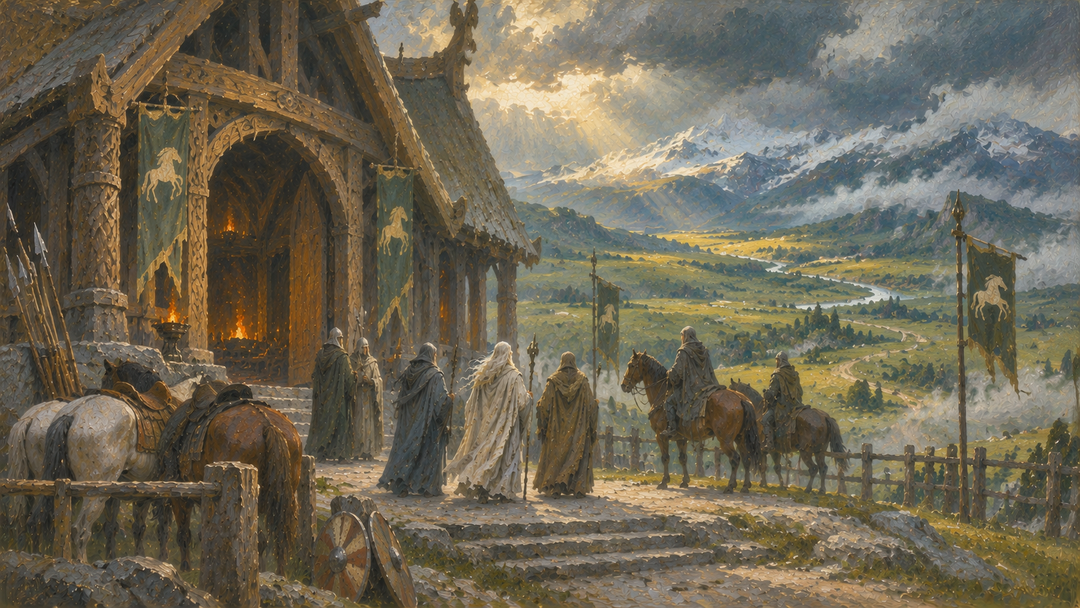
Consider Rohan. In The Two Towers, Théoden’s court has been weakened by Gríma Wormtongue, while Saruman’s forces threaten the kingdom from the west. The Rohirrim must fight at Helm’s Deep before they can concentrate on Gondor. A loyal Saruman would not have raised that hostile army or helped corrupt Théoden’s government. Rohan might have mobilised earlier, with fewer losses, and faced less danger of being prevented from riding to Minas Tirith.
There is an important qualification. Removing Saruman’s army also changes the events that bring Théoden, Aragorn and the Ents into action. Tolkien’s actual sequence cannot be preserved unchanged while deleting its causes. It is therefore impossible to say how many extra riders would reach Gondor, or precisely when. One major enemy front would disappear, freeing resources for the conflict with Mordor.
A faithful Saruman could also have contributed his scholarship. At the Council of Elrond, Gandalf explains that Saruman had specialised in the lore of the Rings. Earlier, Saruman opposed action against the power in Dol Guldur, partly because he wished to find the Ring himself. If he had shared information honestly and supported Gandalf’s investigations, the Wise might have recognised the danger sooner. Yet discoveries decades before the war belong to a broader alternative history, not merely to five Wizards agreeing to cooperate in 3018.
The palantír at Orthanc offers another uncertain advantage. Aragorn eventually uses that seeing-stone to confront Sauron and draw his attention. A loyal Saruman might have helped the West understand its uses and risks. Equally, Saruman’s own dealings with the stone show how dangerous it was to face Sauron’s influence through it. It would be unjustified to treat Orthanc as a flawless intelligence service.
Radagast’s contribution would be less dramatic but still useful. In The Fellowship of the Ring, he carries Saruman’s message to Gandalf without knowing that it is a trap. At Gandalf’s request, he sends news by birds and beasts to Orthanc; Gwaihir then helps Gandalf escape. Radagast therefore does assist the struggle, despite later descriptions of him as having neglected his wider mission through his absorption in nature.
If he worked consistently with the others, his knowledge of the wild and his contacts among birds could improve reconnaissance around Wilderland, the Anduin and the approaches to the enemy’s northern strongholds. That is a reasonable counterfactual, not a documented campaign. We do not know that he could command every animal or summon Eagles whenever required. The Eagles are independent beings, not transport automatically available to the Wizards.
The Blue Wizards might matter most far from Gondor
The Blue Wizards present the greatest uncertainty. Unfinished Tales gives them the names Alatar and Pallando and describes their journey eastwards, where they disappeared from the knowledge of the West. Tolkien’s 1958 letter to Rhona Beare expresses a fear that they failed and perhaps began secret cults or magical traditions. That was a tentative account, not a narrated history of their actions during the War of the Ring.
In much later notes published in The Peoples of Middle-earth, Tolkien imagined a strikingly different role for them. Here they are called Morinehtar and Rómestámo, names associated with overcoming darkness and helping the East. They arrive during the Second Age rather than alongside the other Wizards in the Third. Their purpose includes encouraging opposition to Sauron among peoples beyond the familiar western lands.
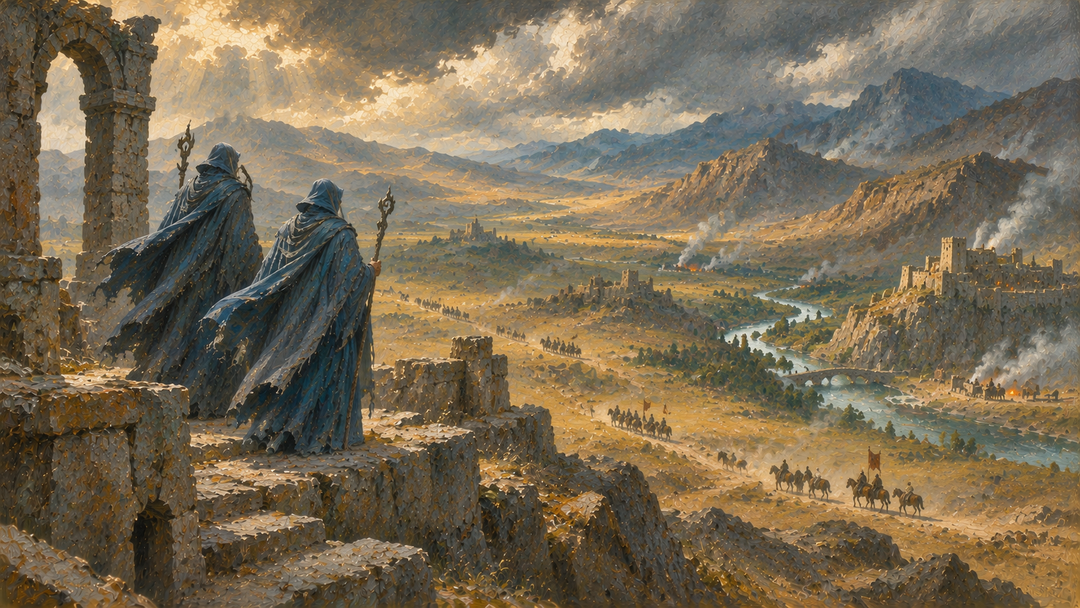
These versions should not be flattened into one settled biography. The earlier account leaves their success doubtful; the later account credits their activities with weakening and dividing forces that might otherwise have overwhelmed the West. Tolkien never reconciled the different names, dates and outcomes. Nevertheless, his later conception supplies strong grounds for thinking that action in the East could matter more than another Wizard on a battlefield outside Minas Tirith.
Sauron’s military reach extended well beyond Mordor. In the appendices to The Lord of the Rings, Easterlings attack Dale and Erebor while Gondor is under assault. King Brand and King Dáin are killed, and their successors endure a siege beneath the Lonely Mountain. Lórien suffers repeated attacks from Dol Guldur, and fighting also reaches the Woodland Realm. The war is not confined to the route followed by Frodo and Sam.
Suppose the Blue Wizards had successfully fostered resistance among eastern peoples and obstructed Sauron’s recruitment and supply routes. Fewer forces might have reached his northern armies; some could have been kept busy defending his own interests farther east. This might have relieved pressure on Erebor and the Elven realms. It could also have limited reinforcements for Mordor.
That scenario is fan speculation built from Tolkien’s later outline, not a record of battles the Blue Wizards fought. We have no troop figures, reliable map of their operations or account of their whereabouts in March 3019. Indeed, under the later conception, they may already have helped the West by preventing the enemy from bringing still greater numbers to war. Requiring them to travel west and stand beside Gandalf could actually remove them from the work where they were most valuable.
Better odds for victory, but no guaranteed shortcut
The decisive problem remains the Ring. Sauron could lose armies and still be dangerous so long as it survived. The captains of the West understood that their march to the Black Gate was not a conventional plan to conquer Mordor. Their small force was meant to attract Sauron’s attention and provide Frodo and Sam with a chance to reach Mount Doom. More Wizards could support that diversion, but a larger and more conspicuous intervention might also prompt Sauron to hunt harder for the Ring.
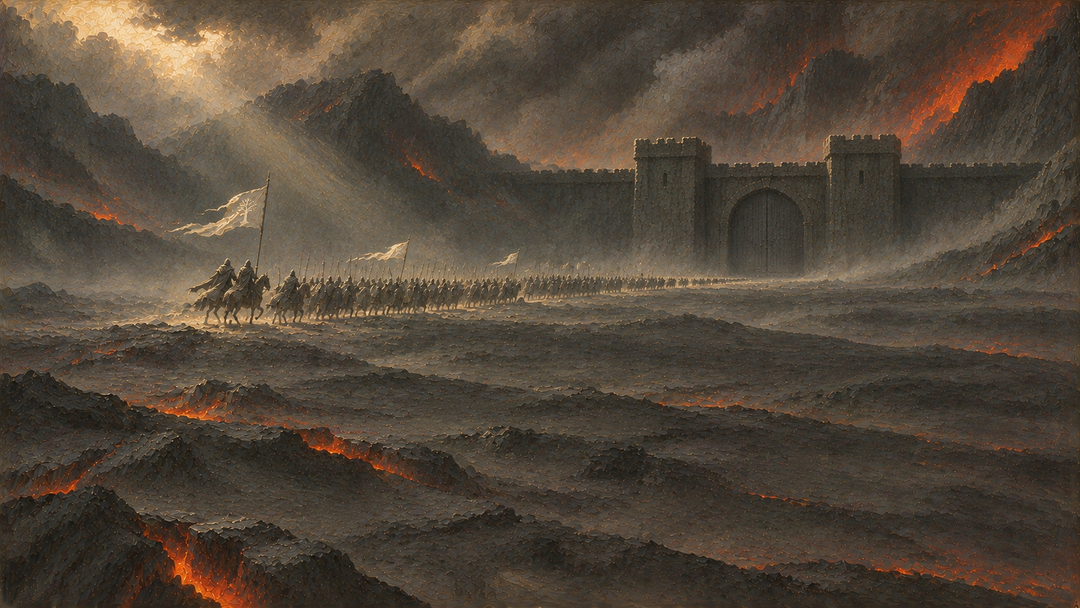
Nor does their combined presence solve the practical problems of the journey. Gollum guides the hobbits through routes that the Wise do not control; Shelob, Orcs, hunger and exhaustion nearly destroy the mission. At the final moment, Frodo claims the Ring instead of voluntarily destroying it. Its destruction follows Gollum’s seizure of it and fall into the fire. Nothing suggests four additional Wizards would resolve this predicament.
There is also a difference between starting this cooperation during the war and imagining centuries of faithful service. If Saruman had never turned towards domination, the White Council’s decisions, the defence of Rohan and the search for the Ring might all have developed differently. If the Blue Wizards had spent centuries destabilising Sauron’s eastern alliances, his armies might have been much weaker by 3019. These cumulative effects are potentially enormous, but the more history changes, the less confidently any familiar event can be predicted.
Film continuity needs separate treatment. Peter Jackson’s The Lord of the Rings films give Saruman’s magic and military role a more immediately visual presentation, omit Radagast and do not bring the Blue Wizards into the story. The Hobbit films give Radagast a much more prominent part and show earlier cooperation against the Necromancer. Neither adaptation supplies evidence that a five-Wizard attack could destroy Sauron or replace Frodo’s mission. The films and books establish different emphases, not a measurable scale of combined power.
On the most plausible reading, loyal cooperation would have made a very large difference to the conduct and cost of the war. Rohan could have been spared Saruman’s assault, Gandalf would not have lost crucial time as his prisoner, Radagast could have maintained better communications, and eastern resistance might have tied down thousands of enemies. The Free Peoples could have reached the final crisis in a stronger position.
But there is no reliable calculation of how many battles would change, how many people would survive or whether the Ring-bearer would succeed sooner. Tolkien’s larger point is that wisdom, restraint and the freedom of others matter more than overwhelming force. Five faithful Istari could unite resistance without trying to become another Dark Lord. They could greatly improve the chance of victory; they could not make it inevitable.
Sources & Notes
- The Encyclopedia of Arda — Wizards: mission and known members — https://www.encyclopedia-of-arda.com/w/wizards.php
- Tolkien Gateway — Blue Wizards — https://tolkiengateway.net/wiki/Blue_Wizards
- The Encyclopedia of Arda — Radagast — https://www.encyclopedia-of-arda.com/r/radagast.php
- The Encyclopedia of Arda — Saruman — https://www.encyclopedia-of-arda.com/s/saruman.php
Primary reading: Unfinished Tales, The Istari; The Fellowship of the Ring, The Council of Elrond; The Peoples of Middle-earth, Last Writings. Earlier and later accounts of the Blue Wizards differ. A united five-Wizard campaign and its results are counterfactual, not a completed Tolkien narrative.