The Corsairs’ Real Weapon Was Not Piracy — It Was the Ports That Made Piracy Possible
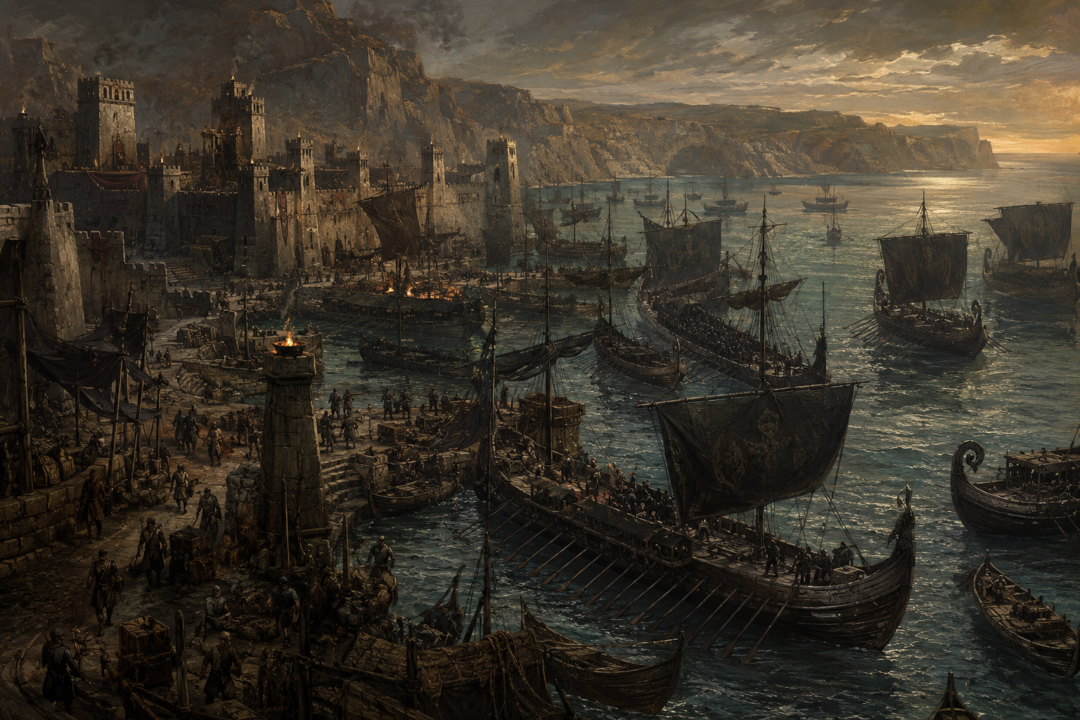
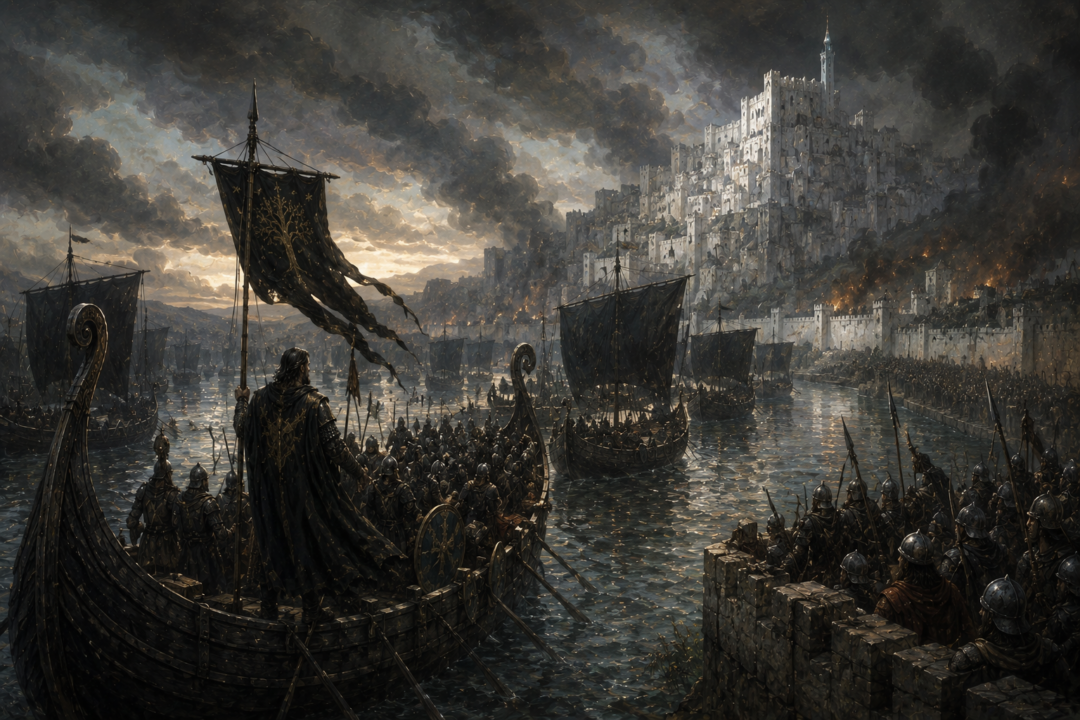
When black-sailed ships appeared on the Anduin during the Battle of the Pelennor Fields, the sight was enough to break hope.
Éomer believed enemies were arriving from the south. The forces of Mordor rejoiced. Gondor’s defenders had every reason to fear what those sails represented: the Corsairs of Umbar had spent centuries attacking Gondor’s coasts, and during the War of the Ring their fleet was powerful enough to keep much of southern Gondor occupied while Minas Tirith faced Sauron’s main assault.
But the Corsairs’ strength was never simply that they possessed ships.
Ships require somewhere to gather, repair, provision, shelter, embark troops, and return with plunder. Fleets require harbours. And throughout Gondor’s long struggle with Umbar, some of the most important events occur not on the open sea but around the havens that made naval power possible.
The Corsairs were dangerous because they possessed a fortified maritime base at Umbar — and because Gondor’s own great southern port, Pelargir, stood on the river system leading toward the heart of the kingdom.
Seen this way, the Corsair wars become something larger than a story about pirates.
They are a centuries-long struggle over the gateways between sea, river, coast, and kingdom.
Umbar Was a Stronghold Before It Was a Corsair Haven
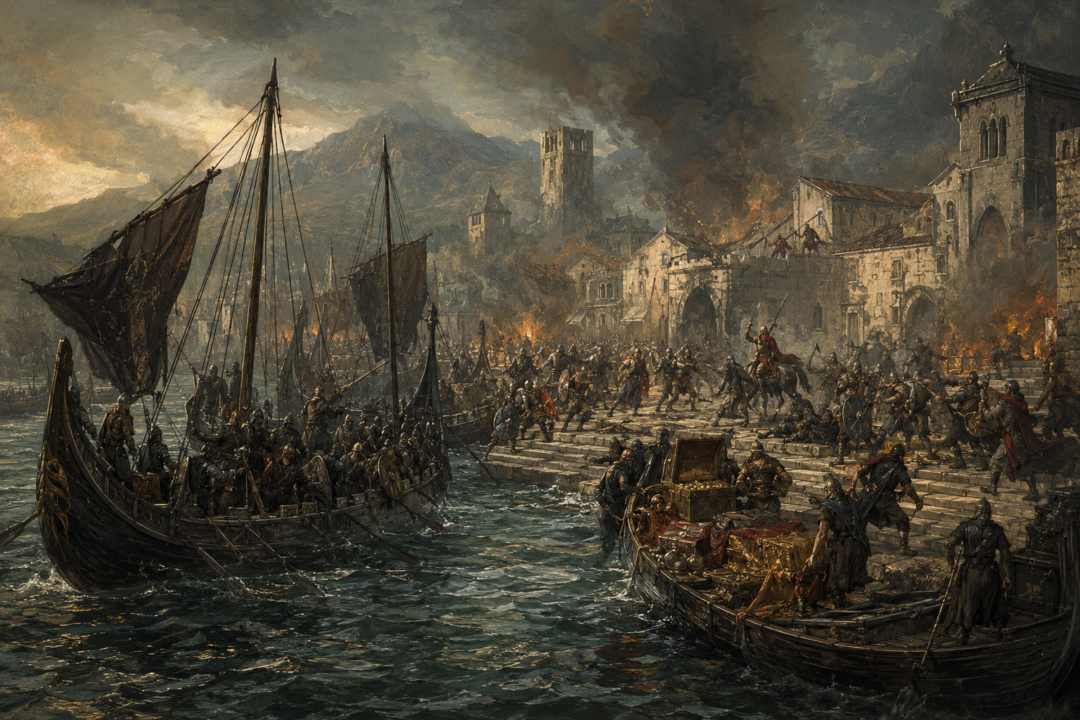
Umbar was not merely an anchorage where raiders happened to gather.
Its importance went back deep into Númenórean history. After the establishment of the Realms in Exile, Gondor eventually fought to possess it. King Eärnil I captured Umbar in the tenth century of the Third Age, and the harbour became an important stronghold of Gondorian power in the south.
That history matters because it reveals what Umbar actually represented.
Possession of the haven extended Gondor’s reach toward Harad and gave the kingdom a major maritime position far south of its central territories. Losing it therefore meant more than allowing hostile sailors to operate nearby.
And Gondor did lose it.
The disaster emerged from the Kin-strife, Gondor’s devastating civil war. Castamir the Usurper had strong support among the coastal population and commanded the fleet. After Eldacar returned and Castamir was killed, Castamir’s sons and their followers eventually escaped from Pelargir with ships and sailed to Umbar.
There they established an independent lordship hostile to Gondor.
The future Corsair threat was therefore rooted in something much more dangerous than ordinary piracy: experienced enemies of Gondor had obtained a defensible southern haven from which maritime war could be sustained for generations.
A Fleet Without a Haven Is a Temporary Threat
Tolkien’s notes on nomenclature describe the Corsairs in terms comparable to Mediterranean corsairs: sea-raiders operating from fortified bases.
The second half of that idea is strategically crucial.
A ship can raid a coastline. A harbour can support a fleet.
From Umbar, hostile forces could assemble vessels over long periods and then strike northward. This pattern appears dramatically during the crisis of the Long Winter in T.A. 2758–59, when fleets from Umbar and Harad attacked Gondor’s coasts while enemies simultaneously struck Rohan.
These were not isolated attacks by a few opportunistic ships. Maritime forces could land troops at widely separated points and turn Gondor’s enormous coastline into a military liability.
The sea allowed an enemy to choose where pressure would fall.
Gondor could not simply place one army between Umbar and Minas Tirith. Coastal attacks might threaten Belfalas, Anfalas, the mouths of rivers, or lands farther north. Defenders had to watch many possible approaches.
A hostile port therefore multiplied the usefulness of every ship based there.
Umbar gave the Corsairs somewhere from which repeated attacks could originate.
Pelargir Was the Other Half of the Equation
If Umbar explains how the Corsairs projected power northward, Pelargir explains why that power could become strategically dangerous to Gondor itself.
Pelargir stood on the Anduin, below the heartlands of Gondor and connected to the sea through the river’s mouths. It was one of Gondor’s great havens and had been important since before the foundation of the southern kingdom.
Its history repeatedly intersects with Gondor’s internal and external wars.
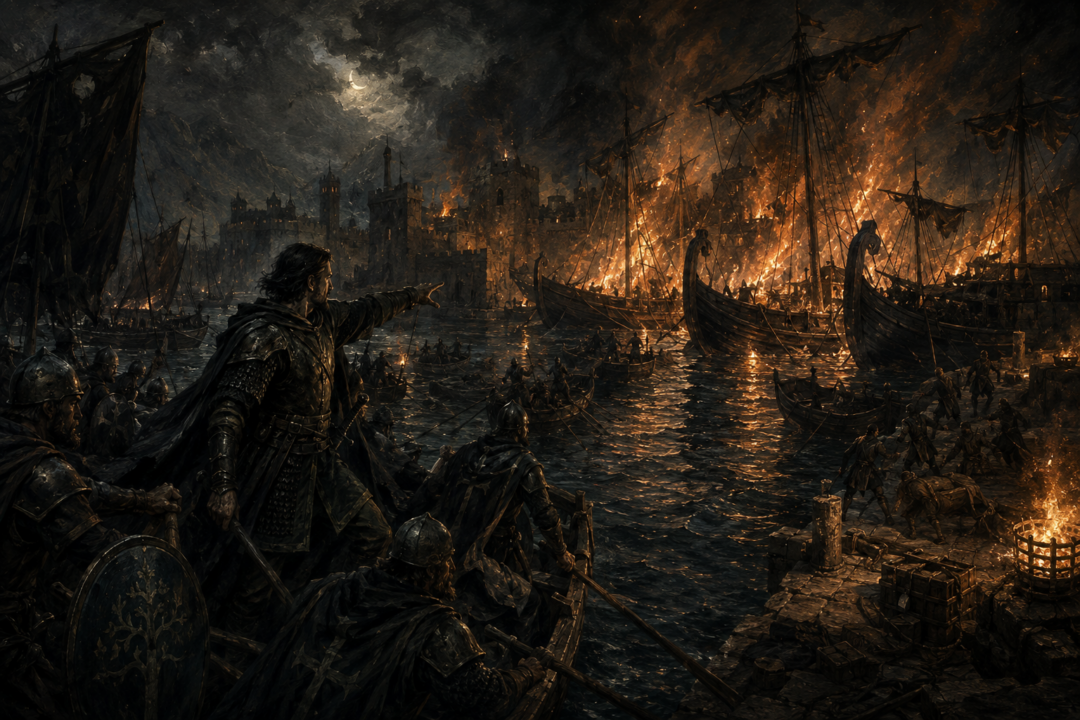
During the Kin-strife, Castamir’s surviving faction held Pelargir before escaping to Umbar. Nearly two centuries later, Castamir’s descendants Angamaitë and Sangahyando sailed from Umbar and struck Pelargir. Their attack in T.A. 1634 was devastating: King Minardil was slain, and the Corsairs escaped with plunder.
That raid shows how dangerous the connection between Umbar and Pelargir could be.
The Corsairs did not need to conquer all of Gondor. Maritime mobility allowed them to strike a politically and strategically important location and withdraw.
Pelargir was therefore not simply another coastal town vulnerable to piracy. It was one of the places where control of the sea could intersect directly with Gondor’s river network and southern military strength.
Why Thorongil Attacked the Fleet at Its Base
Centuries later, Aragorn — serving Gondor anonymously under the name Thorongil — recognized the danger posed by Umbar.
During the rule of Steward Ecthelion II, Thorongil warned that the Corsairs presented a serious threat to Gondor’s southern fiefs. He eventually led a small fleet in a surprise attack upon Umbar.
What happened there is revealing.
Thorongil did not attempt a grand conquest of the southern lands. Instead, his force entered the haven by night and burned many of the Corsairs’ ships. Thorongil also defeated the Captain of the Haven before withdrawing.
The operation was limited, but its target was precisely chosen.
Ships concentrated inside a harbour represent accumulated military power. Destroying them before they can sail can accomplish something that chasing raiders across a vast coastline cannot.
The episode reinforces the larger pattern: Gondor’s struggle against the Corsairs was partly a struggle against the infrastructure that allowed them to operate.
Thorongil struck Umbar because the haven concentrated the threat.
Sauron Used the Corsairs to Immobilize Southern Gondor
During the War of the Ring, this maritime threat became part of Sauron’s wider strategy.
Gondor was not defending only Minas Tirith.
Its southern fiefs had their own enemies to fear. The Corsairs and forces allied with them threatened the coastal and river regions, preventing Gondor from freely concentrating all available strength around its capital.
This is visible when reinforcements arrive in Minas Tirith before the siege. The contingents from the southern fiefs are smaller than hoped because substantial forces have remained behind to guard their own lands.
The Corsairs did not have to capture Minas Tirith themselves to serve Sauron’s purposes.
Their existence in the south divided Gondor’s attention.
That is the deeper strategic value of a fleet operating from a hostile base. Its potential movements can matter before its ships ever reach the decisive battlefield. Every coast that must be guarded and every river approach that must be watched consumes defenders.
The threat from Umbar was therefore helping the assault on Minas Tirith even while the Corsair fleet remained far to the south.
Pelargir Became the Point Where Sauron’s Plan Broke
Aragorn’s passage through the Paths of the Dead is often remembered primarily as a supernatural gamble.
Strategically, however, his destination is just as important as the road he takes.
He does not lead the Dead directly to Minas Tirith.
He goes south.
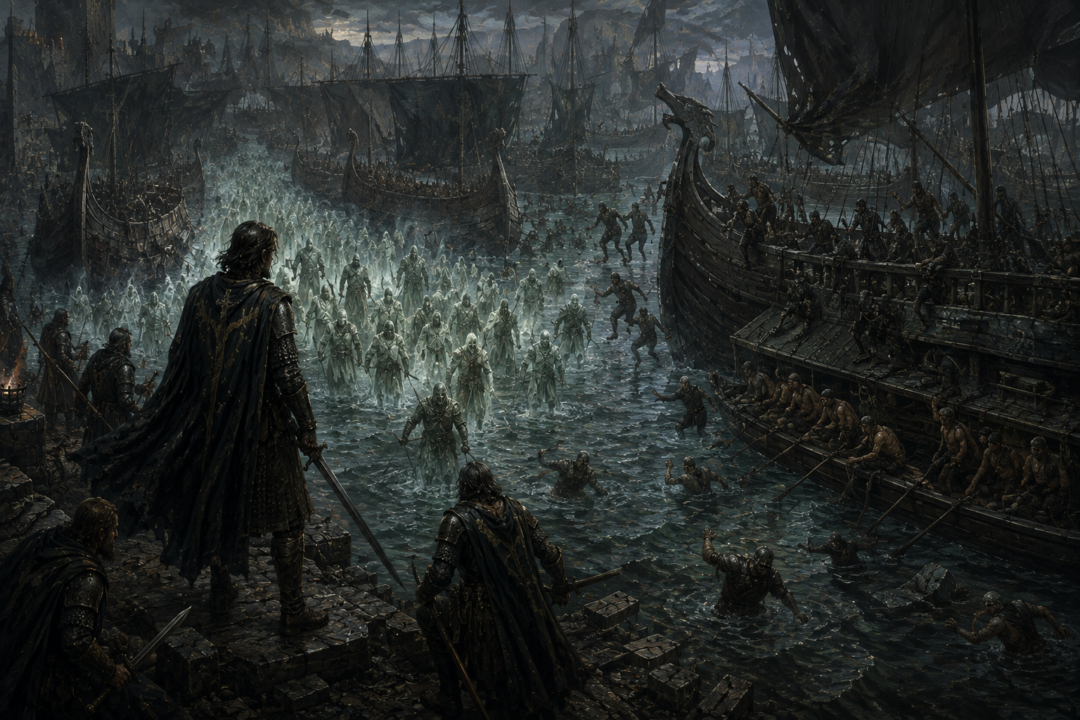
At Linhir, enemies attacking the region are driven away in terror. Aragorn then moves through Lebennin toward Pelargir, where the great Corsair fleet has gathered.
There the scale of the danger becomes clear. The fleet included fifty great ships, together with smaller vessels beyond count. Some of the ships contained enslaved rowers who were people of Gondor taken in earlier raids.
The Dead terrify the Corsairs. Men abandon their vessels, some trying to escape, and Aragorn gains possession of the fleet.
Only after the ships have been secured does he release the Dead from their oath.
That sequence is essential.
The victory at Pelargir does not merely eliminate a band of raiders. It transfers maritime mobility from the Enemy to Gondor.
The Captured Ships Became Gondor’s Road to the Battlefield
Aragorn now faced another problem.
He had defeated the Corsairs far south of Minas Tirith, but the battle for the city was approaching. Men from southern Gondor could be gathered, yet marching them overland would consume precious time.
The captured fleet solved the problem.
Aragorn filled the ships with forces gathered from the southern regions and sailed rapidly up the Anduin.
This is one of the great reversals of the War of the Ring.
The same ships whose arrival was meant to deepen Gondor’s catastrophe became the means by which reinforcements reached the Pelennor Fields.
That is why the black sails produce such despair when they are first seen from the battlefield. Nobody there initially knows that control of the fleet has changed.
Éomer sees what should logically be the final disaster.
Instead, Aragorn unfurls the standard of the King.
The Corsairs’ maritime system has been turned against Sauron.
Ports Explain Why the Corsairs Mattered for Centuries
Calling the Men of Umbar “Corsairs” can make them sound like a peripheral nuisance: raiders attacking merchant vessels and disappearing over the horizon.
Their history shows something more formidable.
Umbar was a fortified haven capable of supporting sustained hostility against Gondor. Pelargir was a vital Gondorian port whose position connected the sea with the Anduin and the southern provinces. Across centuries, attacks on fleets, havens, coastal regions, and river approaches repeatedly shaped the balance between the two powers.
This does not mean piracy was unimportant. Raiding was fundamental to the Corsairs’ threat, and the texts explicitly describe their attacks upon Gondor’s coasts and sea traffic.
But piracy alone does not explain their strategic endurance.
Ports do.
Umbar allowed hostile naval power to survive, rebuild, and strike again. Pelargir offered access to one of Gondor’s crucial maritime and river routes. And during the War of the Ring, control of the ships at Pelargir determined whether the Black Fleet would strengthen Sauron’s attack or carry Gondor’s own warriors to Minas Tirith.
The decisive weapon was not simply the ship.
It was the protected place from which the ship could sail — and the harbour into which it could return.
That is why Gondor’s long war with the Corsairs repeatedly comes back to the same geography.
Umbar. Pelargir. The Anduin. The coast.
The black sails were terrifying.
The havens behind them were what made them powerful.
Sources & Notes
- The Encyclopedia of Arda — Umbar: the fortified southern haven and its changing control by Gondor, the Corsairs, and Harad — https://www.glyphweb.com/arda/u/umbar.php
- The Encyclopedia of Arda — Pelargir: Gondor’s great river-haven, its seizure during the Kin-strife, and Aragorn’s attack on the Corsair fleet — https://www.glyphweb.com/arda/p/pelargir.php
- The Encyclopedia of Arda — Kin-strife: the civil war that drove Castamir’s defeated faction from Pelargir to Umbar — https://www.glyphweb.com/arda/k/kinstrife.php
- The Encyclopedia of Arda — Castamir: Gondor’s Captain of Ships whose descendants became the Corsairs of Umbar — https://www.glyphweb.com/arda/c/castamir.php
- The Encyclopedia of Arda — Long Winter: the simultaneous invasions of Rohan and seaborne attacks on Gondor by fleets from Umbar and Harad — https://www.glyphweb.com/arda/l/longwinter.php
Background references for Umbar and Pelargir as strategic havens, the Corsairs’ origin in the Kin-strife, and their use of maritime bases to threaten Gondor’s coasts. Primary accounts are in J.R.R. Tolkien’s The Return of the King and its appendices.