The One Return of the King Scene I Would Remove
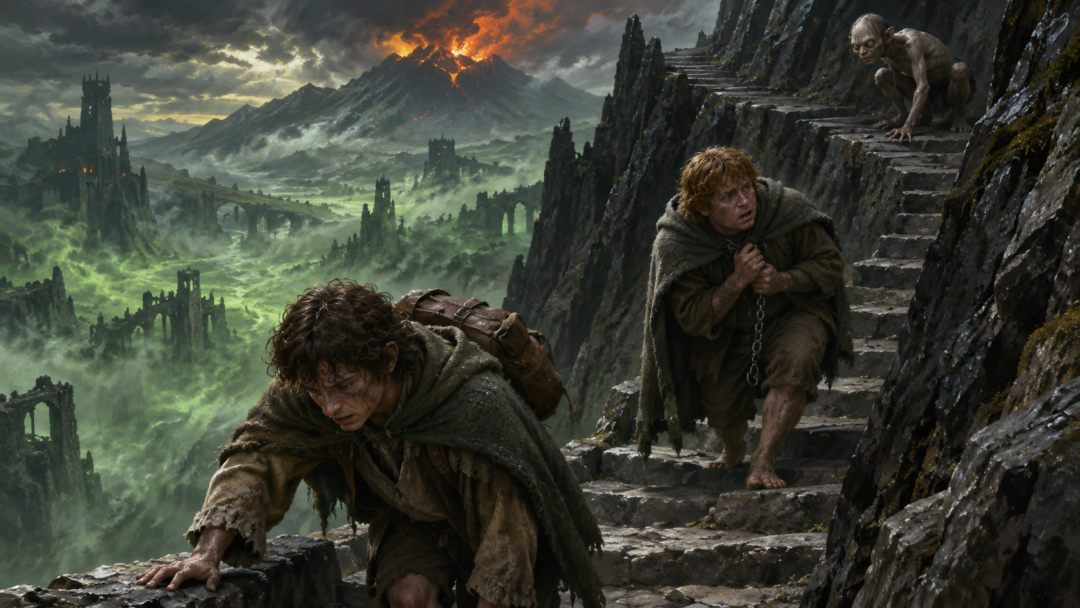
Peter Jackson’s *The Lord of the Rings* trilogy makes changes Tolkien purists can debate: Elves arrive at Helm’s Deep, Faramir takes Frodo toward Osgiliath, Denethor becomes more grotesque, and the Army of the Dead effectively settles the Battle of the Pelennor Fields. I understand the cinematic reasoning behind most of them. But I would remove one scene from *The Return of the King* without hesitation: Frodo sending Sam away on the Stairs of Cirith Ungol.
It is beautifully acted, visually convincing, and painful. That makes it worse. Jackson manufactures a betrayal between characters whose friendship supports Tolkien’s conclusion, trading something essential for a few effective minutes of drama.
The Lembas Bread Conspiracy
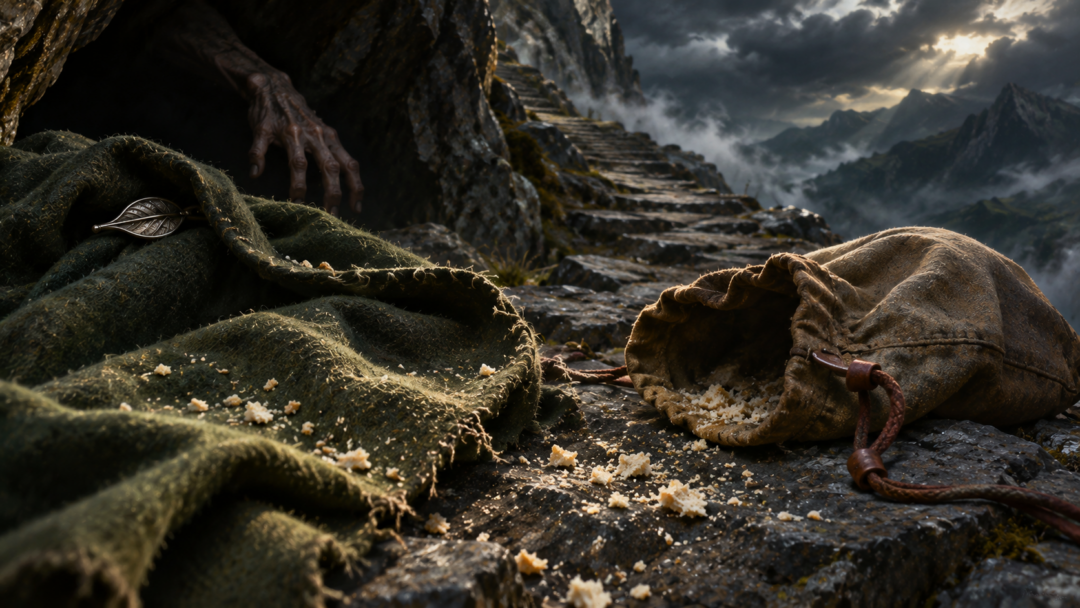
Gollum wants to separate Frodo from Sam, who distrusts him and threatens his plan to recover the Ring. While the hobbits sleep, Gollum steals their remaining lembas bread, scatters crumbs over Sam’s clothing, and throws the food down the mountainside.
When Frodo discovers the missing provisions, Gollum points to the crumbs as evidence. Exhausted, suspicious, and increasingly dominated by the Ring, Frodo believes him. Sam protests; their argument turns to Sam’s supposed desire for the Ring; Frodo tells him to go home.
Sam descends the stairs until he finds the discarded lembas wrappings, recognizes Gollum’s trick, and climbs back. Frodo meanwhile follows Gollum toward Shelob’s lair.
The mechanism is familiar: a villain frames a loyal friend, the hero believes the lie, and the companion eventually returns. Such a plot can work elsewhere, but Frodo and Sam’s bond is not an ordinary friendship to be broken for a convenient misunderstanding. The audience is meant to feel the shock of the rejection, then relief when Sam returns. Both reactions are real; neither establishes that the rejection belongs in this story.
Tolkien Never Made Sam Pass This Test
In *The Two Towers*, which contains the journey through Cirith Ungol, Frodo never dismisses Sam over stolen food. They enter the terrible passage together.
They have tensions. Sam mistrusts Gollum; Frodo knows their guide is dangerous yet sees reasons to pity him. The Ring increasingly burdens Frodo. Their relationship, initially framed as master and servant but growing beyond those titles, survives. Tolkien does not treat loyalty as the reward for an agreeable friendship. Sam is stubborn, suspicious, sometimes unfair; Frodo can be impatient and secretive. Their commitment exceeds their irritation. That endurance is especially meaningful because neither hobbit is idealized as incapable of mistakes. The test is whether they can remain together amid fear and disagreement, not whether a villain can make one suddenly disown the other.
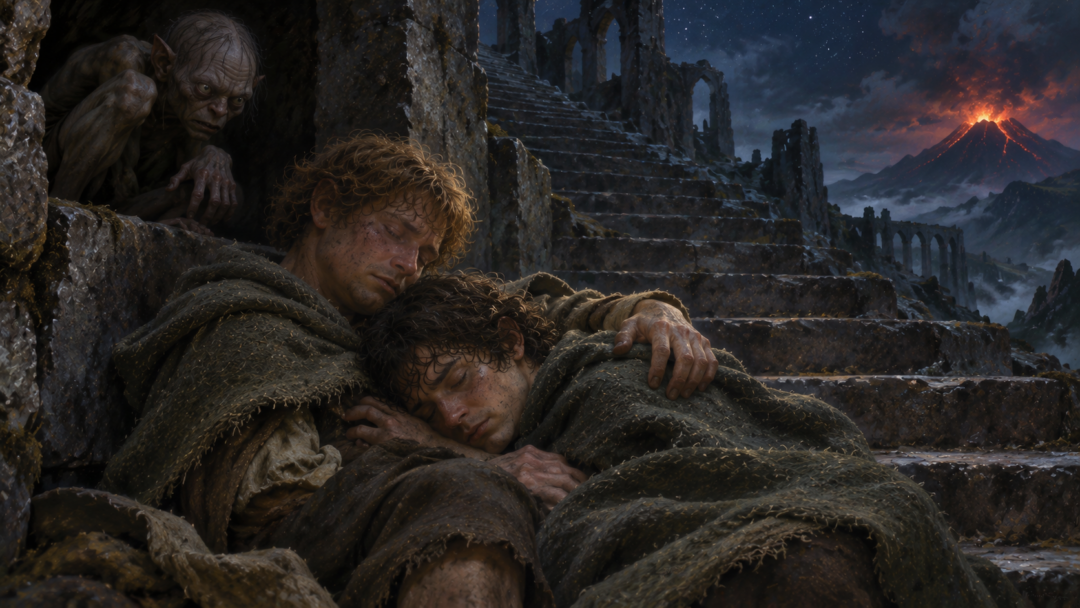
In the chapter *The Stairs of Cirith Ungol*, Gollum returns to find the hobbits asleep. Frodo’s head rests in Sam’s lap, Sam’s hand protectively on Frodo. For a moment, the sight seems to reach the damaged creature Gollum once was. Affection itself interrupts his malice and offers an argument against betrayal.
Jackson reverses that possibility. Rather than showing Gollum confronted by a friendship that might recall his remaining humanity, the film lets him dismantle it with crumbs.
Frodo Is Burdened, Not Stupid
The obvious defense is that the Ring has weakened Frodo’s judgment. Jackson consistently portrays it as an invasive force that fosters possessiveness, fear, and isolation. Frodo’s behavior in Osgiliath, his reactions to the Ring’s presence, and his eventual inability to surrender it at Mount Doom establish his vulnerability. At Cirith Ungol, clear reasoning is hardly assured.
But damaged judgment does not require forgetting almost everything one knows about another person. Sam has carried supplies, protected Frodo, rationed food, and repeatedly challenged Gollum’s dishonesty. Frodo knows how seriously he takes the journey. The charge that Sam secretly ate their remaining bread should meet enormous resistance.
Instead, a few crumbs and some manipulation make Frodo trust his openly compromised guide over the companion who has sacrificed nearly everything for him. The Ring explains his fear that Sam might take it; it does not adequately explain the food accusation or the speed of his surrender to Gollum’s account.
The scene contributes to a recurring film problem: Frodo sometimes appears to be transported toward Mordor while others make sensible decisions. Tolkien’s Frodo is compromised and exhausted, but his endurance includes moral intelligence, sympathy, and a difficult understanding of Gollum that Sam does not fully share. His compassion can expose him to danger. That is richer than falling for a schoolyard frame-up.
Sam Should Not Have to Earn Back His Place
Sean Astin nearly conceals the script’s problem with Sam. His devastated expression is moving; his downward walk looks like the collapse of everything he has lived for since leaving the Shire. Yet Sam must obey an obviously disastrous order: abandon Frodo, the Ring, and their mission in hostile territory with Gollum.
Sam respects Frodo, and his loyalty includes a servant’s instinct to obey. But he has repeatedly shown that protection sometimes requires disagreement. His confrontation with Gollum springs from that instinct. Why would he now leave?
He might withdraw a short distance to recover from the hurt or wonder whether Frodo still wants him. Actually starting for home feels dictated by the need for temporary separation, not his priorities. The discarded wrappings then supply an external clue that restores his resolve.
Tolkien’s Sam needs no proof of a frame-up to believe Frodo deserves protection. His loyalty precedes the crisis, survives it, and persists after every reasonable hope of success disappears. That is a stronger kind of courage.
The Film Already Had a Better Separation
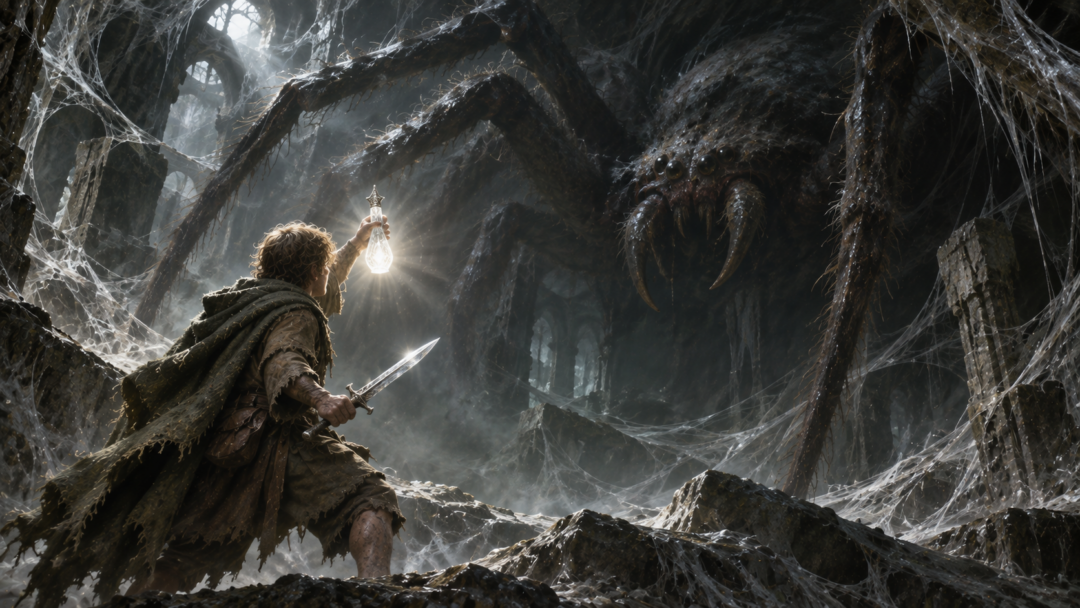
Tolkien supplies a devastating separation without betrayal. In Shelob’s lair, Frodo becomes trapped in darkness and attacked. Sam fights the monstrous spider with Sting and the light associated with Galadriel’s gift, driving her away, but believes Frodo dead.
Now Sam faces a genuine dilemma: stay beside Frodo’s apparently lifeless body or continue the quest that might be Middle-earth’s last hope. He takes the Ring briefly, not to steal power, but because an impossible situation seems to demand it. Then he overhears Orcs reveal that Frodo is alive. He must pursue his friend, although the Ring is in his keeping and the enemy is closing in.
Tolkien sets duty to Frodo against duty to the mission. Neither choice promises safety or happiness. Jackson keeps Shelob’s attack, Sam’s fight, and the Orcs carrying Frodo away. But the earlier invented rupture means Sam first has to recover from artificial rejection before confronting the far more consequential dilemma the book already provides. Why add a cheaper separation directly before a stronger one? The book makes Sam act under uncertainty about what loyalty requires, rather than waiting for a scrap of physical evidence to tell him what happened. That uncertainty is both more painful and more revealing.
Gollum Becomes a Convenient Plot Machine
The alteration also flattens Gollum, one of the trilogy’s greatest achievements. Andy Serkis makes him frightening, pitiable, manipulative, and sometimes almost innocent. Jackson otherwise understands him as a ruined person whose longing for the Ring coexists with a damaged capacity for attachment.
Tolkien preserves that uncertainty. In *The Stairs of Cirith Ungol*, Gollum hesitates beside the sleeping hobbits. Sam wakes, mistakes his gesture for a threat, and reacts harshly. The opening closes. This is not proof Gollum would have reformed; Tolkien leaves the possibility uncertain. Yet it gives Sam’s distrust a tragic edge: he has excellent reasons to fear Gollum, but his hostility may shut down a fragile chance of change.
The film offers a highly efficient saboteur instead. Gollum knows how to plant evidence, when Frodo will believe it, and how Sam will respond. His plan works because the screenplay temporarily bends both hobbits to its desired outcome. Gollum is more disturbing when his inner conflict stays unresolved; his capacity for betrayal needs no elaborate bread trick.
The Strongest Argument for Keeping It
There is a fair defense. Film needs visible conflict, and viewers must experience the Ring’s corrosion rather than only hear of it. Separating the hobbits raises suspense: Frodo enters Shelob’s tunnels without his protector, and Sam’s return provides a satisfying reversal. The arc is clear even to audiences unfamiliar with Tolkien’s novels, fitting Jackson’s emphasis on temptation, mistrust, and emotional confrontation.
But the trilogy has already dramatized the Ring’s damage. Boromir attacks Frodo at Amon Hen. Frodo recoils when Sam offers help. Gollum’s divided personality shows the effects of prolonged possession. Mount Doom will supply the ultimate demonstration. Another illustration is unnecessary just when Frodo and Sam’s companionship should have its greatest weight.
Shelob also supplies suspense without the quarrel. A nearly blind hobbit crawling through a monster’s tunnels while his unstable guide disappears is terrifying enough. The invented separation increases immediate emotional volume but weakens the quieter accumulation built over three films.
What I Would Put in Its Place
I would keep the exhausting climb, dwindling provisions, Gollum’s growing danger, Sam’s suspicion, and Frodo’s reluctance to lose their guide. Instead of the stolen-lembas scheme, let the hobbits pause on the stairs. Sam struggles to comfort Frodo as the Ring becomes unbearable. Nearby, Gollum watches, torn between resentment and a fleeting recognition of what he has lost.
They continue into Shelob’s domain. Gollum disappears when the trap becomes clear, and Frodo and Sam face the darkness without an invented argument. The image of two small figures trying to stay together in a place designed to isolate and destroy them would be stronger.
Sam’s discovery of Frodo after Shelob’s attack would then draw on uninterrupted loyalty. His temporary assumption of the Ring would arise from catastrophe, not from repairing a manufactured misunderstanding. Jackson would not need to reproduce every Tolkien sentence: looks, gestures, silence, and the actors’ chemistry could carry the scene, perhaps in less time.
The Friendship Is the Point
I would not cut the stairs scene because it is poorly made. The direction is assured, the performances excellent, and Howard Shore’s music makes Sam’s rejection almost unbearable. I would cut it because it mistakes pain for necessity.
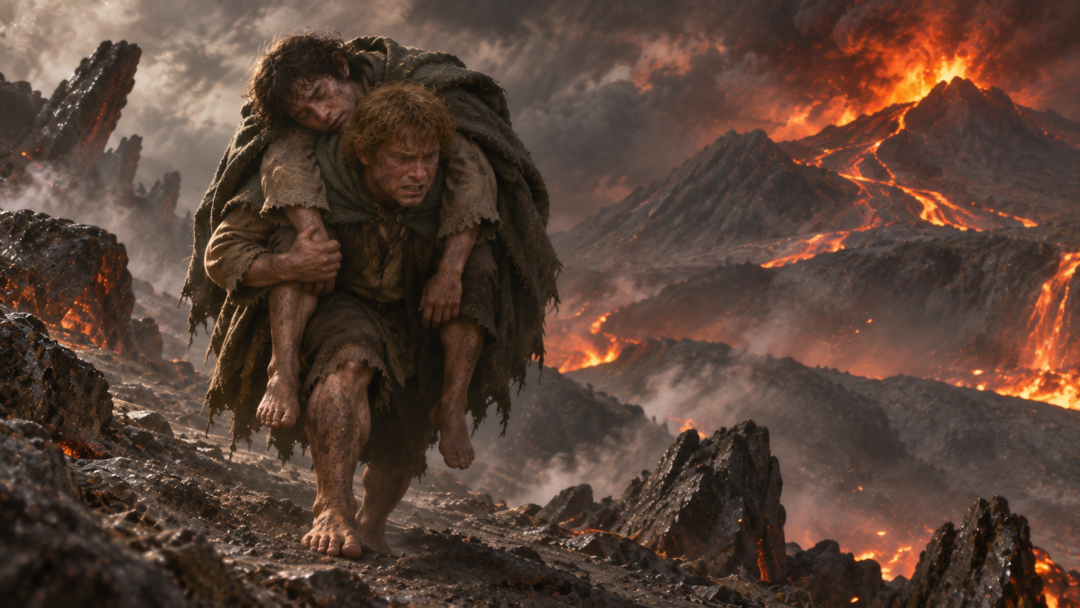
Frodo and Sam’s achievement is not that they abandon each other briefly and reunite. They stay bound together when strength, food, certainty, and hope have nearly vanished. At the end, Sam cannot carry Frodo’s burden for him, but he can physically carry Frodo. Love cannot always solve another person’s suffering; it can help them endure what would otherwise destroy them.
The stairs episode adds an unnecessary qualification. Frodo becomes implausibly gullible, Sam implausibly obedient, and Gollum implausibly effective. Their personalities serve a twist rather than producing drama through established choices.
Jackson made one of cinema’s great fantasy trilogies, but not every added conflict improves Tolkien. If I could remove one scene, it would be Frodo telling Sam to go home—not because friendship should be effortless, but because this one had already endured enough believable suffering without an invented betrayal.
Sources & Notes
This article is based on close reading and interpretation of Tolkien's published works and related source material where relevant.