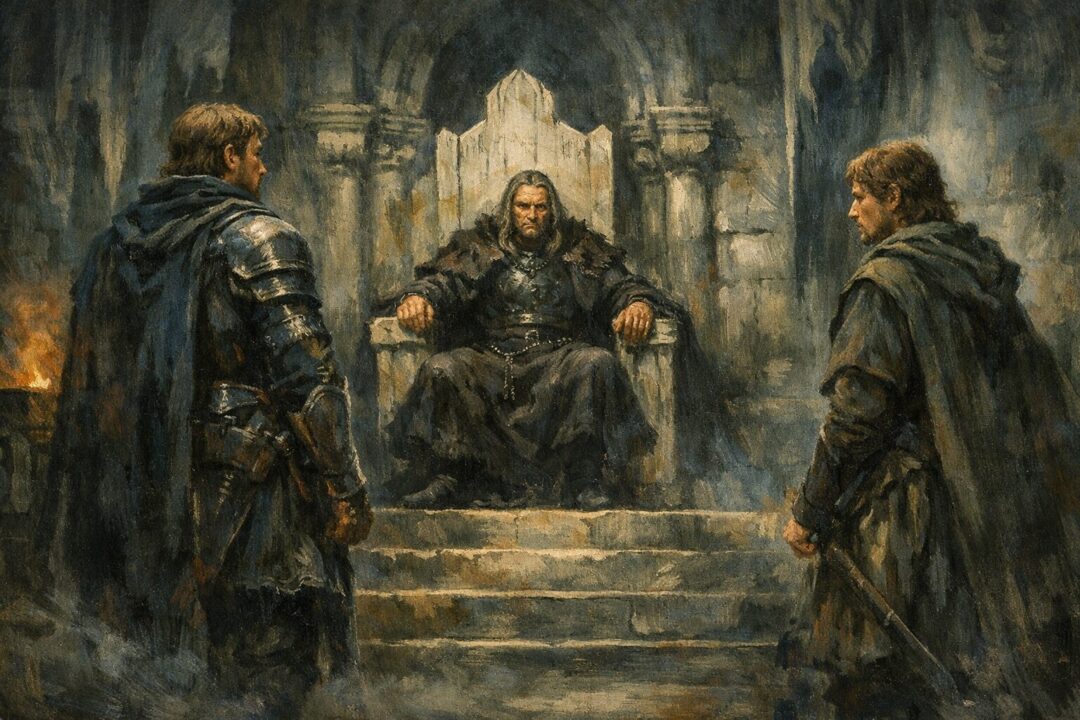
Most people hear that Boromir was somehow “less Númenórean” than Denethor or Faramir and assume the answer is simple.
It is not.
In fact, if the phrase is taken the wrong way, it can distort Boromir completely.
Because Boromir is not presented as a lesser man in any ordinary sense. He is not cowardly. He is not small-hearted. He is not base. He is one of the bravest men in the story, a captain greatly loved, a warrior who holds the line of Gondor under constant pressure, and in the end dies defending Merry and Pippin.
So what exactly is missing in him that Gandalf can speak of Denethor and Faramir as having the blood of Westernesse running nearly true in them, “and yet did not in Boromir whom he loved best”?
The answer lies not in rank, and probably not in blood as mere genealogy.
It lies in type.
Boromir is of Númenórean descent. But he is not shaped, in mind and inner quality, after the older Númenórean pattern that still survives in Denethor and Faramir.
That distinction is subtle, but once seen, it changes the entire family.
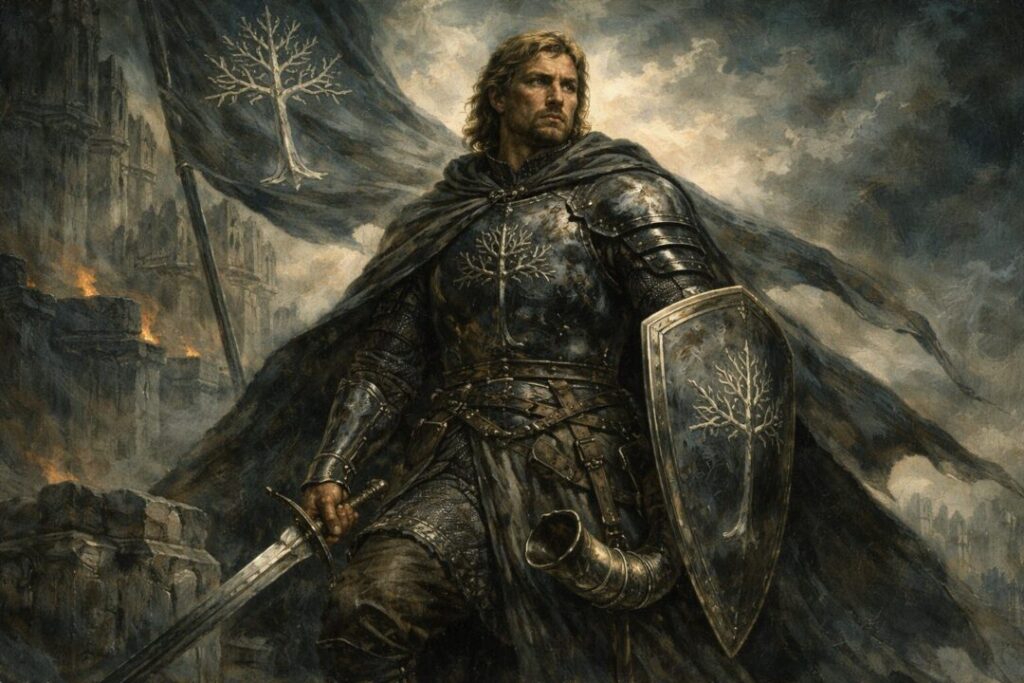
This Is Not About Boromir Being Less Noble
The first mistake to avoid is treating Gandalf’s remark as if it means Boromir is somehow coarse, impure, or morally inferior.
The text does not support that.
Boromir is proud, yes. He is forceful, yes. He becomes tempted by the Ring, yes. But none of that makes him ignoble. On the contrary, the story goes out of its way to preserve his honor. Aragorn remembers him with tenderness. His defense of the hobbits is one of the clearest redemptive moments in the book. Even Faramir, who differs from him sharply in temperament, speaks of him with love and admiration.
So the issue is not whether Boromir is a great man.
He is.
The issue is what kind of great man he is.
Gandalf’s Remark Is More Specific Than It Looks
When Pippin asks about Denethor, Gandalf says that Denethor is not as other men of his time, and that “by some chance the blood of Westernesse runs nearly true in him; as it does in his other son, Faramir, and yet did not in Boromir whom he loved best.”
This is one of the most important lines in the whole discussion.
It tells us three things at once.
First, Denethor possesses traits associated with the old Númenórean height.
Second, Faramir shares those traits.
Third, Boromir does not share them in the same way, despite being Denethor’s son and the one most favored by him.
That already tells us that the phrase cannot simply mean literal descent. Boromir and Faramir have the same father and mother. The text is pointing to inherited character and capacity, not a different bloodline.
And Gandalf immediately explains some of what he means in Denethor’s case: long sight, strength of will, and unusual insight into the minds of men.
That is crucial.
The “Númenórean” quality in question is not just nobility of birth. It is a survival of an older stature of mind.
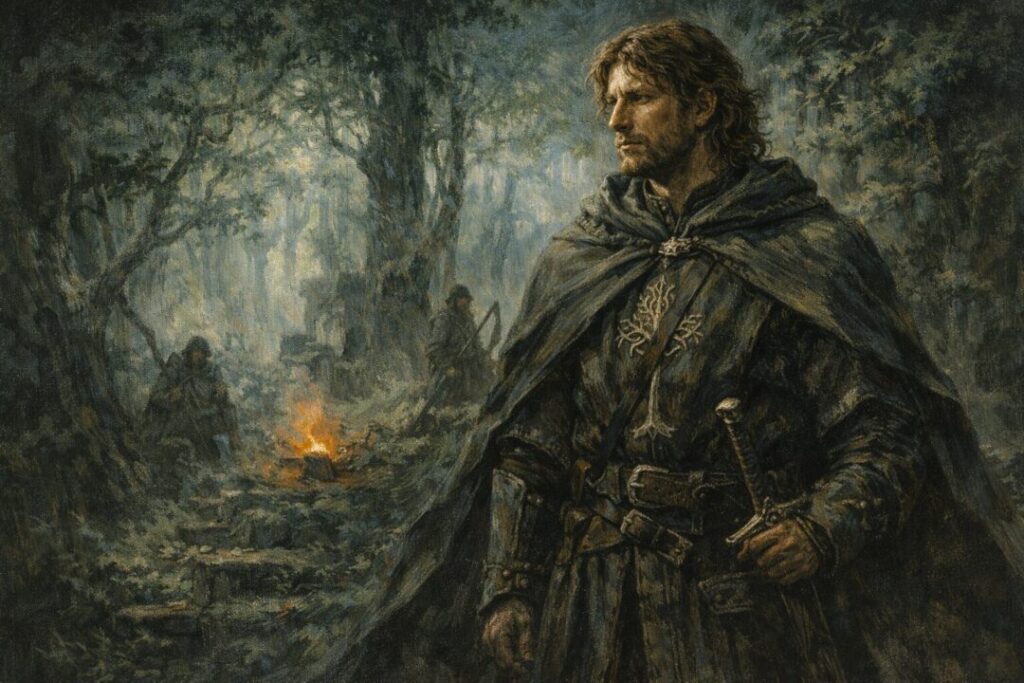
What the Old Númenórean Type Looks Like
Across the history of Gondor, the highest Númenórean pattern is never merely military.
The Men of Westernesse are often marked by height of mind as much as bodily strength. They are associated with memory, lore, farsightedness, dignity, self-command, and the ability to perceive beyond the immediate moment. Even when they become proud or flawed, they tend to be dangerous because they are formidable inwardly, not only outwardly.
Denethor clearly fits that pattern, though in a darkened form.
He is stern, discerning, difficult to deceive, intellectually powerful, and capable of using the palantír for a long time without immediate collapse. His tragedy is not that he is small. It is that he is great and breaks under a strain too vast.
Faramir also fits that older pattern, but with a different moral shape.
He is perceptive rather than suspicious.
He is wise rather than contemptuous.
He values memory, beauty, and inherited civilization, not merely victory.
He understands war as necessity, not glory.
That is why one of his most revealing lines is not martial at all. He says he does not love the sword for its sharpness, nor the arrow for its swiftness, nor the warrior for his glory, but only that which they defend.
That is a very Númenórean sentence in the deepest sense.
It joins power to preservation.
Strength to civilization.
War to something older and worth saving.
Boromir Is Described Very Differently
If we want the clearest answer to Boromir’s “un-Númenórean” quality, Appendix A gives it.
There Boromir is described as “like” Denethor in face and pride, “but in little else.” Then comes the decisive comparison: he was “a man after the sort of King Eärnur of old,” taking no wife and delighting chiefly in arms, fearless and strong, but caring little for lore, save the tales of old battles.
That is not an insult.
But it is a contrast.
Boromir is not cast in the mold of the old far-seeing Númenórean lords. He is cast in the mold of a later war-king of Gondor: bold, battle-driven, formidable, and oriented toward deeds of arms.
In other words, Boromir does not lack greatness.
He lacks that particular blend of wisdom, inward depth, long memory, and severe self-mastery that marks Denethor and Faramir.
He is the kind of man a besieged Gondor would naturally exalt.
But the text hints that he is not the fullest survival of Westernesse.
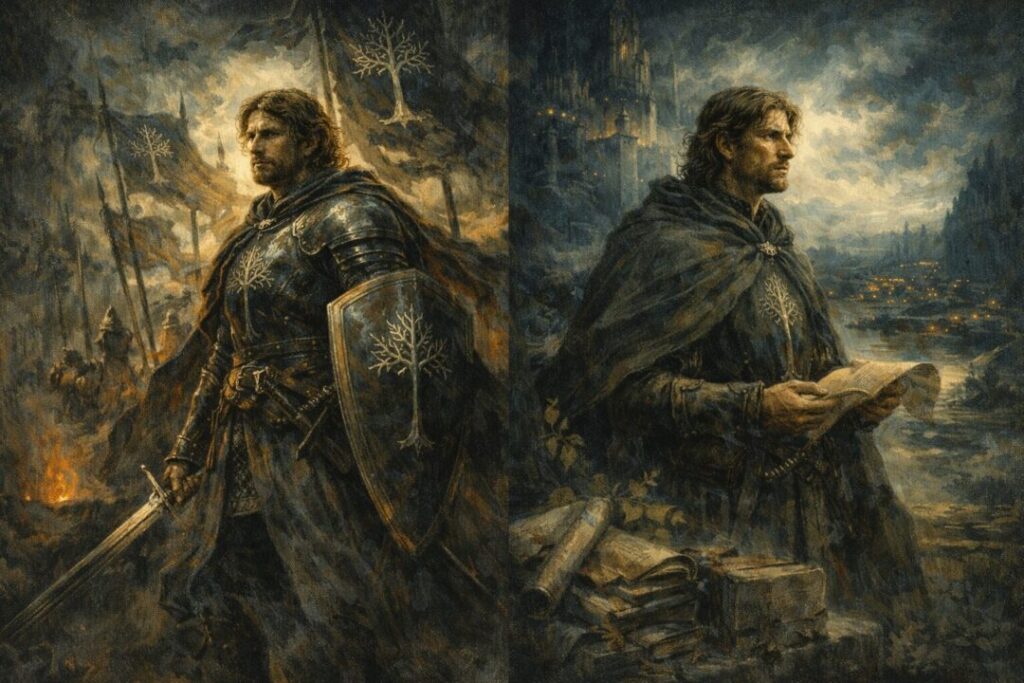
Why Denethor Loved Boromir Best
This is where the family becomes especially painful.
Denethor loved Boromir best. The text says so plainly. He favored him openly. Even at the end, grieving and distorted by despair, he says Boromir was loyal to him and no wizard’s pupil, and that Boromir would have brought him a mighty gift.
That tells us much about Denethor.
He recognized in Faramir the qualities most like his own: perception, intelligence, inwardness, and a mind not easily governed by simple martial pride. But perhaps for that very reason, Faramir was harder for him to love easily.
Faramir reflected him too closely.
Boromir did not.
Boromir was more direct. More open in his affections. More plainly the warrior-son of a city at war. He represented visible strength, public courage, and immediate defense. He was easier to admire without self-recognition.
And there is a bitter irony in that.
The son Denethor loved most was less like the old Númenórean pattern he himself embodied.
The son he understood least was the one in whom that pattern survived more truly.
Boromir’s Temptation Fits This Difference
Boromir’s fall before the Ring also makes more sense when seen through this lens.
He is not tempted because he is especially corrupt.
He is tempted because he is practical, war-minded, and focused on immediate defense. He sees Gondor under mortal threat. He thinks in terms of weapons, strength, and necessary action. So when he imagines the Ring, he imagines using it against the Enemy.
That is not Sauronic domination in its pure form.
It is a Gondorian captain’s disastrous mistake: trying to answer absolute evil with superior force.
Faramir resists from a different place. He is not simply stronger in will in some generic sense. He has a deeper instinctive rejection of that entire logic. He does not want victory at any price. He does not want the kind of triumph that uses the enemy’s own weapon, even for a good end.
That difference is not accidental.
It reflects the whole contrast between them.
Boromir is nearer to the battlefield.
Faramir is nearer to memory, judgment, and restraint.
“Un-Númenórean” Does Not Mean “Less Gondorian”
There is another important nuance here.
Boromir may be less like the high Númenórean type, but he is in some ways more representative of late Gondor itself.
By the end of the Third Age, Gondor has been under unrelenting pressure for generations. Its culture has narrowed under siege. Survival requires captains, walls, vigilance, and martial endurance. In such a world, a man like Boromir becomes not an exception, but almost an ideal.
He is exactly the kind of son a wounded realm would raise.
So his difference from Denethor and Faramir is also historical.
He feels like a man shaped by the diminished age itself.
They feel, more strongly, like remnants of something older.
That may be one reason Boromir is so moving. He is noble within a reduced world. He is great, but his greatness is compressed into war.
Faramir still carries something wider.
The Tragedy Is That Boromir Was Still Good
This matters because Boromir’s story is far sadder if we refuse to flatten him.
He is not the “bad brother.”
He is not the merely worldly one.
He is not a failed Númenórean standing beside better men.
He is a genuinely noble man whose strengths belong to a narrower order.
He is fearless, loyal, beloved, and magnificent in defense.
But he is not long-sighted.
He is not deeply learned.
He is not inwardly detached from power in the way Faramir is.
And he does not embody the old Westernesse in its fullest surviving form.
That is why the text can honor him and limit him at the same time.
His heroism is real.
His nobility is real.
His failure is real too.
And all three belong together.
So What Made Boromir “Un-Númenórean”?
In the end, the answer is not that Boromir lacked Númenórean ancestry.
He did not.
The answer is that the specifically high Númenórean qualities the text values in Denethor and Faramir did not run in him “nearly true.”
He resembles Denethor in face and pride, but not in deeper cast of mind.
He resembles the warlike kings and captains of later Gondor more than the grave, far-seeing men of Westernesse at their height.
He delights chiefly in arms.
He cares little for lore except battle-lore.
He is noble, but not ancient in spirit.
Faramir and Denethor, however differently those traits end in each of them, both preserve more of that older inheritance: perception, memory, severity of mind, and a certain inner altitude.
That is why Boromir can be loved best by Denethor, honored by the story, and still be the one in whom Westernesse runs least truly.
And that is what makes him tragic.
Because Boromir is not the lesser son.
He is the son of Gondor as it had become.
Faramir is the son of Gondor as it remembered itself.
Sources & Notes
- J.R.R. Tolkien, The Lord of the Rings, Book V, Chapter 1, “Minas Tirith” — Gandalf says the blood of Westernesse ran nearly true in Denethor and Faramir, but not in Boromir whom Denethor loved best.
- J.R.R. Tolkien, The Lord of the Rings, Appendix A, “Gondor and the Heirs of Anárion,” The Stewards — Boromir is compared to King Eärnur: fearless, strong, delighting chiefly in arms, and caring little for lore except tales of old battles.
- J.R.R. Tolkien, The Lord of the Rings, Book IV, Chapter 5, “The Window on the West” — Faramir’s rejection of loving the sword for itself shows the preservation-minded wisdom contrasted with Boromir’s martial outlook.
- J.R.R. Tolkien, The Lord of the Rings, Book III, Chapter 1, “The Departure of Boromir” — Aragorn, Merry, and Pippin preserve Boromir’s honor by remembering his repentance and his last defense of the hobbits.