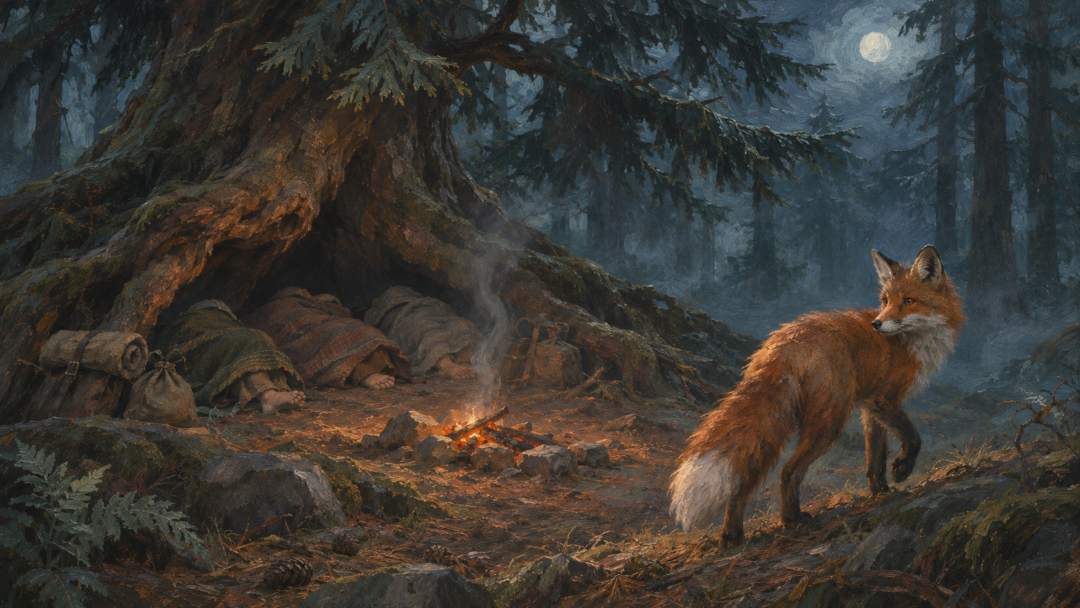
On their first night walking out of Hobbiton, Frodo, Sam, and Pippin fall asleep beneath a great fir tree. Their fire goes out, the woods become quiet, and a passing fox stops to investigate three unexpectedly exposed hobbits. It is a tiny interruption in a journey that will eventually shake Middle-earth. Yet the fox has a thought about what he sees, and the narrator promptly answers it.
That is the joke: for a moment, the story leaves the hobbits and follows an animal attending to his own affairs. The fox concludes that something very strange must explain the sleepers. The narrator confirms he is right, then reveals that the fox will never learn what it is. The punchline belongs to the storyteller, who knows the secret but leaves his curious visitor in the dark.
A fire in the heart of the Shire
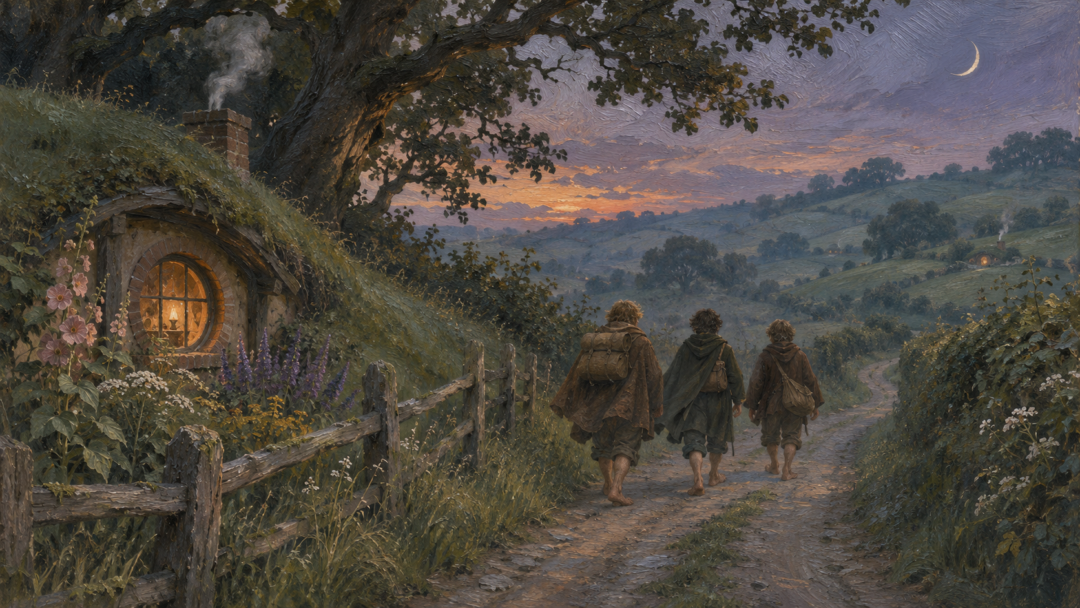
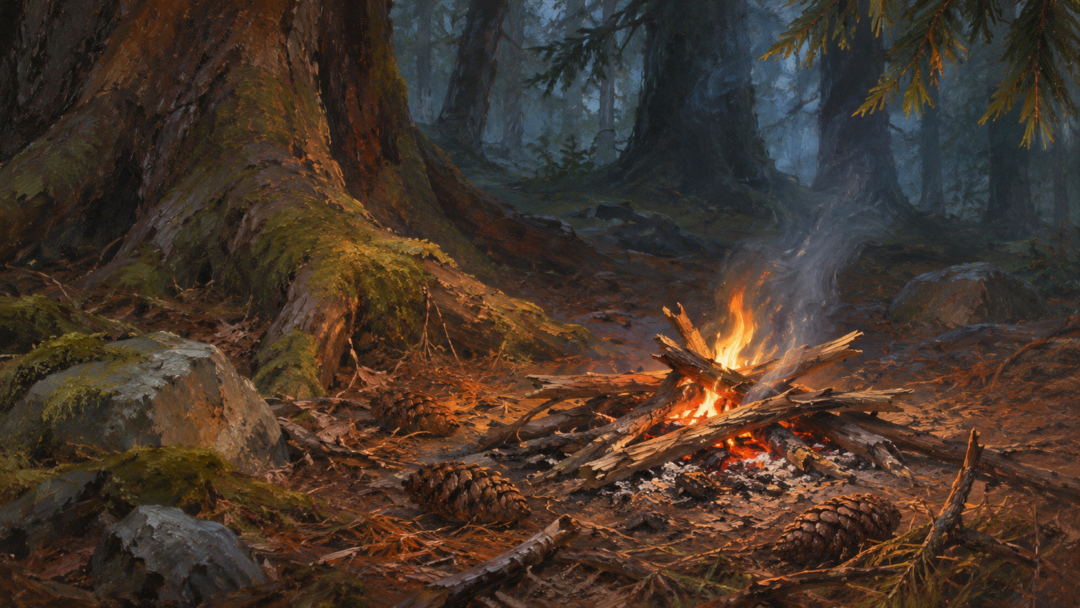
The scene appears in “Three Is Company,” the third chapter of The Fellowship of the Ring. The hobbits have left Hobbiton on foot and are still travelling through familiar Shire country. When Pippin grows sleepy, Sam recalls a sheltered patch of fir wood beyond a hill. They leave the road, gather dead sticks and cones, and make a small fire among the resin-scented trees. Nothing about the campsite suggests a stage set for a revelation.
They sit by the flames until sleep overtakes them, then curl up in their blankets against the roots of a large tree. Crucially, they set no watch. Frodo does not yet believe they are in immediate danger, because they remain well inside the Shire. That judgment belongs to this particular night, not to the whole expedition. The Ring has already made leaving home necessary, but familiar ground still feels capable of sheltering its inhabitants.
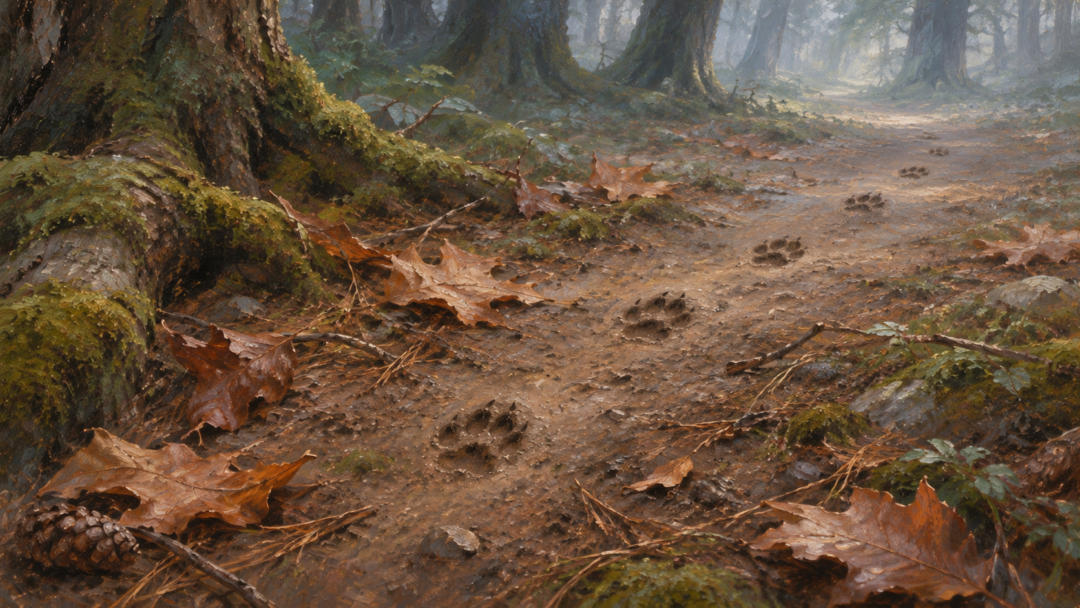
Once the fire has died, a few woodland creatures come to look at the sleepers. One is a fox, introduced as passing through on “business of his own.” That wonderfully ordinary phrase gives him a life quite separate from Frodo’s errand, without telling us what his business might be. He stops, sniffs, looks, and makes an assessment before the narrative moves on.
Why three sleeping hobbits look ridiculous to a fox
The fox does not find a campfire or a tree surprising. He finds the campers surprising. Hobbits have houses, beds, meals, gardens, and a strong attachment to settled habits. From his perspective, discovering one asleep outdoors would be unusual; finding three together makes the sight more extraordinary. His incredulous “Three of them!” turns a modest woodland camp into the sort of neighborhood incident that demands an explanation.
This is a neat reversal of the usual adventure viewpoint. Readers know the hobbits as small people about to face a much larger world, and often see wild country through their anxieties. Here a wild creature watches the hobbits instead. Their behavior, not the forest, is the oddity. He treats it as a puzzling breach of the local order and thinks it through with surprising seriousness.
That seriousness makes the moment funnier. He has noticed a real pattern and drawn a reasonable conclusion from inadequate information. His language resembles the everyday astonishment of someone who has heard rumors of strange happenings and has just found fresh evidence. When he calls the situation queer, the word means odd or peculiar in its ordinary sense here. There is no hidden modern innuendo to decode; the humor lies in his sensible alarm at a sight the reader can explain.
The narrator delivers the actual punchline
For a few sentences, the narration performs an unexpected trick. All three hobbits are asleep, so none can observe the visitor or report his thoughts. Nevertheless, the reader is allowed to know exactly what the fox thinks. The story briefly shifts away from the travellers’ experience into the mind of a creature who has no established place in their adventure. That freedom belongs to the storyteller.
Then comes the decisive line: “He was quite right, but he never found out any more about it.” Its two halves do different jobs. The first vindicates the fox’s suspicion: there really is something important behind this peculiar sight. The second closes the door on any explanation for him. It is an affectionate anticlimax. The fox has solved the first part of a mystery, only to be denied the rest of the story.
The reader occupies a privileged middle position. We know why Frodo is leaving and understand that the Ring makes this journey more than a walking holiday. The fox knows only what his nose and eyes tell him. The narrator can see both sides and chooses to share the fox’s ignorance as well as his insight. That difference in knowledge produces a small dramatic irony: the most perceptive creature at the campsite is also the one least likely to discover what matters.
A little comedy before the road grows dangerous
The placement of the episode gives its joke an extra tenderness. Frodo has serious reasons for moving quietly, but he has not yet experienced the full danger pursuing him. The absence of a watch and the ease with which the hobbits fall asleep preserve the feel of an ordinary excursion. A fox’s mild astonishment belongs to a landscape where the worst apparent scandal is that respectable hobbits are spending a night under a tree.
The following morning keeps that domestic register alive. Frodo wakes with an aching back and a stiff neck from sleeping against the roots; Pippin’s concerns soon turn toward breakfast and hot water. Their bodies are already discovering that travel differs from comfortable life at home. The fox’s puzzlement fits neatly beside these discomforts: all four characters, for different reasons, are confronting the practical absurdity of hobbits sleeping rough.
Yet the same chapter soon brings a very different interruption. A mysterious Black Rider appears on the road, and Frodo’s instinct is to hide. His earlier confidence in the Shire’s safety begins to look fragile. The fox is not a coded warning of that particular encounter; its scene simply precedes a change in the hobbits’ understanding of their surroundings. For one night the woods can be curious rather than threatening. Soon, being noticed will become a frightening possibility.
An echo of The Hobbit, not a different set of rules
The fox also belongs to the welcoming, conversational manner of the early Shire chapters. The narrator can linger over meals, directions, sore feet, and eccentric habits without losing sight of the larger journey. A woodland animal with an opinion feels at home in that register. The story allows readers to smile at a minor character who has wandered in from the margins of the scene and has no idea how large the central adventure really is.
That lightness recalls The Hobbit, whose storyteller often addresses the wonderful and the ordinary with playful familiarity. There are animal characters with important roles in that earlier book, including the thrush whose message helps Bard. The fox is different. He neither speaks to the travellers nor supplies useful information. His thoughts are available only to the reader, and his appearance changes nothing in the plot. The resemblance is in narrative warmth, not in identical kinds of animal magic.
As The Lord of the Rings advances beyond the Shire, its narrative weight increasingly falls on pursuit, loss, endurance, and choices with enormous consequences. Humor does not vanish, and remarkable nonhuman beings continue to matter; the book never becomes uniformly solemn. But this particular kind of passing aside, in which an ordinary woodland creature briefly gets the storyteller’s attention and then disappears, becomes less characteristic of the journey. There is no need to identify a single page where the voice suddenly changes.
What the fox is not hiding
Because the passage is so memorable, it can invite explanations larger than the text warrants. Nothing identifies the fox as a spy, a disguised Maia, a shapeshifter, or an agent sent to check on Frodo. The description gives him his own affairs, while the final sentence says he never learns the reason for the hobbits’ strange behavior. His curiosity is genuine, not an assignment.
Nor does he return with an answer later in the narrative. His anonymity is part of the effect: he is simply a fox going through a wood, not a named character whose importance readers have overlooked. The story’s attention rests on him for just long enough to let his private impression become funny. Giving him an elaborate later destiny would change the shape of the joke from a quick interruption into an unresolved plot thread, which the passage does not provide.
There is a subtler question about who could possibly know what he thought. The Lord of the Rings presents itself within a tradition of remembered and recorded adventures, yet no sleeping hobbit could have witnessed this animal’s silent reasoning. That can be enjoyed as a playful liberty taken by the narrator rather than a factual problem needing a hidden witness. The text offers no separate explanation of how the fox’s thoughts were obtained, and one is not required to understand the scene.
The little visitor remains where the narrative left him, among the fir trees, with a perfectly sound suspicion and no chance to test it. Frodo and his friends carry the explanation down the road without ever knowing they were observed. The joke is not that the fox knows a secret. It is that the narrator borrows his eyes, grants him a moment of insight, and then gently shuts the story on him.
Sources & Notes
- Tolkien Gateway, Three is Company — the first night's camp, fox interlude, and early Hobbit-like narrative tone — https://tolkiengateway.net/wiki/Three_is_Company
- The Encyclopedia of Arda, Foxes — the curious fox that finds Frodo, Sam, and Pippin sleeping outdoors — https://www.encyclopedia-of-arda.com/f/foxes.html
- Tolkien Gateway, Foxes — the animal's brief appearance in the Shire — https://tolkiengateway.net/wiki/Foxes
Reading reference: The Fellowship of the Ring, Book I, Three Is Company. The account's humor and narratorial viewpoint are close-reading interpretations. Nothing in the passage identifies the fox as a disguised supernatural character or spy.