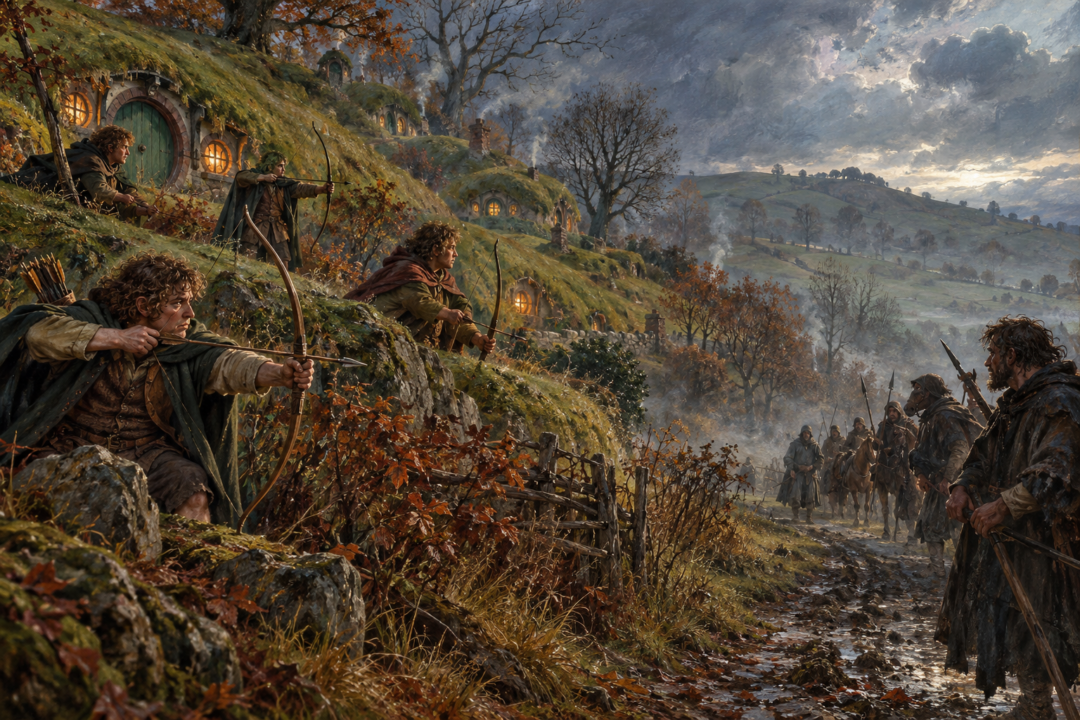
When Frodo, Sam, Merry, and Pippin finally returned to the Shire, they discovered something almost unthinkable: their quiet homeland had been occupied.
Trees had been cut down. Inns had been closed. Food and goods were being seized. Armed Men enforced an ever-growing collection of rules. Lotho Sackville-Baggins had styled himself “Chief,” and behind the whole miserable system stood Saruman, now calling himself Sharkey.
Yet one corner of the Shire had never truly submitted.
Tookland had resisted.
The reason was not that the Tooks possessed some secret army or magical protection. What they had was older and, in the peculiar society of the Shire, almost forgotten: a large and cohesive family, defensible territory, a recognized leader, a surviving tradition of authority in emergencies, and the willingness to use force before submission became normal.
That combination made the Tooks uniquely difficult to conquer.
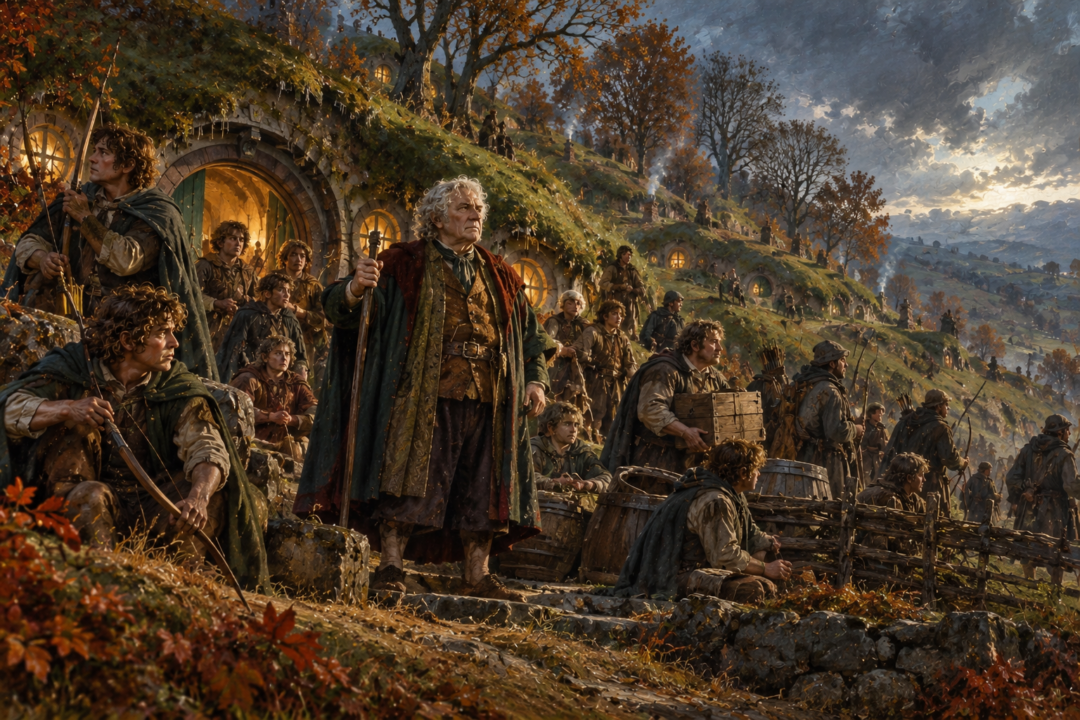
The Shire Had Almost Forgotten How to Defend Itself
The great weakness of the Shire was also one of its loveliest qualities.
It barely needed government.
The Prologue to The Lord of the Rings explains that families generally managed their own affairs. The Shire's ancient laws were respected largely because hobbits believed them to be old and just. Its officials were few, and its police—the Shirriffs—had little serious crime to confront.
Even the office of Thain had become largely ceremonial.
The Thain was traditionally master of the Shire-moot and captain of the Shire-muster and the Hobbitry-in-arms. But emergencies requiring such institutions had become so rare that these responsibilities seemed almost obsolete.
Then the emergency finally came.
The Shire's habits of trust became vulnerabilities. Hobbits were accustomed to rules that people obeyed voluntarily, not regulations imposed by armed outsiders. They had no standing military establishment prepared to confront organized intimidation.
Saruman's regime exploited precisely this weakness. The occupation did not begin as a conventional invasion in which an enemy army stormed Hobbiton. Authority was gradually seized, property and supplies were controlled, restrictive rules multiplied, and Men provided the threat of violence behind them.
By the time many hobbits understood how far matters had gone, resistance had become dangerous.
The Tooks were different.
The Tooks Still Had a Thain Who Was Prepared to Act Like One
During the occupation, the Thain was Paladin Took II, Pippin's father.
Under normal conditions, his title carried far more prestige than practical power. But the old purpose of the office had never entirely disappeared. The Thain remained, at least traditionally, the figure associated with mustering the hobbits in an emergency.
And Paladin refused to recognize Lotho's new authority.
This mattered enormously.
Across much of the Shire, the occupiers could present themselves as the agents of the “Chief,” backed by new rules, Shirriffs, and armed Men. In Tookland, however, there was already an older center of legitimacy.
Lotho could call himself Chief.
Paladin was the Thain.
That did not make Paladin a king or absolute ruler of the Shire. The text gives the Thain no such everyday power. But in a crisis, his office carried an old connection with collective defense.
The irony is striking: the institution that peaceful generations had reduced almost to a dignity suddenly became relevant again when the peace collapsed.
The Tooks had not created an emergency government.
They already possessed the remnants of one.
They Had the Great Smials
Leadership alone would not have been enough.
The Tooks also possessed an unusually strong physical center: the Great Smials at Tuckborough.
This was no isolated hobbit-hole belonging to a single household. The Great Smials were the ancestral seat of the Took family, an extensive complex excavated into the Green Hills and occupied by many members of the clan.
During the Troubles, this mattered.
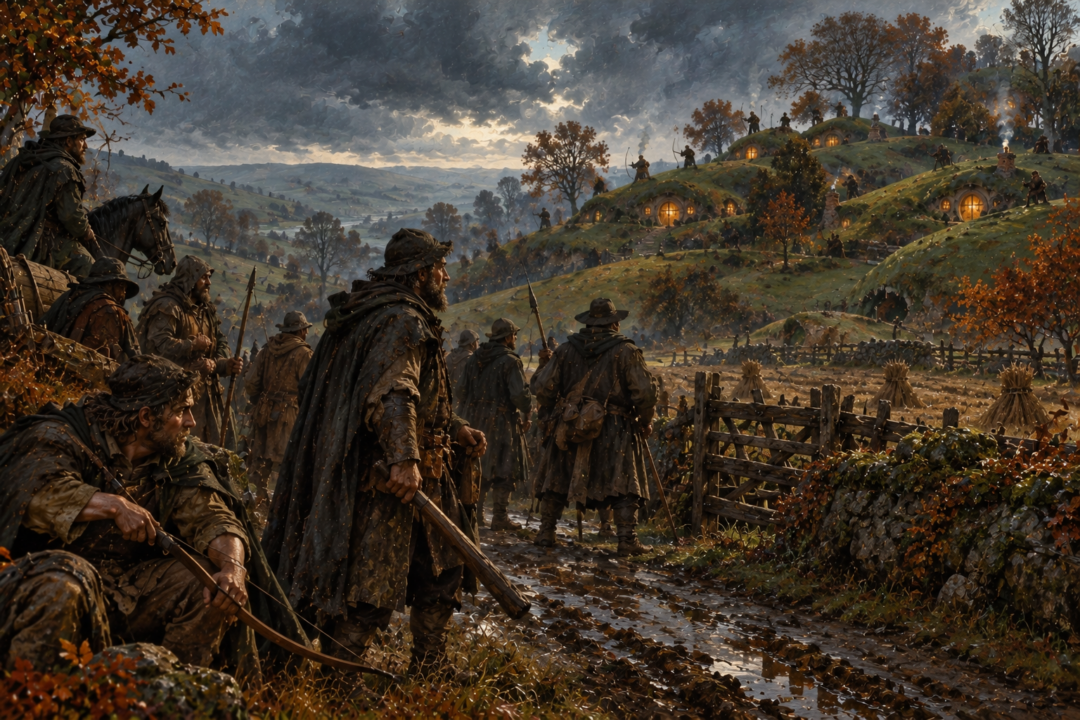
The Tooks withdrew into their deep holes and resisted the ruffians. The Men could not simply sweep through Tookland and impose themselves as they had elsewhere.
The text does not describe the Great Smials as a designed military fortress, and it would be misleading to turn Tuckborough into a miniature Hornburg. But the practical advantage is clear. A numerous family concentrated around extensive underground dwellings in familiar hill-country was much harder to intimidate or dislodge than scattered households.
Tookland therefore had something resembling a defensible heart.
The occupation could surround and watch it.
It could not easily digest it.
They Were Willing to Shoot
This is the sharpest difference.
The Tooks actually fought back.
When ruffians entered Tookland, the resistance became violent. Three of the Men were shot for prowling and robbing. The confrontation cost the Tooks as well: Farmer Cotton later reports that the ruffians killed one or two of them.
That detail destroys any comforting idea that Tookish resistance was merely symbolic.
People died.
Afterward the ruffians maintained watchers around Tookland, effectively attempting to contain the rebellious district. The Tooks had demonstrated that entering their territory carried a real risk.
Elsewhere, the occupation depended heavily on fear. The ruffians were larger than hobbits, armed, organized, and willing to bully or hurt anyone who resisted. Once that imbalance was accepted, even numerous hobbits could be controlled by comparatively few Men.
The Tooks broke the calculation.
They demonstrated that intimidation might be answered with arrows.
That did not immediately liberate the Shire. Indeed, resistance contributed to harsher behavior by the ruffians. But it prevented Tookland from becoming merely another compliant district.
There is a moral cost here that should not be ignored. Armed resistance meant bloodshed, including hobbit deaths. The Tooks' advantage was not that fighting was painless. It was that they were prepared to accept danger rather than concede control of their homeland.
The Took Family Was Still a Real Community
There was another advantage that is easy to overlook: the Tooks were unusually numerous and concentrated.
The Prologue notes that nearly all Tooks still lived in Tookland, unlike several other old Shire families whose members had spread more widely.
That concentration mattered politically and militarily.
The occupiers were not dealing merely with individuals who happened to share a surname. They confronted a powerful extended family rooted in one region, centered upon the Great Smials, and headed by the Thain.
In ordinary Shire life, this might look like nothing more than tradition and family pride.
Under occupation, it became resilience.
A scattered population can be isolated household by household. A concentrated kinship network can communicate, shelter its members, recognize common leadership, and respond collectively.
The Tooks possessed social cohesion before they needed military cohesion.
When the crisis arrived, one could become the other.
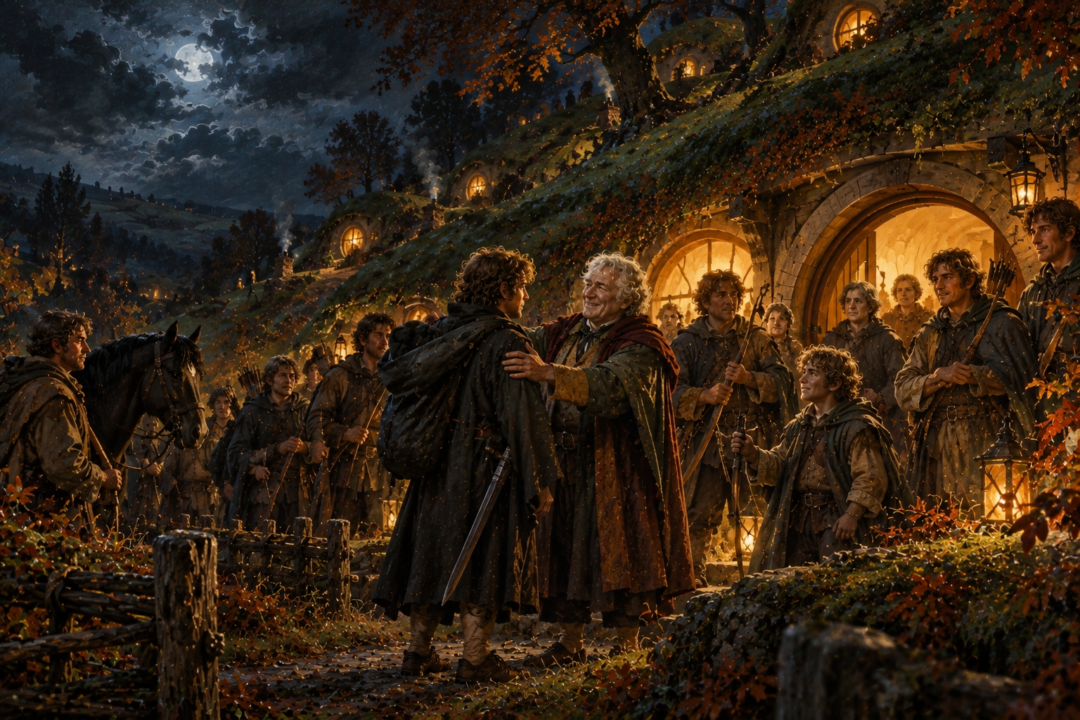
Then Pippin Came Home
The resistance in Tookland had survived without Peregrin Took. But Pippin's return transformed what it could accomplish.
The hobbit who returned to his father was not the young wanderer who had left the Shire.
Pippin had travelled through war. He had seen Isengard, ridden with Gandalf, entered Minas Tirith, become a Guard of the Citadel, endured the siege of Gondor, and marched with the Host of the West toward the Black Gate.
That experience did not create Tookish resistance. Paladin and his people had already been resisting.
What Pippin provided was a connection between that local resistance and the wider uprising being organized by the returning Travellers.
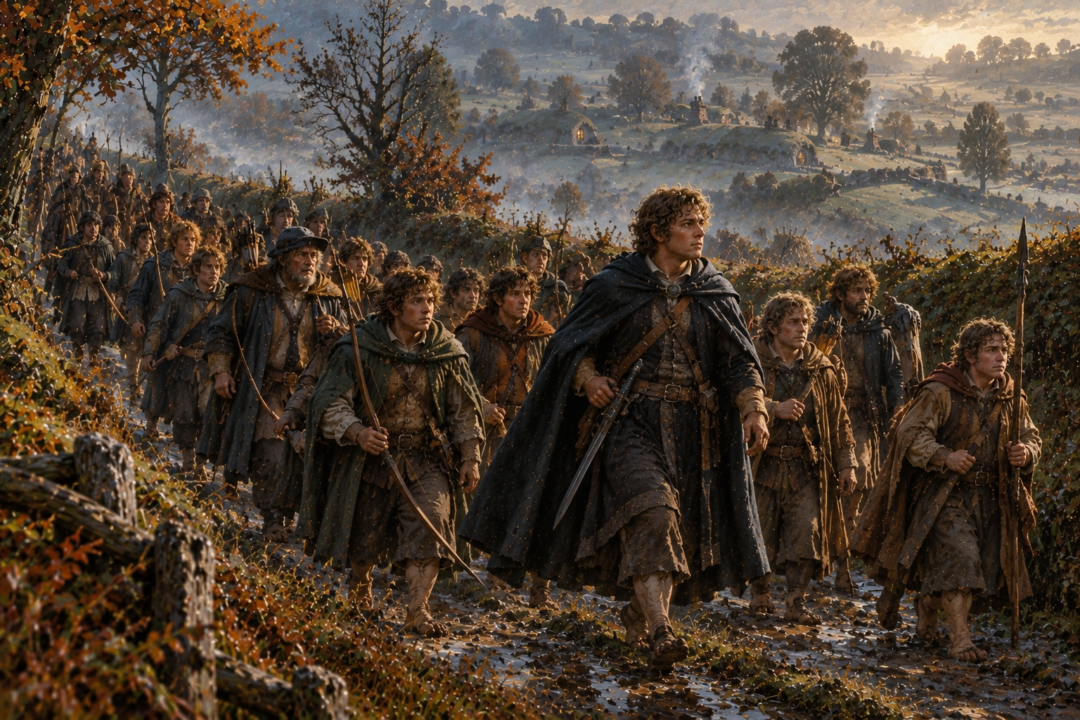
He rode to Tookland and returned with a substantial force. At the Battle of Bywater, one hundred Tooks joined the hobbits assembling against the ruffians.
The old title of the Thain and the newly acquired experience of his heir suddenly met.
The result was something the occupation had not expected: organized hobbit resistance.
The Tooks Alone Were Not Enough
It would be easy to exaggerate their role.
The liberation of the Shire was not a Took-only victory.
Merry played the central role in organizing the defense at Bywater and used the terrain and barricades effectively. Farmer Cotton and his sons rallied local hobbits. Bucklanders answered Merry's horn. Sam helped raise Hobbiton. Frodo repeatedly tried to prevent unnecessary killing even while supporting the overthrow of Sharkey's rule.
The Battle of Bywater was therefore a Shire-wide act of resistance.
But the Tooks supplied something especially valuable at the decisive moment: a body of hobbits who had already refused submission and could be mustered quickly.
Their earlier defiance had preserved a pocket of independence from which armed support could emerge.
The occupation had never completely conquered the Shire because it had never completely conquered Tookland.
What the Tooks Really Had
So what did the Tooks possess that much of the Shire lacked?
Not superior courage in some simple hereditary sense. The Battle of Bywater proves that ordinary hobbits from elsewhere could fight fiercely when properly rallied.
Nor did the Tooks possess a professional army.
What they had was a rare combination of advantages: geographic concentration, deep communal roots, defensible dwellings, wealth and numbers, an acknowledged leader whose ancient office included responsibility for the Shire's defense, and—most importantly—the decision to resist before resistance seemed safe.
The rest of the Shire eventually discovered that it possessed courage too.
But courage becomes far more effective when people can organize around something.
For generations, the Thainship, the Great Smials, and the dense Took clan had looked like relics of an older Shire: prestigious, picturesque, perhaps slightly eccentric.
Under occupation, those relics became infrastructure.
That may be the most revealing irony of the entire Scouring.
The Shire survived for centuries because it rarely needed warriors, fortifications, or emergency leaders. Its peace made such things seem unnecessary.
Then, when armed Men imposed themselves upon the country, the family famous for producing unusually adventurous hobbits turned out to have preserved exactly the structures that a crisis required.
The Tooks did not save the Shire alone.
But before the rest of the Shire rose, they proved something essential.
Sharkey's rules were not inevitable.
They could be refused.
Sources & Notes
- Tolkien Gateway — Tookland: the Tooks' territory and resistance during the Troubles https://tolkiengateway.net/wiki/Tookland
- Tolkien Gateway — Paladin Took II: the Thain's refusal of Lotho's authority https://tolkiengateway.net/wiki/Paladin_Took_II
- Tolkien Gateway — The Scouring of the Shire: Tookish resistance and the wider uprising https://tolkiengateway.net/wiki/The_Scouring_of_the_Shire
- Tolkien Gateway — Thain: the Shire-moot, muster, and traditional emergency responsibilities https://tolkiengateway.net/wiki/Thain
Primary reading: The Lord of the Rings, Prologue, 'Of the Ordering of the Shire'; The Return of the King, 'The Scouring of the Shire'. These are secondary reference guides. The Tooks resisted before the Travellers returned, but the liberation was Shire-wide. Social cohesion as infrastructure is interpretation; the Great Smials should not be mistaken for a formally described military fortress or the Tooks for a professional army.