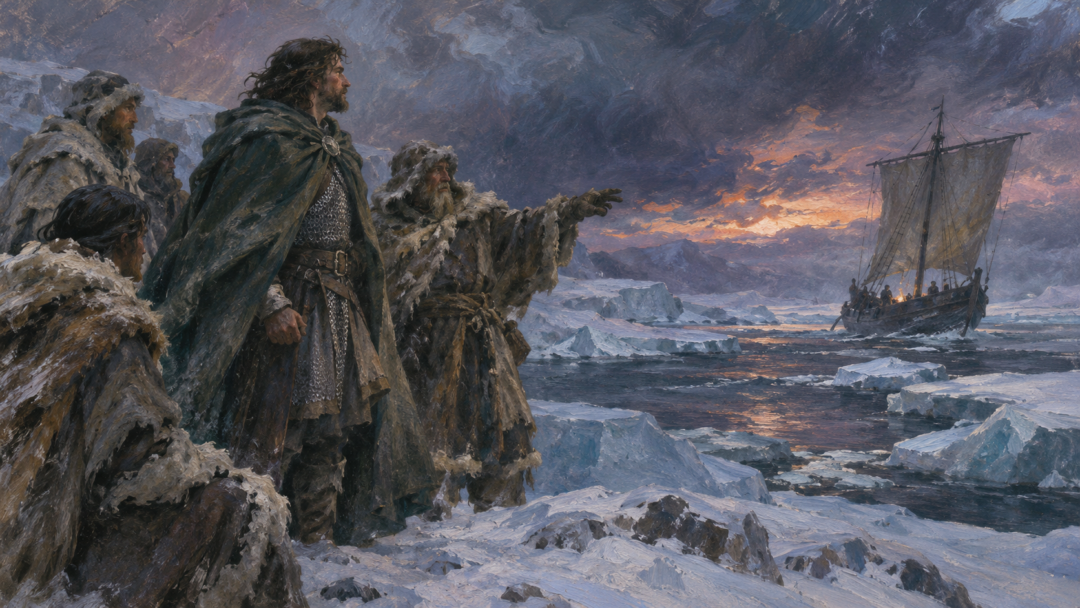
On the frozen shore of Forochel, a ship appeared among the ice. Its sailors came to rescue a king whose capital had fallen, and the Snowmen who had sheltered him urged him not to go. Arvedui boarded anyway. A storm drove it against the ice, and the last King of Arthedain disappeared into the sea.
That disaster sounds like the answer to Malbeth's prophecy about a fatal choice. But the prophecy points more directly to an earlier decision: Gondor's refusal to accept Arvedui as its king. Malbeth foresaw a choice for the Dúnedain between an apparently unlikely future of united rule and a long separation. But surviving the shipwreck would not automatically have restored Arnor.
What Malbeth actually foretold
Long before the ice of Forochel, Malbeth the Seer advised Araphant to name his newborn son Arvedui, meaning Last-king. The name sounded like a verdict, yet the prediction contained an opening. The Dúnedain would face a choice. If they took "the one that seems less hopeful," Arvedui would receive a different name and become king of a great realm. Otherwise, sorrow and many generations would pass before the Dúnedain rose and were united again.
Notice who must choose. Malbeth does not say that Arvedui will decide between trusting the Snowmen and taking a ship. He speaks of the Dúnedain as a people, and identifies neither Forochel nor a voyage. Its placement in Appendix A is revealing: it follows the account of Gondor choosing a successor to King Ondoher and rejecting Arvedui's claim. The narrative even refers to that rejection as the choice of the Dúnedain of Gondor.
The story reaches back to Elendil. After Númenor's destruction he established Arnor in the north, while his sons Isildur and Anárion governed Gondor in the south. Their descendants ruled separately. Arnor also broke into Arthedain, Cardolan, and Rhudaur, whose rivalries exposed them to Angmar. By Arvedui's time, Arthedain alone retained a royal line descending from Isildur; the north was no longer a single state waiting for a coronation.
The crown Gondor chose not to give him
An opening came in Third Age 1944. Ondoher of Gondor and both his sons were killed fighting the Wainriders. Arvedui, then heir to Arthedain, was married to Ondoher's daughter Fíriel. He claimed the southern crown both as a direct descendant of Isildur and as the husband of Ondoher's surviving child. He invoked Númenor's ancient rule that the eldest child could inherit regardless of sex.
Gondor's Council, led in this matter by the Steward Pelendur, rejected him. It maintained that Gondor's crown descended through Anárion's male line and that Isildur had relinquished the southern realm to Anárion's son Meneldil. Instead the council accepted Eärnil, a royal descendant whose victories had saved Gondor. Eärnil took the crown in 1945. Arvedui lacked the strength and will to contest it.
Here the prophecy's less hopeful path becomes understandable. Choosing an absent northern prince over the general who had just delivered Gondor would have been politically difficult, after a devastating war. Yet it might have joined Elendil's heirs and made Arthedain's survival a southern concern. Appendix A itself considers the possibility that uniting the crown and northern sceptre could have preserved kingship and prevented evils. Its careful opening is "It may be that"—an invitation to consider the alternative, not a guarantee.
Nor does the narrative make Eärnil a villain. It calls him wise rather than arrogant. He acknowledged their kinship and promised help when he could give it. The tragedy is sharper for that: Gondor's decision was defensible in its immediate circumstances, while the longer danger to the north remained. It was no choice between good and evil. It was between a familiar, proven commander and a more uncertain possibility of joining the heirs of Elendil.
The warning on the ice was a different choice
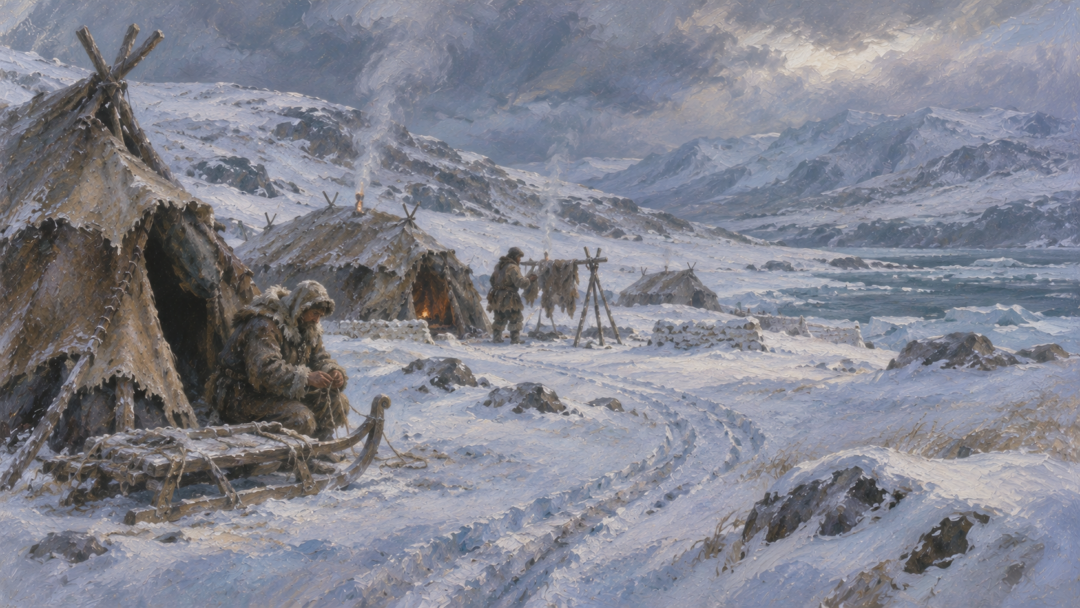
Thirty years after Gondor refused his claim, Angmar delivered its final blow. The Witch-king captured Fornost in 1974, and Arvedui escaped with a few guards. He first hid in old Dwarven mine-tunnels, then sought food among the Lossoth of Forochel. The northerners' jewels meant little to the Snowmen, who feared the Witch-king. Nevertheless they gave the exhausted fugitives food and built snow-huts for them.
Aranarth told Círdan at the Grey Havens of his father's flight. In March 1975, despite contrary winds, Círdan's ship reached the frozen bay. The Lossoth helped transport the survivors across the ice, but their chief sensed danger in the weather. He urged waiting until summer, when the Witch-king's power waned, rather than risking the ice-choked sea.
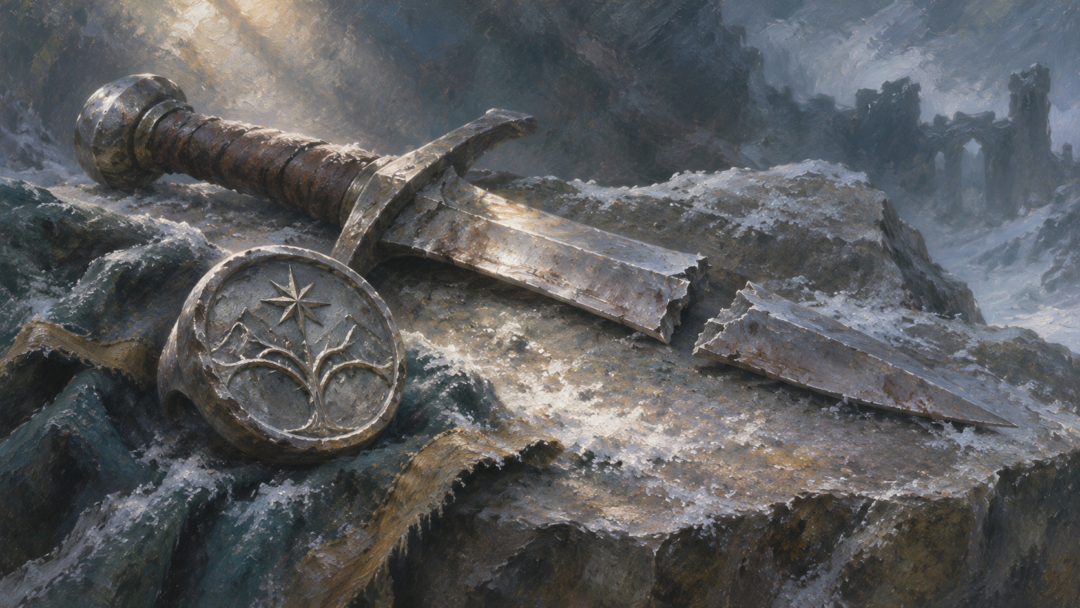
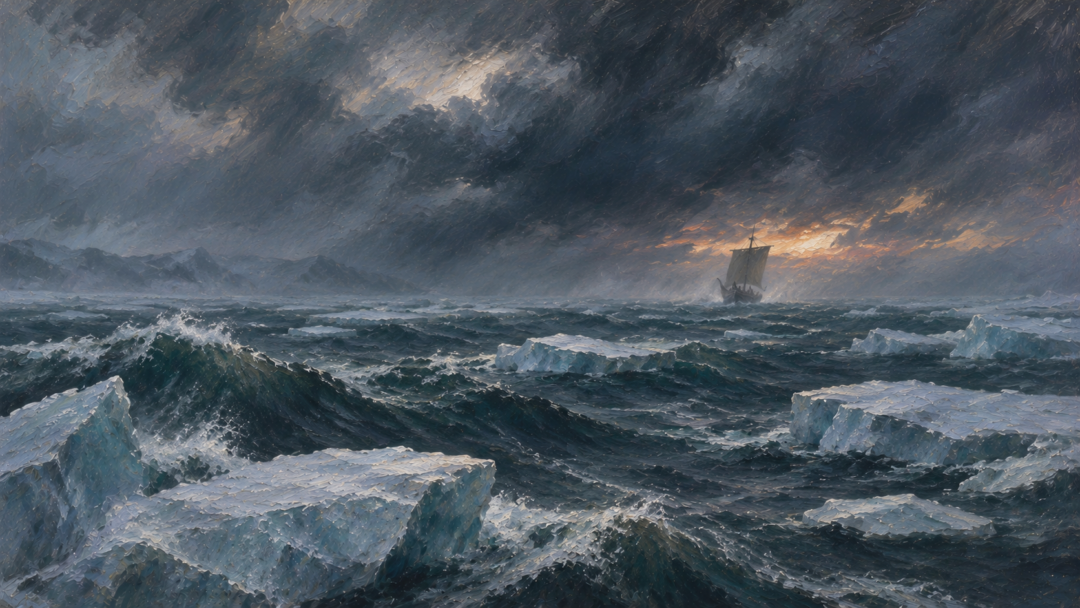
Arvedui thanked the chief but boarded. At parting he gave him the ancient ring of Barahir, promising that his descendants would ransom it if its keeper ever needed their aid. Then the storm struck. Ice crushed the hull, and the king was lost with the two northern seeing-stones he carried, those of Annúminas and Amon Sûl. The account says the chief's counsel was good, "by chance or by foresight." It does not identify this as Malbeth's foretold choice.
The two decisions nevertheless make a striking pair. In Gondor, the authority of an established royal claimant was set aside in favor of the leader whose competence seemed immediately certain. At Forochel, a royal fugitive declined the local knowledge of people who understood the ice better than he did. That parallel is interpretation, not prophecy. It shows how the disaster tests whose judgment deserves attention, without confusing the Lossoth with Malbeth's Dúnedain.
Could a surviving Arvedui have restored Arnor?
Surviving the voyage would have saved a king, not automatically his kingdom. Fornost was occupied, most of the surviving Dúnedain had been driven west across the Lune, and the northern lands had already been weakened by centuries of warfare and plague. Cardolan and Rhudaur had ceased to be viable Dúnedain kingdoms long before this final invasion. Even a living Arvedui would have needed people, secure settlements, allies, and the means of defending them against attack.
There was, however, an extraordinary opportunity. Eärnil had sent his son Eärnur north with a fleet and army to aid Arthedain. The force arrived too late to save Arvedui, but joined the Elves of Lindon and Rivendell and the northern survivors in destroying Angmar's power at the Battle of Fornost in 1975. Had Arvedui lived to witness that victory, he would have remained the legitimate northern king while his enemy's realm was broken. A restoration under his leadership is therefore plausible as a possibility.
Yet the actual victory offers a warning against treating military success as political recovery. Angmar was defeated so completely that its power west of the mountains was ended, but Arthedain did not spring back into existence. The surviving Dúnedain were too few, and Eriador's population had dwindled. Removing the Witch-king's armies could make the land safer; it could not repopulate it or rebuild its royal institutions. Arvedui's presence might have changed what the victors attempted, but the text does not supply the resources or decisions needed to make that attempt succeed.
Reuniting Arnor with Gondor was a still more difficult prospect. By the time of the shipwreck, Gondor had been ruled by Eärnil for three decades, and his son Eärnur was heir. The council's rejection of Arvedui in 1944 had not been revoked. Living through the winter could not retroactively make him the accepted king of both realms. A later agreement or succession crisis might have changed matters, but none is described. His survival would leave the political question open, not answer it.
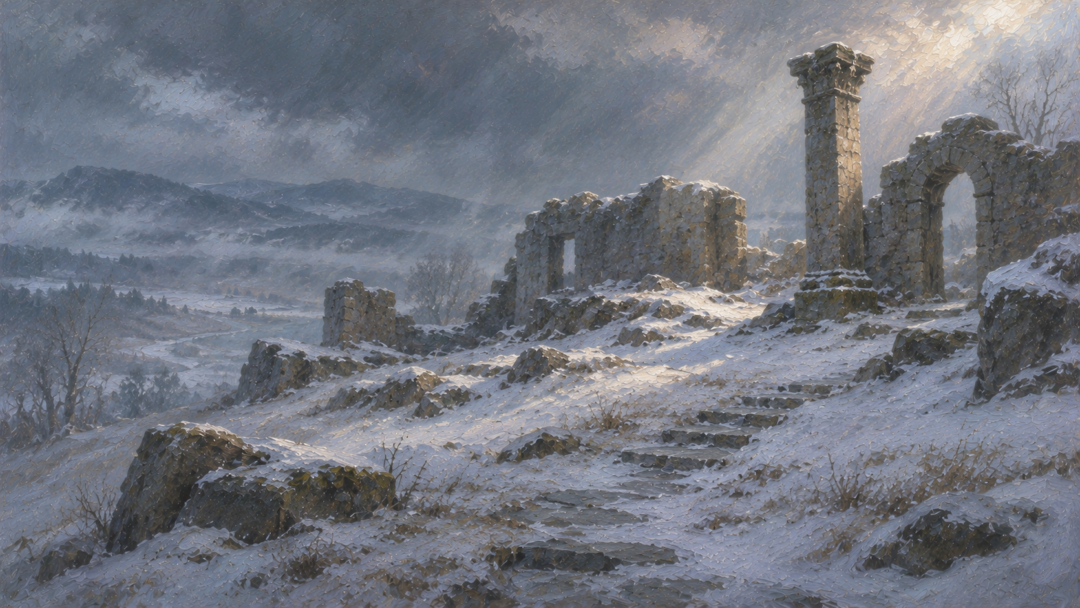
What survived when the northern crown vanished
Arvedui's death did not end the House of Isildur. Aranarth became the first Chieftain of the Dúnedain, and his descendants guarded their people without claiming to govern a restored northern kingdom. Aranarth's son Arahael was raised in Rivendell, as later heirs would be. There Elrond's house preserved the sceptre of Annúminas, the broken sword Narsil, the star of Elendil, and the recovered ring of Barahir. The two palantíri stayed beneath the sea.
This distinction between a bloodline and a functioning kingdom is central to Arvedui's story. The Rangers could continue to protect Eriador and maintain the memory of its kings without rebuilding Fornost or Annúminas. Even the Shire reflected that absence: it chose a Thain after the northern kingship ended, while memories of the returning king gradually became a distant saying. A realm might lose its throne and still leave obligations, customs, and hopes behind.
More than a thousand years later, Aragorn inherited the claim that Arvedui had preserved but failed to secure. After the War of the Ring he became king of Gondor and Arnor, and Annúminas was restored. That fulfills the delayed branch of Malbeth's prediction: generations before the Dúnedain reunited. It was not merely a coronation, though. Aragorn's achievement followed the overthrow of Sauron, Gondor's acceptance of his rule, and a changed world. Those conditions had not existed for Arvedui.
The last image of Arvedui is not a king refusing to save his realm by speaking the wrong words. It is a man leaving a hard-won refuge on a sea he did not understand, while his rescuers wait beyond the ice. He could have survived; he might even have reigned again. Malbeth's prophecy preserves the ache of that possibility, but leaves the unwritten kingdom beyond the horizon.
Sources & Notes
- The Encyclopedia of Arda - Last-king — https://www.encyclopedia-of-arda.com/l/lastking.php
- The Encyclopedia of Arda - Arvedui Last-king — https://www.encyclopedia-of-arda.com/a/arvedui.html
- The Encyclopedia of Arda - Council of Gondor — https://www.encyclopedia-of-arda.com/c/councilofgondor.html
Appendix A, ‘The North-kingdom and the Dúnedain’ and ‘Gondor and the Heirs of Anárion’, supplies Malbeth’s prophecy, Gondor’s succession decision, and the Forochel disaster. Surviving the shipwreck and restoring or reuniting the kingdoms are separate counterfactuals.