On the wooded slopes of Amon Hen, Boromir lunges for Frodo, and Frodo slips on a plain gold ring. One man suddenly cannot see the other. It looks useful, until he climbs to the ancient Seat of Seeing and feels a distant Eye searching for him. The Ring hides him from one enemy but invites a more dangerous attention.
There is no rule that only Frodo, the appointed Ring-bearer, can put it on. Other people already have. The worst outcome is not a thief's death. A powerful claimant might displace Sauron and become a new Dark Lord; a weaker one could be consumed, while even a brief wearer risks discovery and betrayal. The books show the smaller disasters; Gandalf, Galadriel, and Tolkien's letters explain the larger possibility.
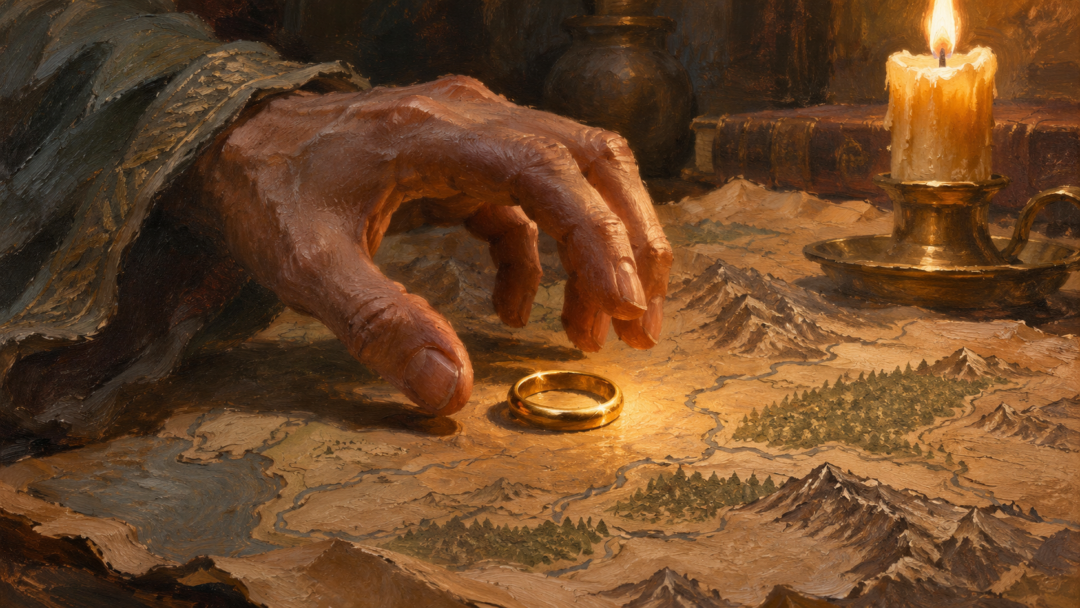
Putting It On Is Not the Same as Commanding It
Sauron did not forge the One Ring as an ordinary magic object. He invested much of his own power in it so that he could dominate the bearers of the other Rings of Power. That makes it a weapon of command, not just concealment. Its power depends on the new owner's capacity to wield it. A hobbit does not become Sauron's equal by slipping gold over a finger, and a warrior does not suddenly acquire a wizard's knowledge.
For mortals such as Bilbo and Frodo, the most obvious effect is invisibility. Yet their bodies are not simply erased. It draws them into the unseen world, where beings connected to it may perceive them more clearly. At Weathertop, Frodo sees the Ringwraiths in a terrible new way when he puts it on. Being hidden from nearby eyes is poor protection against enemies whose power operates beyond ordinary sight.
The experience also changes what a wearer notices. When Sam later uses the Ring near Cirith Ungol, his sight grows dim and strange while his hearing becomes extraordinarily sharp. He can hear Orcs talking and understand them, although the narration leaves open whether the Ring supplies some understanding or merely heightens his comprehension. He feels horribly exposed, even while the Orcs fail to see him. The power does not make him secure.
Long possession is another danger entirely. In 'The Shadow of the Past', Gandalf explains that a mortal who keeps a Great Ring may go on living without gaining genuine life, until existence itself grows exhausting. Repeated invisibility can eventually make such a bearer fade permanently under the dominion of the Dark Power. The Nazgûl were enslaved through their own Nine Rings; wearing the One once does not instantly turn someone into a Ringwraith. Gollum shows a different slow ruin: centuries of survival narrowed around hunger for his precious possession.
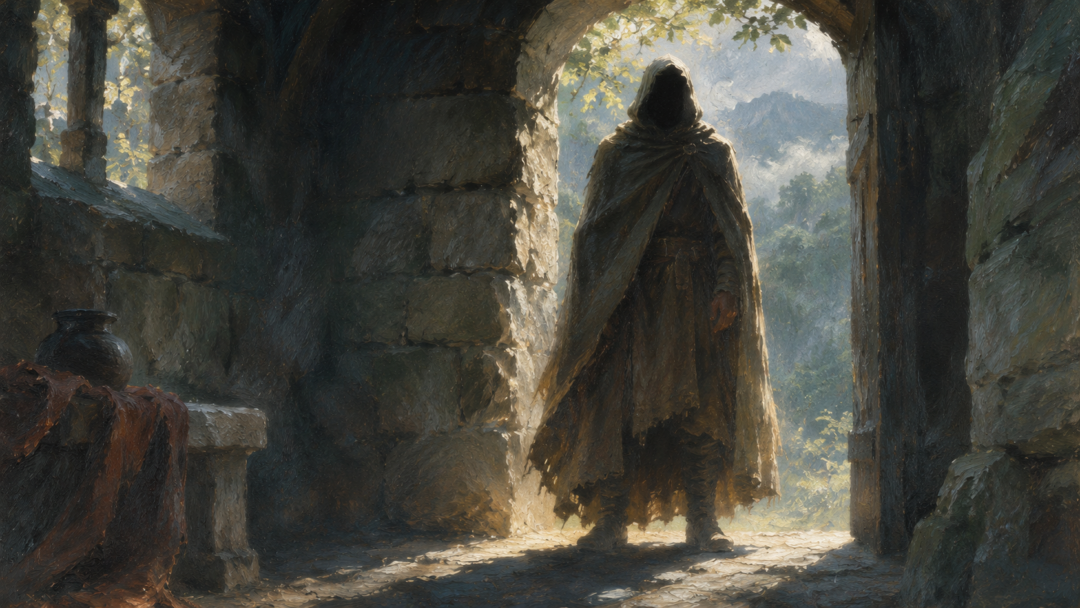
Isildur, Boromir, and Sam: Three Different Warnings
Isildur had the clearest opportunity to end the danger early. After Sauron's defeat, he cut the Ring from his hand and kept it as compensation for his slain father and brother, refusing counsel to cast it into Orodruin. Possession did not make him a second Sauron. When Orcs ambushed his company near the Gladden Fields, he used the Ring to escape unseen. But as he swam in the Anduin, it slipped from his finger, leaving him visible to the archers who killed him.
This is more than bad luck. Gandalf describes the Ring as having betrayed Isildur, and Elrond calls it Isildur's Bane. It could help him hide without being faithful to him. At the Council of Elrond, Elrond even suggests that death may have been preferable to whatever else might have befallen Isildur. The story leaves that longer fate unstated.
Boromir never gets to test its powers. His danger lies in what he becomes willing to do to acquire them. Desperate to defend Gondor, he imagines turning Sauron's weapon against Sauron, and argues that the Free Peoples would be foolish to throw away such a gift. When Frodo refuses, Boromir tries to seize it by force. The moment passes, and he recognizes with horror what he has done. He dies defending Merry and Pippin, not from any curse.
That matters because his reasoning begins with loyalty, not a wish to serve evil. He wants his city saved, and the Ring makes taking power seem like a duty. Boromir never commands armies with it; that future is purely hypothetical. What we do see is immediate damage to trust, judgment, and friendship, strong enough to break the Fellowship apart at the very moment it needs unity.
Sam provides the crucial counterexample. Believing Shelob has killed Frodo, he takes the Ring so the quest can continue. In 'The Choices of Master Samwise', he puts it on as Orcs approach and escapes their notice. He does not become a king, and he has not failed merely by carrying it. Later, in 'The Tower of Cirith Ungol', the Ring offers him a vision of Samwise the Strong leading armies and turning the barren land of Mordor into a flourishing garden.
The fantasy is perfectly fitted to him: even his imagined empire grows flowers and fruit. But Sam recognizes that such greatness would require ruling other people, and he knows he is not equal to its burden. His love for Frodo and satisfaction with a free gardener's small plot help him resist. He returns the Ring to Frodo. Sam is not immune; he understands and rejects the temptation.
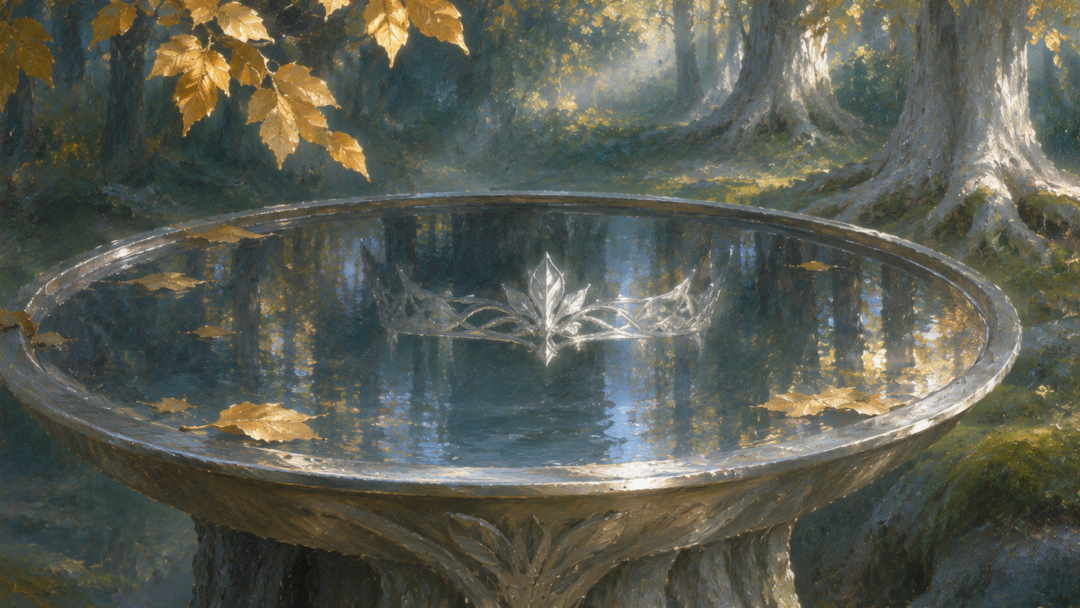
Why Gandalf and Galadriel Refuse
When Frodo offers Gandalf the Ring in Bag End, the wizard's answer is alarm, not curiosity. He fears that he would take it with a sincere desire to do good, especially out of pity for weakness and a wish for strength to protect others. Yet in his hands, the means would corrupt the end. He refuses even to keep the Ring safely unused, knowing how readily need could turn custody into possession.
Galadriel faces a similar choice when Frodo freely offers it to her in Lothlórien. She imagines herself as a queen in place of the Dark Lord, magnificent and terrible, loved and feared by all. The book describes her seeming to grow beyond measure before the vision passes and she declines. The film heightens that transformation visually, but she never actually commands the One. Her victory is the refusal, not a demonstration of its power.
Their warnings are not that good people secretly want the same things as Sauron. They are that ruling everyone for their own benefit can become indistinguishable from ruling everyone by fear. A guardian might promise safety; a wise queen might promise beauty. The danger is deciding that others must submit. The Ring is particularly suited to turning protection into possession because it was designed for the mastery of others.
In Letter 131, Tolkien explains that a sufficiently strong new possessor could challenge Sauron and usurp his place. That is the nightmare behind the refusals, not a guarantee available to anyone who finds the Ring. In Letter 246, he makes the distinction sharper: Galadriel or Elrond might have built obedient armies and an empire to fight Sauron, but only Gandalf could plausibly be expected to master him in a direct contest. Galadriel's confidence is not proof she could do everything she imagined.
The Gandalf counterfactual is particularly chilling. If he won the struggle for mastery, Sauron would lose access to the Ring for good, yet the Ring and its works would endure. Gandalf would still believe he was acting rightly. The danger would be rule imposed for the subjects' supposed good, backed by power they could not resist. Tolkien calls that outcome worse than Sauron's victory: not because Gandalf would stop knowing good from evil, but because he could make coercion look like goodness itself.
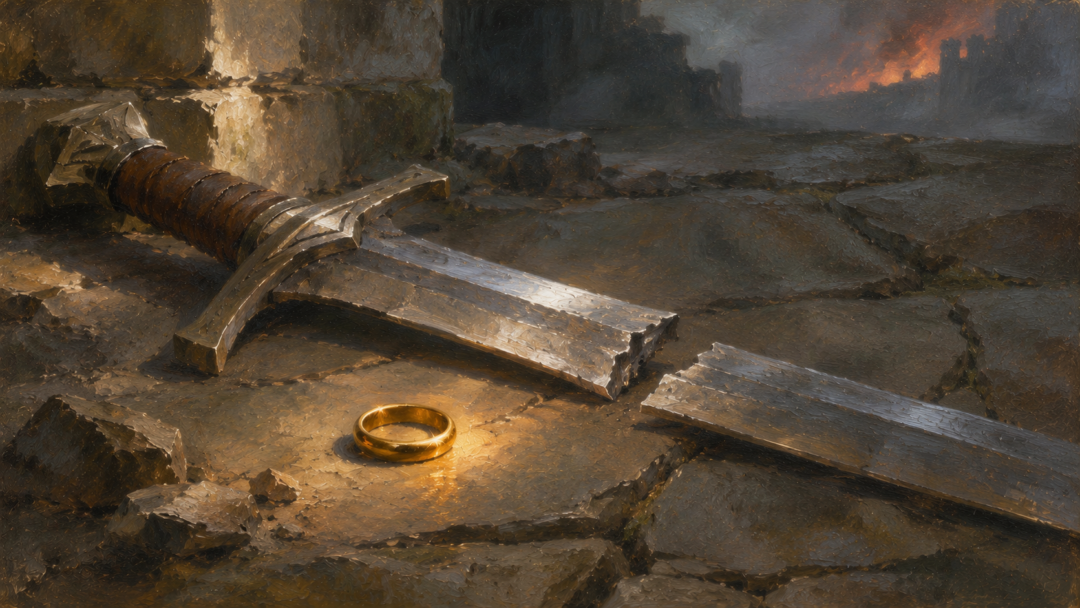
What Happens When Someone Claims It in Mordor?
Frodo supplies the sharpest answer to the idea that claiming the Ring automatically makes its owner invincible. At the Crack of Doom, exhausted by the journey and the Ring's pressure, he announces that it belongs to him and puts it on. Sauron becomes aware of him immediately. His attention snaps away from the battle at the Black Gate, and he summons the Nazgûl toward the Mountain. His claim gives him no sudden strength to defend it.
Letter 246 considers what might have happened if Gollum had not intervened. The Ringwraiths could have addressed Frodo as their lord while trying to draw him away from the place where the Ring could be destroyed. That obedience would have been a trap, not recognition that Frodo had supplanted Sauron. The encounter remains hypothetical.
Nor is a rival's victory the same event as unmaking the Ring. At Mount Doom, its destruction breaks the power bound up with Sauron and brings down his dominion. A victorious Gandalf, by contrast, could have deprived Sauron of the Ring permanently while leaving its machinery of command intact. This is why the worst outcome is political as well as personal: an empire of obedience could survive its original tyrant, with a new ruler convinced that the chains were necessary.
Sam's imagined garden offers the quietest answer to that possibility. He could picture Mordor blooming at his command, but the price was other people's freedom and his own. He chose the work of his own hands instead. The Ring's most frightening promise was never that it could make a person disappear. It was that someone might come back into view wearing a crown, certain that everyone else ought to obey.
Sources & Notes
- The One Ring - Tolkien Gateway — https://tolkiengateway.net/wiki/One_Ring
- Letter 246 - Tolkien Gateway — https://tolkiengateway.net/wiki/Letter_246
- The Mirror of Galadriel - Tolkien Gateway — https://tolkiengateway.net/wiki/The_Mirror_of_Galadriel
Compare Gandalf’s refusal in ‘The Shadow of the Past’, Galadriel’s test in ‘The Mirror of Galadriel’, and Sam’s temptation in ‘The Tower of Cirith Ungol’. Letter 246 distinguishes hypothetical powerful claimants from an inexperienced bearer; a rival Dark Lord is a counterfactual, not an enacted event.