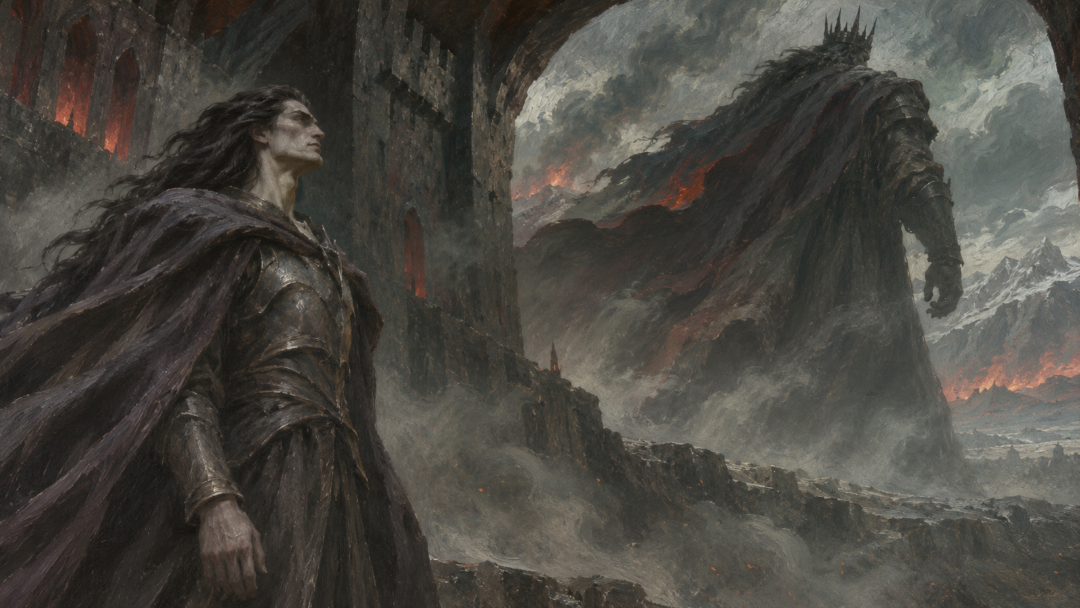
On the island of Tol Sirion, a tower built to guard a river passage became one of the most feared strongholds in Beleriand. Sauron took it from the Elves and turned a defended route into a place of terror. From the river valley below, an old safeguard had become a watchful threat. Yet the military significance of that conquest raises another question: was he also responsible for feeding, equipping, moving, and maintaining Morgoth's armies?
The strongest answer appears in The Silmarillion, in Of the Coming of Men into the West. The account says Morgoth went away from Angband, “secretly under shadow he himself departed from Angband, and went forth into Middle-earth, leaving to Sauron the command of the War.” That explicitly delegates wartime command during Morgoth's absence, but assigns no particular logistical duties.
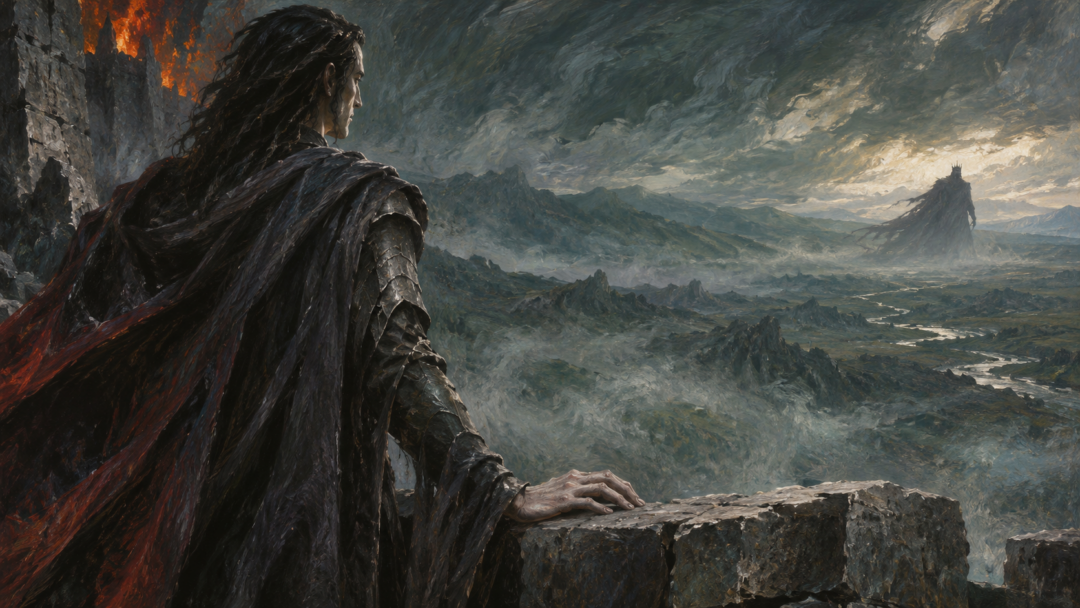
The passage that actually gives Sauron command
The setting is the awakening of Men in Hildórien, far to the east. News of their arrival reaches Morgoth, who regards the development as important enough to leave his northern fortress personally. He goes secretly into Middle-earth while Sauron is left with the war. This is a particular responsibility entrusted on a particular occasion.
There is an important qualification in the way this story is told. The chapter introduces the account with: “But it was said afterwards among the Eldar that when Men awoke in Hildórien at the rising of the Sun the spies of Morgoth were watchful, and tidings were soon brought to him;” The departure and delegation belong to that later Elvish tradition, not an eyewitness account of events inside Angband or the distant East.
That framing suits the surrounding story. Finrod learns of the first Men entering Beleriand, but even Bëor is reluctant to speak of his people's remote past. The Elves perceive a shadow upon human memory without knowing the details of Morgoth's dealings with Men. The report is not a transcript of an appointment. We are told who was left in charge of the war, not what instructions were given, what officers reported to him, or how the work was divided.
The chapter also says Morgoth eventually returned to Angband when he feared the growing strength and cooperation of the Eldar. That return limits any reading of the passage as a permanent transfer of all authority. It shows an interval in which Morgoth was away and Sauron was entrusted with the war. It does not establish permanent, exclusive command of every host or a transfer of Morgoth's wider authority.
A share in Morgoth's works is not a job description
For a wider picture of Sauron's position, the Valaquenta, in Of the Enemies, is useful. It calls him the greatest of Morgoth's named servants and says he took part in Morgoth's deeds, his great works, and his cunning deceptions. This is evidence of unusually extensive involvement in the Dark Lord's enterprise. Such participation helps explain his selection for command, without identifying specific duties or supervision of supplies.
The same passage says Sauron originally belonged to the Maiar associated with Aulë and retained knowledge of their lore. Aulë's sphere of making and craftsmanship is relevant to Sauron's abilities and history. It does not follow that Morgoth appointed him director of armaments, mines, workshops, or military production. Skill and a wartime assignment are different evidence; neither supplies an organizational plan of Angband.
Other descriptions of Morgoth's regime are broad rather than departmental. After the ruin of the Noldorin defenses, captives are taken to Angband and forced to apply their skills and knowledge in Morgoth's service. Morgoth also sends spies in deceptive forms to spread distrust among his enemies. Both show power exercised through coercion and intelligence. Yet the account attributes these measures to Morgoth. It does not identify Sauron as the supervisor of every captive worker or every spy.
What Tol Sirion proves on the ground
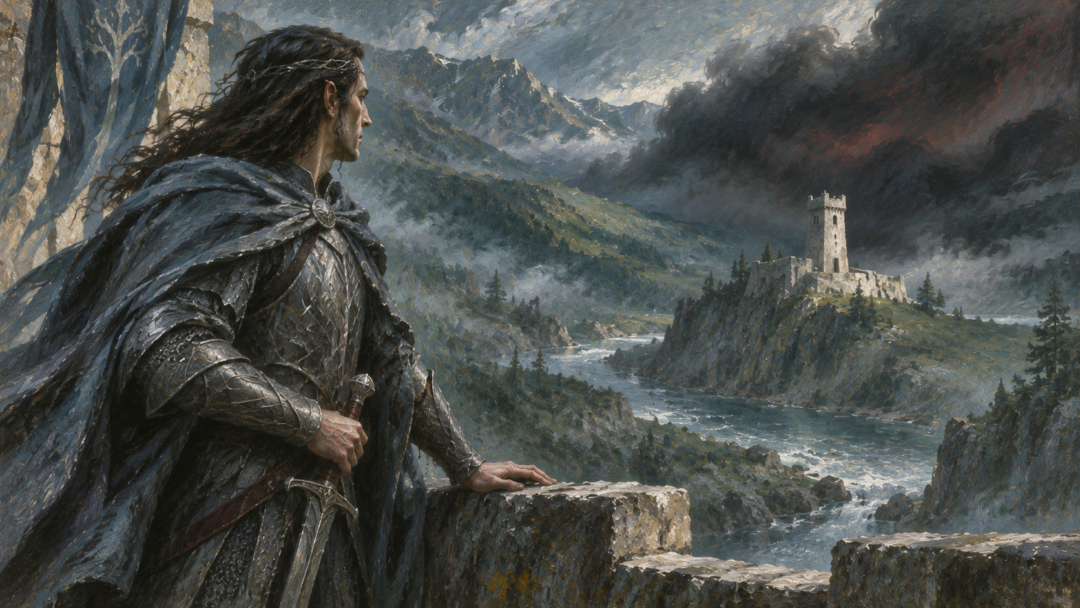
The clearest episode of Sauron wielding power in Beleriand comes after the Dagor Bragollach, the Battle of Sudden Flame. The Elves continue to hold the western passage of Sirion, even after much of the siege around Angband has collapsed. Finrod's tower, Minas Tirith, stands upon the island of Tol Sirion, and Orodreth is its warden. This is not Gondor's later Minas Tirith: it guards a route southward from the north.
After the death of Fingolfin, Sauron comes against Orodreth. The Silmarillion describes him at this point as a formidable sorcerer and lord of werewolves. He captures Minas Tirith by assault, with fear overwhelming its defenders, and Orodreth escapes to Nargothrond. Sauron himself is named as the attacker and the occupying power. That is direct evidence of military action and control of a stronghold.
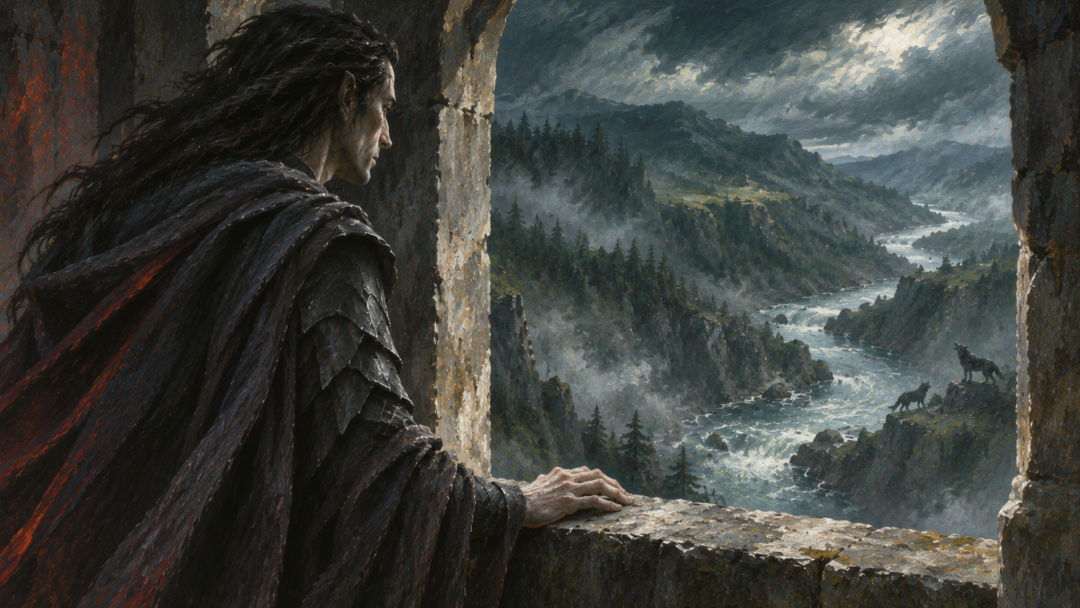
Sauron turns the tower into a watchpoint for Morgoth, and Tol Sirion becomes Tol-in-Gaurhoth, the Isle of Werewolves. From there he is said to perceive those passing through the vale. An Elvish defense becomes an instrument of surveillance and intimidation. Morgoth now holds the western pass. The text gives us a specific occupied place, a purpose for it, and a strategic consequence. It does not give a roster of its defenders, an account of how its occupants were provisioned, or orders for moving reinforcements.
The later tale of Beren and Lúthien makes the strength of Sauron's hold there even more vivid. Beren, Finrod, and their companions fall into his power while attempting to pass in disguise. The prisoners are confined, Finrod dies defending Beren, and Lúthien with Huan ultimately breaks Sauron's power on the island. Sauron personally uses the stronghold for detection, captivity, and terror, before losing it. Neither outcome depends on imagining an unseen supply organization beneath the tower.
Gothmog and the danger of inventing a chain of command
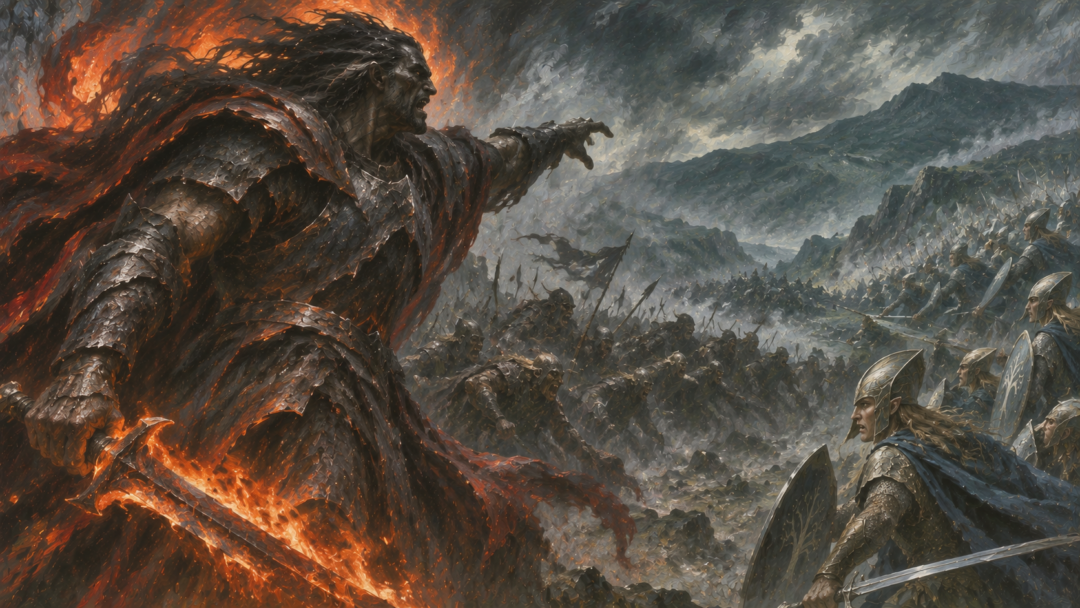
Sauron is not the only servant of Morgoth whose military authority receives a name. At the Nirnaeth Arnoediad, the Battle of Unnumbered Tears, Gothmog is identified as the Lord of Balrogs and high-captain of Angband. He enters the fighting in the west and drives a wedge between the Elven forces, isolating Fingon from Turgon and Húrin. Gothmog commands on that battlefield; Sauron is not placed there.
Earlier in the account of the same battle, an officer is described as Morgoth's captain in the west and receives an instruction to draw Fingon out from his defensive position. That officer's actions include an atrocious provocation involving the captive Gelmir. That captain is not named in this episode, so the passage alone cannot settle his identity. The narrative portrays Morgoth directing operations through captains without giving their full hierarchy. Such orders concern identifiable operations, not the routine maintenance of armies.
Gothmog's high-captaincy does not prove that Sauron served under him, any more than Sauron's temporary command proves that Gothmog always answered to Sauron. The passages describe different events and responsibilities. The narratives permit different captains to exercise authority at different times without specifying their reporting relationships. Rank words alone cannot supply a complete organizational diagram of Angband.
Where logistical responsibility becomes inference
Even armies of Orcs and monsters must move and sustain themselves. It is reasonable to imagine that whoever directed a prolonged military effort had to reckon with practical constraints. If Sauron had command of the war, he may have had some authority over arrangements necessary to keep that war going. The conditional matters: the text gives the broad wartime charge, while the proposed logistical responsibilities are an inference from what conducting war usually involves.
Saying that Sauron was entrusted with the war during Morgoth's absence reproduces the narrative's meaning. Saying that his orders could have affected movements, access to strongholds, or the deployment of forces is a cautious extension from command. Saying that he was Morgoth's chief quartermaster, the manager of Angband's manufacturing, or the permanent supervisor of all supply lines would require separate passages. The examples usually offered—the fortress, the spies, the prisoners, the craftsman background—do not provide them.
It is also worth noticing what the narratives choose to show. The fall of Tol Sirion tells us who attacked, who fled, what the tower became, and what control of the pass meant. The description of Morgoth's spies tells us how distrust spread among the Elves and Men. The tale of Gothmog shows a battle being decided by a violent intervention. These are rich operational details, but they are not descriptions of procurement, storage, transport, or daily garrison administration. Silence does not confirm a theory.
A source check should therefore begin with the chapter and the precise wording, rather than with a modern label applied to Sauron. Online commentaries and blogs sometimes reproduce or discuss lines about command at Angband, and they can be useful signposts. A blog reproducing an Angband-command line is not a second independent textual witness. The wording considered here has been checked against online transcriptions, not a separately inspected original printed edition. The Silmarillion contains the explicit statement about command of the war; the Valaquenta supplies the wider account of his participation; and the stories of Tol Sirion and the Fifth Battle supply distinct examples of power exercised in the field.
This does not establish a fixed portfolio, or an exhaustive search of every draft. The useful conclusion is narrower and better supported: in a reported account of Morgoth's departure, Sauron was left with wartime command; elsewhere, he captures and holds a strategically important tower. The duties of supplying all Morgoth's armies remain unspecified.
At Tol Sirion, the tower looks down a passage that once helped protect Beleriand and now exposes travelers to Sauron's gaze. That is the kind of power the story makes visible: a conquered position, a watchful enemy, a road rendered dangerous. Behind it, Angband's vast machinery of war remains mostly in shadow. We can recognize Sauron's authority without pretending that the shadows contain a written inventory of his duties.
Sources & Notes
This article is based on close reading and interpretation of Tolkien's published works and related source material where relevant.