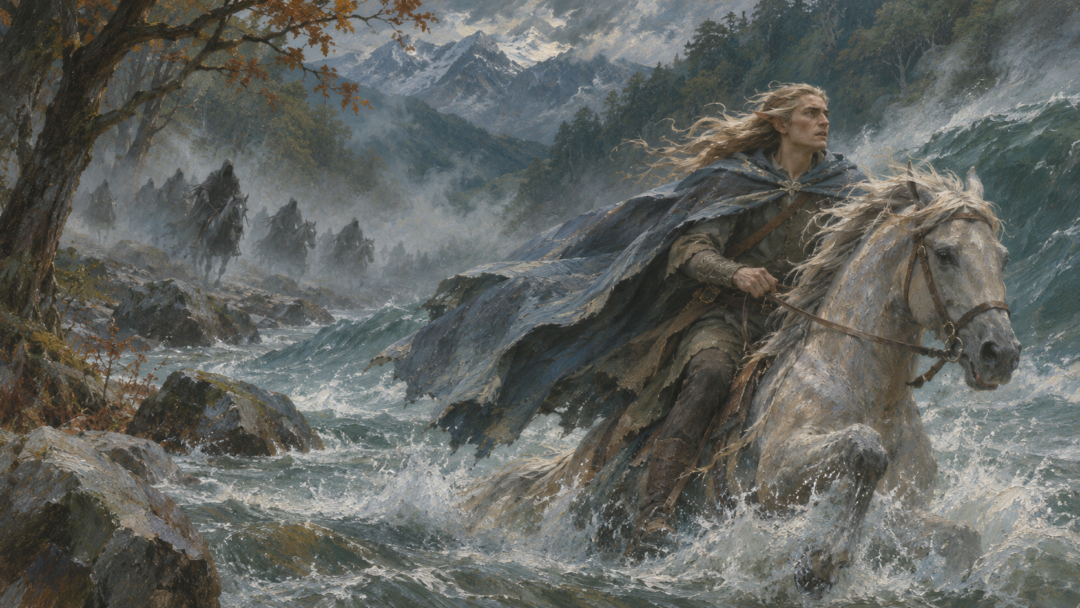
At the Ford of Bruinen, the wounded Frodo faces the Black Riders. In Peter Jackson’s The Fellowship of the Ring, Arwen carries him across the river and confronts their pursuers. In the novel, Glorfindel lends Frodo his horse, and Frodo himself defies the Riders before a flood sweeps them away. Before the film even opened, a December 17, 2001, Associated Press report documented fierce arguments over that change.
That contemporary argument overturns the easy version of today’s question. Jackson’s films were not universally accepted; The Rings of Power has no uniform audience either. The deeper distinction lies in their starting material and the expectations surrounding them. Jackson reshaped a complete, beloved novel; the television series dramatizes an age recorded largely through historical accounts. It also arrives after Jackson’s vision has become part of how audiences picture Middle-earth.
Jackson Faced the Same Arguments in 2001
In that Associated Press report, Dan Lewerenz interviewed longtime reader Gordon Watson, who accepted that a film needed to omit material but objected to changing underlying themes. Arwen’s rescue particularly bothered him: he believed it diminished Frodo’s heroism at a moment when the hobbit should demonstrate courage against the Nazgûl. He objected to what the scene said about the central character.
The report also featured Will Bishop, who had attended an advance screening and welcomed the changes. He liked Arwen’s larger presence and the emotional warmth she brought. One alteration meant diminished courage to one reader and greater feeling to another. Both reactions predated the trilogy’s cultural standing. We cannot conclude that either man subsequently changed his mind, much less that Tolkien fans collectively reversed their judgment.
The passage from book to screen makes the disagreement understandable. In the novel, Glorfindel’s horse carries Frodo toward safety, but Frodo still chooses to resist the Riders. The river’s rising waters are Elrond’s doing, with Gandalf adding the appearance of charging horses. Jackson brings these contributions together in a confrontation centered on Arwen. For one viewer, she receives an unforgettable introduction; for another, the sequence shifts attention away from the small hero whose resilience makes the quest extraordinary.
The Films Changed More Than the Length of the Journey
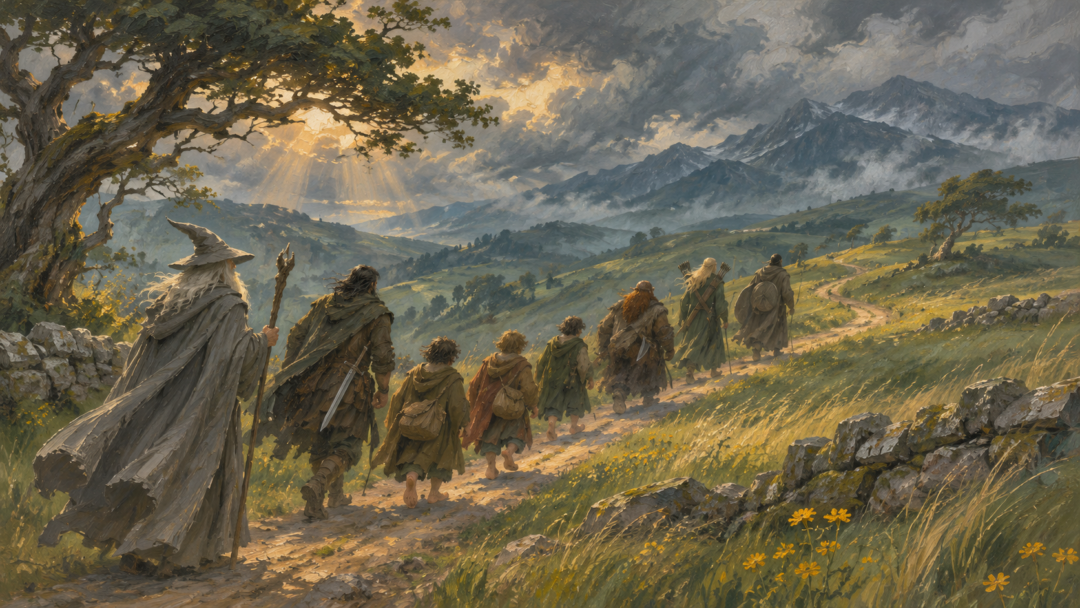
Jackson removed Tom Bombadil and the Barrow-downs, shortening the hobbits’ strange road toward Bree. That makes narrative sense in a film, yet it changes the journey’s texture. In the book, danger and wonder appear before the larger war comes fully into view, while Bombadil seems strangely untouched by the Ring’s power. The omission preserves the plot’s momentum but loses a glimpse of a Middle-earth more mysterious than the struggle against Sauron.
Other changes reach deeper into characterization and theme. Book Faramir resists the Ring’s temptation; the film’s Faramir initially takes Frodo and Sam toward Osgiliath. The movies also omit the Scouring of the Shire, in which the returning hobbits find their home damaged and must help restore it. Without that episode, the cinematic homecoming is gentler. What disappears is the insistence that even sheltered places bear war’s consequences.
Jackson never claimed film could reproduce the books entirely. In an interview conducted before the first movie’s release, and republished by Creative Screenwriting in 2014, he called his film an interpretation. He discussed tightening motivations and concentrating the story around the Ring and Sauron. Viewers could disagree with those decisions while still loving his characters, images, and overarching journey. Fidelity was already more complicated than counting which scenes survived.
The Rings of Power Starts With a Different Puzzle
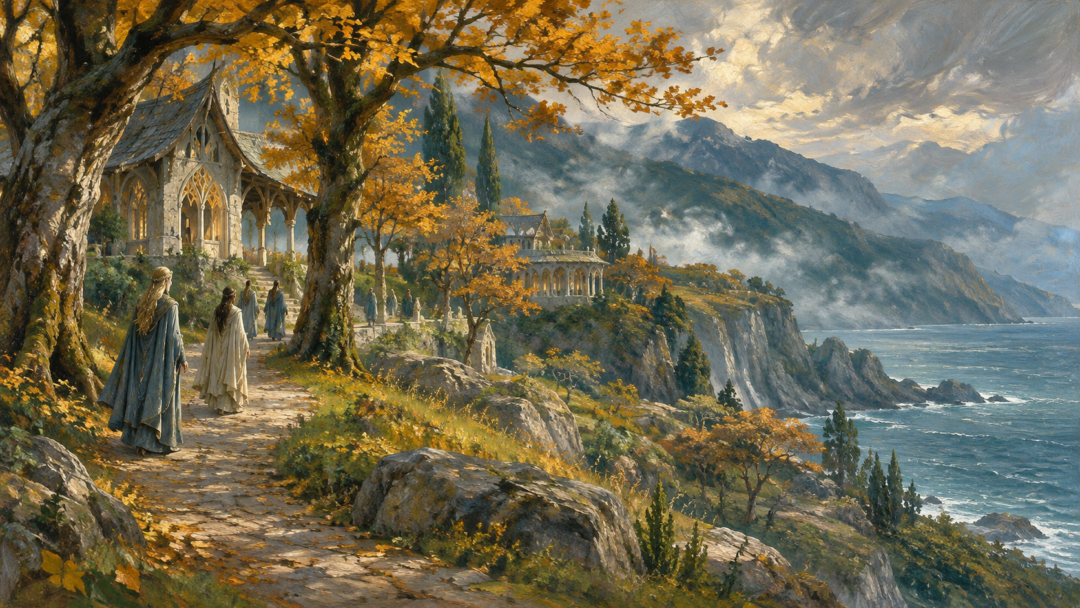
Jackson had chapters of developed action and dialogue tracing Frodo’s journey from Bag End to Mount Doom. The Rings of Power instead draws on Second Age history: the making of the Rings, Sauron’s deception, the Elven realms, the Dwarves of Khazad-dûm, and the destiny of Númenor. Much of that history appears as timelines, accounts, and appendices rather than a continuous novel. As Vanity Fair explained in 2022, showrunners J. D. Payne and Patrick McKay were building drama from substantially sparser narrative material.
Consider Celebrimbor in Eregion. Readers know the terrible significance of Sauron’s deception and the Rings, but television requires conversations, suspicions, shifting loyalties, and scenes showing how choices are made. A chronology can cover the making of the Three Rings and the One Ring in a handful of entries. Television must make events feel lived rather than listed. Invention is unavoidable here, although individual inventions can still be judged for their plausibility and effect.
The largest structural change is time. Appendix B of The Lord of the Rings places the forging of the Rings in the middle of the Second Age, while Númenor falls more than fifteen hundred years later. The series brings stories associated with these periods together, allowing mortals such as Elendil and Isildur to appear amid events involving the Rings. It connects the cast but removes the written history’s vast generational distance.
That distance carries meaning. Númenor’s downfall is bound to its rulers’ fear of death, desire for forbidden immortality, and long estrangement from their earlier loyalties. Compressing the centuries inevitably alters the depiction of that decline. Some viewers find the closer personal connections dramatically useful; others think the moral tragedy loses weight. This is a substantive disagreement about adaptation, not evidence that the show had a complete Second Age novel to follow and simply refused.
Galadriel raises another question. The series presents a restless, determined pursuer of Sauron, quite unlike the composed figure familiar from Jackson’s films. Her earlier history is complex, and accounts of parts of it vary across Tolkien’s writings. That does not make every portrayal equally persuasive. Viewers can reasonably ask whether her anger, judgment, and relationships develop into a convincing character without treating the movie version as the only possible starting point.
When a Film Becomes Part of the World's Memory
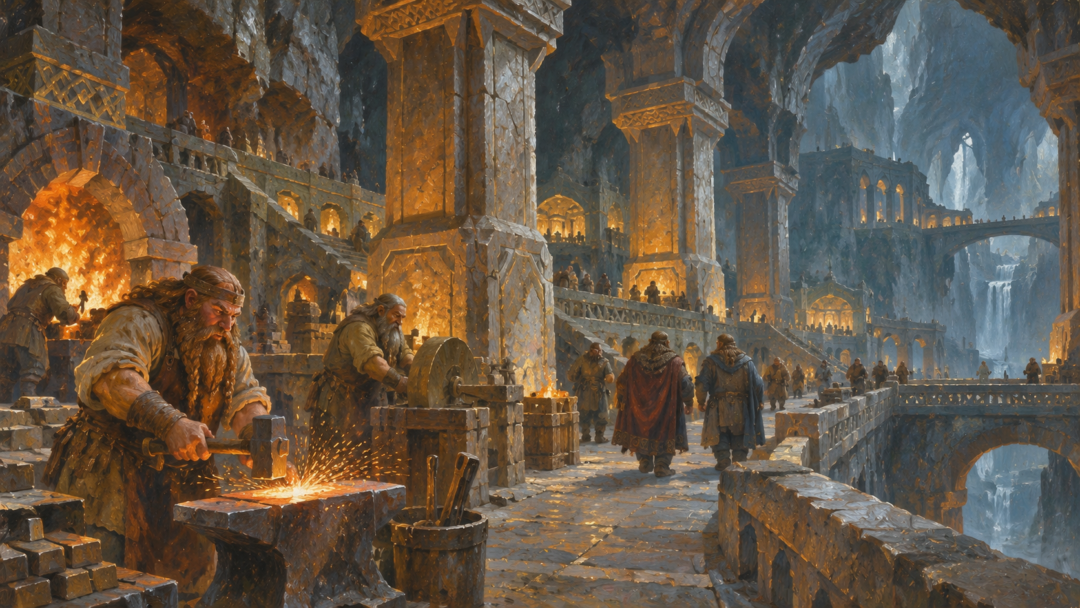
Think of the Shire’s green hills, Rivendell’s architecture, or the music accompanying the Fellowship. Jackson’s films supplied faces, sounds, landscapes, and rhythms that many people now recognize immediately. Their influence creates an unusual challenge for another adaptation. Something may feel faithful partly because it resembles those films, even when the source books leave room for a different interpretation.
The creators acknowledged that balancing act. In a February 2022 Vanity Fair interview, McKay said the series should be “different but familiar.” Too little resemblance might make Middle-earth feel unrecognizable to film audiences. Too much could make the show appear derivative. It is trying to evoke an existing world without merely repeating a particular cinematic version of it, all while portraying a considerably earlier age.
Media scholar Lincoln Geraghty examined this tension in September 2024. He observed that some critical fan videos fault The Rings of Power for departing from Tolkien while also accusing it of copying Jackson’s Middle-earth. Those complaints need not be logically inconsistent: a viewer can dislike a lore change and find a visual echo unimaginative. Their combination nevertheless shows how Jackson’s films have become another standard for judging later adaptations. Geraghty was interpreting examples of fan commentary, not surveying the entire audience.
He also described the sense of ownership fans develop through years of reading, discussing, and defending a favorite world. Someone who knows the family trees of Númenor or the story of Celebrimbor may experience an alteration as a loss, while another viewer feels protective of a particular screen image. The franchise has legal owners, but its stories occupy private imaginative territory. That helps explain the intensity of reactions without proving every complaint fair.
Not All Backlash Is the Same
There are substantial questions to ask about The Rings of Power: whether its mysteries sustain interest, whether character decisions feel earned, whether Sauron’s deception convinces, and whether the compressed history preserves the force of Númenor’s tragedy. These concern the resulting drama. A viewer can dislike the series for such reasons and admire Jackson’s trilogy, just as someone can enjoy the show while questioning particular departures from the writings.
The public backlash also included racially charged attacks on the casting of actors of color as Elves, Dwarves, and Harfoots. The Guardian documented these controversies in September 2022 alongside disputes about lore and audience reviews. Discriminatory hostility should not be confused with criticism of acting, scripts, or characterization. Equally, its presence does not turn every dissatisfied viewer into a bigot. Treating all objections as one phenomenon obscures both genuine storytelling problems and the hostility faced by performers.
Online reaction makes the distinctions harder to see. Outraged videos and cutting parodies may spread further than a quiet opinion that a season was enjoyable but uneven. Concerns about review bombing shaped early coverage, yet review bombing cannot explain all negative responses. The internet carried arguments about Jackson in 2001 too, but contemporary platforms reward an especially visible style of reaction. Viral complaints cannot establish what most readers believe.
The Real Test Is What a Change Does
An adaptation can reproduce events while missing their significance, or invent a scene that expresses a character’s courage or fear. Arwen at the ford makes an effective cinematic entrance while changing Frodo’s moment of resistance. A compressed Second Age keeps characters together while reducing the sense of history unfolding across generations. The most useful question is not simply whether a change exists, but what the new version gains and what it gives up.
There is room to admire one creative choice and reject another without applying a universal exemption to Jackson or a universal penalty to Amazon. The evidence points instead to differing judgments about themes, characters, storytelling, and a familiar cinematic inheritance. At the Ford of Bruinen, Frodo’s defiance and Arwen’s ride offer two visions of a perilous crossing. Fans have argued about such moments for decades because the courage shown when the river rises still matters to them.
Sources & Notes
This article is based on close reading and interpretation of Tolkien's published works and related source material where relevant.