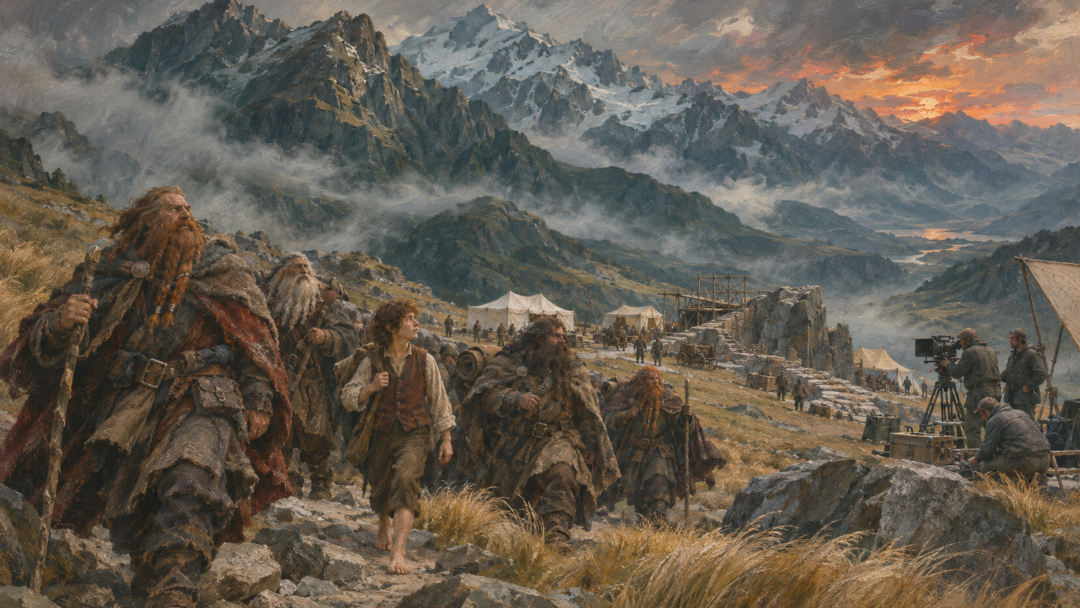
When Bilbo meets Gollum beneath the Misty Mountains, their contest seems wonderfully simple: two figures in a cave, trading riddles over a mysterious ring. On screen, even that intimate encounter required a digital Gollum, reconstructed cave scenery, and painstaking cleanup of filmed images. So why did Peter Jackson's Hobbit trilogy cost so much more than The Lord of the Rings when the filmmakers had abandoned some older production methods?
The answer is not one spectacular mistake swallowing the money. Financial filings reported by CBS and the Associated Press show a striking spending gap, while accounts from the filmmakers reveal a larger production involving demanding digital effects, unusual camera technology, and difficulties in preparation. The supposed savings from eliminating miniature photography are far less certain than the scale of the work that replaced it.
What the Budget Numbers Actually Show
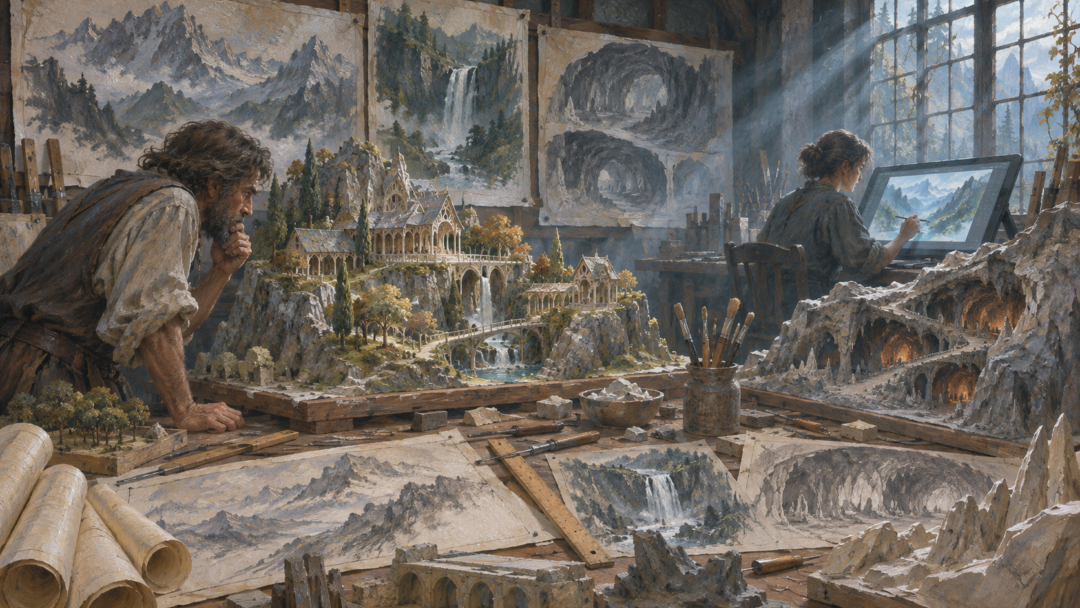
The commonly cited production cost for Jackson's original Lord of the Rings trilogy is $281 million. In October 2013, the Associated Press reported that New Zealand filings showed The Hobbit had already spent $561 million. That disclosure included the principal filming with actors but excluded later pickup shooting and unfinished postproduction. This was an interim figure, not a final bill.
In October 2014, CBS/AP reported that expenditure had reached 934 million New Zealand dollars, then about $745 million: roughly 2.65 times the older trilogy's reported cost. Yet this figure excluded the final eight months of costs before The Battle of the Five Armies was scheduled to open that December. The report also could not establish whether worldwide marketing and distribution were included. Nor are these figures adjusted for inflation, currency movements, or accounting differences. The gap is substantial; its precise final size remains unsettled.
The Project Was Expensive Before It Became Three Films
Blaming the entire difference on turning two films into three makes for a neat story, but the timeline disagrees. In October 2010, when The Hobbit was still planned as two films shot together, the Los Angeles Times reported an expected production cost close to $500 million. That was an estimate, not an approved final budget, but the scale was already extraordinary.
Getting started was complicated. Warner Bros. and New Line were working with MGM, which held significant rights and was expected to co-finance the films. MGM's severe financial problems delayed approval as creditors weighed reorganization. Rights negotiations and a performers' labor dispute also complicated the run-up to filming. These issues help explain the uncertain schedule, but they do not provide separate dollar amounts that can safely be added to the later production expenditure.
In July 2012, after principal photography for the original two-film plan, Jackson and the studios announced a trilogy. More screen time created room for additional material and could entail further editing, filming, effects, and finishing work. But much of the expensive undertaking already existed. No available breakdown establishes exactly what the third release added, much less that it doubled the cost. The decision changed the project's shape; it cannot, by itself, explain the size of the original commitment.
Why Abandoning Miniatures Was Not a Proven Saving
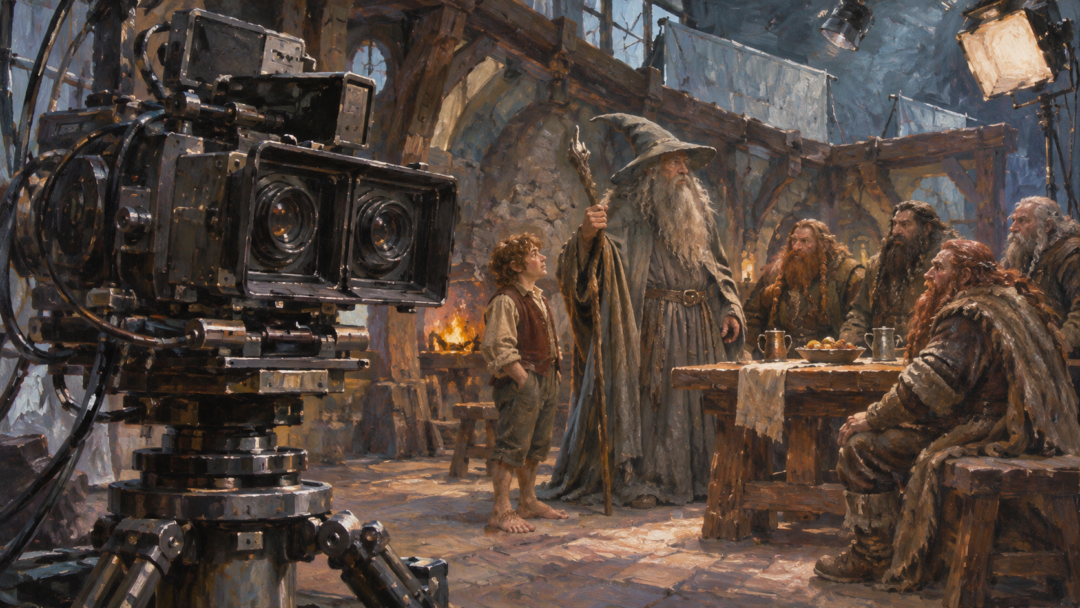
The original Lord of the Rings films famously used elaborate miniature environments, sometimes nicknamed bigatures because they were so large. The later trilogy followed another approach. In a detailed Computer Graphics World account, Weta Digital supervisor Matt Aitken explained that advances in computer graphics allowed complex natural environments to be created without filming miniatures. That establishes a technical change, not a verified budget reduction or evidence that saving money drove the decision.
Physical construction did not vanish. Weta Workshop still built substantial sets, while Weta Digital extended them and created landscapes beyond their boundaries. Rivendell had built interiors, but its distant waterfalls and surrounding scenery were largely digital. The goblin caverns combined real set pieces with computer-generated bridges, walkways, rock faces, and scavenged architecture. A soundstage could hold an imposing structure and still represent only a small portion of the place eventually seen on screen.
Making the two worlds meet was another task. Artists scanned sets and photographed their surfaces so digital extensions would align with filmed scenery. In Gollum's cave, Andy Serkis performed in a motion-capture suit alongside Martin Freeman. Effects artists then removed Serkis from the filmed images, repaired the background, and inserted the finished character. The industry account says the sequence's roughly 200 shots each needed paint work. Two people talking had become a succession of carefully matched physical and digital elements.
Computers offered flexibility: a virtual mountain could be revised without rebuilding a model, and sometimes an entirely digital shot was easier. But flexibility is not an audited saving. A meaningful comparison would need the costs of equivalent miniature work and digital replacement, including physical sets, modeling, scanning, rendering, and compositing. Those departmental figures are unavailable. Eliminating one kind of filmmaking removed its associated tasks while leaving many others, and introducing new ones, to be performed.
3D and 48 Frames Per Second Changed the Work
The Hobbit films were photographed in stereoscopic 3D at 48 frames per second instead of the customary 24. The higher rate meant twice as many frames per second, while stereo required separate views to create depth. Both choices affected capture and finishing. Computer Graphics World reported extra rotoscoping and paint work, though clearer frames could also make some tasks easier. It would be wrong to turn those additional frames into a claim that every effects department, or the entire budget, doubled.
Consider the familiar illusion of Gandalf towering above hobbits and dwarves. The earlier trilogy used forced perspective, positioning performers at different distances from the camera. That trick did not work adequately with the new stereo format. Instead, the Hobbit crew filmed on differently scaled sets with linked cameras, combining images so the actors appeared to occupy the same space. A visual effect that once relied heavily on camera placement now demanded coordinated sets, cameras, and compositing.
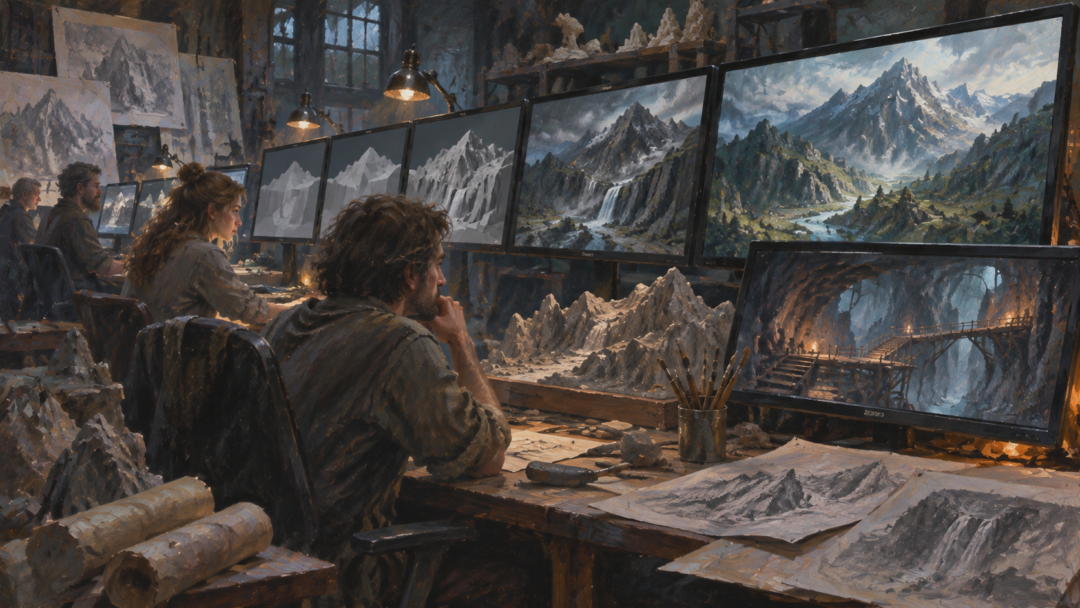
Digital environments also had to survive sharper images and convincing depth. Artists simulated Rivendell's waterfalls, developed tools to extend forests, and created the rain, shattering rocks, and stone giants of the Misty Mountains. The many tasks required people as well as processing power. Computer Graphics World reported that 850 Weta Digital artists worked on The Hobbit, many for more than three years. That is not a payroll total, but it shows why a switch from models to pixels need not mean a smaller workforce or simpler production.
A Small Book Became a Broader Screen Adventure
In the novel, Bilbo misses much of the Battle of Five Armies after being knocked unconscious; Gandalf's campaign against the Necromancer stays offstage. The films bring battles and the White Council's confrontation at Dol Guldur directly into view, drawing on a wider Middle-earth history, including material from The Lord of the Rings appendices. Showing briefly described events can require complete locations, performances, costumes, action, and effects. That expands filming demands, although no disclosed budget assigns a reliable price to a particular storyline. Page count is a poor measure of screen-production cost.
The Director's Changeover Left Little Preparation Time
Guillermo del Toro had been preparing to direct The Hobbit before departing amid prolonged delays. Jackson took over, but later explained that the schedule did not allow the preparation he needed to redesign the production around his approach. In an account reported by The Guardian, he described tackling complicated scenes without complete storyboards and with scripts that he and his collaborators had not yet finished to their satisfaction. This was Jackson's own retrospective description, not a calculated item on a balance sheet.
Preparation matters enormously when fantasy scenes involve interconnected departments. Camera positions shape what sets must contain; creature movements affect stunt work; filmed action determines later digital requirements. If those decisions remain unresolved, crews may have to improvise on set or revisit sequences. Jackson described postponing work on the climactic battle to plan it properly. The final film also moved from a planned July 2014 release to December. Those disruptions are documented; an additional dollar cost for them is not.
It is reasonable to infer that this uncertainty made scheduling and resource allocation harder. It would be unjustified to invent a reshoot bill or assume every postponement increased expenditure: delays can have different financial consequences. Jackson's account instead supplies an important organizational detail. A production committed to ambitious technical methods was also adjusting to a change of director without an equivalent reset of the timetable. That is a credible source of financial risk, even though the public records do not measure its effect.
Incentives and Box Office Do Not Settle the Budget
The 2014 CBS/AP report said the production had received $122 million in New Zealand incentives. Those payments matter to financing, but subtracting them directly from $745 million would not establish a final net production budget. The expenditure figure was interim, and the available reporting does not reconcile all spending, support, and other relevant accounts.
The trilogy's enormous worldwide ticket sales answer a different question. Box-office gross is not the money a studio retains: cinemas take a share, and marketing, distribution, and other financial arrangements matter. Commercial success cannot reveal what any one effects technique cost, or whether two films would have been more profitable than three. The figures document considerable spending, but they do not deliver a complete causal ledger or a definitive profit calculation.
The final answer lies in what the camera could no longer capture by itself. A miniature Rivendell might be absent, yet artists still had to make the waterfalls flow, the rock match the set, and the valley stretch beyond its walls. Bilbo's world looked effortless because so much labor had been hidden from view. The misleading part of the cost-cutting question is the assumption that removing one method must make the whole journey smaller.
Sources & Notes
This article is based on close reading and interpretation of Tolkien's published works and related source material where relevant.