At the Crack of Doom, Frodo reaches the end of his terrible journey and discovers that he cannot surrender the Ring. Far from the mountains of Mordor, another great fictional world places an extraordinary burden on its central figure: on Arrakis, Paul Atreides becomes entangled in the destiny of an entire people. It is easy to see why readers might wonder what the creator of Middle-earth thought of Frank Herbert's Dune. The answer, when it finally appears in the historical record, is surprisingly sharp.
J.R.R. Tolkien did dislike Dune, and said so in a letter dated 12 March 1966. But the reason for his dislike is not established by the available correspondence. That difference is the heart of the story. We have a clear negative judgment, a trail of books and letters, and a deliberate decision not to explain the judgment. What we do not have is a review identifying the offending passages, ideas, or characters.
A blunt verdict in a courteous letter
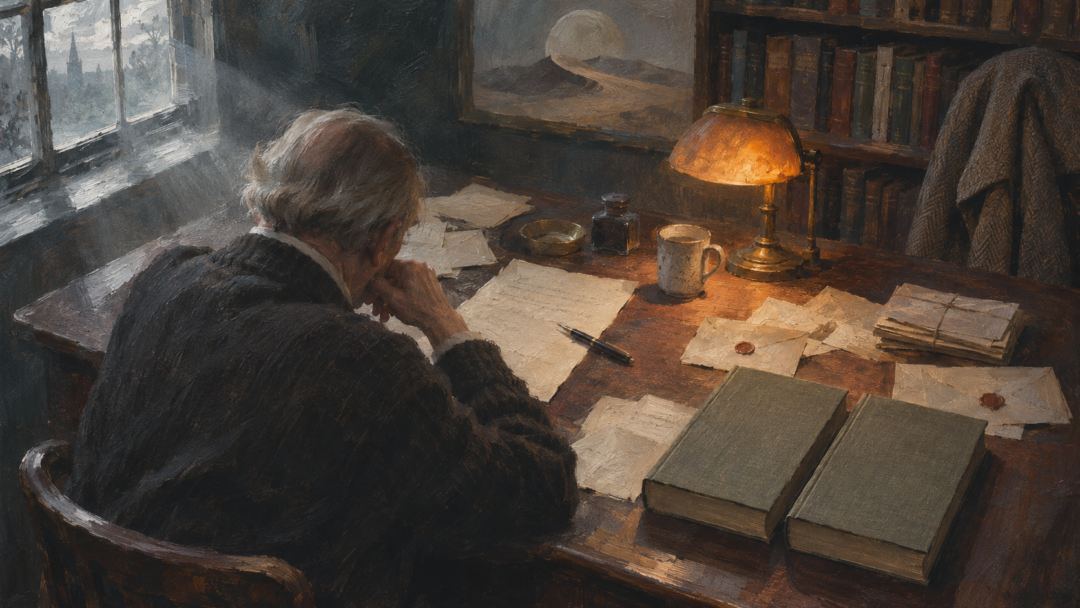
The recipient was John Bush, associated with the publisher Victor Gollancz. Bush had sent Tolkien a copy of Herbert's novel and asked what he thought of it. The reply is recorded by Tolkien scholars Christina Scull and Wayne G. Hammond in the addenda to their J.R.R. Tolkien Companion and Guide. Their chronology places the letter on 12 March 1966 and reports that Tolkien thanked Bush for the gift while expressing strong dislike of the book.
The memorable wording, preserved in a quotation attributed to the letter by Wikiquote and reproduced in summary by Tolkien Gateway, is brief: “I dislike Dune with some intensity.” It is an unmistakable statement of taste, especially from an author whose own invented world had drawn passionate admirers and critics. Nothing in that sentence softens the judgment. Yet it is not the beginning of an extended attack. It is practically the end of what he was prepared to say about the novel.
The same account makes his reasoning about silence explicit. Tolkien believed that an author still engaged in writing might struggle to be fair when judging another author working along comparable lines. In this case, he thought refusing further comment was the fairer course. That explains why Bush did not receive a detailed critique; it does not explain what made Dune disagreeable to its famous reader. The distinction is easy to lose when the letter is reduced to a provocative quotation.
How two copies of Dune reached Tolkien
The story begins before Bush's letter. In August 1965, Sterling Lanier, an editor at Chilton Books, sent Tolkien a copy of Dune. Lanier was closely involved in bringing Herbert's novel into book form. The story had already appeared in installments in the science-fiction magazine Analog, and Chilton, better known for practical and technical publishing, issued the collected novel in 1965. At the time, it was a recent arrival, not yet the decades-old classic familiar to readers today.
Lanier also had a connection to Tolkien that predated the gift. Hammond and Scull record correspondence between them in 1960, and later contact involving figurines based on characters from The Lord of the Rings. This makes the package more than an anonymous unsolicited book sent to a prominent author. It came from someone already in touch with him about Middle-earth, and from an editor personally associated with the publication of Dune. Those circumstances explain how the novel found its way to Tolkien's attention without telling us how he responded to its contents.
On 29 September 1965, Tolkien wrote to thank Lanier. Here the dates matter enormously. Hammond and Scull say he had not yet read Dune, being occupied with the dispute surrounding the unauthorized Ace Books edition of The Lord of the Rings. Tolkien Gateway's summary of the Lanier letter likewise indicates that he expected to wait for a vacation before reading it. September therefore provides evidence of receipt and courtesy, not of an immediate adverse reaction to Herbert's book.
Several months later, Bush sent another copy and asked for an assessment. Tolkien noted that Lanier had already supplied one. According to Tolkien Gateway's account of the March letter, he even proposed returning Bush's copy because he already possessed the novel. That practical offer need not be turned into a dramatic gesture. Owning two copies of a book is a perfectly sufficient explanation for offering one back, and no surviving detail here connects the offer to anger or contempt.
The sequence is straightforward: a first gift in August, thanks in September, and a second gift followed by the negative reply in March. It does not demonstrate two separate readings, a long campaign against the novel, or even that he finished every page. It shows that by March 1966 he had formed a strong enough opinion to tell Bush he disliked it. The exact path from unread gift to settled response remains outside the evidence supplied by these letters.
Why the comparison with Middle-earth invites speculation
There is a reason one short letter has attracted so much attention. In their Reader's Guide addenda, Hammond and Scull observe that Dune and The Lord of the Rings have often been compared more for their scope than their content. That is a useful description of their shared reputation, not a claim that Tolkien himself made this comparison. Both books offer readers the sensation of entering a world that existed long before the opening chapter and will continue to change after its final page.
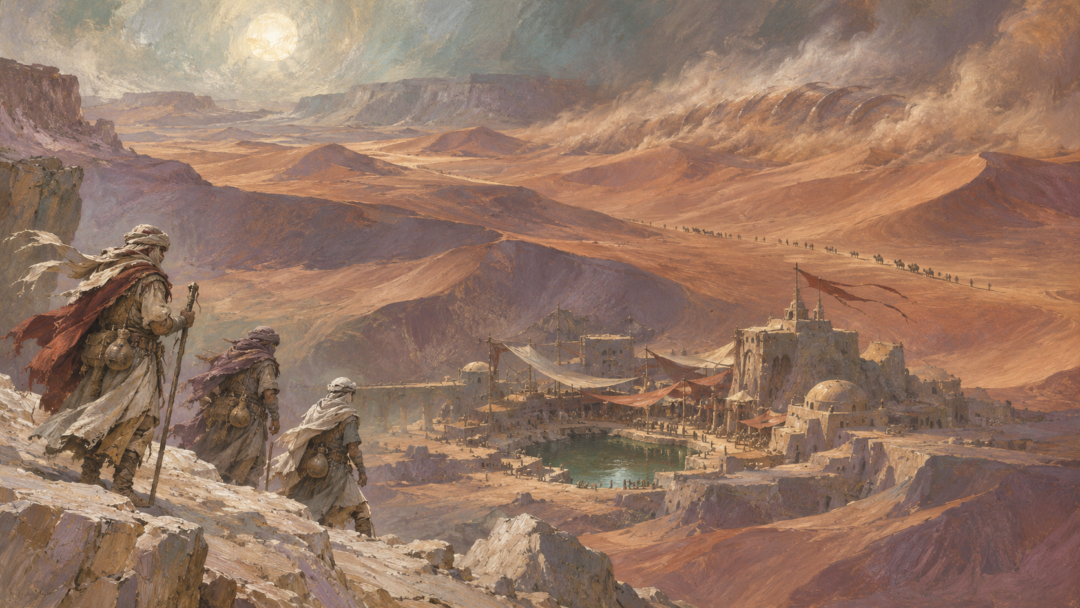
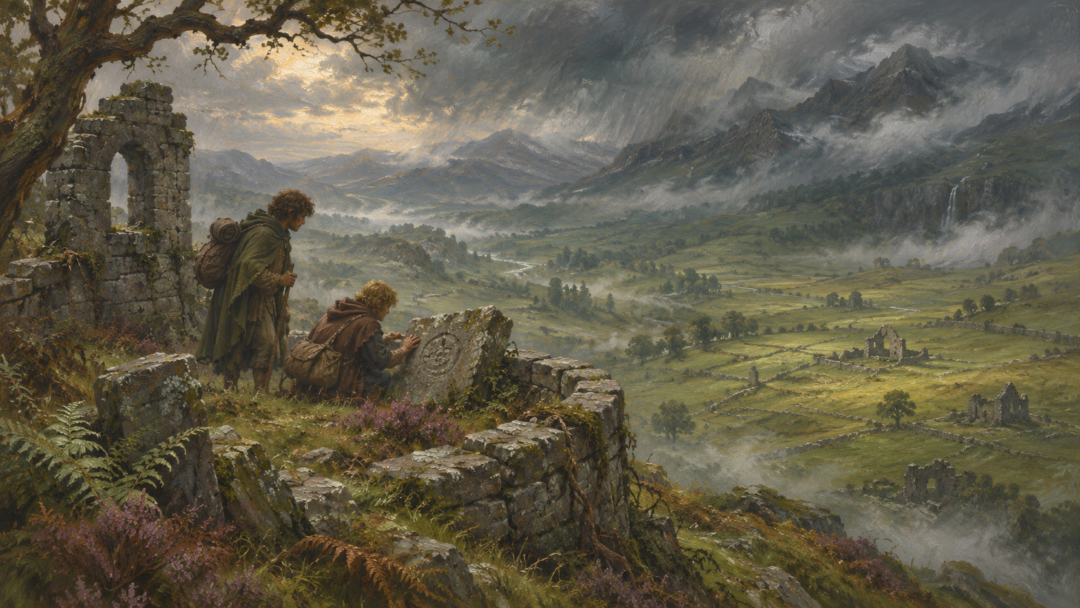
Herbert's Arrakis is not merely a stretch of desert with sandworms. Its scarce water shapes Fremen customs, its spice drives an interstellar economy, and its politics link noble houses, imperial power, and religious expectation. In Middle-earth, the road from the Shire to Mordor passes through places carrying the weight of earlier ages: ruined kingdoms, old alliances, fading Elvish realms, and languages with histories of their own. Details that might be decorative in a thinner adventure become part of the machinery of these worlds.
The similarities grow less simple when we look at their protagonists. Frodo is a small, unwilling bearer of an object that must be destroyed; Paul belongs to a ruling family and becomes central to a struggle over power and prophecy. The Ring tempts its holders with domination, while control of spice and Arrakis confers immense political leverage. Such contrasts make the books rewarding to read beside each other. They do not, however, reveal a private judgment about either novel's artistic success.
The criticism Tolkien chose not to write
Tolkien's concern about fairness gives the letter its particular shape. He was not simply refusing to answer a stranger, nor did he pretend to have no view. He answered the question about his personal response and then drew a line before public-facing criticism. His explanation concerned the difficulty of judging a fellow author fairly while continuing one's own creative work. It was a principle about the act of commenting, not a coded account of Dune's deficiencies.
That difference rules out some attractive but unsupported stories. One often hears that fantasy and science fiction belong to opposing camps, with magic on one side and machinery on the other. But nothing in this exchange says that Tolkien disliked science fiction as a genre. Nor does it show that he objected to Herbert's treatment of prophecy, religion, ecology, warfare, or empire. Dune contains all those subjects; their presence in the novel does not make them documented reasons for the reaction.
Even the phrase about authors working along similar lines needs care. It may suggest that Tolkien recognized a broad kinship between ambitious works of imaginative fiction. It does not amount to a literary verdict on Herbert's technique, or establish resentment about comparisons with The Lord of the Rings. A writer can feel unable to assess another fairly without considering that writer an imitator, rival, or threat. No quarrel between the two novelists emerges from this correspondence.
In a sense, the missing review is what distinguishes this episode from an ordinary harsh book judgment. If Tolkien had objected to the prose, named a character he found unconvincing, or challenged a particular idea, readers could examine those claims against Dune itself. Instead, we are left with a reaction that cannot be tested against a passage. His silence protects Herbert from a negative analysis, but it also prevents later readers from turning Tolkien's authority into an argument against the book.
What the surviving sources actually establish
The strongest guide to the dates is the scholarly work of Hammond and Scull. Their Chronology addenda identify the two correspondents and distinguish the September acknowledgment from the March opinion. Their Reader's Guide addenda confirm the two copies and supply the observation about comparisons based chiefly on scope. Read together, those entries form a modest but coherent documentary record. They are more informative than a free-floating quotation detached from the letters around it.
Tolkien Gateway adds helpful summaries of the individual letters, including the proposed return of the duplicate copy, and refers readers to Oronzo Cilli's Tolkien's Library: An Annotated Checklist. Wikiquote preserves the striking first-person wording and attributes it to the Bush letter. These are different ways of reporting the same historical episode, not three independent occasions on which Tolkien attacked Dune. The complete original letter and Cilli's underlying treatment have not been independently examined for this account, so the summaries should not be stretched beyond what they report.
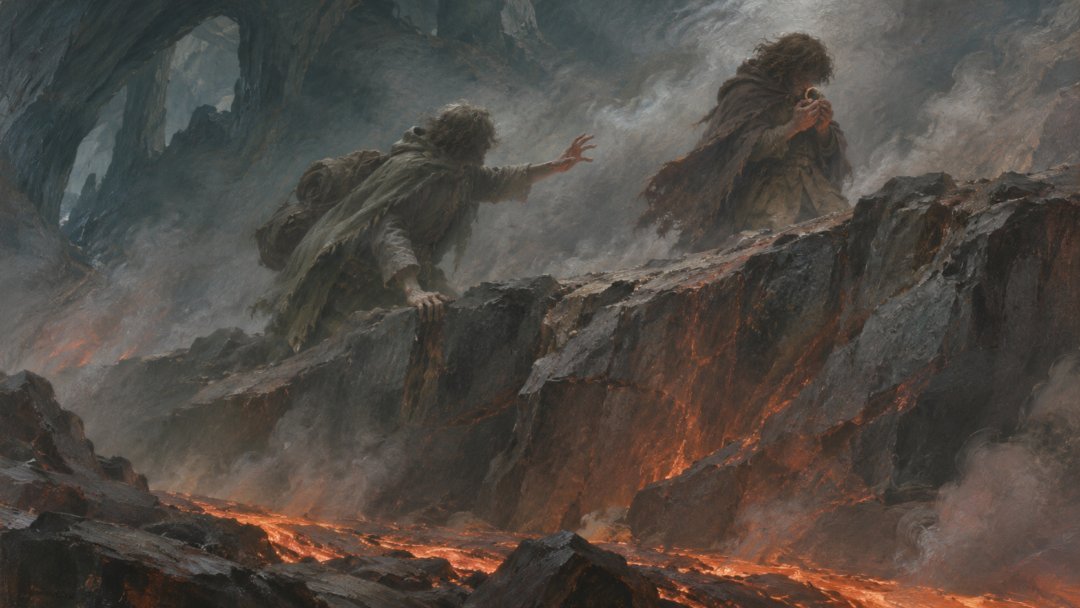
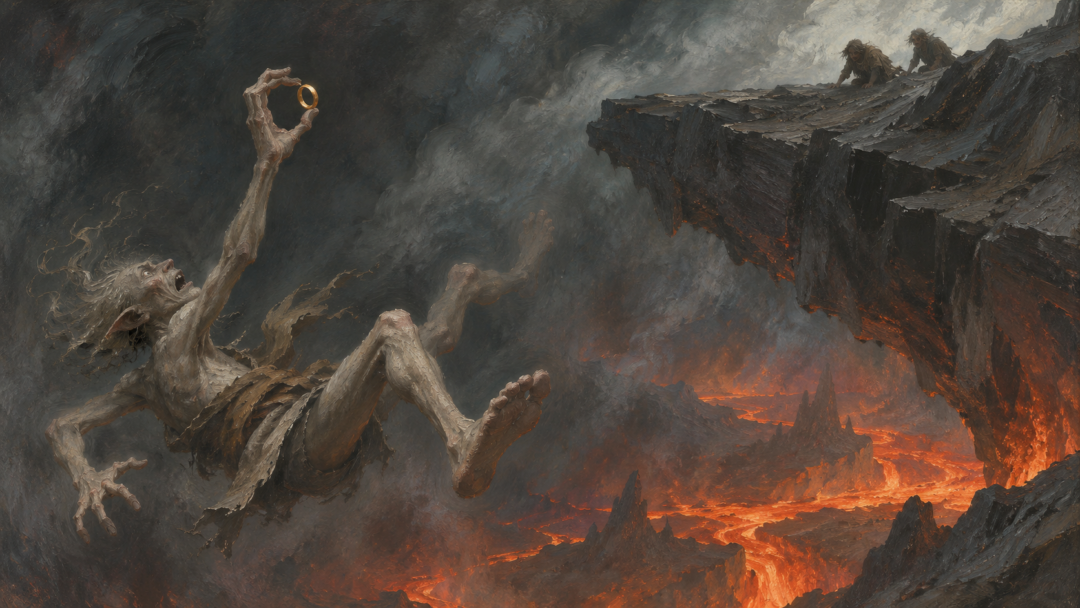
The Ring falls into the fire only after Frodo's failure and Gollum's last desperate struggle, an ending that refuses an easy account of heroic success. The Dune letter offers a different kind of unresolved ending. We know precisely where Tolkien stood in March 1966, but not which pages brought him there. The most revealing part of his response may be the argument he chose not to make.
Sources & Notes
This article is based on close reading and interpretation of Tolkien's published works and related source material where relevant.