When many readers think of Elrond’s sorrow, they picture a father watching Arwen choose a mortal life for the man she loves. It is one of the quiet tragedies at the end of The Lord of the Rings: a choice made freely, yet one that leaves Elrond to cross the Sea without his daughter.
But that heartbreak did not begin when Arwen met Aragorn.
By then, Elrond had already spent thousands of years watching nearly everyone he loved disappear. His life stretches across almost the entire history of Middle-earth after the First Age, and every generation placed another impossible choice before him. He witnessed kingdoms rise and fall, saw friends perish, endured repeated separations from his own family, and lived with the unique burden of being Half-elven—a people whose greatest gift was also their deepest source of grief.
Arwen's decision was not the first wound. It was simply the last.
Born Into Catastrophe
Few lives in Middle-earth begin amid greater upheaval than Elrond's.
He and his twin brother Elros were born to Eärendil and Elwing during the final desperate years of the First Age. Their family already carried the bloodlines of both Elves and Men, descended from the houses of Bëor, Hador, Fingolfin, and Thingol. Their parents were themselves symbols of hope in a world collapsing beneath the wars against Morgoth.
Yet almost immediately, tragedy found them.
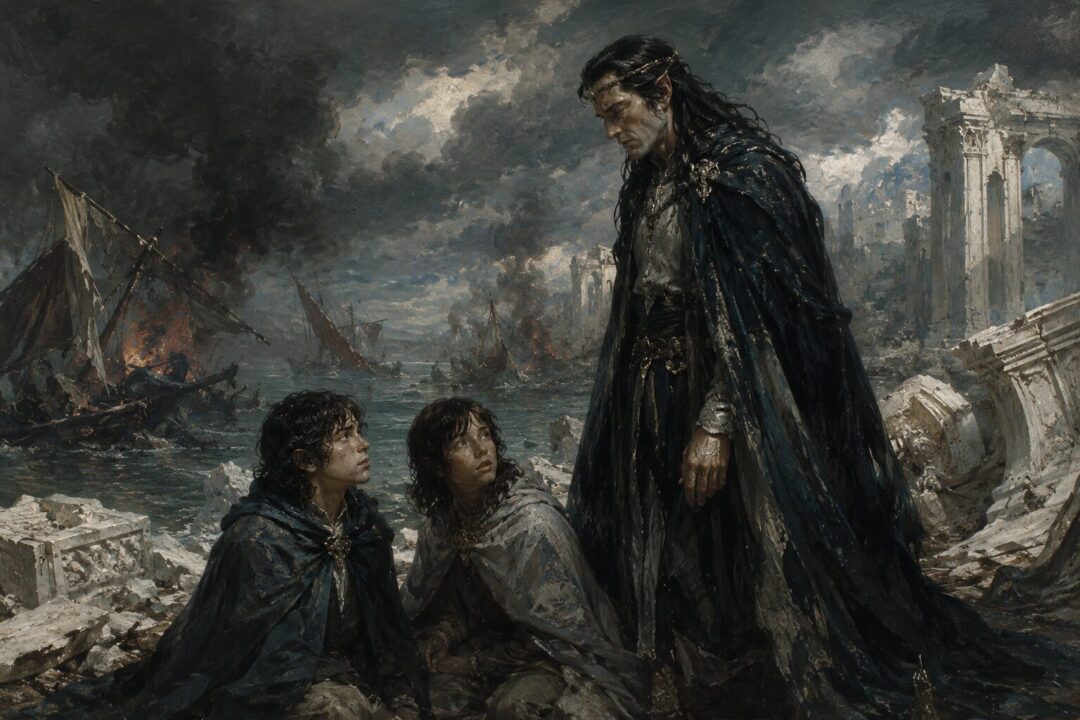
The Sons of Fëanor attacked the Havens of Sirion in pursuit of the Silmaril carried by Elwing. During the assault, Elrond and Elros were captured. Although the attack arose from one of the darkest chapters of Elvish history, the texts also describe an unexpected turn: Maglor pitied the young twins and raised them with care after the battle.
This does not erase the violence that separated the brothers from their parents. Rather, it illustrates one of Tolkien's recurring themes—that mercy may survive even after terrible wrongdoing.
Even as a child, Elrond learned that love and loss could exist together.
A Family Forever Divided
The War of Wrath defeated Morgoth, but victory did not restore what had been lost.
Instead came one of the defining choices in all of Middle-earth.
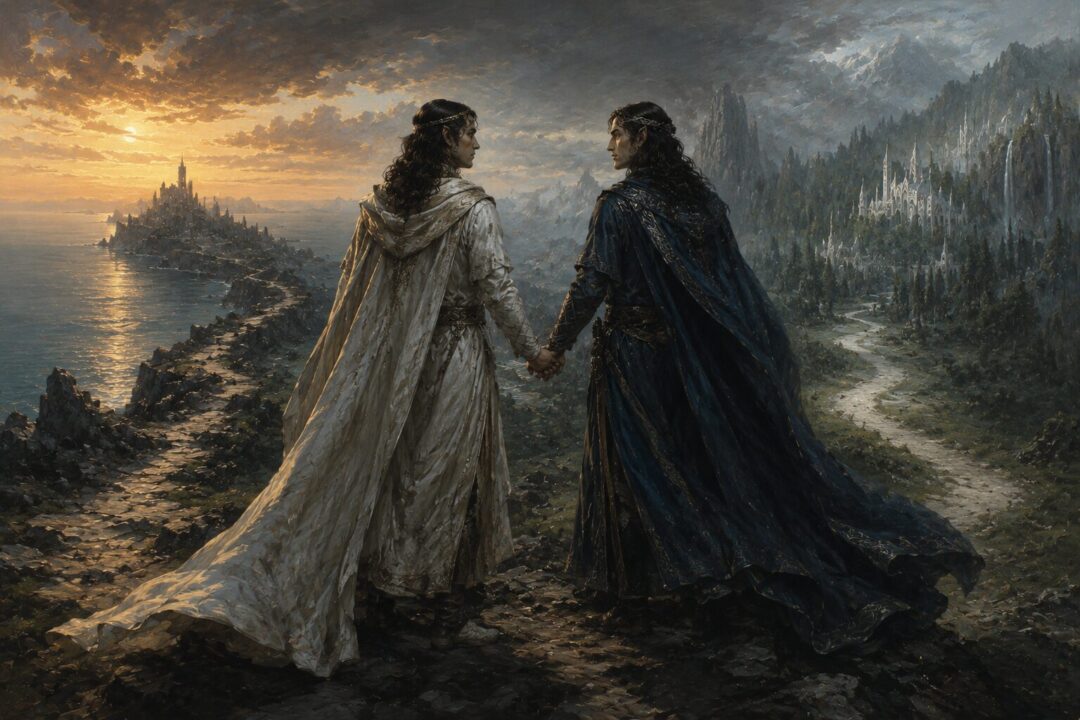
Because Eärendil and Elwing had united the kindreds of Elves and Men, the Valar granted their children the Choice of the Half-elven. Elrond chose the fate of the Eldar, while Elros chose the Gift of Men.
Neither choice was presented as morally superior. Each carried its own blessing and sacrifice.
Elros became the first king of Númenor, living an extraordinarily long mortal life before willingly surrendering it. Elrond remained immortal within Arda for as long as it endured.
For many readers, this decision can seem abstract. In practice, it meant something painfully simple.
The brothers would never truly share the same destiny again.
Elros would age, die, and depart beyond the circles of the world. Elrond would remain behind.
Long before Arwen's choice echoed this division, Elrond had already experienced it with his own twin.
The Long Burden of Immortality
Immortality in Tolkien's legendarium is rarely portrayed as endless happiness.
Elves are bound to the life of the world. They preserve memory across ages, carrying joys forward alongside every sorrow. Time heals little when nothing is forgotten.
Elrond became one of Middle-earth's greatest keepers of memory.
He saw Beleriand vanish beneath the sea.
He witnessed the glory of Númenor through the legacy of his brother before its catastrophic downfall.
He lived through the forging of the Rings of Power, the rise of Sauron, the Last Alliance, the loss of Gil-galad, and the death of Isildur.
Each age demanded that he bury more friends while remaining behind to guide those who followed.
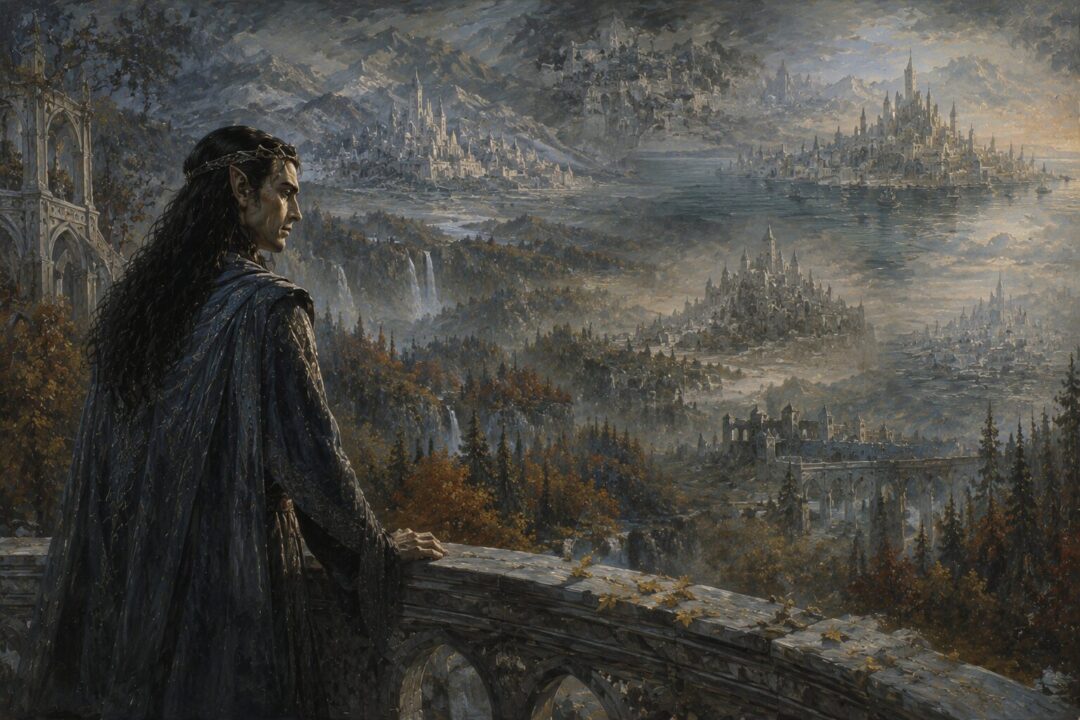
Rivendell itself became something remarkable because of this experience. It was not merely a refuge from danger but also a sanctuary where fragments of older ages survived. Songs, histories, languages, and wisdom that had vanished elsewhere remained alive because people like Elrond remembered them.
That preservation, however, came at a personal cost. To remember everything is also to remember every loss.
The Fall of Gil-galad and the End of an Age
Among the deaths that shaped Elrond most profoundly was that of Gil-galad, the last High King of the Noldor in Middle-earth.
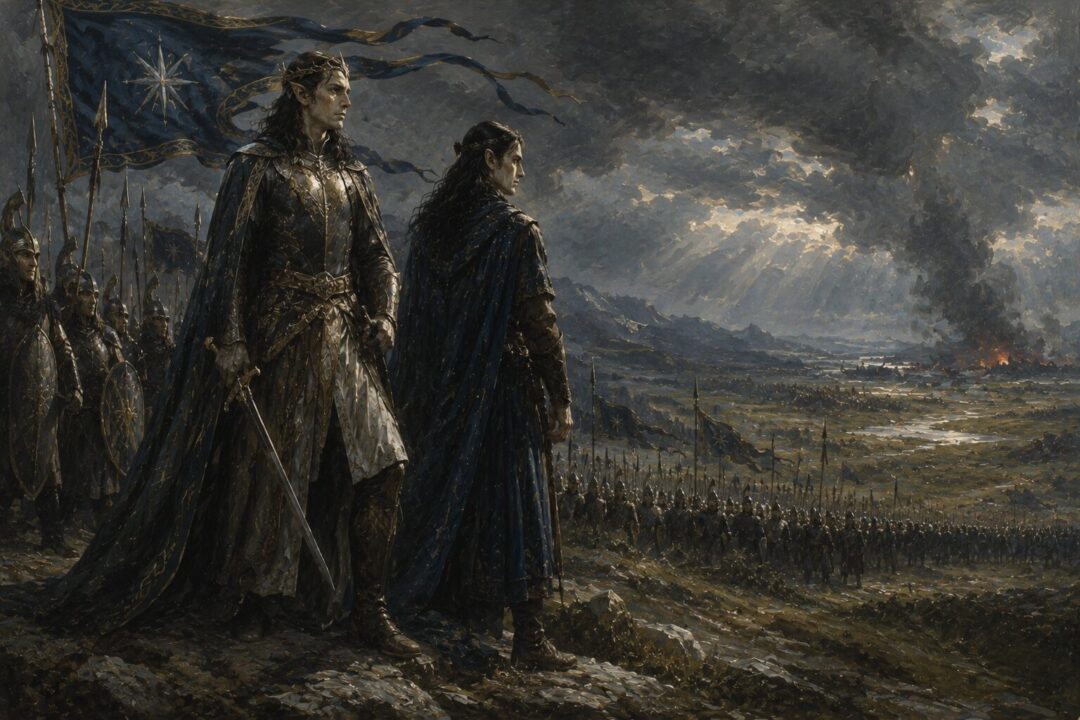
Elrond served as Gil-galad's herald throughout much of the Second Age. Together they opposed Sauron during some of the greatest conflicts in history.
When the Last Alliance marched against Mordor, Elrond stood beside Gil-galad through the long campaign that ended with the defeat of Sauron.
Victory came at terrible cost.
Gil-galad died in combat with Sauron, alongside Elendil. The texts do not linger on Elrond's personal emotions during this moment, but the consequences are unmistakable. Another leader whom Elrond had served faithfully was gone, and the old order of the Elves diminished even further.
The pattern repeated itself once again: survival meant witnessing another ending.
Watching Kingdoms Fade
Unlike most rulers, Elrond did not simply govern through one generation.
He watched entire civilizations pass.
The kingdom founded by his brother eventually disappeared beneath history after the Downfall of Númenor.
Arnor fractured into smaller realms before finally collapsing.
The Northern Dúnedain became wandering Rangers rather than kings.
The power of the Elves steadily diminished as the centuries passed.
For ordinary people, political decline unfolds across many lifetimes.
For Elrond, it unfolded within one.
This perspective helps explain why he often speaks with patience rather than urgency. He has already seen triumphs become ruins and proud kingdoms become forgotten names.
Hope, for him, has never depended on permanence.
The Choice He Could Never Make for Others
One of the most painful themes surrounding Elrond is that he repeatedly encounters choices he cannot make himself.
He could not choose for Elros.
He could not undo Isildur's refusal to destroy the One Ring after the Last Alliance.
He could guide, advise, and warn—but never compel.
The same principle eventually governed Arwen.
Although Elrond foresaw much of what her decision would mean, the choice belonged to her alone.
This reflects an important moral pattern throughout Tolkien's works. Free will remains meaningful precisely because even the wisest cannot remove it from others.
Elrond understood the cost better than almost anyone.
Aragorn Revived an Ancient Memory
When Aragorn and Arwen fell in love, history did not simply repeat itself.
It echoed.
Aragorn descended directly from Elros. Arwen descended from Elrond.
The union of Aragorn and Arwen therefore reunited branches of the same family that had been separated since the Choice of the Half-elven.
This mirrors, in important ways, the earlier union of Eärendil and Elwing, where the bloodlines of Elves and Men were also joined.
Yet beneath that hopeful symbolism lay another painful truth.
If Arwen chose Aragorn, she would choose mortality.
For Elrond, this meant reliving the separation that had begun with Elros thousands of years earlier.
The difference was even more intimate this time.
Instead of losing a brother to another destiny, he would lose his daughter.
Why Elrond Delayed the Marriage
Some readers interpret Elrond's conditions for Aragorn as an attempt to prevent the marriage.
The texts suggest something more measured.
Elrond declared that Aragorn could wed Arwen only if he first became King of both Arnor and Gondor. This requirement was extraordinarily difficult, but it reflected the significance of Arwen's sacrifice.
If she surrendered immortality, it could not be for anything less than the restoration of the kingdom descended from Elros.
Rather than denying Arwen's freedom, Elrond appears to insist that her choice should serve the highest possible hope for both Elves and Men.
He neither forces nor forbids.
He waits.
That waiting itself becomes another form of grief.
A Father Who Already Understood Loss
By the end of the Third Age, Elrond had become something rare even among the Eldar.
He remembered nearly every defining event that had shaped the world since the First Age.
He had been separated from his parents.
Separated from his twin.
Separated from countless friends by war and time.
He had watched the slow fading of the Elves and knew that the Three Rings would lose their power after the destruction of the One Ring.
Even Rivendell's days were ending.
Against that immense backdrop, Arwen's choice was not an isolated tragedy.
It gathered every earlier sorrow into one final farewell.
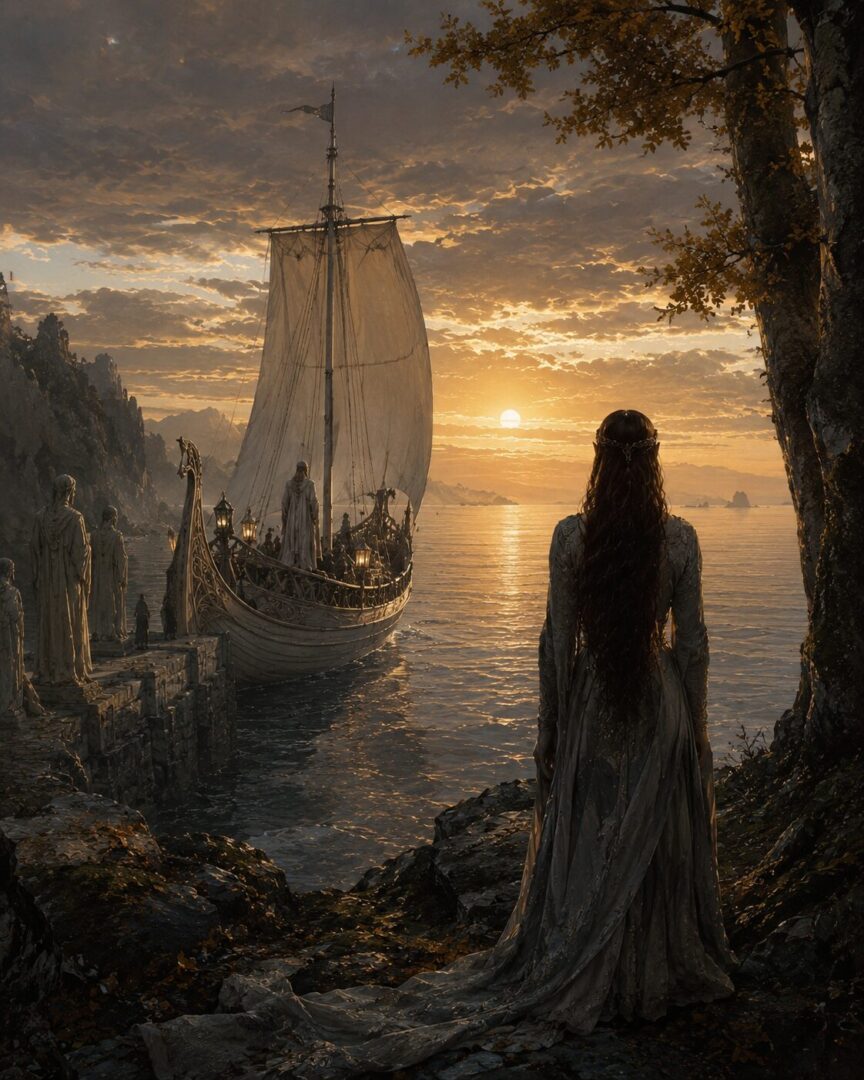
The Grey Havens Were Not Simply a Victory
After Sauron's defeat, the story often feels triumphant.
The King returned.
Peace was restored.
The Shadow passed.
Yet for Elrond, victory carried another departure.
When he sailed from the Grey Havens, Arwen remained behind in Middle-earth because she had accepted the fate of Men. The separation became permanent within the history of the world.
The text does not portray Elrond as rejecting her choice. Instead, it presents the departure with quiet dignity and profound sadness.
There is no villain responsible.
No curse to break.
Only the inevitable consequence of freedom exercised in love.
That may be why the scene remains so powerful.
It is not the beginning of Elrond's grief.
It is the moment when thousands of years of remembered partings finally receive their last earthly chapter.
Seen in that light, Elrond becomes far more than the wise master of Rivendell. He embodies one of the central truths of Middle-earth: memory is both a gift and a burden. The longer one preserves what is beautiful, the more often one must endure its passing. His wisdom is inseparable from that experience. Every act of counsel, every welcome offered in Rivendell, and every hope placed in the Free Peoples emerges from someone who has already survived losses beyond counting.
Arwen did not create Elrond's sorrow.
She revealed how long he had been carrying it.
Sources & Notes
- Tolkien Gateway character overview for Elrond. https://tolkiengateway.net/wiki/Elrond
- Tolkien Gateway overview of Elros, Elrond's brother. https://tolkiengateway.net/wiki/Elros
- Tolkien Gateway overview of Arwen and her choice. https://tolkiengateway.net/wiki/Arwen
Sources added.