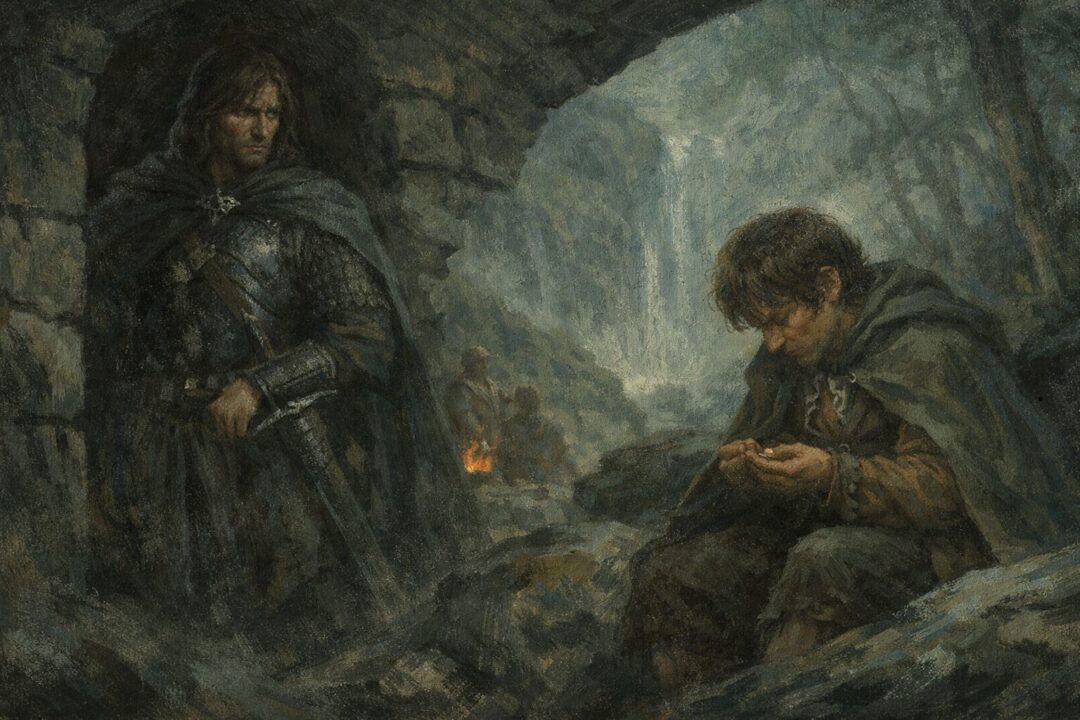
When people talk about resistance to the Ring, they usually begin with the exceptional. Hobbits, whose smallness shields them from grand ambition. Wizards, bound by ancient rules and deep knowledge. Elves, whose long memory makes them wary of power gained too quickly. These are the figures we expect to endure.
Faramir does not belong cleanly in any of these categories.
He is a Man of Gondor. A captain and a warrior, raised in a land constantly preparing for war. He has seen the slow weakening of the West, the thinning of its defenses, and the shadow gathering in the East. He desires victory for his people and fears their decline. On paper, he should be exactly the kind of person the Ring consumes: capable, principled, desperate enough to see power as a solution.
And yet, when the Ring comes within his reach, he refuses it.
This moment often feels understated, especially when compared to the dramatic failures that surround it. There is no visible struggle, no prolonged temptation, no last-second rescue. Faramir listens, understands, and lets the Ring pass out of his life.
This is not an accident of writing, nor a convenient moral exception. It is the result of who Faramir is—and, more importantly, what he understands about power, loss, and the cost of survival.
The Popular Explanation (And Why It Falls Short)
The most common explanation is a simple one: Faramir is wiser than his brother.
There is truth in this, but it does not reach the heart of the matter.
Wisdom alone does not protect anyone from the Ring. If it did, the wisest figures in Middle-earth would never have feared it. In fact, wisdom often sharpens the temptation. The more clearly someone can imagine consequences, the easier it becomes to justify terrible choices in the name of a greater good.
The Ring does not prey on ignorance. It preys on purpose.
It looks for people who want something badly enough to believe they deserve the means to achieve it. Wisdom helps the Ring craft better arguments. It supplies language like “necessity,” “duty,” and “sacrifice.”
So if wisdom alone is not the shield, what is?
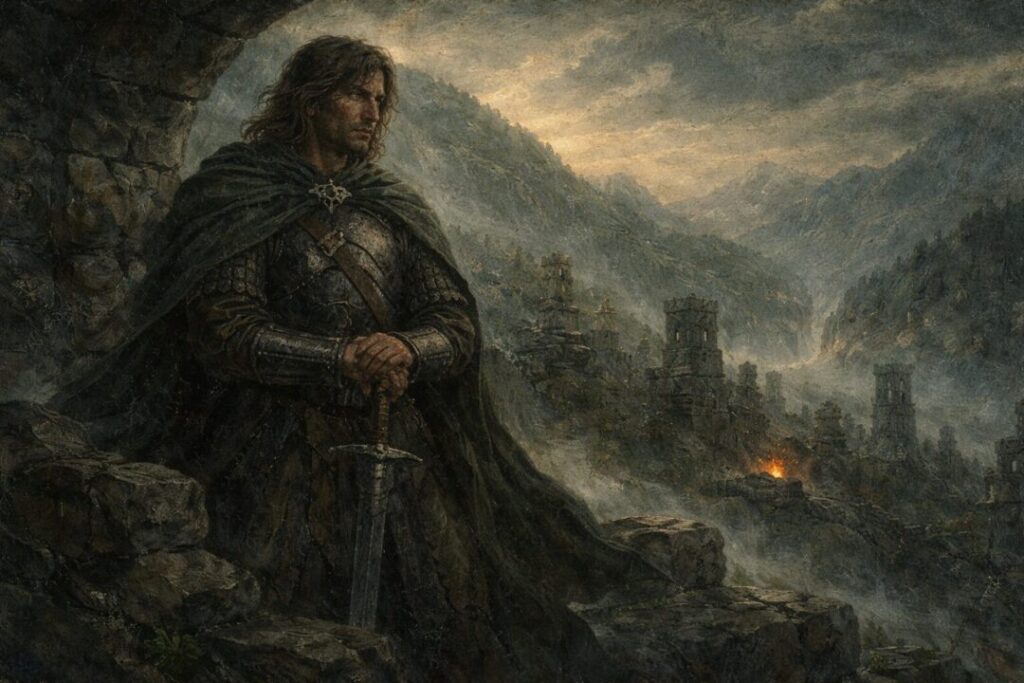
Faramir’s Upbringing: Power Without Possession
Faramir was raised differently from his brother—not in rank or responsibility, but in values.
Boromir was shaped to win. From an early age, he carried the weight of Gondor’s defense and the expectation that strength, courage, and decisive action would hold the darkness at bay. He became the sword-arm of his people, and he bore that role with pride.
Faramir, by contrast, was shaped to understand.
He learned lore and history. He listened to the old tales not only as songs of glory, but as records of failure and decline. He absorbed the long memory of Númenor—not just its greatness, but its fall. He learned that ruin does not always come from defeat. More often, it comes from compromise made in the name of survival.
This difference matters because the Ring does not announce itself as evil. It presents itself as necessary.
It whispers that the old rules no longer apply. That desperate times require new tools. That refusing power is the same as surrender.
Faramir recognizes that voice because he has heard its echoes in history.
He Knows What the Ring Really Is
When Faramir says that he would not pick up the Ring even if he found it lying by the roadside, he is not making a boast. He is stating a conclusion he reached long before Frodo ever entered Ithilien.
He understands that the Ring does not amplify virtue—it replaces it.
Others see the Ring as a tool:
- Boromir sees salvation for Gondor
- Saruman sees order imposed on chaos
- Even the wise imagine a chance to oppose the Enemy on equal terms
Faramir sees erasure.
He understands that any victory won through the Ring would no longer belong to the one who claimed it. The land might be saved in name, but it would be hollowed out in spirit. Gondor would endure only as a thing ruled by fear, not loyalty.
To Faramir, that is not preservation. It is another form of loss.

Why the Ring’s Temptation Fails Here
The Ring is not a blunt instrument. It adapts. It speaks differently to each bearer, shaping its promise to match their deepest longings.
But it has one crucial weakness: it requires participation.
The Ring must be imagined. Its bearer must take the first step and picture themselves using it. Once that image exists, the corruption has begun.
Faramir never crosses that threshold.
He does not test the thought. He does not entertain a private “what if.” He does not imagine himself standing victorious while the Enemy falls.
That refusal is decisive.
Once the door is opened—even a crack—the Ring has already won. Faramir keeps it closed, not through force of will in the moment, but through understanding formed long before temptation arrived.
Contrast With Boromir (Without Condemnation)
Boromir’s fall is often framed as a moral failure, but that reading misses its tragedy.
Boromir loved Gondor more than himself. He was willing to be broken if it meant his people might live. The Ring recognized that devotion and used it.
Faramir loves Gondor too—but he loves it as it is, not as a dominion enforced by terror disguised as strength. He understands that a land preserved through domination is already lost.
One brother believes victory justifies the means.
The other believes survival without integrity is not survival at all.
Neither position comes from weakness. They come from different understandings of what it means to protect something fragile in a world that is fading.

The Quiet Strength of Refusal
Faramir’s moment lacks spectacle. There is no glowing artifact held aloft, no collapse into madness, no last-minute rescue.
And that is precisely the point.
True resistance in Tolkien’s world is rarely loud. It is patient. It is rooted. It is often invisible. It appears as restraint rather than action, as refusal rather than conquest.
Faramir does not defeat the Ring.
He does something far more difficult: he refuses to become part of its story.
In a world where kings, warriors, and sages alike fail that test, this quiet choice sets him apart. Not as a hero of legend, but as a reminder that sometimes the greatest strength lies not in what we claim—but in what we willingly let go.
And that is why Faramir stands as one of the most quietly extraordinary figures in the history of Middle-earth.