Why Gollum’s Hunt Belongs in Middle-earth
A filmmaker could invent a fantasy world, populate it with strange creatures, and send a hunter after a dangerous fugitive. Such a story could offer unfamiliar geography, unpredictable history, and an unknown ending. So why return to Middle-earth for a hunt whose outcome J.R.R. Tolkien’s readers already know?
Because the strongest reason to tell this story is what a new world cannot provide: the weight of everything that happens before and after it.
Familiar names and landscapes cannot substitute for drama. But Tolkien left a pursuit with genuine narrative pressure, moral complications, and consequences extending far beyond one creature’s capture. The challenge is to develop those elements without inflating a relatively small episode into an artificial epic.
The Hunt Is Already Part of the Story
In *The Fellowship of the Ring*, the hunt for Gollum is part of the history that makes Frodo’s journey possible.
At the Council of Elrond, Aragorn recounts tracking Gollum across dangerous country, capturing him near the Dead Marshes, and delivering him to the Elves of Mirkwood. Gandalf needs information because Gollum possessed the One Ring and was subsequently captured and questioned by Sauron’s servants.
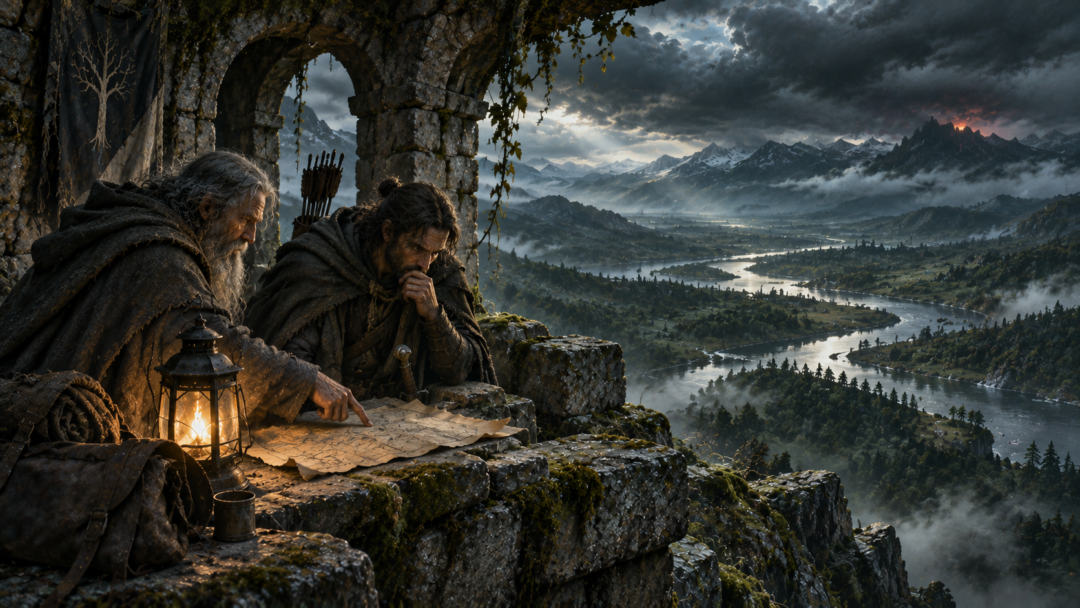
Tolkien’s Appendix B establishes an extended search involving Gandalf and Aragorn. Beginning in earnest again in 3009 of the Third Age, their intermittent pursuit takes them through the Anduin region, Mirkwood, Rhovanion, and toward Mordor. Aragorn finally captures Gollum in 3017.
This chronology places the pursuit within the struggle against Sauron. Gandalf is investigating Bilbo’s ring. Aragorn undertakes dangerous work without public recognition. Gollum possesses information that could expose the Shire to catastrophe.
An invented fantasy hunt could reproduce the action, but not these relationships without constructing their history from scratch. Middle-earth supplies connections that make an otherwise modest assignment consequential.
A Small Pursuit With Enormous Consequences
Gollum appears insignificant, yet his knowledge is extraordinarily dangerous.
He commands no armies and possesses neither royal authority nor magical power comparable to the great figures of Middle-earth. He is a ruined former Ring-bearer, physically isolated and consumed by his desire to recover his lost possession. Nevertheless, his connection to the Ring places him at the center of events that powerful rulers barely understand.
In *The Shadow of the Past*, Gandalf explains how Gollum’s history helped establish the identity and danger of Bilbo’s ring. His experiences connect an object kept in an ordinary hobbit home to Sauron’s most important surviving weapon.
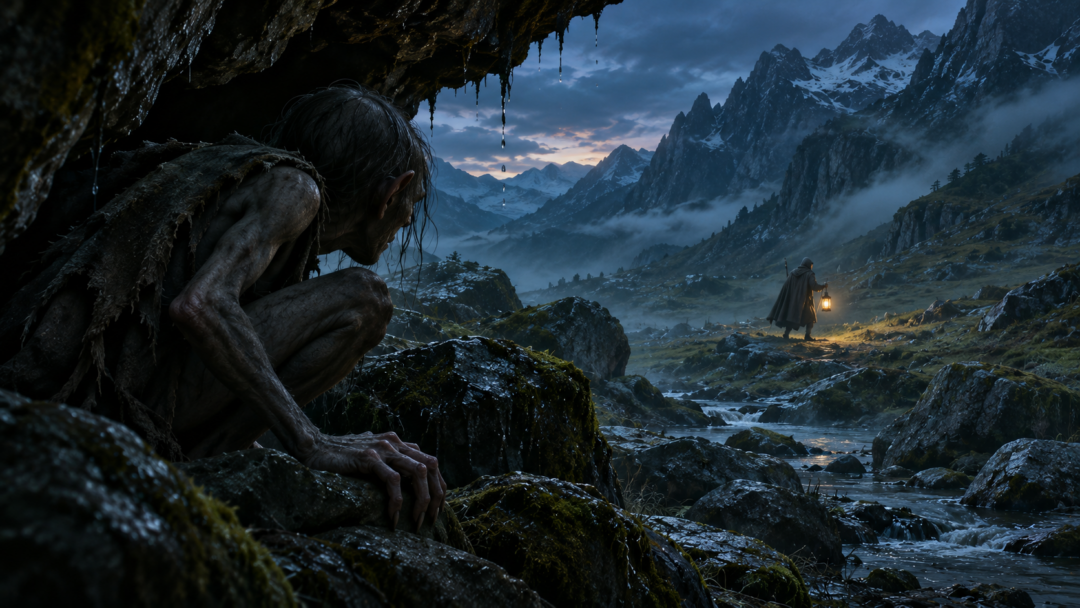
The hunt consequently operates on two scales. Physically, it is a difficult search for a creature skilled at hiding in hostile territory. Strategically, it is an attempt to control information before that knowledge helps destroy Middle-earth’s free peoples.
This contrast provides stronger material than simply adding monsters, battles, or spectacular locations. The stakes already exist. A filmmaker must make them tangible through danger, character, and decisions rather than repeated explanations of future events.
Aragorn Is More Interesting Before the Crown
The pursuit also reveals an aspect of Aragorn that his eventual kingship can overshadow.
Peter Jackson’s *The Fellowship of the Ring* introduces Strider as a mysterious Ranger at Bree. He protects the hobbits, guides them through the wilderness, and gradually reveals his connection to a larger destiny. The films also emphasize his hesitation about accepting Gondor’s kingship.
The hunt offers a less ceremonial perspective. Tolkien’s Aragorn spends years traveling, watching, serving, and enduring hardship before the War of the Ring reaches its climax.
Capturing Gollum promises neither a throne nor public victory. It means tracking an elusive creature through dangerous country, securing him, and keeping him alive long enough to deliver him into custody. His prisoner is valuable, difficult, and hardly an inspiring companion.
Such work complicates the heroic image audiences already possess. Kingship looks glorious during a coronation. Leadership looks different when it requires an exhausting, thankless responsibility without witnesses or any guarantee of success.
An original fantasy Ranger could endure comparable hardships. Aragorn’s established future, however, changes their significance. They demonstrate the character developed long before audiences encounter his most celebrated decisions.
Gollum Cannot Be Treated as Ordinary Prey
Tolkien has already made Gollum’s moral status deeply uncomfortable.
Bilbo has the opportunity to kill Gollum in *The Hobbit* but spares him. In *The Shadow of the Past*, Gandalf challenges Frodo’s readiness to consider Gollum deserving of death. Later, in *The Two Towers*, Frodo extends limited mercy and trust toward him despite recognizing his danger.
These moments establish that Gollum is threatening, deceitful, and capable of terrible acts, yet cannot simply be treated as a monster whose destruction constitutes an uncomplicated victory.
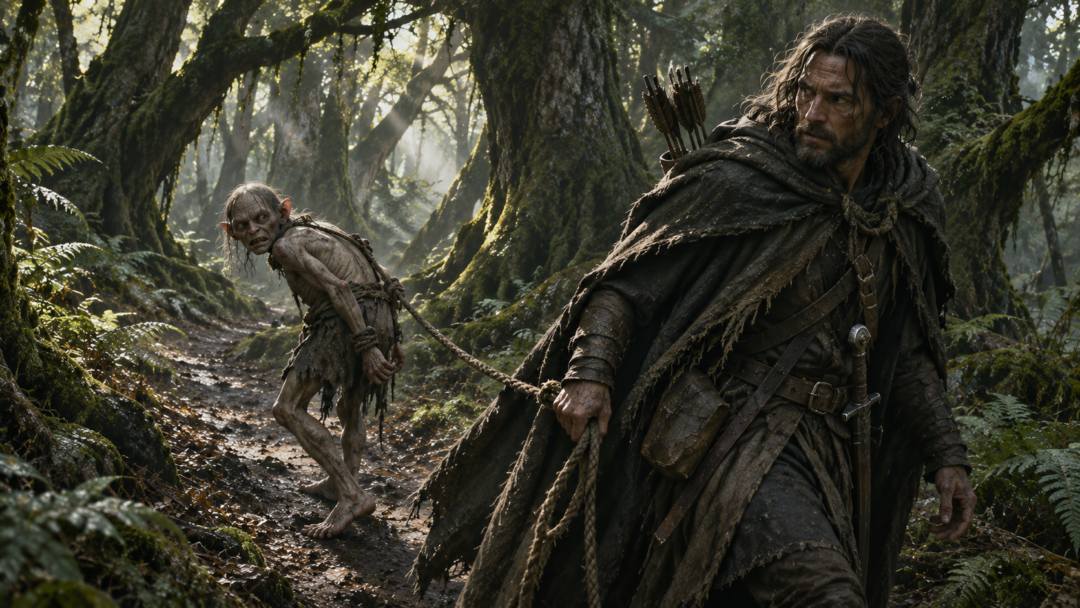
Aragorn must pursue someone genuinely dangerous without regarding him as disposable. Gandalf needs Gollum’s testimony, but that necessity does not eliminate questions about the prisoner’s treatment. Even the practical obligation to deliver him alive creates tension between duty and the temptation to resolve a threat through violence.
A film could express this contradiction through behavior rather than speeches. How should a hunter respond when his quarry is simultaneously repellent and pitiable? How does the responsibility change when the future may depend on the survival of someone apparently undeserving of mercy?
Middle-earth provides an established moral framework for these questions. Removing Gollum from that framework would sacrifice much of his distinctive significance.
Knowing the Outcome Is Not Knowing the Experience
Fans already know Aragorn catches Gollum, that Gollum survives, and that his journey eventually reaches Mount Doom. This eliminates uncertainty about the broad outcome, but not about the experiences, relationships, or decisions producing it.
Consider Moria in Jackson’s *The Fellowship of the Ring*. Viewers familiar with Tolkien already anticipate Gandalf’s confrontation with the Balrog. The sequence nevertheless succeeds through mounting dread, the Fellowship’s vulnerability, and the emotional cost of the encounter.
Likewise, the Ring’s destruction in *The Return of the King* remains powerful on repeat viewings. Its dramatic force comes partly from how the characters reach that familiar destination.
A Gollum film cannot plausibly persuade informed audiences that Aragorn will die before completing his mission or that Gollum will permanently disappear. Instead, terrain, exhaustion, mistrust, and moral compromises must become compelling enough to give the established result new meaning.
This is a narrower dramatic opportunity than an entirely original story provides, but it is not an empty one. Suspense can concern the cost of success rather than its probability.
The Films Leave a Useful Gap
Jackson’s trilogy substantially compresses Aragorn’s earlier search.
The films establish Gollum’s connection to the Ring and the danger of Sauron’s discovery. They also provide a recognizable visual language for Rangers, forests, ruined strongholds, and the lands surrounding Mordor. Yet they never dramatize the extended campaign through which Gandalf and Aragorn search for Gollum and eventually secure him.
That omission creates room for a connected narrative without retelling the War of the Ring. It also presents a temptation: relying on familiar scenery instead of developing a compelling pursuit.
Middle-earth should function as a world whose geography, politics, and history shape events, not merely as a collection of recognizable backgrounds.
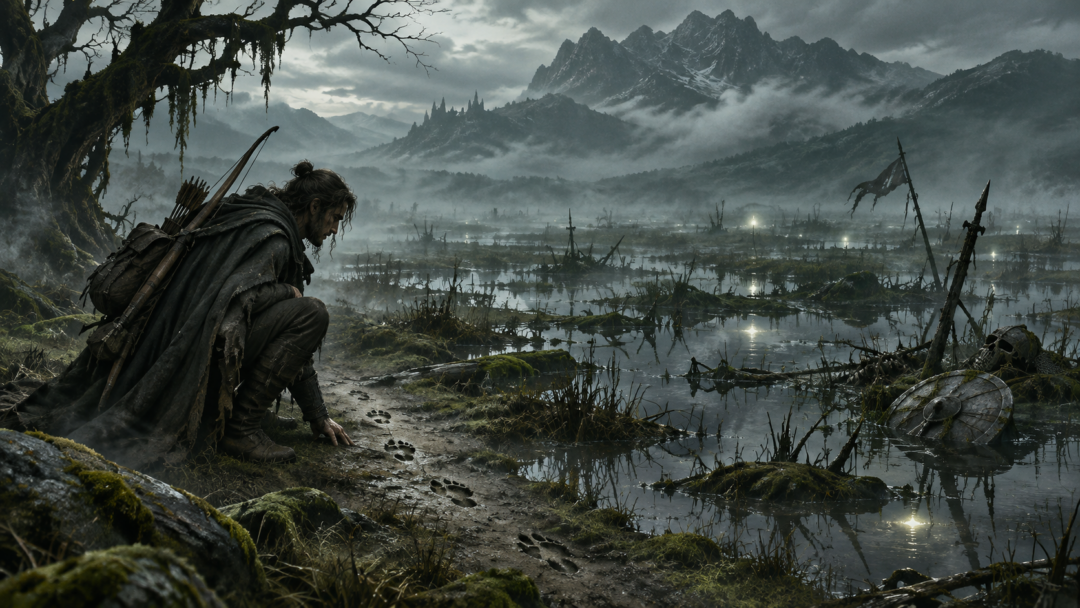
The Dead Marshes, for example, are not interchangeable with a generic haunted swamp. In *The Two Towers*, their dead and mysterious lights preserve the memory of an ancient battlefield. A pursuit through this landscape can draw tension from its history without requiring invented spectacle.
Established locations communicate meaning before characters explain anything. That accumulated significance is one of Tolkien’s world-building advantages.
The World Makes Every Decision More Expensive
An original fantasy writer can devise whatever rules best serve a chase. Such freedom permits surprises, but consequences may seem negotiable when audiences have no established reasons to trust the world’s constraints.
Middle-earth provides comparatively firm boundaries.
Gollum’s knowledge matters because Sauron is seeking the Ring. Gandalf cannot simply disclose everything because secrecy and uncertainty are central to the struggle. Aragorn’s obligations as a Ranger shape his actions, while his larger history gives those responsibilities added significance. The route toward Mordor contains dangers that exist independently of this particular plot.
Drama should develop from these constraints rather than convenient exceptions to them.
Chronology also requires attention. Tolkien’s published Appendix B and certain accounts discussed in *Unfinished Tales* do not align perfectly on every dating detail. Adaptation inevitably involves choices, but those decisions should preserve the established causal sequence rather than contradict it casually.
A familiar universe does not eliminate creative freedom; it changes its form. Instead of inventing unlimited possibilities, filmmakers identify meaningful choices within an inherited structure. Such restrictions can produce sharper storytelling when consequences remain consistent.
The Commercial Argument Is Real, but Insufficient
Middle-earth offers undeniable commercial advantages over an unknown fantasy property: worldwide recognition, an established cinematic identity, and an existing audience.
Warner Bros. and New Line have announced *The Lord of the Rings: The Hunt for Gollum*, directed by and starring Andy Serkis, with Peter Jackson, Fran Walsh, and Philippa Boyens involved as producers. The film is scheduled for December 17, 2027.
These connections matter when financing expensive fantasy filmmaking. Recognition reduces the burden of introducing an unfamiliar world and gives audiences an immediate reason to pay attention.
But recognition only helps attract viewers. It cannot sustain an unsatisfying film filled with unnecessary detours.
Jackson’s *The Hobbit* trilogy offers a warning. Its source material presents a smaller central adventure than the sprawling adaptation ultimately delivered. Whatever one’s judgment of the results, the expansion demonstrates how returning to a beloved world can encourage additional action and narrative complications that do not necessarily strengthen the principal story.
A Gollum hunt should resist that impulse. Its source material requires neither an invented war nor a procession of recognizable characters appearing for applause. Its strengths are secrecy, pursuit, moral unease, and the unequal relationship between an experienced hunter and a damaged fugitive.
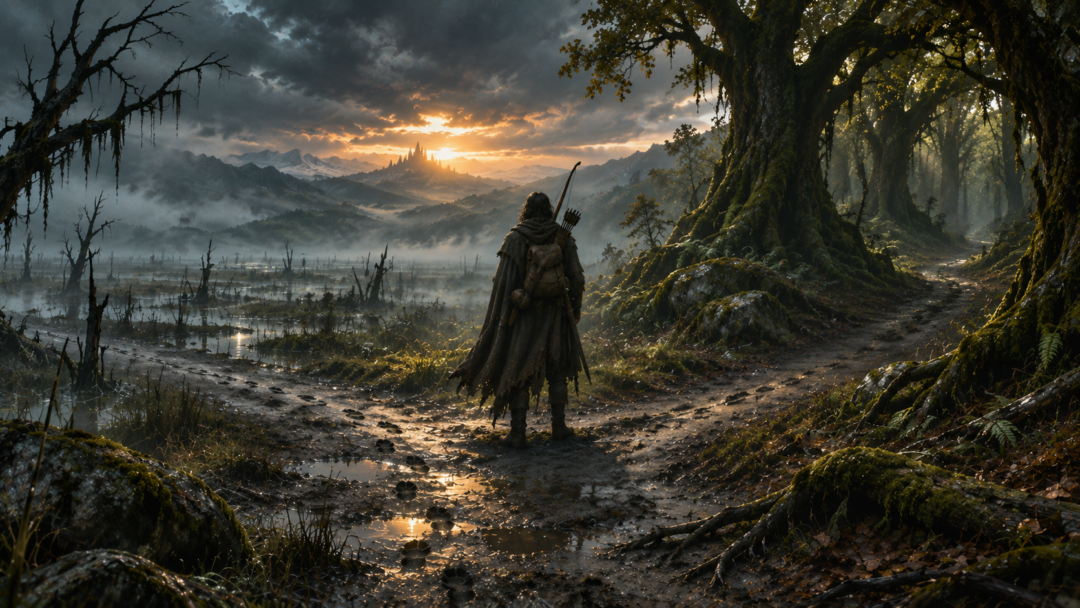
A smaller adventure could be especially valuable in a franchise already associated with enormous battles. Scale should follow the material rather than the audience’s expectations of spectacle.
Why an Original World Remains a Legitimate Alternative
None of these advantages means fantasy should continually recycle established settings.
An original hunt could introduce unfamiliar cultures, creatures, and moral systems. Its creators could determine the ending without consulting an established chronology. A new protagonist might fail completely, abandon the mission, or discover that the supposed quarry was never the true threat.
That unpredictability has genuine artistic value.
The relevant question, however, is whether Gollum’s particular story would improve if separated from Tolkien’s creation. Much of its meaning would disappear.
Gollum’s significance depends on the Ring, Bilbo, Sauron, Gandalf, and Frodo’s later mercy. Aragorn’s pursuit matters because it precedes his kingship and because difficult work performed out of sight helps make later victories possible. Even Gollum’s survival, seemingly a failure to eliminate a dangerous enemy, becomes extraordinarily important at the conclusion of *The Return of the King*.
A new fantasy world could create other compelling relationships, but they would necessarily be different. Removing Tolkien’s history would not preserve this particular story while merely changing its setting.
The Best Reason to Return
Ultimately, recognizable characters and a valuable franchise explain why a studio might finance the hunt. They do not establish why audiences should care about it dramatically.
The stronger justification is Tolkien’s construction of a world in which apparently minor actions accumulate enormous moral and historical consequences.
Bilbo’s pity matters. Gandalf’s investigation matters. Aragorn’s exhausting pursuit matters. Frodo’s subsequent decision to spare Gollum matters. None of these choices guarantees success when it is made, and none can be properly understood in isolation.
A worthwhile adaptation could reveal the personal cost of one necessary, largely unseen task. It could demonstrate why an unglamorous search belongs alongside grand battles without pretending that this pursuit was secretly the greatest event of the age.
The destination is already known. That should encourage precision rather than inflation.
A new fantasy world might deliver a more surprising chase. Middle-earth offers the opportunity to make a familiar ending feel more deeply earned. For a story about Gollum, that is the more persuasive reason to return.
Sources & Notes
This article is based on close reading and interpretation of Tolkien's published works and related source material where relevant.