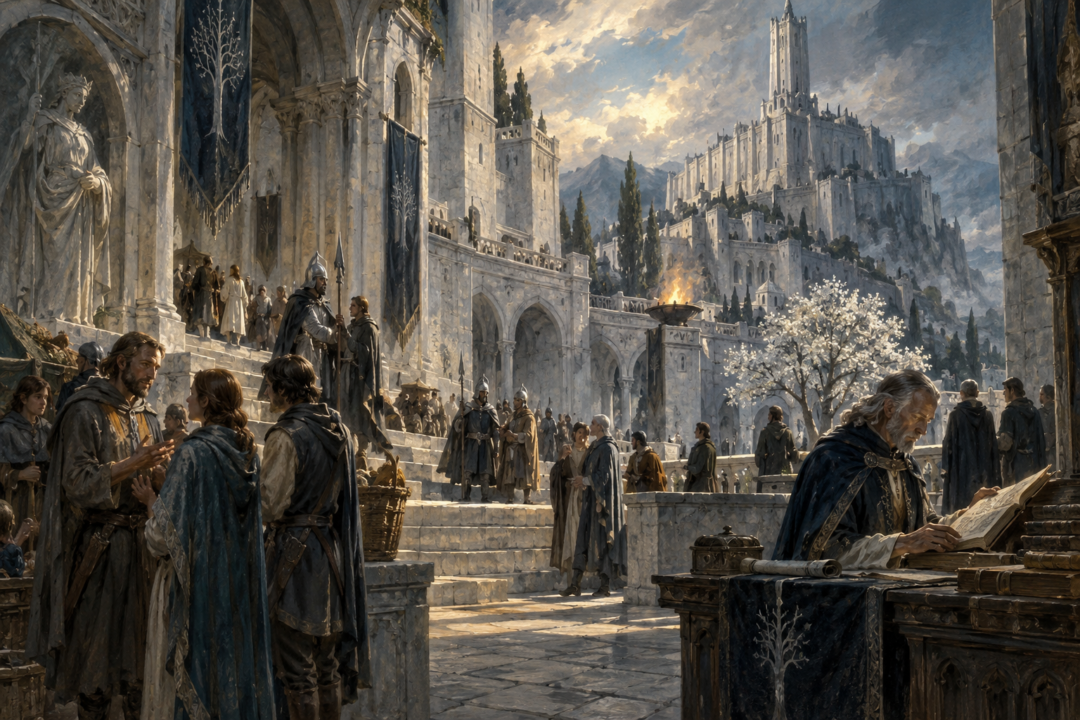
When Aragorn is crowned King, he does not simply become “Aragorn, King of Gondor.” He takes the name Elessar, and his royal house becomes the House of Telcontar. Both are Quenya forms.
That choice can seem strange. By the end of the Third Age, the ordinary language of Gondor was not Quenya. It was Westron, the Common Speech heard throughout most of The Lord of the Rings. Even Sindarin had a much stronger place in living Gondorian culture than Quenya did.
Yet look down Gondor’s royal list: Meneldil, Cemendur, Anardil, Rómendacil, Turambar, Atanatar, Hyarmendacil, Eldacar, Ondoher, Eärnil, Eärnur.
The pattern is deliberate. Gondor spoke one language in daily life while placing another around its crown.
The reason reaches back beyond Gondor itself, to Númenor—and to a political and cultural memory that survived the destruction of an entire civilization.
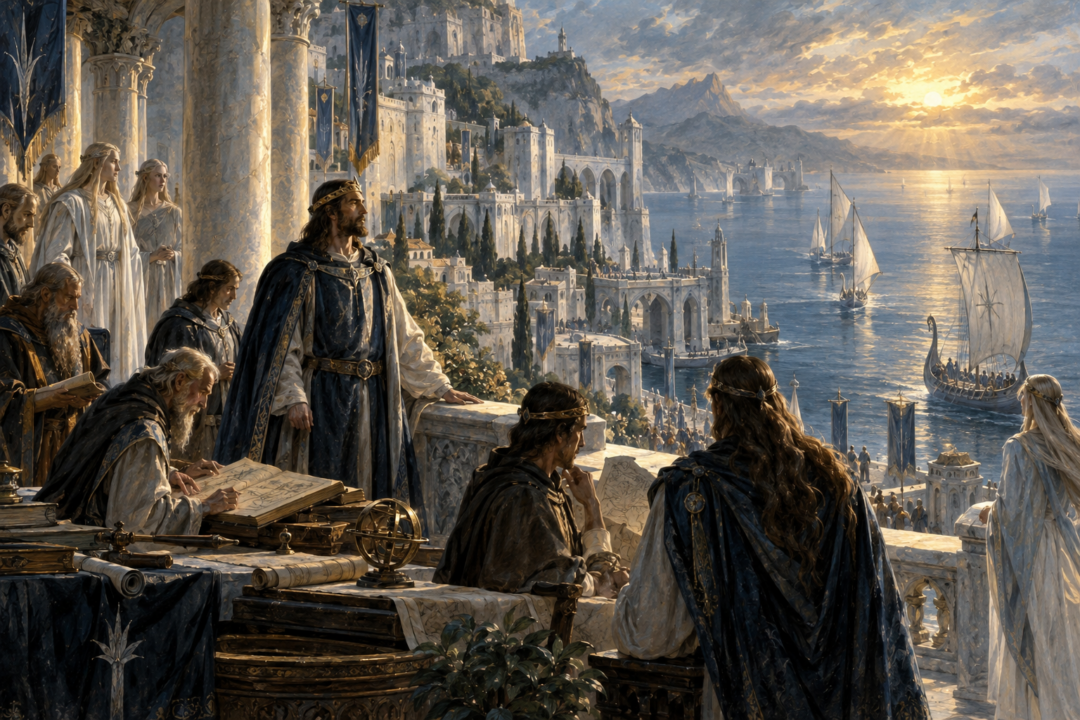
Quenya Was Never Simply Gondor’s Everyday Language
The first distinction is crucial: a language can possess enormous prestige without being the language people normally speak.
Appendix F of The Lord of the Rings describes Westron as the Common Speech of the western lands. It ultimately developed from the speech of Númenórean settlers and became widespread before Númenor itself fell. In the realms founded by the Dúnedain in exile, Westron increasingly became the native language of the population.
Gondor therefore did not spend the Third Age as a Quenya-speaking kingdom that mysteriously refused to abandon Quenya names.
Its linguistic situation was layered.
Westron was the great common language. Sindarin survived among portions of the Dúnedain and remained particularly associated with people of higher Númenórean descent and culture. Quenya occupied a different position: it was an ancient language of learning, tradition, ceremony, and exalted names.
By the War of the Ring, knowing Quenya was therefore not equivalent to using it at the dinner table.
Its rarity was part of its significance.
The Custom Came from Númenor
Gondor inherited its royal culture from Númenor, and Númenor had inherited Quenya naming traditions through its friendship with the Eldar.
In Unfinished Tales, the royal house and the Line of Elros are associated with official Quenya names. Early Númenórean rulers used Quenya royal titles beginning with Tar-, while Quenya carried extraordinary cultural prestige because of Númenor’s early friendship with the Eldar and its connection with the West.
That makes Gondor’s naming practice far more than an aesthetic preference for beautiful Elvish words.
The founders of Gondor were the Faithful: Númenóreans who had resisted the growing hostility toward the Eldar and the Valar in the final centuries of Númenor. Elendil and his sons Isildur and Anárion themselves bear Elvish names.
When their followers escaped the Downfall and established Arnor and Gondor in Middle-earth, they were not creating civilizations without a past. They regarded their kingdoms as realms in exile.
Their language, names, monuments, lore, and political traditions all carried memory across the sea.
Quenya royal names were one piece of that inheritance.
Númenor Had Already Made Language Political
The deeper importance of the custom becomes visible when we look at Númenor’s decline.
During Númenor’s earlier history, its rulers traditionally took royal names in Quenya. But as resentment of the Eldar and the Ban of the Valar increased, language itself became caught in the conflict.
The later Kings increasingly rejected the old Elvish associations.
Ar-Adûnakhôr broke the traditional pattern by taking the sceptre under an Adûnaic royal name. Later rulers continued the use of Adûnaic forms. Eventually the use and teaching of the Eldarin languages were suppressed, while the Faithful preserved their friendship with the Eldar and maintained the forbidden traditions.
Names had become declarations of allegiance.
A Quenya name could evoke the older Númenor: the Númenor that had received knowledge from the Eldar and had not yet turned its fear of death into rebellion against the West.
An Adûnaic royal title was not inherently evil—Adûnaic was Númenor’s own native Mannish tongue. The significance lay in the historical circumstances under which the later Kings deliberately rejected the earlier Quenya royal tradition.
That distinction matters. The conflict was not “good Elvish language versus bad human language.”
It was about what the royal house chose to remember and reject.
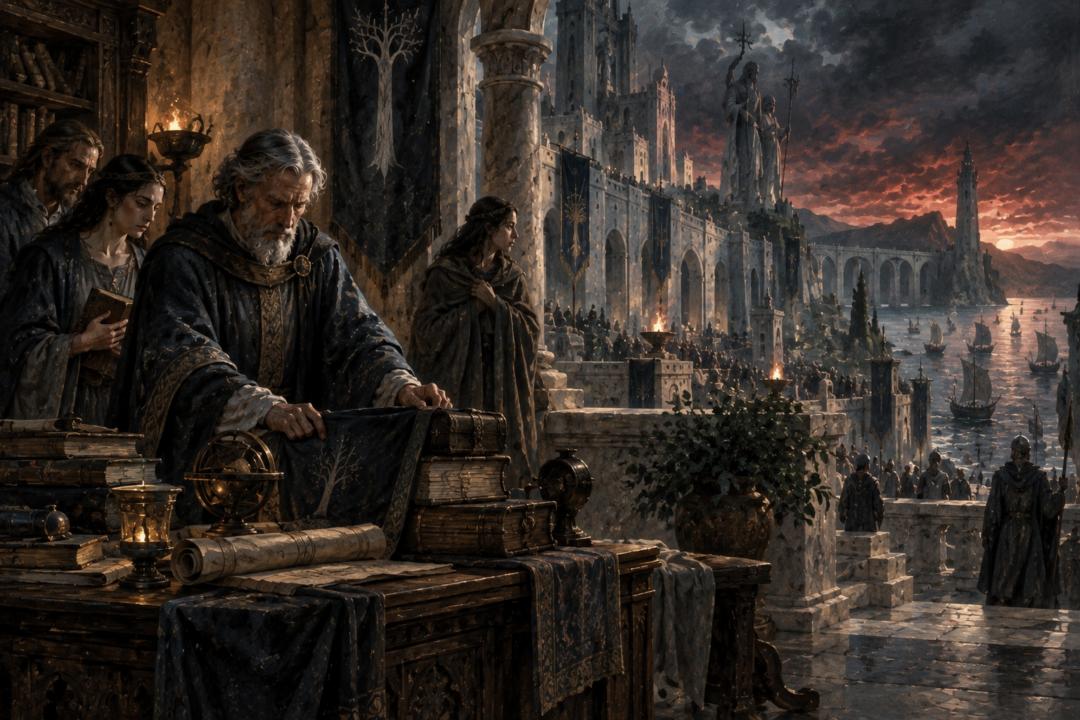
Gondor Was Founded by the Losing Side That Survived
Here lies one of the great ironies behind Gondor.
The Faithful were politically marginalized in late Númenor. Their opponents controlled the kingdom. Yet when Númenor was destroyed, Elendil and his followers survived the catastrophe and carried part of its ancient culture back to Middle-earth.
The Realms in Exile therefore preserved traditions that Númenor’s final regime had attempted to suppress.
Gondor’s Quenya royal names make sense within that context.
Meneldil, the son of Anárion, succeeded to Gondor after Isildur’s death. The kings who followed continued to bear High-elven names. Appendix A explicitly notes the practice of the Kings of Gondor using such names.
This did not require their subjects to speak Quenya.
A royal name belonged to a different cultural register from ordinary conversation. It connected the king to the Númenórean royal inheritance and, beyond Númenor, to the ancient Eldarin world from which much of the prestige of the Dúnedain’s lore derived.
The crown spoke through memory even when the marketplace spoke Westron.
The Names Could Carry Royal Ideology
Some Gondorian kings also assumed names commemorating victories or ambitions.
Tarostar, for example, took the name Rómendacil after defeating Easterlings. Later Minalcar assumed the same royal name, becoming Rómendacil II. Hyarmendacil I took his famous name after his victory over the peoples of Harad.
The element -ndacil is associated with victory, so these names functioned almost like commemorative royal titles.
The linguistic tradition could therefore do more than identify a ruler. It could present his reign in historical terms.
A king’s Quenya name might place his achievements inside the same elevated naming system that connected the monarchy to its Númenórean past.
This helps explain why the survival of Quenya did not depend on Quenya remaining a community’s ordinary spoken language.
Ceremonial languages survive differently.
They endure in names, inscriptions, scholarship, ritual formulas, monuments, and institutions long after everyday speech has moved elsewhere.
Gondor provides a particularly striking fictional example because its entire civilization is preoccupied with preserving fragments of a greater past.
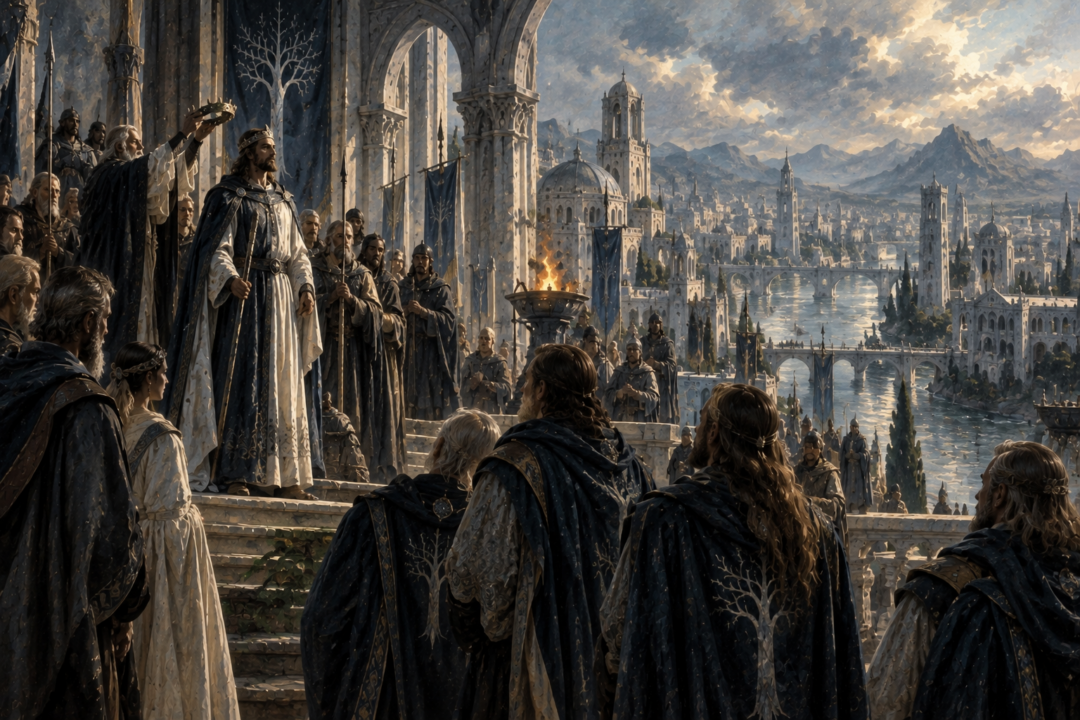
The Stewards Reveal Where the Boundary Lay
The strongest evidence that these names mattered institutionally comes after the kings disappear.
The Stewards of Gondor initially also bore High-elven names. Appendix A specifically notes, however, that after Mardil Voronwë the Stewards ceased to use High-elven names.
That change coincides with the beginning of the long rule of the Ruling Stewards after King Eärnur vanished in Minas Morgul.
The text does not explicitly give us the Stewards’ reasoning, so it would go too far to claim that they deliberately abandoned Quenya names because they considered them exclusively royal.
But the contrast is suggestive.
The Stewards governed Gondor, commanded its armies, occupied its highest seat of practical authority, and passed their office from father to son. Yet they did not claim kingship. Their official position remained that they ruled “until the King returns,” even after centuries made such a return seem increasingly unlikely.
Their naming pattern fits that larger restraint, whether or not it was consciously designed to express it.
Denethor is powerful enough to rule a kingdom.
He is still not its king.
Gondor’s Languages Reflected Different Layers of Identity
By the late Third Age, Gondor was therefore not linguistically simple.
Westron represented the shared life of the realm and connected Gondor with much of western Middle-earth.
Sindarin remained an important language among sections of the Dúnedain and survived especially strongly in places such as Minas Tirith and Dol Amroth.
Quenya stood higher and farther away: preserved by the learned and used in elevated nomenclature and traditions.
These languages did not necessarily compete for the same role.
A Gondorian could speak Westron every day while living among Sindarin place-names and serving rulers whose names belonged to a Quenya tradition thousands of years old.
Even the landscape preserves these layers. “Gondor” itself is Sindarin. Quenya had the corresponding form Ondor. The kingdom did not need a single linguistic identity because its identity had been built across several ages.
Its vocabulary was archaeological.
Every language exposed another layer of its past.
Aragorn Restores More Than a Throne
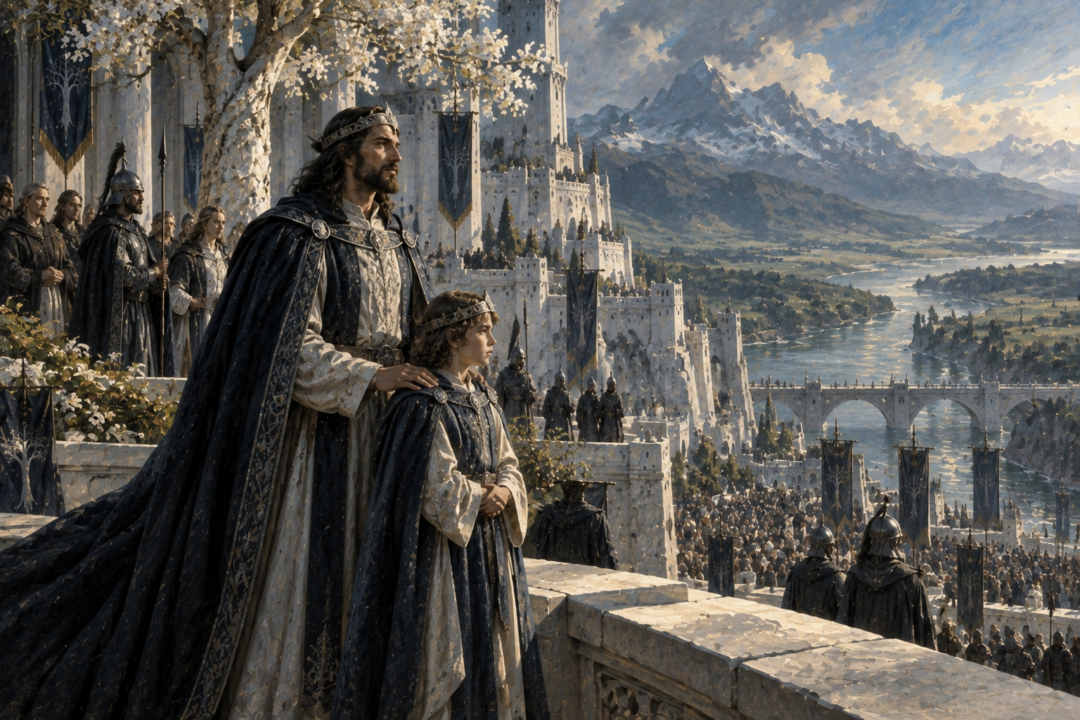
That is why Aragorn’s coronation makes the ancient naming tradition meaningful again.
He enters Minas Tirith as Aragorn, son of Arathorn, but he reigns as Elessar. Appendix A gives his royal style as Elessar Telcontar, with Telcontar being the Quenya rendering of “Strider.”
The choice links something remarkably humble to something ancient.
“Strider” began as the suspicious name given to a weather-beaten Ranger in Bree. Instead of discarding it when he becomes king, Aragorn preserves its meaning inside Quenya.
The wandering Ranger and the heir of Isildur become part of the same identity.
His son, appropriately, is Eldarion—another Quenya name.
The restored monarchy therefore resumes a naming tradition whose roots reach through Gondor to the Faithful of Númenor and the House of Elros.
A Kingdom Speaking to Its Dead
Gondor’s Quenya royal names were not evidence that its people had failed to adopt their natural everyday language.
They reveal something more interesting.
Gondor could change without believing that everything old should be discarded.
Westron became the language through which the kingdom actually lived. Sindarin remained a living mark of its Dúnedain heritage among parts of the population. Quenya survived in a narrower, elevated sphere because certain things—kings, ancient places, lore, ceremony—were deliberately named in the language of an older tradition.
And behind that tradition stood the central trauma of Númenórean history.
The kings who turned against the Eldar had abandoned the old Quenya royal custom. The Faithful survived their kingdom’s destruction and founded new realms where High-elven names appeared again.
Thousands of years later, Gondor’s people might no longer speak Quenya in ordinary life, but the crown still remembered.
That is perhaps the most revealing thing about Gondor: it is a civilization constantly surrounded by remnants of what came before.
Its towers weather. Its bloodlines diminish. Its borders retreat. Its kings disappear.
But names can survive.
And when a king finally returns, one of the first things the restored monarchy does is speak through an ancient name again.
Sources & Notes
- Tolkien Gateway, “Kings of Gondor” — https://tolkiengateway.net/wiki/Kings_of_Gondor
- Tolkien Gateway, “Quenya” — https://tolkiengateway.net/wiki/Quenya
- Tolkien Gateway, “Westron” — https://tolkiengateway.net/wiki/Westron
- Tolkien Gateway, “High Elves” — https://tolkiengateway.net/wiki/High_Elves
Reference entries document the characters, places, events, and textual details discussed in this article.