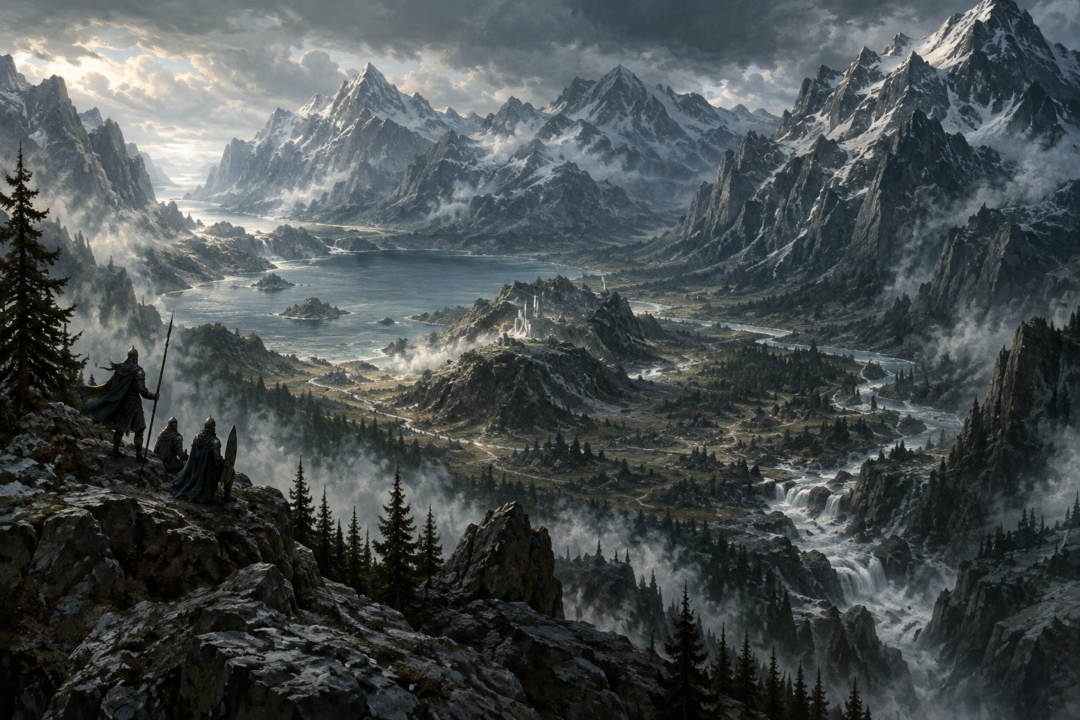
Hithlum looks, at first, like exactly the place one would choose to survive a war against Morgoth.
The cold northern land lies behind formidable mountain barriers. The Ered Wethrin, the Mountains of Shadow, separate it from much of Beleriand and from the northern plains facing Angband. To the west rise the Ered Lómin, the Echoing Mountains. Within Hithlum itself, the Mountains of Mithrim divide its regions. Roads through this country are constrained by passes, valleys, and the Firth of Drengist.
For generations, those barriers work.
Fingolfin and Fingon can hold Hithlum even when other northern realms are broken. Fortresses guard the approaches. Armies attacking from Morgoth's country must force difficult entrances rather than simply pour across an open frontier.
But geography has no loyalty.
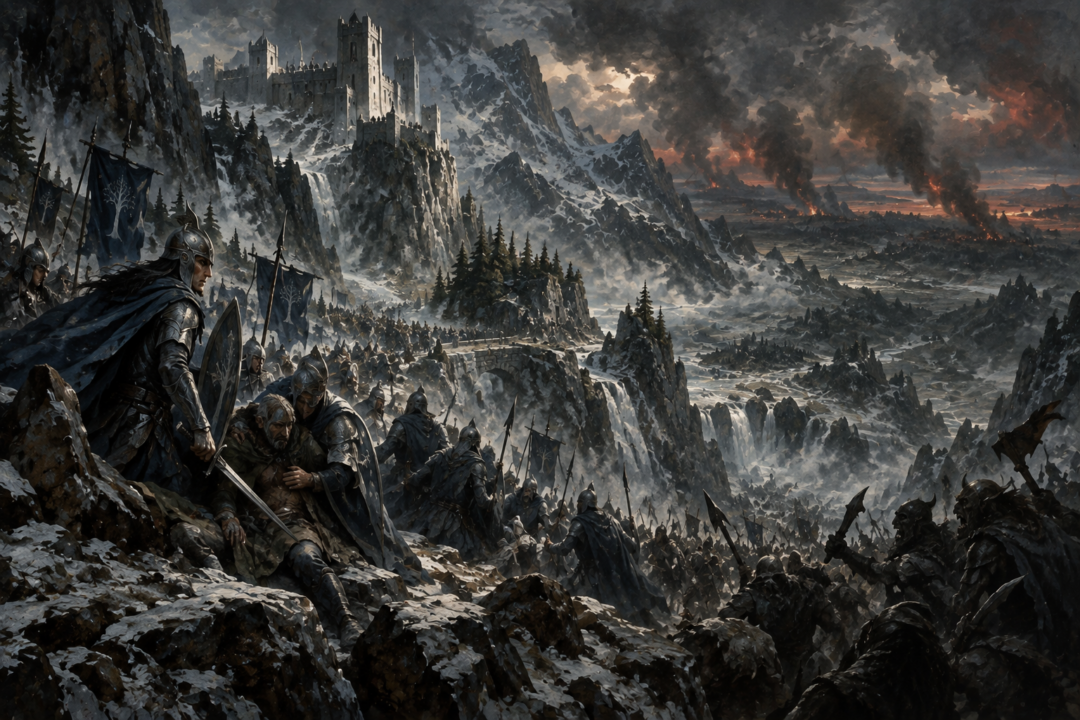
After the Nirnaeth Arnoediad, the same mountains that once protected Hithlum help define an isolated conquered land. The House of Hador is broken. Fingon is dead. Morgoth settles Easterlings there, while the surviving people of Hador are oppressed and enslaved.
Hithlum's tragedy is therefore not that its defenses suddenly fail as mountains. It is that the strategic meaning of those defenses reverses.
Before defeat, the mountains keep the Enemy out.
After defeat, they help make escape difficult.
Hithlum Is Almost a Natural Fortress
Hithlum occupies the northwestern part of Beleriand's great political landscape. Its geography immediately distinguishes it from the more open territories nearer Angband.
The Ered Wethrin form its great southern and eastern barrier, while the Ered Lómin stand along the west. The Firth of Drengist cuts through the western mountains and provides an important route toward the sea. Inside the larger region are Mithrim and Dor-lómin, with the Mountains of Mithrim separating them.
This does not mean Hithlum is inaccessible. The histories repeatedly show people and armies entering and leaving it.
What matters is that movement is channelled.
That distinction is crucial in warfare. A mountain wall does not have to be completely impassable to be valuable. If an enemy must use identifiable approaches, defenders can concentrate strength there.
That is precisely what happens in Hithlum.
After Fingolfin's host reaches Middle-earth, Hithlum becomes the heartland of his people. During the long Siege of Angband, the Noldor do not merely trust the mountains themselves. They watch and fortify the frontier.
The most important example is Barad Eithel at Eithel Sirion, near the source of Sirion in the Ered Wethrin. From this fortified position the northern plain could be watched.
Hithlum's security is therefore a combination of terrain and organized defense.
The mountains create the opportunity.
The defenders make the opportunity useful.
The Dagor Bragollach Shows What the Mountains Can Do
The Battle of Sudden Flame destroys the illusion that Morgoth can be permanently contained.
The northern plain of Ard-galen is devastated. Dorthonion is overrun. The defensive system surrounding Angband is broken in several places, and the Noldorin realms suffer catastrophic losses.
Yet Hithlum does not fall.
Fingolfin and Fingon are driven back toward their mountain defenses, and the fighting around the Ered Wethrin is severe. Hador and his son Gundor fall while defending Fingolfin's retreat near Eithel Sirion.
That detail reveals the real character of Hithlum's protection.
The mountains are not a magical wall. They must still be fought for.
But they provide something other devastated northern territories lack: defensible ground onto which a battered army can withdraw.
The distinction between retreat and collapse becomes enormous. A defeated field army that reaches a prepared mountain line can remain an army. A realm whose approaches remain held can survive even after losing territory elsewhere.
Hithlum does exactly that.
Morgoth has shattered the Siege of Angband, but he has not yet shattered Fingon's kingdom.
Morgoth Tests the Gates Again
Several years after the Dagor Bragollach, Morgoth attacks Hithlum again.
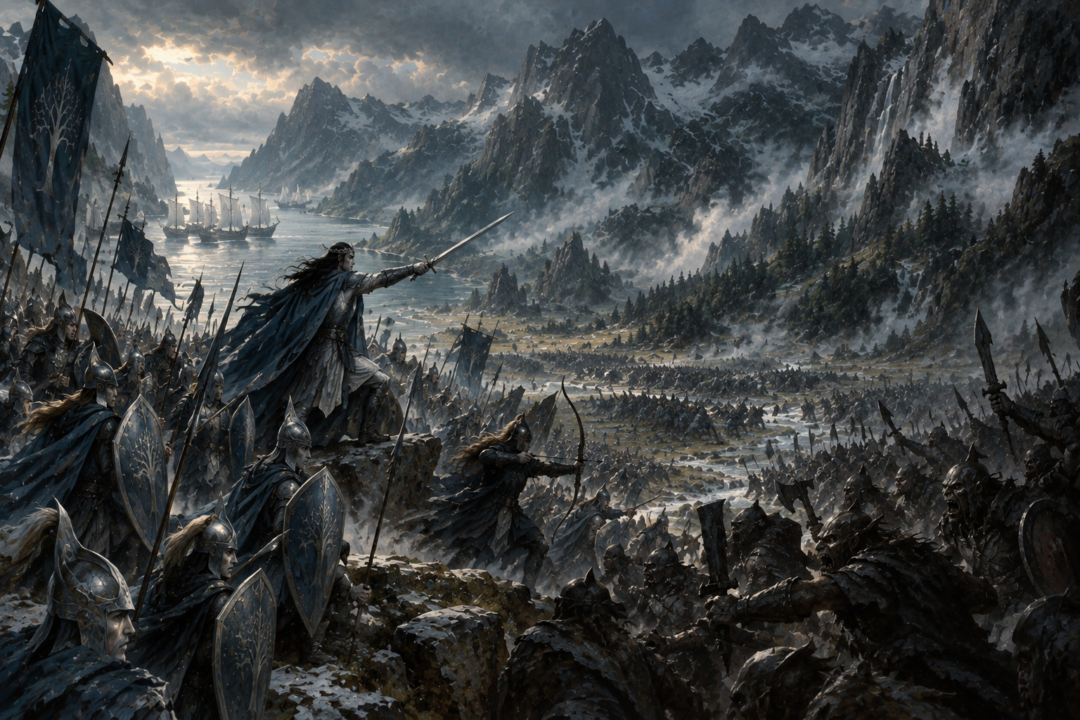
The assault focuses on the passes of the Ered Wethrin and Eithel Sirion. Galdor, lord of Dor-lómin and son of Hador, is killed there. His son Húrin succeeds him.
Once again, however, Hithlum survives.
The fighting also demonstrates that its geography is more complicated than a simple mountain ring. An attack comes into Hithlum from the north, and Fingon is hard pressed. Aid arrives unexpectedly from another direction: Círdan sends ships up the Firth of Drengist, allowing forces from the Falas to strike against Morgoth's host.
This episode is one of the best demonstrations of Hithlum's strategic strength.
Its limited approaches can hinder an attacker, but friendly forces familiar with those approaches can use them too. Mountains, fortresses, the firth, and coordinated armies form a defensive system.
Yet the episode also contains a warning.
Hithlum survives because there are still allies outside it.
Its geography is strongest when the wider resistance of Beleriand still functions.
The Nirnaeth Changes the Meaning of the Map
The decisive transformation comes with the Nirnaeth Arnoediad, the Battle of Unnumbered Tears.
Fingon's western army marches out from Hithlum. The battle ends in disaster. Fingon is slain. The forces of the Eldar and Edain are broken, and Húrin is eventually captured after the famous last stand of the Men of Dor-lómin.
This is where Hithlum's strategic problem changes completely.
Its mountains have not disappeared. Its passes have not widened. Its valleys have not changed.
But the army that made those barriers useful is gone.
A fortress is valuable because someone controls it. A pass protects you only while friendly soldiers hold it. Once the enemy possesses the surrounding military advantage, enclosed terrain can cease to be sanctuary and become confinement.
After the Nirnaeth, Morgoth gives Hithlum to Easterlings who had entered his service. The surviving people of the House of Hador are oppressed, dispossessed, and enslaved.
The shield has become a cage.
Dor-lómin Shows What Defeat Means for Civilians
The consequences become painfully personal in the story of Túrin.
Morwen remains in Dor-lómin after Húrin's disappearance. Her position is precarious precisely because the old political order has collapsed. The warriors who once made Dor-lómin a secure hereditary lordship of the House of Hador are dead, captured, or scattered.
Easterlings occupy the land. Brodda takes possession of Húrin's property and forces Aerin, a kinswoman of Húrin, into marriage.
Morwen fears for Túrin, particularly because he is the heir of Húrin. She therefore sends him secretly out of Dor-lómin toward Doriath.
That journey gives the geographical reversal a human scale.
Before the Nirnaeth, a child of Húrin lives within one of the strongest defended regions of the northern alliance.
After the Nirnaeth, safety lies outside it.
The important point is not that escape from Hithlum becomes impossible. It plainly does not. Túrin escapes; Morwen and Nienor later leave as well. Tuor's story likewise involves movement through and eventually out of the region.
Rather, travel has become dangerous, politically constrained, and dependent on secrecy or knowledge of difficult routes.
The mountains still shape movement.
Only now the people who most need protection are no longer the people controlling the land.
Even Morgoth's Allies Discover the Trap
There is a darker irony in what happens to the Easterlings themselves.
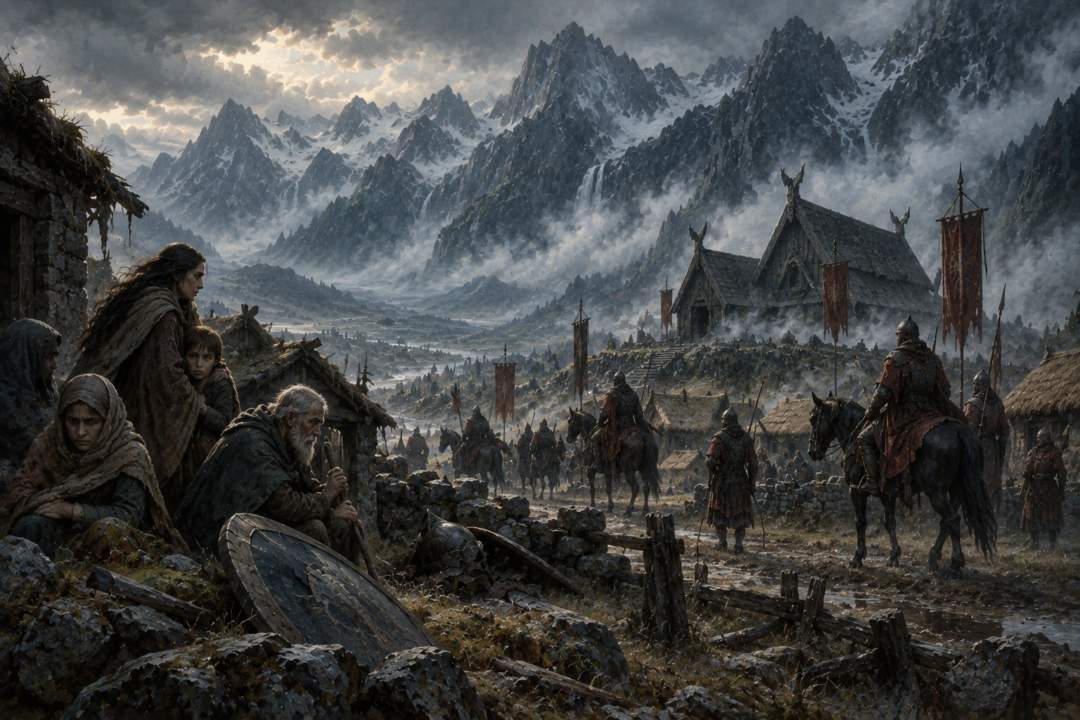
After the Nirnaeth, Morgoth assigns Hithlum to those Easterlings who had served him. Yet the account makes clear that this reward is deceptive. They are confined in Hithlum and forbidden to leave it.
That is an extraordinary reversal.
The conquerors receive a conquered country, but their possession is itself a form of containment.
Morgoth does not need Hithlum to function as an independent allied kingdom. He can use its boundaries to isolate populations useful to him while maintaining control over the wider north.
The geography therefore serves successive masters without changing.
Under Fingolfin and Fingon, enclosure helps preserve resistance.
Under Morgoth, enclosure helps regulate conquered peoples.
The mountains are neither good nor evil. Their strategic effect depends entirely upon who controls the exits.
Hithlum Was Never Defended by Mountains Alone
It would be easy to look at a map of Beleriand and conclude that Hithlum survived for so long simply because it was mountainous.
The history says something subtler.
Hithlum survives because terrain, fortifications, leadership, soldiers, and alliances reinforce one another.
Fingolfin can retreat behind the Ered Wethrin because defenders still hold them. Barad Eithel matters because it is watched and garrisoned. Fingon survives a later invasion partly because help can reach him through Drengist. The House of Hador makes Dor-lómin strong because generations of its people fight beside the Noldor.
Remove those human structures, and the mountains cannot save the realm.
The Nirnaeth does exactly that.
The catastrophe occurs outside the supposed shelter of Hithlum, but its consequences reach every farm and household behind the mountains because the forces capable of defending that shelter have been destroyed.
That is the central strategic lesson of Hithlum.
Defensible terrain can multiply strength.
It cannot replace strength.
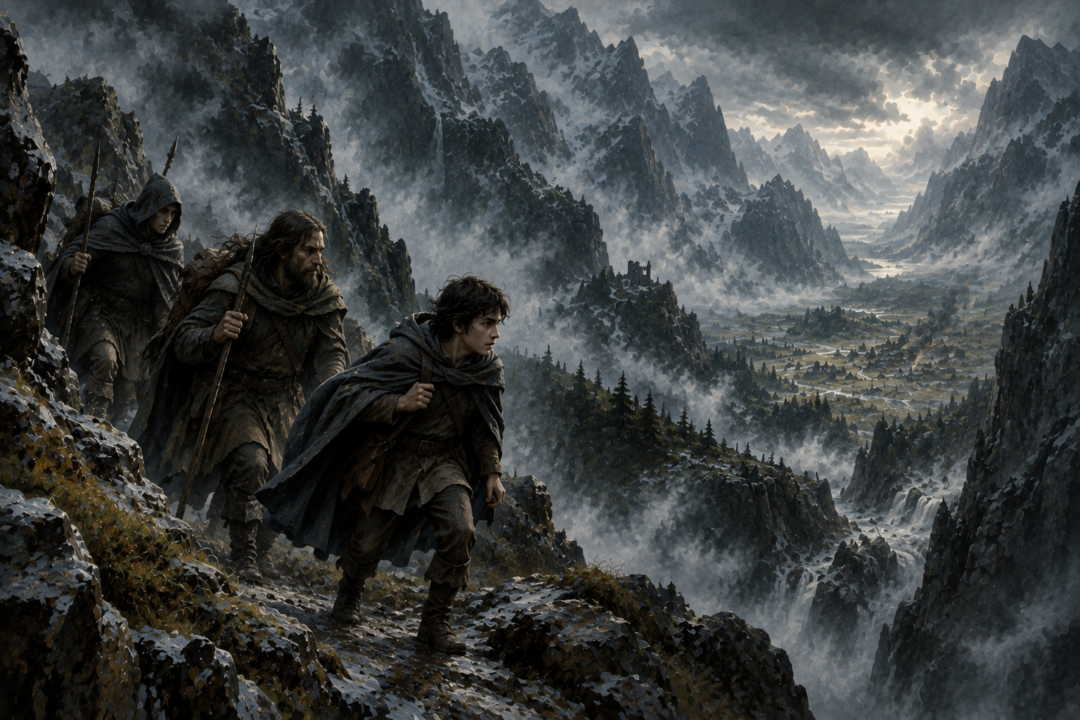
When a Refuge Becomes an Enclosure
There is a recurring tragedy in the First Age: places that appear secure remain secure only while the larger world around them permits it.
Hithlum is one of the clearest examples because its geography does not betray its inhabitants. The mountains continue doing what mountains always did. They restrict movement, narrow approaches, and separate one region from another.
What changes is power.
While Fingolfin, Fingon, and their allies command Hithlum, restricted access makes invasion costly. After the Nirnaeth destroys that military order, restricted access works against the defeated population. The House of Hador can no longer rely on the passes as defended entrances to a homeland. Survivors must instead think about those same barriers as obstacles between themselves and possible refuge elsewhere.
That makes Hithlum more than another fallen kingdom on the map of Beleriand.
Its geography becomes part of its tragedy.
The land that once allowed the northern Noldor and Edain to endure Morgoth's assaults longer than many of their neighbors becomes, after their great defeat, a place where conquered people live behind the same mountains that once promised security.
Hithlum does not fall because mountains are useless.
It falls because mountains can protect a people only while that people still possesses the power to hold them.
Sources & Notes
- Tolkien Gateway, “Hithlum” — https://tolkiengateway.net/wiki/Hithlum
- Tolkien Gateway, “Ered Wethrin” — https://tolkiengateway.net/wiki/Ered_Wethrin
- Tolkien Gateway, “Nirnaeth Arnoediad” — https://tolkiengateway.net/wiki/Nirnaeth_Arnoediad
Reference entries document the characters, places, events, and textual details discussed in this article.