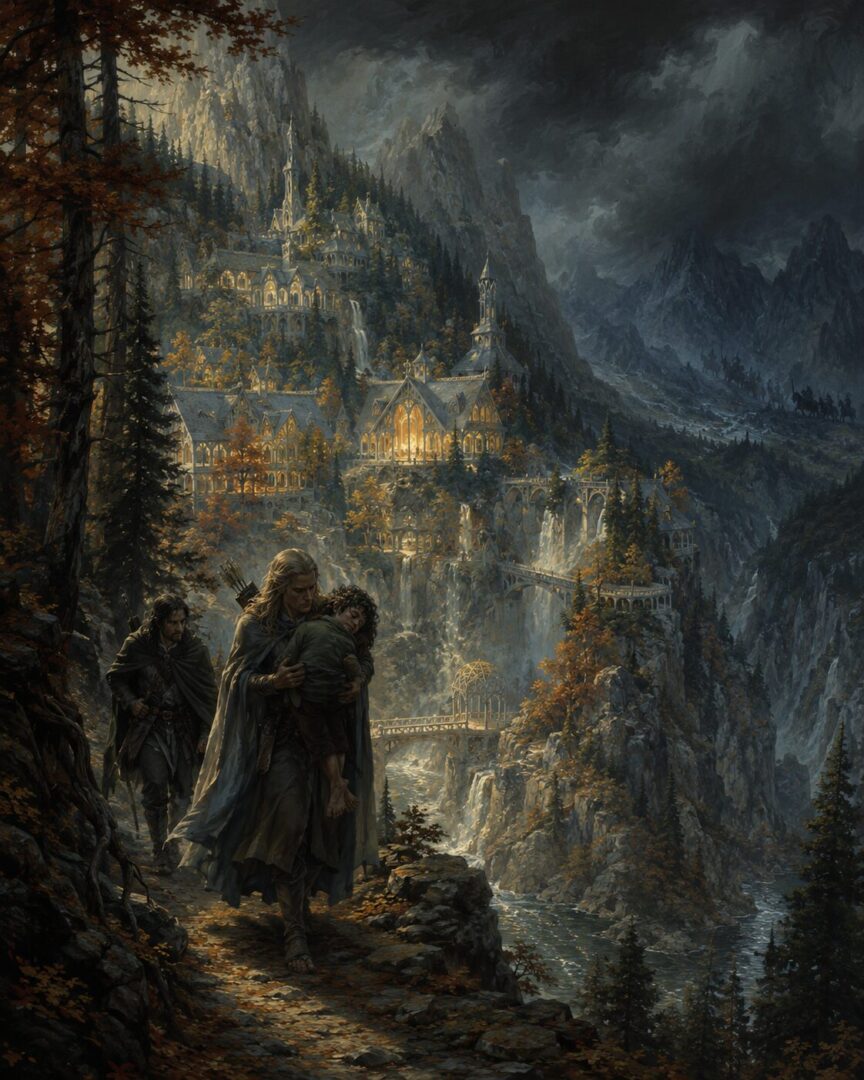
Rivendell feels, at first, like the safest answer in Middle-earth.
It is hidden in a deep valley. It is ruled by Elrond, one of the wisest living figures of the Third Age. It has healed wounds, preserved memory, sheltered heirs, guarded ancient lore, and outlasted wars that broke kingdoms around it. By the time Frodo reaches the House of Elrond, bleeding from the Morgul-wound and hunted by the Nine, Rivendell seems less like a place on a map than a pause in the doom of the world.
So the question is natural: if the One Ring could reach Rivendell, why not leave it there?
The answer reveals one of the most important hidden rules of the story. Rivendell could give the Ring-bearer rest. It could gather wisdom around the Ring. It could delay the Enemy from seizing it. But it could not make the Ring harmless. Shelter is not the same as victory, and Rivendell’s very greatness made it the wrong place to keep a thing made for domination.
Rivendell Was a Refuge, Not an Escape From History
Rivendell, or Imladris, was founded by Elrond in the Second Age during the wars against Sauron in Eriador. It endured as a hidden refuge and one of the chief Elvish strongholds in the West, associated with Elrond’s wisdom and, later, with Vilya, the Ring of Air, the mightiest of the Three Elven Rings.
Encyclopedia of Arda
That matters because Rivendell’s power is often misunderstood. It is not simply a fortress with stronger walls than Mordor has armies. It is a house of healing, counsel, memory, and preservation. It is the place where broken things are named, understood, and sometimes renewed: Frodo after Weathertop, Aragorn’s lineage, the shards of Narsil, the scattered histories of Men, Elves, Dwarves, and Hobbits.
But preservation has limits. Rivendell can resist decay; it cannot cancel the moral nature of the One Ring. It can hide a road for a while; it cannot end the road’s danger. It can protect Frodo long enough for a decision to be made; it cannot turn possession of the Ring into safety.
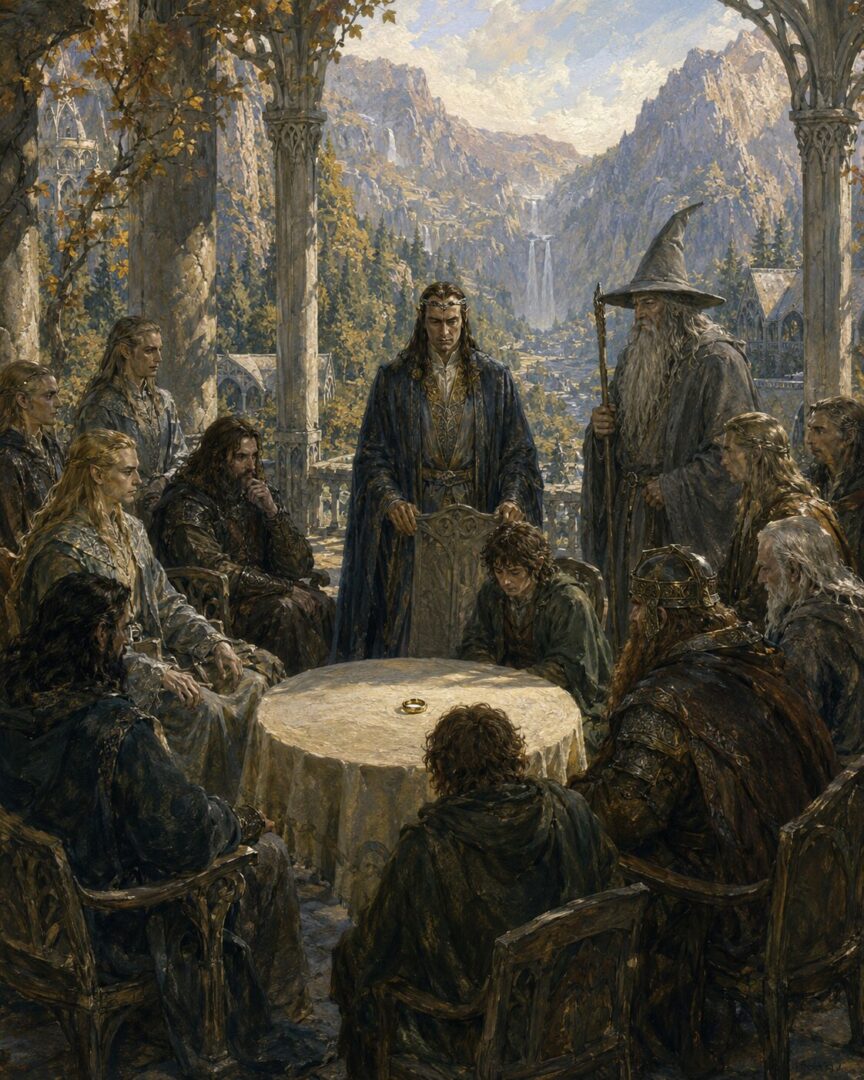
That is why the Council of Elrond is not a celebration of arrival. It is the moment when arrival becomes responsibility.
The Ring Was Not Merely Being Hunted
The simplest reason Rivendell could not keep the Ring is that Sauron was seeking it. But that is only the outer layer.
The Ring was not a lost weapon that happened to be dangerous if found. It was Sauron’s own ruling instrument, made by him to dominate the other Rings of Power. The Council was called in Rivendell on 25 October, Third Age 3018, to decide what must be done with the Ring after Frodo brought it there.
Keeping it in Rivendell would not solve the crisis. It would merely concentrate the crisis in one of the last great sanctuaries of the West. The Ring would still exist. Sauron would still grow in military strength. The Nine would still be his servants. Saruman’s treachery, once revealed, proved that even the Wise were not immune to the desire to possess or use what should have been rejected.
In other words, Rivendell could hide the Ring from hands. It could not hide it from history.
If the Ring remained in the world, the war did not end. Sauron did not need every valley to fall at once. He needed time, fear, division, and eventually the recovery of what was his. A hidden Ring was not a defeated Ring.
Elrond’s Strength Made the Ring More Dangerous, Not Less
A casual reader might assume that Elrond, being wise and powerful, would be the ideal keeper. The story’s logic points the other way.
The Ring is most dangerous to those who imagine they could use it for good. A small person might be tempted by escape, comfort, importance, or possession. But the great are tempted by the idea of repair. They can imagine armies saved, enemies thrown down, kingdoms restored, evils corrected. That vision is exactly what makes the Ring deadly.
Elrond understood this. Gandalf understood it. Galadriel later dramatizes the same danger in Lórien. The Ring does not merely offer power to the wicked. It corrupts through the desire to make power serve the good.
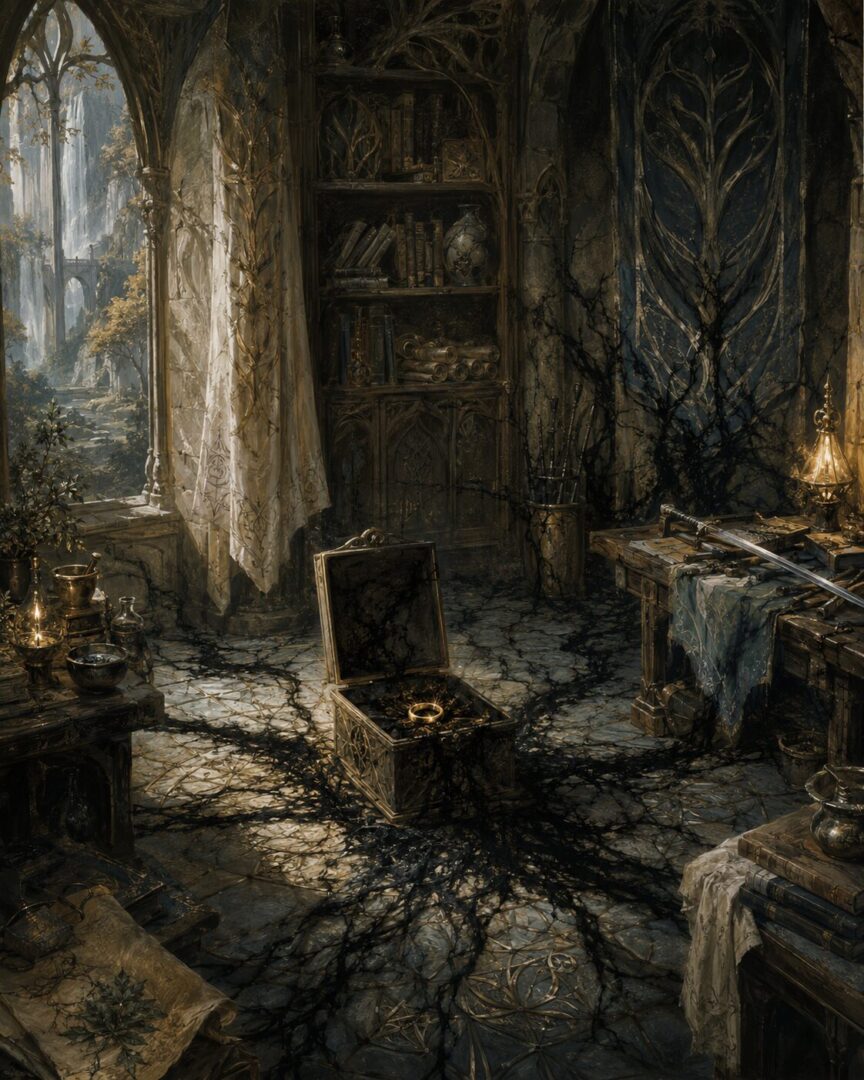
That is why Rivendell cannot become the Ring’s permanent vault. It contains too much wisdom, too much memory, and too many people who understand what is at stake. The temptation would not be crude. It would be noble, sorrowful, strategic, and persuasive.
A desperate guardian might think: keep it only until the war worsens. Use it only if Minas Tirith falls. Study it only to understand it. Touch it only to prevent a greater evil.
Those are exactly the kinds of doors the Ring exists to open.
The Three Rings Could Preserve, But Not Redeem the One
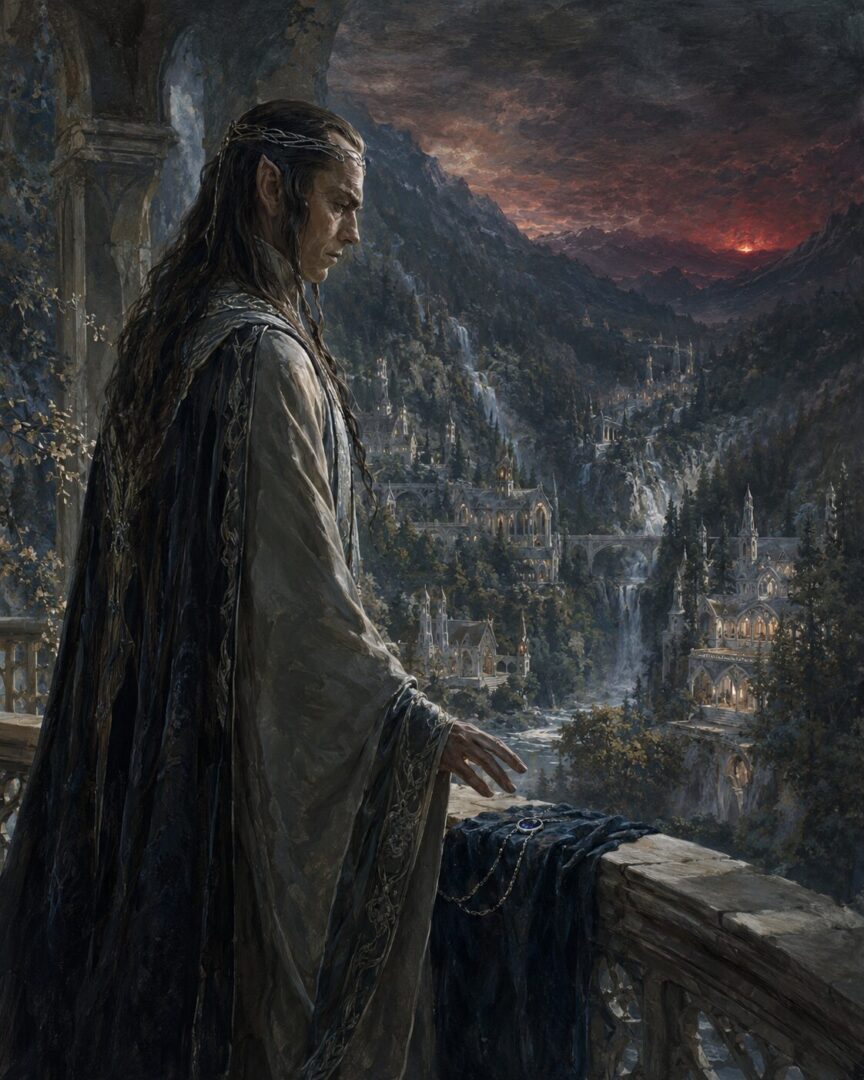
Rivendell’s special atmosphere is tied, in part, to Elrond’s possession of Vilya. Vilya was the Ring of Sapphire, the Ring of Air, and the greatest of the Three Elven Rings. The Three were not made by Sauron, but they were still bound into the larger Ring-system and subject to the One while it existed and was wielded by him.
Encyclopedia of Arda
This is crucial. The Elven Rings were associated with preservation, healing, and resistance to the weariness of time. They helped maintain places like Rivendell and Lothlórien as echoes of an older beauty. But their power was not a cure for Sauron’s Ring.
The One Ring belonged to a different moral order. It was made for mastery. It did not preserve beauty from fading; it bent wills toward control. It did not heal history; it enslaved it.
So even if Rivendell was sustained by one of the greatest powers left among the Elves, that power could not sanctify the One. Vilya could help make Rivendell a haven. It could not make the Ring safe to own.
There is a tragic irony here. The same preserving power that made Rivendell feel timeless also emphasized why the Ring could not remain there. The Elven havens were already fighting a long defeat against fading. If they made the One Ring part of their preservation, they would not escape decline. They would make their refuge dependent on the very evil that had to be rejected.
Throwing It Away Was Not Enough
The Council also considers, directly or indirectly, alternatives to the impossible road into Mordor. Could the Ring be hidden? Could it be sent away? Could it be cast into the Sea? Could the Wise simply refuse to touch it and let the ages bury it?
The answer is no, not because these ideas are foolish, but because they misunderstand the Ring’s role in the war. The Council concludes that the Ring must be destroyed, and the only place where that can be done is the fire in which it was made: Orodruin, Mount Doom.
Hiding the Ring would leave Sauron undefeated. Sending it far away would leave the same danger for another age. Casting it into the deep sea might delay the matter beyond the lives of many, but the Ring would still exist, and the Shadow would still endure.
This is one of the sternest ideas in the story: not every evil can be managed. Some evils must be unmade.
Rivendell is wise enough to see that management would be disguised surrender. To keep the Ring would be to say, “Let the next generation face what we could not.” Elrond’s Council refuses that escape.
The Ring Would Turn Shelter Into Possession
There is also a subtler danger. If Rivendell kept the Ring, Rivendell would change.
At first, the change might be invisible. The Ring would be guarded. Then guarded more carefully. Then spoken of less openly. Then planned around. Then feared. Then perhaps justified as the last hope of the Free Peoples.
A sanctuary becomes a vault. A vault becomes a throne-room in waiting.
That is the Ring’s deepest corruption: it makes the act of keeping feel responsible. It turns possession into duty. It convinces the keeper that surrendering it, destroying it, or sending it away would be reckless.
In that sense, Rivendell’s refusal to keep the Ring is one of its greatest acts of wisdom. Elrond does not try to make his house the center of the world’s fate forever. He allows the Ring to pass out of safety and into peril, because only peril offers the possibility of ending the matter.
A lesser refuge would cling to the treasure it had saved. Rivendell proves its greatness by letting it go.
Frodo Was Sheltered So He Could Choose
Rivendell’s purpose in the Ring’s story is not failure. It does exactly what it is meant to do.
It heals Frodo enough for him to stand before the question. It brings together witnesses from scattered peoples. It reveals the Ring’s history, Isildur’s failure, Gollum’s part in the chain, Saruman’s betrayal, and the narrowing roads left to the West. It gives the Free Peoples one last quiet place where they can decide without the immediate noise of battle.
Most importantly, Rivendell makes room for a choice that power itself would never make.
The Ring is not entrusted to Elrond, Gandalf, Glorfindel, or Aragorn. It is taken onward by Frodo, with companions chosen not because they can dominate the Ring, but because they can accompany its bearer. That is not an accident of weakness. It is the strategy.
Rivendell can provide wisdom, but it cannot replace pity, endurance, humility, and mercy. Those are the qualities the Ring least understands.
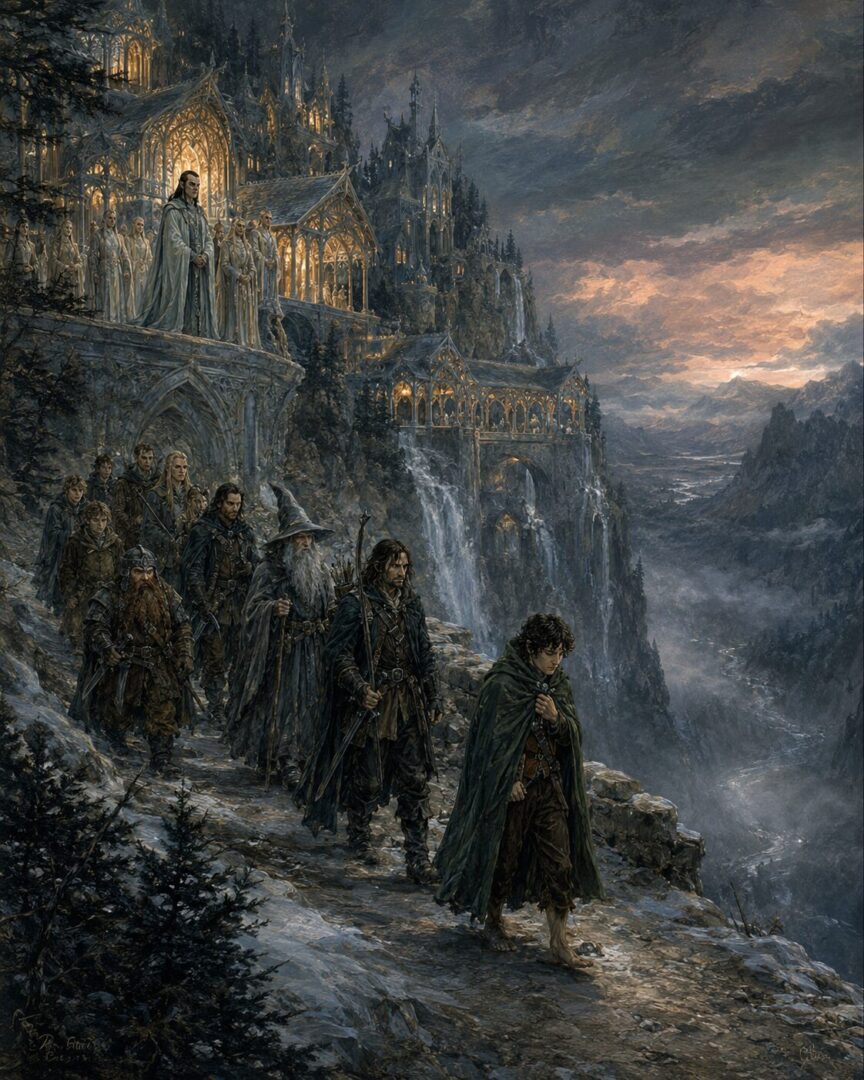
The Last Homely House Could Not Be the Last Battlefield
The phrase “the Last Homely House” suggests warmth at the edge of danger. But “last” is not the same as “final.” Rivendell is the last deep breath before the road darkens. It is not the destination.
If the Ring had stayed there, the story would have become a siege of memory: the old world trying to preserve itself around the instrument of its enemy. Instead, Rivendell sends the Ring away from beauty, away from songs, away from counsel, and toward ash, hunger, fear, and the Cracks of Doom.
That is the painful wisdom of Elrond’s house. It shelters without pretending shelter is salvation. It heals without pretending healing is the same as victory. It preserves what is good without confusing preservation with possession.
Rivendell could shelter the Ring because mercy needed a place to breathe.
It could not keep the Ring because evil does not become harmless when locked in a beautiful house.
Sources & Notes
- Wikipedia overview of Rivendell and the Council of Elrond setting — https://en.wikipedia.org/wiki/Rivendell
- Wikipedia overview of the One Ring and the need to destroy rather than store it — https://en.wikipedia.org/wiki/One_Ring
- Wikipedia overview of The Fellowship of the Ring for the Council and quest decision — https://en.wikipedia.org/wiki/The_Fellowship_of_the_Ring
Sources selected for Tolkien-lore context and reader verification.