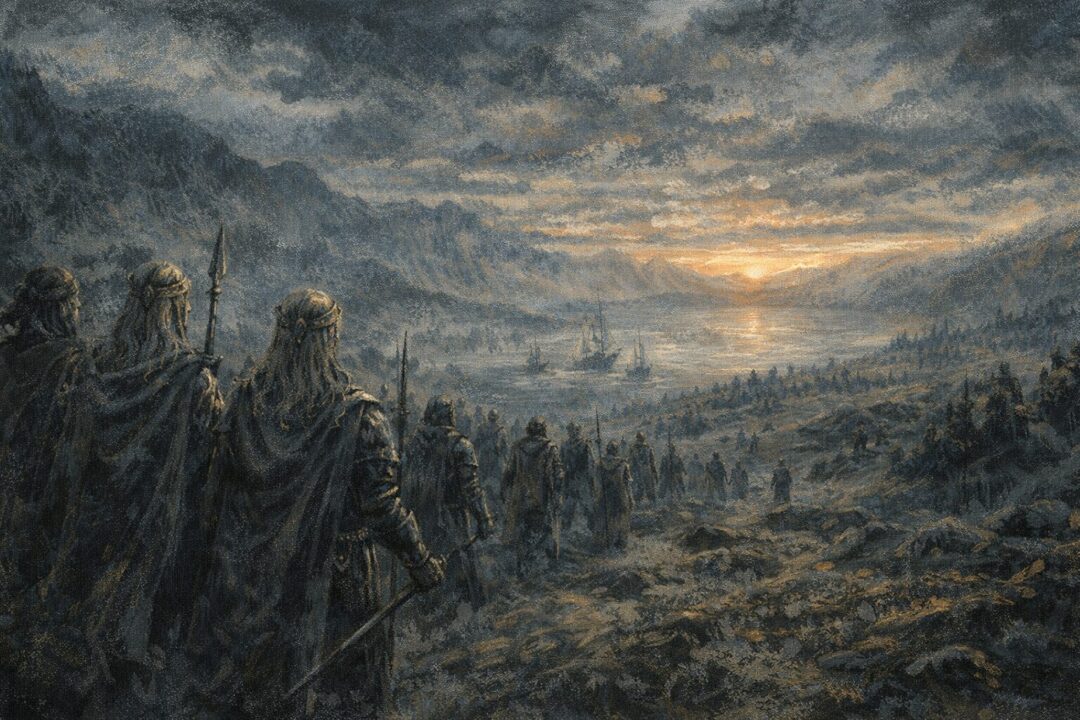
One of the most memorable—and emotionally powerful—changes in the film adaptation of The Two Towers is the presence of Elves at Helm’s Deep.
Their arrival is quiet and solemn. They march in silver armor beneath ancient banners, saying little, yet conveying immense weight. For many viewers, the moment feels inevitable: ancient immortals standing shoulder to shoulder with mortal Men against an enemy that threatens all free peoples of Middle-earth.
It feels right.
And yet, in the book version of The Two Towers, this never happens.
No host from Lórien arrives.
No Elves from Rivendell stand upon the walls.
No immortal warriors loose arrows into the night.
Helm’s Deep is defended by Men alone.
This absence often feels puzzling, especially for readers encountering the story after seeing the films. Why would the Elves—wise, powerful, and allied with Rohan—fail to appear at one of the most desperate battles of the war?
The answer is not neglect, indifference, or fading strength.
It is meaning.
Helm’s Deep Is a Battle Meant for Men
In the book, Helm’s Deep is not presented as a grand alliance of all free peoples. It is a last stand for the Rohirrim—a culture defined not by ancient magic or immortal power, but by loyalty, oaths, and endurance.
Rohan’s strength lies in its people.
They are riders and farmers, warriors and herdsmen. Their kings lead from the front. Their bonds are personal, rooted in honor rather than destiny. When Théoden rides to Helm’s Deep, he does not expect rescue. He expects resistance.
This distinction matters.
If Elves arrived in force, the meaning of the battle would fundamentally change. Victory would no longer rest on Théoden’s decision to rise from despair, on Éomer’s return, or on the grim determination of ordinary men holding the line through the night.
It would become a story of salvation from outside.
But Tolkien rarely tells stories that way.
Again and again, decisive moments are placed in the hands of those who seem least equipped to bear them. Helm’s Deep is no exception. It is not about overwhelming power. It is about holding on—long enough for dawn to matter.
Men must stand, or fall, by their own resolve.
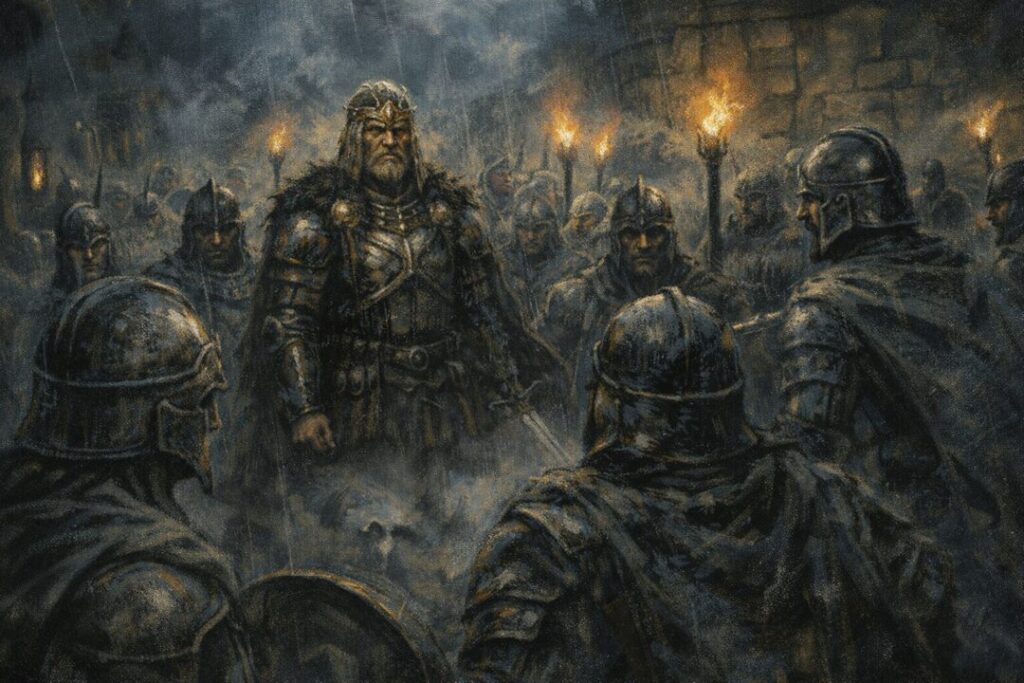
The Elves Were Not Idle
A common misconception is that the Elves were passive observers during the War of the Ring—distant, fading, and largely removed from the conflict.
The wider texts tell a different story.
While the Rohirrim are besieged at Helm’s Deep, Elvish realms are under threat across Middle-earth:
- Lórien is attacked repeatedly by forces issuing from Dol Guldur
- The Woodland Realm faces assaults from the north
- Elvish borders are actively defended to prevent Sauron’s shadow from spreading unchecked
These battles are not dramatized in the main narrative because the story is not centered on them. The perspective follows Hobbits and Men, not because Elvish struggles are unimportant, but because the story is narrowing—focusing on where the fate of the Age will be decided.
The Elves are not refusing to help Rohan.
They are already fighting for survival.
And if their defenses failed, entire regions would fall, altering the war in ways no victory at Helm’s Deep could undo.
Distance, Time, and the Reality of War
Middle-earth is vast, and Tolkien treats distance seriously.
Helm’s Deep is attacked suddenly, driven by Saruman’s urgency and the element of surprise. There is no long campaign, no drawn-out siege that allows distant allies to muster and march.
An Elvish host traveling from Lórien or Rivendell would require weeks—if not longer—to arrive. Even if such a force were assembled immediately, it would come too late.
The films compress time for dramatic clarity.
The books do not.
Tolkien’s wars are shaped by geography, weather, roads, and realistic movement. Messages take time. Armies cannot simply appear where the story demands them. This grounding is part of what gives Middle-earth its weight.
Elves do not arrive at Helm’s Deep because they cannot.
And Tolkien refuses to bend the world to convenience.
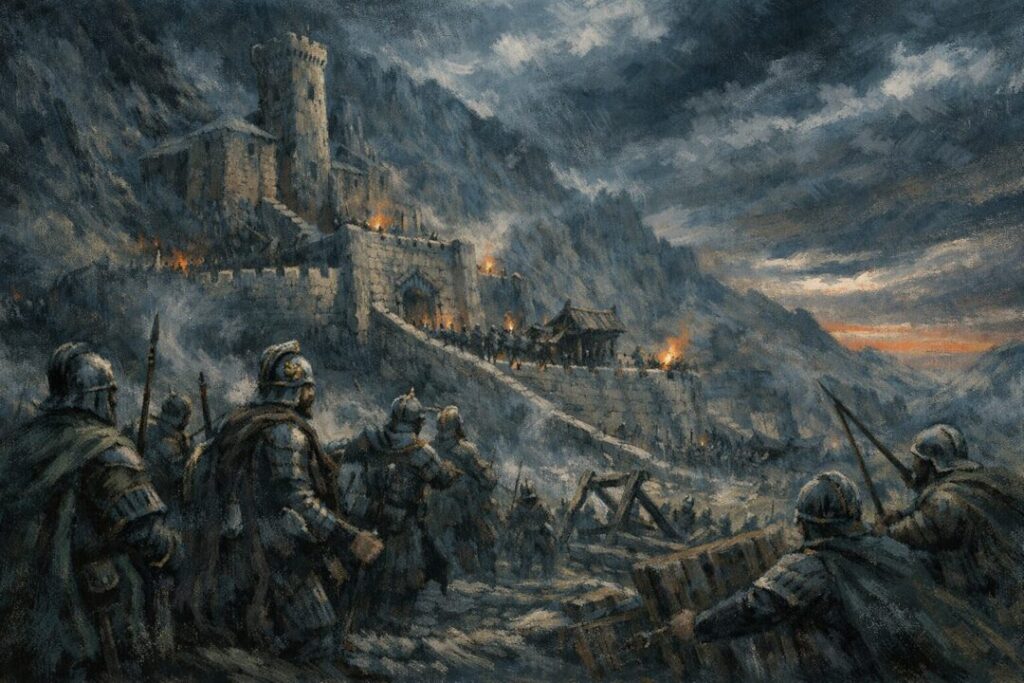
The Fading of the Elves Is Not Inaction
Few ideas are more misunderstood than the “fading” of the Elves.
Fading does not mean weakness.
It does not mean withdrawal from duty.
And it does not mean indifference to the fate of others.
It means a change in role.
The War of the Ring is the final great conflict of the Third Age. Its outcome will determine whether Middle-earth passes fully into the dominion of Men—or into darkness.
For that transition to be meaningful, Men must act as primary agents of their own fate.
The Elves still counsel.
They still preserve.
They still defend their realms.
They still resist evil where they stand.
But they no longer shape the destiny of the world directly.
That time has passed.
Helm’s Deep is one of the clearest expressions of this shift. It is a victory earned not through ancient power, but through perseverance, sacrifice, and hope held through despair.
Why the Films Changed the Battle
The decision to include Elves at Helm’s Deep in the film adaptation is understandable.
Cinematically, it offers:
- Visual contrast between mortal and immortal warriors
- A sense of united resistance against overwhelming evil
- A clearer reminder that the war affects all peoples, not just Rohan
On screen, it works.
But it subtly alters the meaning of the battle.
In the book, hope arrives not through ancient allies, but through endurance and timing—through Gandalf’s return, the breaking of Saruman’s power, and the courage of those who held the walls long enough for the night to end.
The victory belongs to Men.
And that distinction is essential.
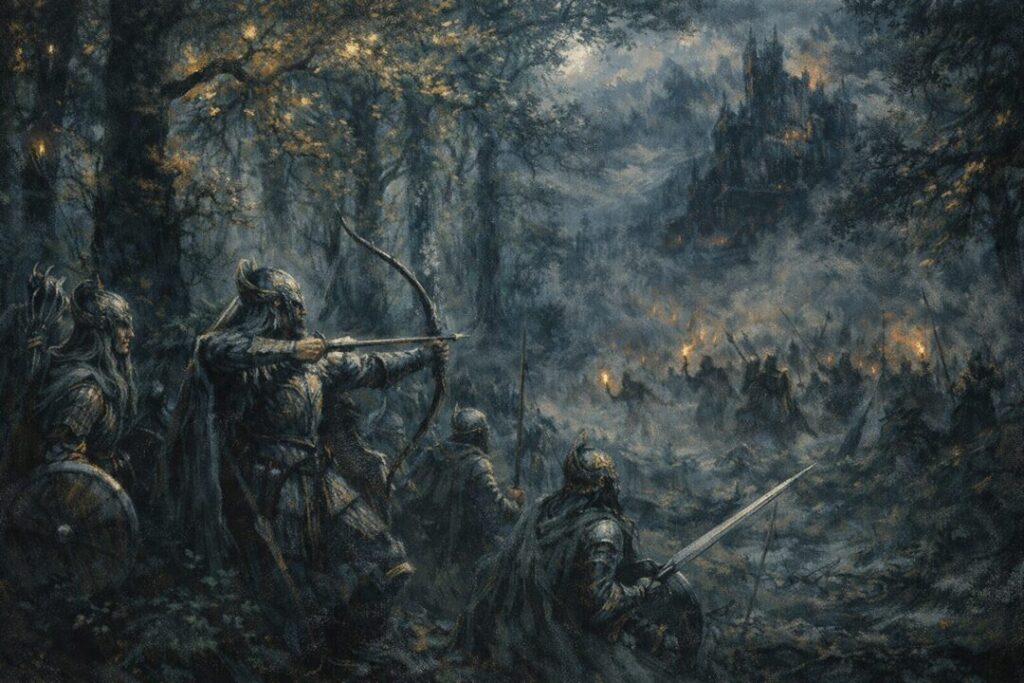
Absence as Meaning
The Elves do not appear at Helm’s Deep because they are no longer meant to.
Not because they are gone.
Not because they are weak.
Not because they do not care.
But because Middle-earth is changing.
The Elder Days are passing.
The center of history is shifting.
And the future will belong to those who can stand without ancient guardians beside them.
Helm’s Deep is not just a battle.
It is a turning point.
And the silence of the Elves there speaks as loudly as any war horn.